[ This is a small but interesting interdisciplinary conference - pj ]
December 15-17, 2014. Maastricht University Brussels Campus
What is the challenge of development today? What is the role of science and technology in development? What are the problems and possibilities that emerging technosciences—such as nano-bio-technoscience—pose for development? What institutional and organizational configurations enable development? How can interdisciplinary inquiries into the social studies of science, technology, and innovation contribute to developmental agendas?
The closing conference of the NWO-WOTRO http://www.nwo.nl/en/about-nwo/organisation/nwo-divisions/wotro sponsored project, *Nanotechnologies for Development* http://fasos-research.nl/nano-dev/, invites proposals that reflect on the relationship between science, technology, development, and innovation.
We are interested in contributions that offer insights into the historical and contemporary principles and practices of development and the role of science and technology therein. These reflections can be empirical, conceptual, or methodological. We also welcome contributions that reflect on collaboration between researchers and development practitioners. We thus invite proposals from a broad range of participants: activists, academics, development practitioners, and beyond.
The conference programme will strive to strike a balance between various approaches and perspectives and consist of keynotes, panel presentations, and a closing roundtable discussion.
The conference will be held at the Brussels campus of Maastricht University (Avenue de l’Armée / Legerlaan 10, 1040 Brussels, Belgium) on December 15-17, 2014. Participation is limited to 50 participants.
To participate, please submit a title, 500-word abstract, a list of 5 keywords, and your CV (max. 400 words) to techdev-conf-fasos AT maastrichtuniversity.nl. The deadline for sending your abstract is September 14, 2014. The conference committee will notify their decision by September 30, 2014.
Showing posts with label science. Show all posts
Showing posts with label science. Show all posts
Wednesday, 10 September 2014

Monday, 4 August 2014
why - { Ctrl Alt Del } ?
individual
INTERPERSONAL : SCIENCES
INTERPERSONAL : SCIENCES
humanistic ------------------------------------------- mechanistic
SOCIOLOGY : POLITICAL
group
Alt | Del |
| Why? | Ctrl |
Ctrl provides the power to decide what/who is 'Alt' and What/Who is 'Del' -eted.
The masses are left to ask why?
My source: Peter Kurilecz - RECORDS-MANAGEMENT-UK at JISCMAIL.AC.UK
A Fresh Start: Ctrl + Alt + Delete - Neatoramahttp://m.neatorama.com/2014/08/01/A-Fresh-Start-Ctrl-Alt-Delete/#!buNWwY
One of the programmers’ pet peeves was that whenever the computer encountered a coding glitch, they had to manually restart the entire system. Turning the machine back on automatically initiated a series of memory tests, which stole valuable time. “Some days, you’d be rebooting every five minutes as you searched for the problem,” Bradley says. The tedious tests made the coders want to pull their hair out.So Bradley created a keyboard shortcut that triggered a system reset without the memory tests. He never dreamed that the simple fix would make him a programming hero, someone who’d someday be hounded to autograph keyboards at conferences. And he didn’t foresee the command becoming such an integral part of the user experience.
Additional link: The Holographic Principle
http://apod.nasa.gov/apod/ap090913.html
Wednesday, 4 June 2014
Would you let a robot take your blood?
A Robot With A Hypodermic Needle
Written by Lucy Black
27 July 2013
Would you let a robot take your blood? The answer to this question illuminates our real relationship to machines that aspire to rise above the robot vac. Is there another sort of uncanny valley?
Veebot is a very clever use of some basic image processing plus some very accurate positioning mechanisms. It first locates a good vein using infrared. Once it has a target it switches to ultrasound to make sure that there is enough blood flow to make it worth inserting the needle.
More...
My source:
International Society for Presence Research: June
http://ispr.info/
Written by Lucy Black
27 July 2013
Would you let a robot take your blood? The answer to this question illuminates our real relationship to machines that aspire to rise above the robot vac. Is there another sort of uncanny valley?
Veebot is a very clever use of some basic image processing plus some very accurate positioning mechanisms. It first locates a good vein using infrared. Once it has a target it switches to ultrasound to make sure that there is enough blood flow to make it worth inserting the needle.
More...
My source:
International Society for Presence Research: June
http://ispr.info/
individual
INTERPERSONAL : SCIENCES
humanistic ------------------------------------------- mechanistic
SOCIOLOGY : POLITICAL
INTERPERSONAL : SCIENCES
humanistic ------------------------------------------- mechanistic
SOCIOLOGY : POLITICAL
group
| trust, confidence, anxiety, expectations, 'needles' - phobia, previous experiences, model of the 'other', intelligence, physical tests to differentiate mental health problems, subjective feelings - 'creepiness' human pa | safety, measurement, imaging, mechanics, technology, electromagnetic spectrum, infra red, ultrasound, motion, accuracy, research, trials, evidence, logic, blood sample, appearance, (surgical robots R-here) factors in RFT - 'right first time' |
| public awareness, interaction, relationships, community of practice - acceptance, publicity, media, dissemination | investment, policy, certification, law, standards, testing, supervision, labour relations |
Saturday, 19 April 2014
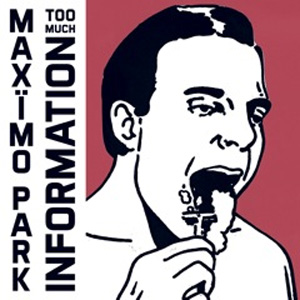
care.data: too much information?
individual
INTERPERSONAL : SCIENCES
humanistic ------------------------------------------- mechanistic
SOCIOLOGY : POLITICAL
humanistic ------------------------------------------- mechanistic
SOCIOLOGY : POLITICAL
group
individual - person ethics 'personal' My identity: lost in numbers Vs. specificity of patterns *my attitude to my 'sensitive' information health literacy personal responsibility, self care, quantified self my understanding of care.data Trust | datasets, BIG data hospital episodes, treatments research privacy research anonymising process for nhs data *care.data is a natural step towards personalised medicine? axon - neurobiology Axon - data warehouse statistics service development and innovation |
 | data security, law, information governance NHS commercial, contract potential for abuse - assumptions public mental health public health policy, consultation policy communication public engagement, primary care informed consent, opt-out data definitions, standards ISO27001 population, insurance |
Additional links:
Allyson Pollock - Protecting confidential patient information and promoting public health research. Three proposed amendments to the Care Bill
Building trust in the use of personal data for medical research, 1 April 2014, AMRC
Image source:
http://www.contactmusic.com/press/maximo-park-announce-new-album-too-much-information-released-3rd-february-2014
Friday, 28 March 2014
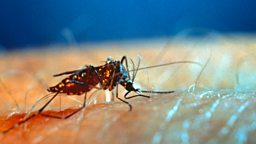
Five Fever Tales: Fact-based dramas about malaria, one of the oldest human diseases
The following radio broadcasts may be of interest:
Five Fever Tales by Lavinia Greenlaw
http://www.bbc.co.uk/programmes/b03yzlhk
These brief plays are very interesting as they present history in a docu-drama approach. The science behind the discovery of what the 'fever' was/is and the challenge for those who first saw new 'living' things through the microscope and then convincing the scientific establishment is quite fascinating.
The economic incentives to solving the 'fever' are also salutary and give pause for thought in considering global health today (and tomorrow - global warning) as is recognition of resistance and current genetic research programmes.
I believe these programmes are freely accessible worldwide, for a limited time period.
Five Fever Tales by Lavinia Greenlaw
http://www.bbc.co.uk/programmes/b03yzlhk
 |
| Five Fever Tales by Lavinia Greenlaw |
These brief plays are very interesting as they present history in a docu-drama approach. The science behind the discovery of what the 'fever' was/is and the challenge for those who first saw new 'living' things through the microscope and then convincing the scientific establishment is quite fascinating.
The economic incentives to solving the 'fever' are also salutary and give pause for thought in considering global health today (and tomorrow - global warning) as is recognition of resistance and current genetic research programmes.
I believe these programmes are freely accessible worldwide, for a limited time period.
Sunday, 23 February 2014
Man Runs a Loop-the-Loop (in Hodges' model - discuss?)
INTERPERSONAL : SCIENCES
humanistic ------------------------------------------- mechanistic
SOCIOLOGY : POLITICAL
humanistic ------------------------------------------- mechanistic
SOCIOLOGY : POLITICAL
individual
group - population
Monday, 27 January 2014
'Intellectual brutalisation' and the saving grace and power of poetry
BBC Radio 4 Today: An eminent cardiologist has organised and funded a poetry competition for his medical students to stop them becoming, in his words, intellectually brutalised.
Gabrielle Gascoigne, pictured, is a previous winner.
The BBC’s Jane Dreaper discovers more.
PBS: For these medical students, poetry nurtures the soul
Here's (source: http://www.bbc.co.uk/programmes/b03s6mdp/live ) the full version of Mastectomy - For His Wife, by Gabrielle Ruth Gascoigne:
It will be an honour
to bathe the scars.
Don’t think my tears imply
an ounce of sorrow -
only joy
could fill my eyes.
It will be a pleasure
to hold you close.
Know this – your precious flesh
calls the bluff on gold
and silver -
makes me a king.
It will be a delight
to talk with you
into the night we thought
stolen, clean away -
until day
renews our hope.
It would be too heartless
if all this love,
these sinner’s prayers and more
should fall to nothing
more than rain
on empty streets.
Gabrielle Gascoigne, pictured, is a previous winner.
The BBC’s Jane Dreaper discovers more.
PBS: For these medical students, poetry nurtures the soul
Here's (source: http://www.bbc.co.uk/programmes/b03s6mdp/live ) the full version of Mastectomy - For His Wife, by Gabrielle Ruth Gascoigne:
It will be an honour
to bathe the scars.
Don’t think my tears imply
an ounce of sorrow -
only joy
could fill my eyes.
It will be a pleasure
to hold you close.
Know this – your precious flesh
calls the bluff on gold
and silver -
makes me a king.
It will be a delight
to talk with you
into the night we thought
stolen, clean away -
until day
renews our hope.
It would be too heartless
if all this love,
these sinner’s prayers and more
should fall to nothing
more than rain
on empty streets.
INTERPERSONAL : SCIENCES
humanistic ------------------------------------------- mechanistic
SOCIOLOGY : POLITICAL
humanistic ------------------------------------------- mechanistic
SOCIOLOGY : POLITICAL
individual
subjectivity insight, rapport, empathyemotional control, detachment, engagement risk of burnout | objectivity anatomy, physiology physicality, processes, mechanistic intellectual brutalisation |
humanistic communication, relationships (medic) poetry | funding, crowded curricula hidden curriculum |
group - population
Monday, 20 January 2014
ERCIM News No. 96 Special theme: "Linked Open Data"
Dear ERCIM News Reader,
ERCIM News No. 96 has just been published at
http://ercim-news.ercim.eu/en96
Special Theme: "Linked Open Data"
http://ercim-news.ercim.eu/en96/special/
Guest editors: Irini Fundulaki (Institute of Computer Science, FORTH) and Sören Auer (University of Bonn and Fraunhofer IAIS)
 Keynote: "Linked Data: The Quiet Revolution" by Wendy Hall
This issue for download
pdf: http://ercim-news.ercim.eu/images/stories/EN96/EN96-web.pdf
epub: http://ercim-news.ercim.eu/images/stories/EN96/EN96.epub
Next issue: No. 97, April 2014 - Special Theme: "Cyber-Physical Systems"
(see the call at http://ercim-news.ercim.eu/call)
Thank you for your interest in ERCIM News.
Feel free to forward this message to others who might be interested.
Best regards,
Peter Kunz
ERCIM News central editor
--------------------------------------------------
An initiative for the ERCIM members: Call for Participation - identifying the emerging grand challenges in ICST http://kwz.me/74
ERCIM News No. 96 has just been published at
http://ercim-news.ercim.eu/en96
Special Theme: "Linked Open Data"
http://ercim-news.ercim.eu/en96/special/
Guest editors: Irini Fundulaki (Institute of Computer Science, FORTH) and Sören Auer (University of Bonn and Fraunhofer IAIS)
This issue for download
pdf: http://ercim-news.ercim.eu/images/stories/EN96/EN96-web.pdf
epub: http://ercim-news.ercim.eu/images/stories/EN96/EN96.epub
Next issue: No. 97, April 2014 - Special Theme: "Cyber-Physical Systems"
(see the call at http://ercim-news.ercim.eu/call)
Thank you for your interest in ERCIM News.
Feel free to forward this message to others who might be interested.
Best regards,
Peter Kunz
ERCIM News central editor
--------------------------------------------------
An initiative for the ERCIM members: Call for Participation - identifying the emerging grand challenges in ICST http://kwz.me/74
Saturday, 5 October 2013
and a 1 [ Empirical - Tabula Rasa ] 2, 3, 4...
INTERPERSONAL : SCIENCES
SOCIOLOGY : POLITICAL
individual
| 2 a blank slate... |
| ||
4 and here? | 3 as dictated here |

group - population
Wikipedia: Tabula rasa
Image: Israbox
Sunday, 15 September 2013
Book review "Clinical Intuition in Psychotherapy: The Neurobiology of Embodied Response"
Clinical intuition is something that in formal learning terms is intangible, but in practice is earned and relied upon as a gift of experience. When I first received this book from the author Terry Marks-Tarlow, leafing through I thought the emphasis was on the neurobiology presaging a rather technical read. The references to brain structures, neocortex, brain waves ... seemed to suggest a reductive approach, remote from my conception of intuition in clinical practice. I need not have worried, the initial discussion on the brain and evolutionary development is not just a foundation for what follows but as the title suggests underpins and integrates the whole text. Despite the title and as the foreward advises you do not have to be a psychotherapist to read and appreciate this book. The stall is set from the outset in the introduction which explains that chapter one defines clinical intuition:
Clinical intuition is defined from a neurobiological perspective as a right-brain, fully embodied mode of perceiving, relating, and responding to the ongoing flows and changing dynamics of psychotherapy. (p.3)
The introductory material here is essential foundation reading for people starting a career in psychology and mental health related disciplines. The evolutionary development of the brain from reptile through to the mammalian brain is invaluable. Tying this to specific brain functions and circuits - care, fear, panic, play, lust, rage and seeking - helps integrate brain anatomy, perception, emotion, and behaviour. The advances in neurobiology to follow will no doubt demand that we all extend our understanding of this interdisciplinary fusion.
 The book itself (hardback edition) is very well produced, the type face easy to read and the book well structured and with a well balanced mix of illustrations and photographs. The reference listing at the end runs over thirteen pages and is well grounded historically and in having regard to ongoing research. The index is comprehensive (fourteen pages) and a resource itself providing a look-up approach. The book's use of case studies, thirteen in total informs the text and provides some continuity through the book. Dialogue between therapist and client is easy to follow and illustrations are provided with ample explanation in situ. The references also utilize web-based resources.
I recall intuition coming up as a thread on several occasions on the psychiatric-nursing list especially between 1998 and 2004. Intuition is a central quality for all personnel working in health and social care. We must also recognise intuition as a human trait as when non-health professionals exercise the judgement that: "Wait a minute, we need a clinical opinion here." Self-care is also discussed. I had a Pythonesque moment - "Is this the right room for an argument?" - considering psychotherapy as a therapeutic modality within therapies as a whole. Here in the UK (and no doubt elsewhere) self, brief and solution based therapies rule economically. Even though the shortage of psychological intervention is recognised in the UK through IAPT improving access to psychological therapies, we need to ask: how does psychotherapy fare in the current (austerity) climate? To what extent can clinicians exercise intuition? Therapy relies on caseness, relationships and narrative, but to what extent can these be acknowledged and delivered within the economical time frames that frequently operate?
Although there's no specific chapter on training for clinical intuition, Marks-Tarlow provides a list of how researchers have characterized clinical intuition (more recently in the 1980-1990s); five characteristics are proposed:
I would very much like to write myself about information and complexity and these themes recur in the text, especially the latter. Several 'spaces' are discussed too: social, physical and spatial schemas. The work of Buzsáki on the hippocampus, navigation and maps - landmark navigation - is fascinating in chapter 7 Navigating the Seas. I have likened Hodges' model to a cognitive periplus - an ancient maritime map. Over the next few months I'll post some quotes from the book.
This is an excellent book that I heartily recommend. The discussion of what is implicit in the brain and so in therapy, what is embodied and wisdom in mentoring invites re-reading. Finally but vitally there is much humour and humanity here too.
Many thanks to Terry Marks-Tarlow for the review copy.
Clinical intuition is defined from a neurobiological perspective as a right-brain, fully embodied mode of perceiving, relating, and responding to the ongoing flows and changing dynamics of psychotherapy. (p.3)
The introductory material here is essential foundation reading for people starting a career in psychology and mental health related disciplines. The evolutionary development of the brain from reptile through to the mammalian brain is invaluable. Tying this to specific brain functions and circuits - care, fear, panic, play, lust, rage and seeking - helps integrate brain anatomy, perception, emotion, and behaviour. The advances in neurobiology to follow will no doubt demand that we all extend our understanding of this interdisciplinary fusion.

I recall intuition coming up as a thread on several occasions on the psychiatric-nursing list especially between 1998 and 2004. Intuition is a central quality for all personnel working in health and social care. We must also recognise intuition as a human trait as when non-health professionals exercise the judgement that: "Wait a minute, we need a clinical opinion here." Self-care is also discussed. I had a Pythonesque moment - "Is this the right room for an argument?" - considering psychotherapy as a therapeutic modality within therapies as a whole. Here in the UK (and no doubt elsewhere) self, brief and solution based therapies rule economically. Even though the shortage of psychological intervention is recognised in the UK through IAPT improving access to psychological therapies, we need to ask: how does psychotherapy fare in the current (austerity) climate? To what extent can clinicians exercise intuition? Therapy relies on caseness, relationships and narrative, but to what extent can these be acknowledged and delivered within the economical time frames that frequently operate?
Although there's no specific chapter on training for clinical intuition, Marks-Tarlow provides a list of how researchers have characterized clinical intuition (more recently in the 1980-1990s); five characteristics are proposed:
- Sudden recognition;
- Immediate knowledge;
- Emergent awareness;
- Non-verbal insight; and
- Holistic integrative sensibilities. (pp.42-43).
I would very much like to write myself about information and complexity and these themes recur in the text, especially the latter. Several 'spaces' are discussed too: social, physical and spatial schemas. The work of Buzsáki on the hippocampus, navigation and maps - landmark navigation - is fascinating in chapter 7 Navigating the Seas. I have likened Hodges' model to a cognitive periplus - an ancient maritime map. Over the next few months I'll post some quotes from the book.
This is an excellent book that I heartily recommend. The discussion of what is implicit in the brain and so in therapy, what is embodied and wisdom in mentoring invites re-reading. Finally but vitally there is much humour and humanity here too.
Many thanks to Terry Marks-Tarlow for the review copy.
Friday, 23 August 2013
HIFA publishes paper in The Lancet Global Health: Governments are legally obliged to ensure adequate access to health information
The Lancet Global Health published a paper on 2nd August 2013 that we can all use in our advocacy to increase the availability and use of healthcare information in low- and middle-income countries. The paper was written by three HIFA Country Representatives for India – Soumyadeep Bhaumik, Tamoghna Biswas, Pranab Chetterjee – together with the HIFA Coordinator, Neil Pakenham-Walsh. The full text is freely available, open-access, here.My source - above text: HIFA2015
Here is a brief extract: ‘Should governments be held responsible for ensuring that every citizen and every health professional has access to the information they need to protect their own health and the health of those they care for? Should governments be held to account for, and to stop, any action that denies the availability of health information, or that misinforms the public or health professionals contrary to scientific evidence? The answers to these questions are yes and yes, as clearly stated in international human rights law.’
Sunday, 14 July 2013
ERCIM News No. 94 Special theme: "Intelligent Cars" (memory and driving - PJ)
Dear ERCIM News Reader,
ERCIM News No. 94 has just been published at
http://ercim-news.ercim.eu/en94
Special Theme: "Intelligent Cars"
Guest editors: Jaroslav Machan (ŠKODA AUTO a.s., Czech Republic) and Christian Laugier (Inria, France)
http://ercim-news.ercim.eu/en94/special/
Keynote: "Collaborative Mobility – Beyond Communicating Vehicles"
by Ilja Radusch, Ilja Radusch, head of department “Automotive Services and Communication Technologies” at Fraunhofer FOKUS and head of the Daimler Center for Automotive IT Innovations
This issue for download
pdf: http://ercim-news.ercim.eu/images/stories/EN94/EN94-web.pdf
epub format: http://ercim-news.ercim.eu/images/stories/EN94/EN94.epub
Next issue: No. 95, October 2013 - Special Theme: "Image Understanding" (see Call at http://ercim-news.ercim.eu/call)
Thank you for your interest in ERCIM News.
Feel free to forward this message to others who might be interested.
Peter Kunz
ERCIM News central editor
------------------------------------------------------------------------
About ERCIM
ERCIM - the European Research Consortium for Informatics and Mathematics - aims to foster collaborative work within the European research community and to increase co-operation with European industry. Leading European research institutes are members of ERCIM. ERCIM is the European host of W3C.
http://www.ercim.eu/
<>
Each issue of ERCIM NEWS is a gift and for me it does not have to be a special theme that speaks directly to the health care, informatics or education communities. I have followed this publication and posted on W2tQ about many fascinating new issues. I'm sure it is over a decade ago since I also subscribed to Technicity, a magazine from Daimler. I bring the two publications together for two reasons (not due to sponsorship - how I wish):
Firstly, this is such a difficult time socio-economically in the EU, evinced in the proportions of younger adults who are unemployed. Publications like this show the opportunities for young people who aspire, but to do so they need the support and opportunities. Safety, design, materials science, energy systems and storage, city transport infrastructure and planning, security, nanotechnology, communications, vehicular informatics ... the possibilities for youths are amazing. In turn, however we need to recognize and respond to the employment potential of those whose path is not primarily academic and research based.
Secondly, in community mental health nursing services for older adults we often come across people who are still driving when their competency is most likely compromised. They should report an admission to hospital, prescribed medication or a specific diagnosis to the DVLA. ERCIM and Technicity both presage the arrival of autonomous vehicles. At present of course an 'intelligent car' depends on the intelligence of the driver. Which is why we get so annoyed when someone drives like an *^%$£!
Driving is a great responsibility and privilege. It is central to who we are, how we define ourselves, our independence, sustaining real social networks and - in my case livelihood. I recognised decades ago there will come a time to hand over the keys. Doing so gracefully, informed by insight and self-awareness is the trick. I don't envy family doctors who have to deal with this when a patient insists that they are safe behind the wheel. Sometimes we are ageist, hoping that a meeting with their doctor of some 20-30 years might carry some gravitas that their generation will still respond to. Add to this though that the person concerned is not always elderly. It can be very difficult for the driver (person, patient) concerned and their families too. Amid all this, as a community nurse you are trying to establish trust, empathy and rapport. Each time this issue is encountered: it is novel.
I don't want to suggest that suddenly the person behind the wheel is 'unintelligent', far from it. Evidence shows that a diagnosis of dementia does not immediately mean surrender of a driver's license. Behind dementia, however lie altered faculties that add up to more than synonyms: cognitive impairment, impaired perception, recall, and decision making, reduced concentration and attention. I thought there might be something in this issue of ERCIM related to dementia; monitoring the physiological state of the driver, reactions, attention, stress levels, eye movement. Is there a signature for health in driving behaviours?
Unlike other methods of detecting tiredness, the Mercedes-Benz system evaluates a series of indicators in order to assess the alertness of the driver and to recognise the gradual transition between being awake and being tired. AME.infoOur sense of being, of personhood is heightened by movement. When do we feel most alive? What is the most important factor in health and well-being? There are moments when we are stationary and time passes us by. There are other occasions when we move through time. We literally project our ego through time. We enjoy sharing with friends where will be in the future and when we can also suspend time. Cars and air travel extend these abilities, AND mobilities.
The danger is when we pass through not only time but distance at speed without a reliable sense of judgement, without a wholly coherent sense of self and responsibility.
In the not too distant future all this of course could lead us to a new definition of self-care at least in this context?
"Self-care - put your trust in a self-driving vehicle"
SOME PAPERS via Athens: (other suggestions welcome)
Title: Driving and dementia: what nurses need to know.
Citation: Journal of Gerontological Nursing, Aug 2011, vol. 37, no. 8, p. 10-13, 0098-9134 (August 2011)
Author(s): Flanagan, Nina M.
Source: BNI
Title: Driving with dementia.
Citation: Nursing in the Community, Jan 2005, vol. 6, no. 1, p. 27., 1649-0657 (Jan-Feb 2005)
Source: BNI
Title: Transitions in dementia care: theoretical support for nursing roles.
Citation: Online Journal of Issues in Nursing, May 2012, vol. 17, no. 2, p. 14 unnumbered pages, 1091-3734 (May 2012)
Author(s): Rose, Karen M*, Lopez, Ruth Palan
Source: BNI
Title: Dementia and driving: screening, assessment and advice.
Citation: Lancet, Oct 1996, vol. 348, no. 9035, p. 1114., 0140-6736 (October 26, 1996)
Author(s): O'Neill, D
Source: BNI
Title: Imposed versus involved: different strategies to effect driving cessation in cognitively impaired older adults.
Citation: Geriatric Nursing, Mar 2005, vol. 26, no. 2, p. 111-116, 0197-4572 (Mar-Apr 2005)
Author(s): Jett, K, Tappen, R, Rosselli, M
Source: BNI
Title: A prospective study of cognitive tests to predict performance on a standardised road test in people with dementia.
Citation: International Journal of Geriatric Psychiatry, May 2010, vol. 25, no. 5, p. 489-496, 0885-6230 (May 2010)
Author(s): Lincoln, N, Taylor, J, Vella, K
Source: BNI
Title: Effects of Alzheimer's disease and mild cognitive impairment on driving ability: a controlled clinical study by simulated driving test.
Citation: International Journal of Geriatric Psychiatry, 01 March 2009, vol./is. 24/3(232-238), 08856230
Author(s): Frittelli C, Borghetti D, Iudice G, Bonanni E, Maestri M, Tognoni G, Pasquali L, Iudice A
Source: CINAHL
Title: A community based survey of cognitive functioning, highway-code performance and traffic accidents in a cohort of older drivers.
Citation: International Journal of Geriatric Psychiatry, 01 March 2009, vol./is. 24/3(247-253), 08856230
Author(s): Ingley S, Chinnaswamy S, Devakumar M, Bell D, Tranter R
Source: CINAHL
Additional links:
Alzheimer’s Society - Driving and dementia
DVLA, UK Guide to the current medical standards of fitness to drive
The University of Nottingham - Predicting fitness to drive speed = (total distance traveled)/(total time taken)
Thursday, 20 June 2013
Saturday, 18 May 2013


Monday, 15 April 2013
HSJ: The NHS and fundamental change ...
... governments typically try to will the end but not the means: they try to shift the habits of the NHS while protecting buildings and people; or in Lord Darzi's pithy phrase, they change "the anatomy of the NHS rather than its physiology". p.16.
Finding the pith in Hodges' model (and the problem of refactoring - where would you like to start?):
INTERPERSONAL : SCIENCES
SOCIOLOGY : POLITICAL
individual
| PURPOSE cognitive geography (the 'physiology' of mindsets) | Anatomy & Physiology PROCESS structure, buildings,geography time, events, space |
| (habituated - ) PRACTICE (collective purposes) team integration | the NHS (organisation) POLICY workforce, funding local, regional, national, global |
group - population
Seddon, N. (2013) Opinion: Learning from international innovators, HSJ, 12 April. 123: 6346; 16-17.
Saturday, 23 March 2013
Inaugural issue open-access journal: Global Health - Science and Practice
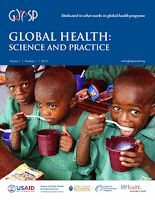
The inaugural issue of the open-access journal Global Health: Science and Practice, is now available here:
http://www.ghspjournal.org/content/current
Below are extracts from the editorials:
'USAID and the Schools of Public Health at JHU and GWU welcome you to the inaugural issue of GHSPan open-access, peer-reviewed journal for the global health community, particularly program implementers, to contribute to and benefit from a dialogue based on science and practical programmatic experience...'Ariel Pablos-Méndez, Michael Klag, Lynn Goldman
'We foresee that public health practitioners, university colleagues, donors, and other development partners will be able to contribute to and benefit from a dialogue based on science and experience of what works for field programs.... GHSP will take a multidisciplinary approach to the science and practice of global health... We look forward to your engagement and feedback.'
Glob Health Sci Pract 2013;1(1):1-2
http://dx.doi.org/10.9745/GHSP-D-13-00012
'Formal research definitely helps. But it is not enough. We also need programmatic know-how, including experience-based knowledge and 'lessons learned.'.James D Shelton, Ronald J Waldman
Glob Health Sci Pract 2013;1(1):3-4
http://dx.doi.org/10.9745/GHSP-D-13-00001
Best wishes,
Neil
My source: HIFA2015
Friday, 15 March 2013
The Breakthrough Prize in Life Sciences & the scope of innovation
A prize that furthers progress in the life sciences is to be welcomed and the winners certainly lauded. Logic would dictate that The Life Sciences Breakthrough Prize and the funding behind it targets the hard sciences: biology, physics and chemistry and the vast and growing number of associated specialist disciplines.
'Life', however, as in living is more than a binary operation - as the FT Weekend editorial notes:
'Life', however, as in living is more than a binary operation - as the FT Weekend editorial notes:
Those eureka ideas
... It would be good to see more daring choices in the future: those outside the well-trodden circuit of university departments and research institutions in the industrialised world.
Breakthroughs in life science go beyond the laboratory to interactions with patients, doctors, public health officials, drug companies and regulators. They should also tap into advances in information technology. ...
(Financial Times - FT Weekend, page 10, 9th - 10th March 2013)
Sunday, 10 March 2013
Space to reflect
2013 could be quite a year for comets, at least in the northern hemisphere.
As we reflect in our studies and at work it is vital to take a breathe and reflect when we can on things otherwordly - Comet PanSTARRS:

Weather permitting after work I will visit Parbold Hill to get a good view of the western horizon.
I've tried on two evenings - 12th - 13th - to spot PanSTARRS without success. There's still time as it moves north. The new moon was quite a sight last evening. Through the binoculars a jet very low down looked like a rocket - the shuttle taking off. Between the low clouds I watched the sun set: cue reflection
APOD archive southern appearance: comets Lemmon & PanSTARRS
Image source: NASA.
As we reflect in our studies and at work it is vital to take a breathe and reflect when we can on things otherwordly - Comet PanSTARRS:
Weather permitting after work I will visit Parbold Hill to get a good view of the western horizon.
I've tried on two evenings - 12th - 13th - to spot PanSTARRS without success. There's still time as it moves north. The new moon was quite a sight last evening. Through the binoculars a jet very low down looked like a rocket - the shuttle taking off. Between the low clouds I watched the sun set: cue reflection
APOD archive southern appearance: comets Lemmon & PanSTARRS
Image source: NASA.
Friday, 1 March 2013
Technology Cancer research to be aided by smartphone game developed at hackathon
From Wired:
 |
| Cancer cell |
Facebook, Google and Amazon Web Services developers will join academics this weekend for a hackathon that will see genetic data provided by Cancer Research UK transformed into a citizen science smartphone game app.
The game, provisionally called GeneRun, will allow the public to look for common changes in genes -- caused by a gain or loss of chromosomes -- that make up breast cancer tumours to help explain what mutations drive the cancer. The idea is to crowdsource scientific investigation that would otherwise take lab workers years to trawl through, and speed up targeted drug invention significantly.
... moreSource: BBC Radio 4 and the above from Wired by Liat Clark.
Monday, 25 February 2013
Finding space in Hay-on-Wye: Complexity & healthcare - book
This time last week I was in Hay-on-Wye the book town on the border of England and Wales. February is still pretty cold, a good excuse to really browse.
Amongst some great finds were three books on complexity in primary care and medicine.
I am sure that the way complexity can be woven within Hodges' model are manifold. On page 4 of Sweeney & Griffiths:
Kieran Sweeney, Frances Griffiths (eds). (2002) Complexity and healthcare: an introduction. Radcliffe Medical Press Ltd.
 |
| complexity and healthcare - book cover |
I am sure that the way complexity can be woven within Hodges' model are manifold. On page 4 of Sweeney & Griffiths:
Using the idea of multidimensional phase space can help us understand categories of disease without clear boundaries. Instead of thinking of a person's illness as a walled off and separate pigeon hole, it can be useful to think of it as a point within a multidimensional illness space.
Kieran Sweeney, Frances Griffiths (eds). (2002) Complexity and healthcare: an introduction. Radcliffe Medical Press Ltd.
Subscribe to:
Posts (Atom)