Showing posts with label creativity. Show all posts

Saturday, 27 September 2014

Rijksmuseum Amsterdam - health in art : art in health

I arrived in Amsterdam last night and spent today, 8 hours in the Rijksmuseum. It is an amazing experience, even to just scratch the surface. Early on it was not busy! Entering the building, is as publicised, to discover a remarkable series of spaces.

There are so many highlights of a rewarding day. One must be within the final hour 1610 finding one of Van Gogh's self portraits. Van Gogh finds himself placed in the interpersonal domain not just by virtue of this self portrait, but his struggle with mental health and  hospitalisations.
individual
INTERPERSONAL : SCIENCES
humanistic ------------------------------------------- mechanistic
SOCIOLOGY : POLITICAL
group
http://www.vangoghmuseum.nl/en


The Anemic Woman
Samuel Dirksz van Hoogstraten [Public domain], via Wikimedia Commons
There were many other (ill-)health related examples (and many that are also bright and humorous).

The sick child. The Sick Woman....

When initially viewing Visiting the Sick you have some searching to do. The sick individual themselves and the doctor are rather lost in the background. The painting stresses the sociological, domestic aspects of health past and present.

In Visiting the Sick and The Anemic Woman we get a view of the way outside (possibly of spiritual significance?) and another room through doorways. From TV, reading and my visit today, this is a common device within Dutch genre painting. If we have a diagnosis now in the 21st century, we still need to look through the windows and doors that relate to the individual and their social situation. In the age of the interface and partitions we still need to negotiate themDoorways, windows and portals as changes in knowledge content, can in the form of care domains illuminate the boundary of what is objective and subjective. This is central in health and social care.


Van Gogh self portrait source:
http://historiek.net/chinezen-zeer-geinteresseerd-in-van-gogh/13217/#.VCb5mRbivTo

The Anemic Woman image source:
http://commons.wikimedia.org/wiki/File:Samuel_van_Hoogstraten_-_The_Anaemic_Lady_-_WGA11719.jpg

Tuesday, 12 August 2014

Disobedient Objects

individual
INTERPERSONAL : SCIENCES
humanistic ------------------------------------------- mechanistic
SOCIOLOGY : POLITICAL
group


personal ethics


objects

social justice


The Victoria and Albert Museum 26 July 2014 – 1 February 2015
Disobedient Objects:
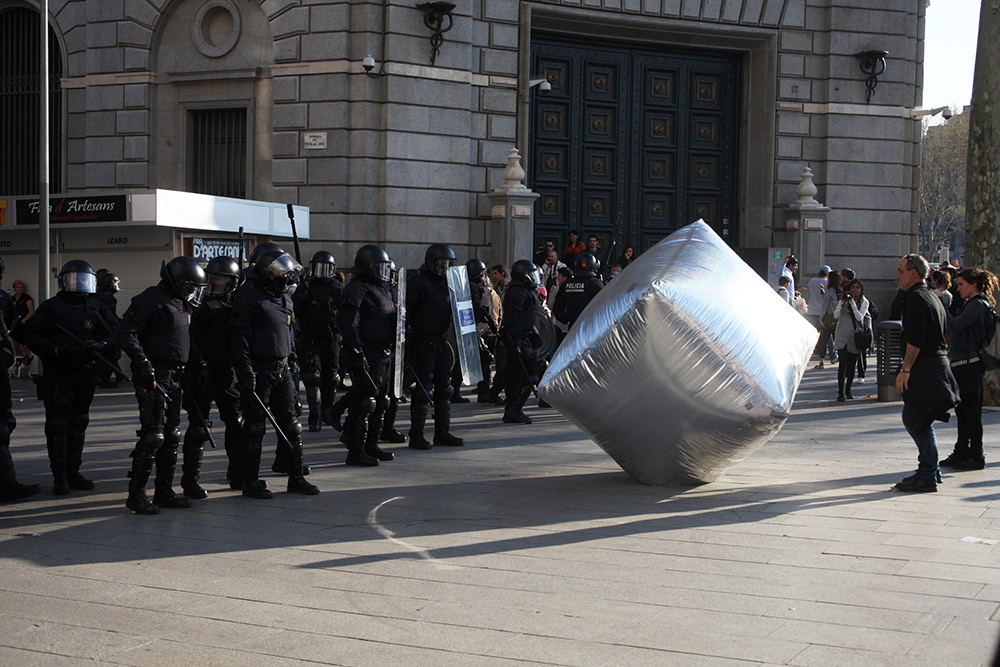
From Suffragette teapots to protest robots, this exhibition is the first to examine the powerful role of objects in movements for social change. It demonstrates how political activism drives a wealth of design ingenuity and collective creativity that defy standard definitions of art and design.

Image source: Inflatable cobblestone, action of Eclectic Electric Collective in cooperation with Enmedio collective during the General Strike in Barcelona 2012.
© Oriana Eliçabe/Enmedio.info

Thursday, 8 May 2014

Interested in writing? [ II ] Hodges' Health Career - Care Domains - Model

In the side bar beneath the bibliography (on a desktop) I've listed a few topics worthy of critical attention. The real need is to link practical application of Hodges' model and further some theoretical underpinnings for the model. This is now happening and it's quite a challenge as I chase questionnaires and write up a draft report for next week. This report is set out as a paper using an author's template from a nursing journal.

Trying to get the message out on writing about this free, holistic bandwidth defining, holistic wrangling, (self-) caring info-portal I blogged an appeal of sorts in 2010. Here we are again. The existing topics in that list relate to the original purposes of the model, plus a few 'extras':
  • reflection;
  • curriculum development;
  • case formulation;
  • holistic care;
  • conceptual spaces
I'll revise the above as a result of this post and ongoing studies at Lancaster University. I will also add the journal to the most recent recovery paper. Expanding on the above for the benefit of anyone interested in using Hodges' model, reflection (as in 2010) is for me the primary purpose of the model.

Reflection: I'm sure that Hodges' model can complement existing and established approaches to reflection. It would be interesting to compare the use of Hodges' model with a control in clinical reflection, reflective practice with a patient/client, and in clinical or managerial supervision. (You see why this is a challenge, and I appreciate it is easy to generate suggestions!)

Curriculum development: If you need a map that incorporates an academic compass (sat-nav even) look no further. Where are the curricula hot-spots and how are they distributed?

Case formulation: There is an existing draft that needs to be revisited at some point, but the scope here is huge in terms of disciplines and applications. As mentioned above it is coming up with questions and research methods.

Holistic care: Is it time to revisit this phrase? Break it apart and put it back together if it still fits?

Is it a damaged good(s)?

Is this a broken currency as it originally did not include the patient as an active participant? Is it one of several linguistic tropes, said in earnest yet what does it mean? How do we measure it? Could there be a role for Hodges' model in defining or measuring it in theory (through the health record) in practice through outcomes that are demonstrably holistic? Does this make sense...? What is this holistic bandwidth that PJ witters on about? Is an informatics metaphor too far, or this a means to a definition?

To conceptual spaces I need to add threshold concepts and there is a literature here for health and social care, something to build upon and post here....

Monday, 5 May 2014

[Itforum] Unique Technology / Assessment Request

The ITForum featured the following post with ongoing discussion and resources related to TEL - technology enhanced learning:

Hello Michael,

When I read your post my thought was that this was a classic example for an adaptive learning module/set of modules. This was a significant concept in the 1970s/1980s when elearning was peaking.

It seems unfortunate that the proliferation of the LMS has all but reduced the learning environment to subject-matter presentation and quizzes.

The recent proclamation of the eLearning Manifesto (http://elearningmanifesto.org) as well as ideas expressed by OULDI (http://www.open.ac.uk/blogs/OULDI/) and my own ideas of Design Alchemy (Sims, 2014) provide alternative ways of thinking about elearning. These may assist in re-thinking strategies to achieve your goals.

Roderick Sims, PhD
design alchemist
 
ITFORUM mailing list
http://listserv.lt.unt.edu/mailman/listinfo/
This is a listserv of the Association for Educational Communications and Technology. The focus of this list is instructional and educational technology topics ranging from technology integration through cognitive systems thinking and beyond.


Thanks to R Sims and Ack. ITForum. I have added the link to Sims, 2014 above.

The original question concerned - core competencies required for nursing programs....

Wednesday, 23 April 2014

Interested in writing?

Two items can be readily brought together here: 
----- Forwarded Message -----
From: JS Drummond
To: NURSE-PHILOSOPHY AT JISCMAIL.AC.UK
Sent: Tuesday, 22 April 2014, 18:00
Nursing Philosophy (Post)-Graduate Student Essay Prize
Hi Folks,

To interested parties, there is still time to submit an entry for the (Post)-Graduate Student Essay Prize to the Journal, Nursing Philosophy.

Details are on the IPONS website. http://www.ipons.co.uk

Best Wishes,
John Drummond (IPONS)
Sent on behalf of Derek Sellman, Editor, Nursing Philosophy

The latest paper on Hodges' model -

Exploring the Dimensions of Recovery and User Experience

- has progressed to the point were I am awaiting contact from the production office of the International Journal of Person Centered Medicine.

In addition to the (Post)-Graduate appeal with IPONS there may be an opportunity through h2cm. If there are any student nurses and other health care learners interested in models of care and the future, I would be pleased to offer some support on a paper. Perhaps there are personal tutors out there who could also engage? I can't offer a prize, but there is surely a prospect with the journal Advances in Nursing Sciences:
Models of Care for the Future
Vol 38:1 - June 2015
Manuscript Due Date: October 15, 2014
As nations worldwide seek to establish models of care that provide quality and efficiency, nurse leaders are emerging to play a significant role in the development of these models. For this issue of ANS we are seeking manuscripts that provide theoretical underpinnings of creative models of care, as well as evidence that supports their implementation. Manuscripts should be clearly grounded in a nursing perspective; the content can include philosophic, theoretic, empirical or ethical aspects related to the model.
I do have form here - two submissions without success - but the very helpful feedback did result in a publication elsewhere.

With studies of my own I can't write another paper alone, but perhaps I can help others. It's time for me to not just think about the model, but do something with it too. It feels strange finally having questions out there in the field - a small study.

Earlier this week a colleague referred to the model's elegant parsimony. This is definitely a quality of Hodges' model and one that merits exploration with new explorers.

Thursday, 2 January 2014

CfP Visual In-Sights Conference, Newcastle University, June 2014

To: EUROPEAN-SOCIOLOGIST AT JISCMAIL.AC.UK
Sent: Monday, 30 December 2013, 10:24
Subject: CfP Visual In-Sights Conference, Newcastle University, June 2014


Call for Papers/Proposals
Visual In-Sights: Theory, Method, Practice 26-27 June 2014
Newcastle University, Newcastle Upon Tyne, UK
Deadline for Abstracts/Proposals: 31 January 2014

Keynote Speakers:
Marcus Banks (Oxford University)
David Campbell (http://www.david-campbell.org/ )
Sirkka-Liisa Konttinen (Amber Collective)

Organised by the Visualities Research Group at Newcastle University, this interdisciplinary conference aims to bring together an international community of established and emerging scholars, creative practitioners, visual artists and arts-based, community project leaders who research, use and work with visual materials and visual methods. Contributions are invited that demonstrate the cutting edge in research and practice around the multiple spaces of the visual, and which explore the porous boundary between the theory, method and practice of the visual.

We seek academic papers and/or proposals for multi-media presentations, break-out sessions using arts/performance/installation, contemporaneous fieldwork exercises and workshops, and exhibitive displays. Contributions may speak, but are not limited, to the themes of:
  • Art and Aesthetics
  • Visual Cultures
  • Visualities and Ethics
  • Visual Communication and Visual Practice
Please submit an abstract or artist proposal of up to 250 words to visual.insights AT ncl.ac.uk
by 31 January 2014.

Notifications of acceptance will be sent out on or before 28 February 2014.

Registration http://www.ncl.ac.uk/gps/research/groups/visualities/visual-insights/registration.htm will open on 31 March 2014. The conference fee is £80 (academics), £50 (artists), and £30 (students and unwaged)

For more information please visit:
http://www.ncl.ac.uk/visual-insights/
Enquiries: visual.insights AT ncl.ac.uk

Monday, 23 December 2013

SCNTST - Self Therapy

INTERPERSONAL : SCIENCES
SOCIOLOGY : POLITICAL
individual
Self Therapy
SCNTST


"... Self Therapy 
is designed for the headphones
 not the dance floor, ..."


Hunter-Tilney, L., Life&Arts, FT Weekend November 16-17 2013, p.19.

group - population


Image source: http://renownedforsound.com/index.php/album-review-scntst-self-therapy/

Saturday, 5 October 2013

Friday, 4 October 2013

Thursday, 3 October 2013

two books two islands two doctors - beyond a cappuccino

My uncle Doug (I do miss him) mentioned a book to me when I was some time around 1974. I think I found a copy in their bookcase when the whole family used to visit on a Sunday afternoon.
A decade later 1983, the year before I got married I visited Sorrento and during this holiday took a day trip to Capri.

With my fiancé I found myself walking around the Villa San Michele. The book was The Story of San Michele by Axel Munthe. I don’t recall consciously deciding to go to Anacapri, but I found myself there. It really made an impression on the 24 year old. What an amazing place to be, study, to try to be creative if not grandiose.

I’m sure I read the book after this visit, it dawning on me that this was - not just - that place, but the story too.

In between on holiday in Kefalonia in 1995 and read Captain Corelli’s Mandolin while there. Axel Munthe was a doctor and there’s a doctor in de Bernières’ book.

Two islands, two doctors, two books: fact and fiction and the spaces in between.

Thirty years later it was a lovely experience to take the bus to Anacapri this September and spend some time at San Michele.

Now the mix of history and styles is a bit jarring, but it is still, for me at least, an amazing space to be. The views of the Bay of Naples are stunning.

The light, the air, the sky.

Inspirational.

At some point if I could spend some time there, beyond a cappuccino...


The Bay of Naples - Vesuvius from San Michele 4 Sept 2013

literatureandmedicine

Saturday, 21 September 2013

Health 2.0 Europe 2013: Nurses, registration and £££

This year I've really enjoyed the Health 2.0 Manchester chapter meetings and there's some great evening sessions to follow this northern autumn. In June as I posted on W2tQ I also spent a weekend at the NW Health Hack in Knutsford. 

For several months European Health 2.0 conference has been publicized at the Manchester meetings. I was keen to attend until I saw the registration fee even with a 15% reduction. The fee increased yesterday too as I was reminded by Pascal Lardier on twitter:
@pascal_lardier 19 Sep
Today is the last day to pay less for your ticket to Register here:
I retweeted the above and replied to Pascal and Health2eu, telling them what they already know - Health 2.0 rocks! but adding that I thought few nurses would be able to afford the registration fee.

NW Health Hack was a success for me (in addition to our group coming 3rd) because it was free, apart that is from driving there over the weekend on my days off (thanks again to all the sponsors). As the NHS is trying to save money I've also taken some unpaid leave this year.

NHS nurses, like many public sector groups have effectively had a pay cut these past few years. There are other general challenges:
  • Are those nurses who might attend already 'onboard'?
  • Does nursing engagement itself need a health check (what is 'clinical engagement' now)?
  • Much was made of achieving clinical engagement in previous NHS IT projects. How can clinical engagement that reaches nurses be assured now?
  • If (technical) innovation is to be a constant stream, please don't leave the nurses on an island: they can set sail too.
  • Are nurses, like the one writing this, tainted, having been sat on the fence (health care || ICT) for too long?
  • Once projects are established how can nurses, patients and carers stay the course and keep in touch and engaged?
  • As 'NHS clinicians' can nurses participate in initiatives such as the forthcoming Code4Health, or will operational constraints limit their involvement?
  • How are the socio-technical aspects and outcomes measured (hospital vs. home personal use vs. self-care...) ?
  • Is there a golden ratio for the mix of delegates?
  • If there's a strategic partner involved where's the strategy?
Pascal sliced through my query and many of the points above:

19 Sep
- then they should reach out to me!

So if the World Wide Health 2.0 conferences are of interest to you, do as Pascal suggests. New communities can provide new opportunities. Don't just help make your day, help make tomorrow too.

In 2012 the NHS employed 146,075 doctors, 369,868 qualified nursing staff, and 37,314 managers. 
http://www.nhsconfed.org/priorities/political-engagement/Pages/NHS-statistics.aspx#staff

Additional notes 29 Sept:


patients are also asking how can Health 2.0 Europe conference be made more accessible for them ?

they should email me pascal AT health2con.com there is a FREE reg code for them.

Thursday, 12 September 2013

Stayin' Alive - a fun, guided, stigma busting cultural walk and celebration of World Mental Health Day


Dear friends of CoolTan Arts,

We would like to invite you to join us for Stayin' Alive - a fun, guided, stigma busting cultural walk and celebration of World Mental Health Day.

Saturday 12 October 2013, 11.30am-approx 4pm
Start:  Maudsley Hospital, Denmark Hill, SE5 8AZ (outside the main entrance)
Finish: South Bank
Length: 4.8 miles

By taking part in this sponsored walk you will help raise much needed funds for CoolTan Arts, enabling us to support more people with mental distress, through creative arts workshops and self-advocacy training.

This year’s walk theme is ‘Stayin’ Alive’ - exploring the idea of hope. As we walk the route together we will share what inspires us and makes life worth living through talks, discussion, performance and art!  CoolTan Arts have created a Hope Wall to share ideas before the walk: http://cooltanartshopewall.tumblr.com/

How to register for the walk:
There is a registration fee of £5 unwaged, £10 waged.

•    Register Online at www.cooltanarts.org.uk 
•    Call us on 020 7701  2696.
•    Email emmathatcher@cooltanarts.org.uk

Sponsorship:
•    Once you are registered CoolTan Arts can provide you with a sponsorship form.
•    Or, create your own online fundraising page on JustGiving.

Further info:
The Largactyl Shuffle is a guided, stigma-busting cultural walk, designed to encourage mental and physical wellbeing, through art, exercise, humour and history. The walk is named after the oldest anti-psychotic drug Largactil that can have extreme physical side effects including a distinctive shambolic gait, or ‘shuffling’. Largactyl Shuffle walks have been running since 2006 and are designed and led by CoolTan Arts volunteers who entertain walkers with talks and other surprises along the way.

The whole walk is 4.8 miles long and is suitable for people with disabilities and wheel chair users – do as much as you like. Please bring a packed lunch and drinks, wear suitable clothes and sensible footwear. The walk leaders wear orange high-viz vests and rucksacks. Call CoolTan Arts on 07985 658443 if you cannot find the group of walkers on the day.

Tuesday, 30 July 2013

Modeling Outside the Box (MOTB) Workshop

(co-located with MODELS'13 in Miami, Florida, USA, September 30, 2013)

http://cserg0.site.uottawa.ca/modelingoutsidethebox2013

WHAT IS IT?
-----------
Through a series of creativity, lateral thinking, and brainstorming activities, the Modeling Outside the Box (MOTB) workshop will ask participants to think outside the box and imagine different, radical, innovative forms of model-driven engineering (MDE). Participants will be asked to leave behind all their preconceived notions of MDE and to approach the issue of MDE from a different angle. This will be a highly interactive workshop in which facilitators will use tried-and-tested methods for fostering creativity to generate fresh new ideas for MDE. The aim is to avoid the blinkered thinking and tunnel vision that is a natural consequence of any mature discipline. The outcomes will be new connections between people and, hopefully, new ideas that may lead to future research collaborations.

SOUNDS FUN. BUT IS IT FOR ME?
-----------------------------
We are looking for people who are willing to step outside their particular areas of expertise or interest and join with other positive-thinking individuals to imagine alternative futures for MDE. If you have been frustrated with the current state of MDE practice and want to change, then we want you!

SOUNDS LIKE ME. WHERE DO I SIGN UP?
-----------------------------------
We are asking all potential participants to fill in a short 2 page application form
  http://cserg0.site.uottawa.ca/motb13/MOTB13application.doc
and submit it in pdf format via EasyChair
https://www.easychair.org/conferences/?conf=motb2013.
The application form is just meant to ensure a diverse mix of people with a range of experiences are represented as creativity works best when there is diversity. In particular, we are aiming for a mix of senior people and junior people, including students. We encourage both academics and practitioners to join us. We will try our best to accept all applications.

SOUNDS INTERESTING. BUT WILL IT REALLY CHANGE ANYTHING?
-------------------------------------------------------
We cannot promise that the world will change if you come to this workshop.
We can promise that you will meet like-minded individuals, that you will get a chance to have proper conversations with them rather than just listening to presentations, and that your way of thinking will be challenged.

WHO IS BEHIND THIS?
-------------------
Your friendly organizers are Jon Whittle, Nelly Bencomo, and Gunter Mussbacher.
Feel free to contact them at modelingoutsidethebox2013-info@site.uottawa.ca
if you have any questions or just want more information.

PUBLICATION AND COMMITMENT
--------------------------
There will be no presentations or papers in workshop proceedings.
Furthermore, while MODELS’13 allows participants to move between workshops, this is not conducive to creative thinking. We therefore ask applicants to commit to spending the whole day with MOTB.

IMPORTANT DATES
---------------
Deadline for Application: Sunday, August 4, 2013, 23:59:59, Pago Pago, American Samoa time
Notification Sent to Participants: Monday, August 12, 2013
Workshop: Monday, September 30, 2013


I realise this is not models of nursing, and it is a workshop with a specific focus - MDE - it is also rather short notice. The appeal for me is the aims of the workshops and how it encourages a socio-technical approach. I'm sure that h2cm could inform proceedings. Thinking outside the box means you first must identify them.

Saturday, 20 July 2013

Tuesday, 19 February 2013

Every incredible view...

The Shard, London, UK

Every incredible view, whether achieved 
by natural, artificial or conceptual means
relies upon a structure, a framework.


Image source: The view from The Shard
http://www.theviewfromtheshard.com/

Saturday, 9 February 2013

Manet & the art of nursing - never unresolved: (and The Francis report)

Yesterday I travelled to London for a nurse related meeting and used the opportunity from 8pm - 11pm to take in the Manet exhibition at the Royal Academy of Arts. Brilliant! It is a great event. There really is no comparison apart from the very high resolution close examination that our technology makes possible; but then that is a difference experience, a different purpose.

Manet's work at the RA includes paintings that do appear unfinished. Areas of the canvas being unresolved brings home the relationship and dependency of the artist with the subject, and the artist's approach to portraiture. Manet was quite demanding on his subjects apparently and while not completely averse, he did not routinely rely on the new opportunities that photography afforded. Here are some thoughts from the Art Fund website:
'Summer' or 'The Amazon', by Edouard Manet
Manet was a great risk-taker and critics of day rallied against his inconsistent approach, as you will see many of the works seem 'unresolved' or 'unfinished' but one of Manet's great skills was this ability to stop painting at the right moment, and it is this technique which gives the works a sense of movement and life.

Manet once said to his friend Antonin Proust, 'I must be seen whole. Don't let me go piecemeal into the public collections; I would not be fairly judged.' This exhibition, which brings together the largest selection of works by the artist to be exhibited together in a UK museum, is a great opportunity to judge Manet's extraordinary talent as a 'whole'.
In nursing we are accustomed to impatient patients. Many though have no choice but to 'sit' and 'lie'. They are static, not able to walk or run away.

Unconscious patients - we speak to them: redrawing the outlines. Searching verbally where we cannot go, reaching for the centers of personhood. We sculpt them back to their optimal health. Sometimes the brush strokes are urgent, sometimes we improvise with touch.

All the time an ideal: a portrait of care. No matter how busy we are basic nursing care should never remain unresolved.

That part of the canvas is always completed. The outline is integrated. The horizon, foreground, middle and background may be sketchy in the extreme cases, but the real mission critical bases are covered.

What we should never countenance, collude, or indirectly sanction are the cutting of those bases.

If we do the work of art is not just unfinished: it is corrupt.


The Francis Report

Anagram graphic c/o Wordsmith

Manet's 'The Amazon' from: Reproarte.com

Tuesday, 15 January 2013

‘Attentive Writers’: Healthcare, Authorship, and Authority - Call for Papers

 Medical Humanities Research Centre, University of Glasgow, 23-25 August 2013

http://www.gla.ac.uk/schools/critical/research/conferences/attentivewriters/

http://www.gla.ac.uk/schools/critical/research/conferences/attentivewriters/
From nurses, physicians and surgeons to administrators, caregivers, technicians, veterinarians and voluntary sector workers, this conference adopts the term ‘attentive writers’ as evocative of the multitude of both non-professional and professional caregivers – clinical and non-clinical healthcare workers – whose attention to illness might take narrative form. The study of physician-writers was one of the earliest developments in the related fields of Literature and Medicine and the Medical Humanities, with canonical figures such as Conan Doyle, Goldsmith, Keats, Smollett, and William Carlos Williams, receiving much-deserved critical attention. Echoing Rita Charon’s concept of ’attentiveness’, this conference brings this established field of enquiry regarding ‘the physician as writer’ into dialogue with recent calls for a more inclusive approach to the Medical Humanities (i.e. ‘Health Humanities’) and questions the authoritative place of the Western – traditionally male – physician in our explorations of the humanities/health interface.

The relationship between healthcare, authorship and authority will be addressed through three inter-related strands of thematic enquiry: (1) an historical and literary examination of ‘attentive writers’; (2) a more devolved interrogation of the field of Narrative Medicine; and (3) an examination of ‘attentive writing’ as creative practice.

Current Confirmed Plenary Speakers: Professor Rita Charon; Professor Paul Crawford; Further TBA Papers might address, but are not limited to, the following topics:
  • Nurse-writers, physician-writers, surgeon-writers, veterinarian-writers, etc. of any culture, historical period or literary epoch, and/or nurses, physicians, surgeons, and vets as literary subjects
  • Non-clinical healthcare workers (adminstrators, janitors, technicians, etc.) as writers and/or literary subjects
  • The literature of caregiving
  • Gender and medical authority
  • Historical development of medical and literary professionalism
  • The afterlife of Foucault’s ‘medical gaze’
  • Hybrid discourses and genres (the case history, illness narratives, etc.)
  • Narrative Medicine (and, particularly, does it challenge or reinforce the notion of physician as sole author/authority) and related developments in professionalism and education
  • The philosophy of attentiveness in healthcare and creative writing
  • ‘Attentive writing’ as creative practice; including ‘process oriented’ writing practices and those primarily concerned with the creation of aesthetically valuable outcomes.
Abstracts of up to 500 words should be submitted, along with a short biography (no more than 250 words), to arts-attentivewriters at glasgow.ac.uk by 4 March 2013 (note the extended date). Further information for creative writers wishing to make a submission will be announced shortly.

Any queries may also be directed to: megan.coyer at glasgow.ac.uk

Jill Anderson Senior Project Development Officer, Mental Health in Higher Education [My source] 
Join mhhe hub: http://mhhehub.ning.com/ Follow us on Twitter: https://twitter.com/mhhehub 
 <>

It is six years this April of trying to be an 'attentive writer' here on W2tQ, so this sounds a very interesting conference in an apparently fabulous city I have yet to visit. Hodges' model is a great tool to assist in attentiveness and creativity. After the disappointment of the conference in Australia for May I am considering other conference options and writing projects.

Friday, 11 January 2013

Thanks Gerry for pulling some strings

http://www.bbc.co.uk/news/entertainment-arts-20847151
Today it was Gerry Anderson's funeral. I am a child of that generation Thunderbirds, Joe 90, UFO - great TV.

In 2008 I found myself back in my old home town and an old friend from junior school got in touch. One of John's memories regards my dad who passed away in 2003 was the fact that when John came around in the very early 70s my dad would watch Thunderbirds with us too.

It really was family entertainment. Visionary, innovative, humane in its messages and delivery; and like the web today the stories counted. There was humour and human frailty on display too, a great primer for a future mental health nurse.

http://gerryanderson.wikia.com/wiki/Thunderbirds_Are_Go
There are favourite episodes - that featuring Fireflash, the Sidewinder, Sunprobe and Zero X from the film Thunderbirds Are Go that I saw on first release at the cinema.

I acquired a love of film soundtracks from the marriage of music and the action in Thunderbirds. Fusion existed in the 60s. Even before Star Trek arrived in the UK there was hope and optimism for the future.

Thanks Gerry!

Monday, 8 October 2012

Call for Papers: 2nd European Design4Health Conference


I am pleased to [announce] the Call for Papers for the 2nd European Design4Health Conference, which will be held at Sheffield Hallam University, Sheffield, UK from Wed 3rd to Fri 5th July 2013.


The conference provides a platform for dialogue between designers, healthcare professionals, funding bodies, researchers and users. We invite submissions to the conference in the following forms:
  • Abstract submissions: extended abstracts that address the conference themes
  • Exhibition proposals: exhibits of innovative artefacts or systems that make significant progress in design for health
Please visit www.design4health.org.uk for full details.

Kind regards
Kirsty Christer and Dr Alaster Yoxall

Edited from source - JISCMAIL for context (no attachments). PJ

Tuesday, 28 August 2012

Drupalcon Munich 2012 [ii]

I've greatly enjoyed a talk by Mark Boulton before at Drupalcon and as a contributor to LHC@Home this collision of the Internet's birth, Drupal, web design and high energy physics was not to be missed.

I'd heard of the LHC experiments before, but not the fact of there being four [how could I miss that ;-) ].

Mark explained about his work with CERN, the legacy site, the culture and the creation of a new site he has been tasked with in Creating Wonder. The Facet API for search and resort to personas to identify and appreciate the needs of the sites users proved key tools. There is quite a coincidence here in that CERN's user communities reflect the potential audiences I envisage for h2cm. One allied to each of the knowledge domains on the old site:

Students and Teachers (SCIENCES)
General Public and Carers (SOCIOLOGY)
the Patient, Client (Inter- Intrapersonal)
Policy Makers, Managers and Citizens (POLITICAL)

Mark also explained some of the ways he has differentiated content across the CERN community and its organisation. All very helpful advice.

Maintaining the design angle, Morten Birch Heide-Jørgensen delivered Theme < 3 drupal in his usual irascible style.

I r a s c i b l e  here means - 
insightful, Röyale, accessible, singular, commonsensical, inspiring, besuited, and leading edge.

If there is a nightmare in learning Drupal apart from the learning curve and sound of the rolling rock (ppuuussshhh!!), it is the nature of the markup that Drupal currently produces. Morten explained his frustration with the problem of DIV-itis and his resolve to address this producing a theme - Mothership which seeks to get the markup right. There are other ongoing challenges and how they will be resolved in Drupal 8, accessibility and HTML5.

As we contemplate the various processes set to try us, we become accustomed to the notion of 'lead time'. Morten's highlighting the 'time lag' in the latest and greatest HTML and CSS compared with Drupal releases was a very helpful dose of realism.

Mustn't forget Morten's fun delivery - this helps the medicine go down. In addition to the sessions there were many contacts made, people I really do hope to meet again.

More to follow.

Additional link:
BBC 2 Horizon: How Big is the Universe?