Showing posts with label communication. Show all posts

Saturday, 4 October 2014

Bits of information in 2049

individual
INTERPERSONAL : SCIENCES
humanistic ------------------------------------------- mechanistic
SOCIOLOGY : POLITICAL
group
Who?Kill the Moon
1 0
0 1
Dr

Tuesday, 30 September 2014

Bits of information a-cross the centuries - Bad Tidings & The Love Letter

As noted previously on W2tQ the significance of information practically and as a concept is very obvious in health and social care. Not just the debate about assuring privacy and confidentiality of clinical records and professional disclosure, but the meaning of information to an individual. This is assuming that the person concerned has the mental capacity to recognise what a particular circumstance, event, item of news means; and not just this morning, but tomorrow...

A diagnosis, lab result, a date for this procedure or that operation all can be a major source of anxiety and stress.

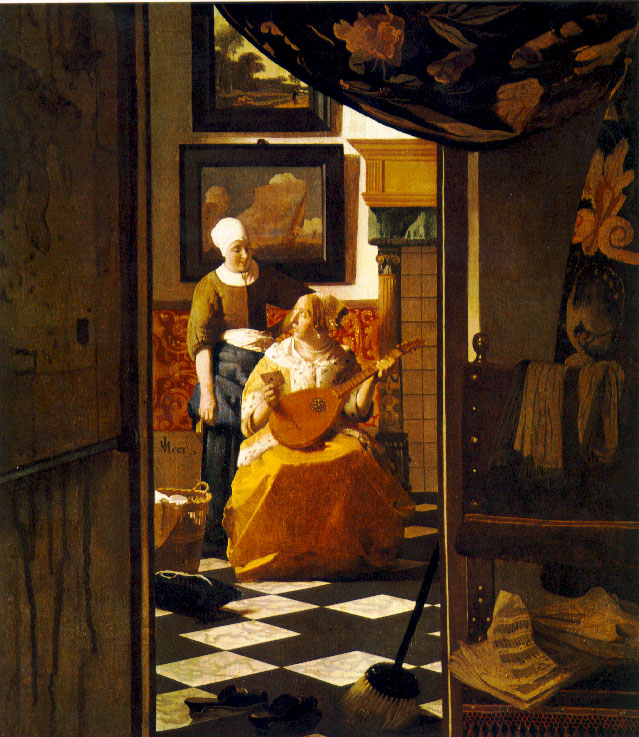
This week's visit to Amsterdam also included a visit to the Stedelijk Museum, where I saw Jobstijding (Bad Tidings), 1932 / Carel Willink (1900-1983). On Saturday I marvelled at Vermeer's The Love Letter and many other great works at the Rijksmuseum. ...

Through art and these works in particular we can contrast the social impact of information, of news - its meaning past and present with our ongoing preoccupation with binary representation and the information age.

Snail mail may be less common and yet the impact of decisions, news, life events ... remains.

individual
INTERPERSONAL : SCIENCES
humanistic ------------------------------------------- mechanistic
SOCIOLOGY : POLITICAL
group

https://www.rijksmuseum.nl/en/collection/SK-A-1595
Vermeer - The Love Letter
1 0
0 1
http://www.stedelijk.nl/en/artwork/3872-de-jobstijding
Carel Willink - Jobstijding (Bad Tidings)

0 1
1 0

Image sources:
The Love Letter, Vermeer
http://www.sai.msu.su/wm/paint/auth/vermeer/vermeer.love-letter.jpg

Jobstijding (Bad Tidings), 1932, Carel Willink (1900-1983)Stedelijk Museum, Amsterdam, The Netherlands

http://www.pinterest.com/pin/567383253025365412/

Sunday, 28 September 2014

ERCIM News No. 99 Special theme: "Software Quality"

Dear ERCIM News Reader,

ERCIM News No. 99 has just been published at
http://ercim-news.ercim.eu/en99

http://ercim-news.ercim.eu/en99Special Theme: "Software Quality"
http://ercim-news.ercim.eu/en99/special/

And on the occasion of ERCIM’s 25th anniversary, we published a selection of articles on the future challenges of ICST:
http://ercim-news.ercim.eu/en99/challenges-for-icst

Keynote by Willem Jonker, CEO EIT ICT Labs: "The Future of ICT: Blended Life"
http://ercim-news.ercim.eu/en99/keynote/the-future-of-ict-blended-life


This issue is also available for download as:
pdfhttp://ercim-news.ercim.eu/images/stories/EN99/EN99-web.pdf
epub: http://ercim-news.ercim.eu/images/stories/EN99/EN99.epub

Next issue: No. 100, January 2015 - Special Theme: "Scientific Data Sharing"

Thank you for your interest in ERCIM News.
Feel free to forward this message to others who might be interested.

Best regards,
Peter Kunz
ERCIM News central editor

------------------------------------------------------------------------
ERCIM "Alain Bensoussan" Fellowship Programme
ERCIM offers fellowships for PhD holders from all over the world.
Next application deadline: 30 September 2014 http://fellowship.ercim.eu/
------------------------------------------------------------------------
ERCIM News
is published quarterly by ERCIM, the European Research Consortium for Informatics and Mathematics.
The printed edition will reach about 6000 readers.
This email alert reaches over 7300 subscribers.
------------------------------------------------------------------------
About ERCIM
ERCIM - the European Research Consortium for Informatics and Mathematics - aims to foster collaborative work within the European research community and to increase co-operation with European industry. Leading European research institutes are members of ERCIM. ERCIM is the European host of W3C.
http://www.ercim.eu/

Follow us on twitter http://twitter.com/#!/ercim_news
and join the open ERCIM LinkedIn Group http://www.linkedin.com/groups/ERCIM-81390

Thursday, 14 August 2014

Paper: Low-cost strategies to improve dementia care

An interest in health and science invites some thought about chaos, complexity and catastrophe theory. These suggest quite a cold - mechanistic - perspective of reality. So trying to think of clinical and nursing examples beyond fluid dynamics, the heart muscle... to more socially oriented applications demands some creative thinking.

In my work within intermediate support in the community for decades my colleagues and I come across cases were husband, wife, partner have looked their significant other to the nth degree. That degree can include hiding the extent of a person's cognitive problems from other family members. Suddenly there is a real catastrophe as the carer is taken acutely ill and hospitalised.

Left at home soon the dependency is revealed. Trying to negotiate care at home can then be a real challenge.

Alternately, when people living with dementia are hospitalised for physical reasons another host of challenges arise.

I've a relative who works over at Warrington General Hospital and it's great to be able to help highlight a paper written by Michelle Beavan their dementia champion and published in Nursing Times:

Beavan M (2014) Low-cost strategies to improve dementia care. Nursing Times; 110: online issue.


Tuesday, 12 August 2014

Disobedient Objects

individual
INTERPERSONAL : SCIENCES
humanistic ------------------------------------------- mechanistic
SOCIOLOGY : POLITICAL
group


personal ethics


objects

social justice


The Victoria and Albert Museum 26 July 2014 – 1 February 2015
Disobedient Objects:
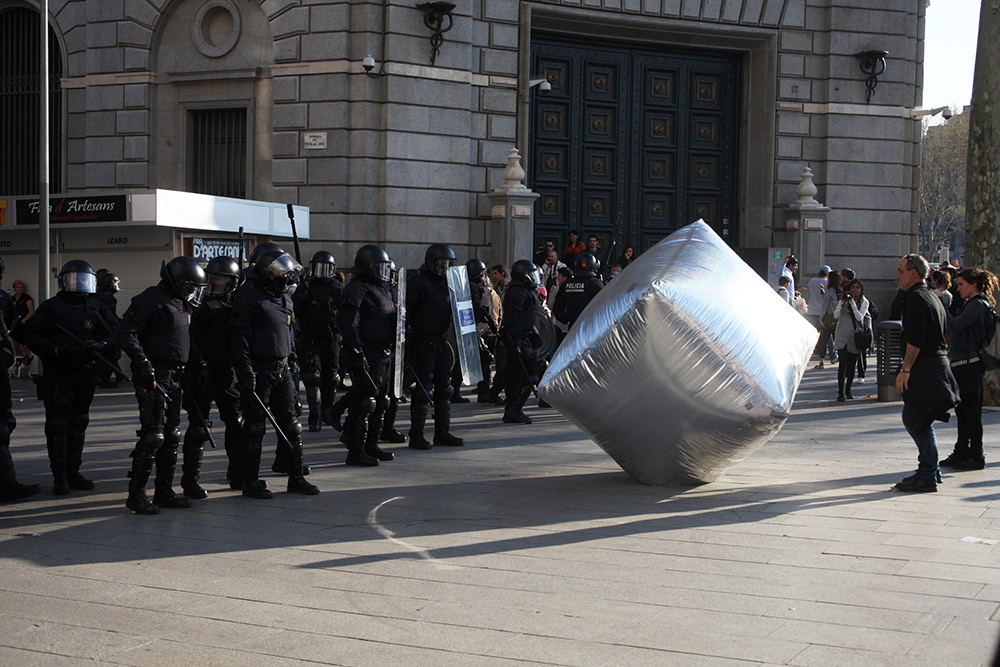
From Suffragette teapots to protest robots, this exhibition is the first to examine the powerful role of objects in movements for social change. It demonstrates how political activism drives a wealth of design ingenuity and collective creativity that defy standard definitions of art and design.

Image source: Inflatable cobblestone, action of Eclectic Electric Collective in cooperation with Enmedio collective during the General Strike in Barcelona 2012.
© Oriana Eliçabe/Enmedio.info

Tuesday, 29 April 2014

Don't RAID on my Care Domains

individual
INTERPERSONAL : SCIENCES
humanistic ------------------------------------------- mechanistic
SOCIOLOGY : POLITICAL
group

Assessment
Person-centred, Holistic, Equality of Esteem in Care, Self-care, Literacies
Rapid
Co-ordination, Speed, Synchronization, Length of Stay, Physical access, Systems
Discharge
Communities of practice, Resources, After-care, Communications, Education
Interface
Policy, Infrastructure, Integration, Choices, Liaison, E-records, Information Sharing


Additional links:

RAPID ASSESSMENT INTERFACE DISCHARGE (RAID) Prof George Tadros

With money in mind: The benefits of liaison psychiatry, MHN

Sunday, 27 April 2014

12th May Lancaster, Workshop: Patient knowledge and involvement in healthcare

An event I am looking forward to: 

Royal Institute of Philosophy Workshop
Storey Institute, Lancaster
Monday 12th May

In recent years great efforts have been made to listen to “patient voices” in healthcare practice, research, and policy, but such initiatives have met with mixed success and many patients continue to feel that their view are overlooked (sometimes despite the best efforts of health care professionals). In this workshop we consider whether and why patient views matter. We ask what factors act to limit the possibilities for communication between patients and professionals, and consider how they might be overcome.
  • 10-10.40 Chaos, conflict and cooperation. Havi Carel, Senior Lecturer in Philosophy, Bristol University
  • 10.40-11.20 Silencing the sick. Ian J. Kidd, Addison Wheeler Fellow in Philosophy, Durham University
  • 11.50-12.30 On trusting and being trusted. Garrath Williams, Senior Lecturer in Philosophy, Lancaster University
  • 2-2.40 Patient advocacy challenged: The case of ME/CFS. Nancy Blake, Patient activist and PhD candidate, Lancaster University
  • 2.40- 3.20 Medical paternalism and the right not to know. Emma Bullock, Postdoctoral Fellow “Concepts of Health”, King’s College London
  • 3.50-4.30 Negotiating as individuals and groups. Rachel Cooper, Senior Lecturer in Philosophy, Lancaster University
Organisers: Ian J. Kidd and Rachel Cooper

Free and open to all, but numbers are limited. To reserve a place please email
Rachel Cooper - on r.v.cooper AT lancaster.ac.uk

Saturday, 19 April 2014

care.data: too much information?

individual
INTERPERSONAL : SCIENCES
humanistic ------------------------------------------- mechanistic
SOCIOLOGY : POLITICAL
group

individual - person
ethics
'personal'
My identity:
 lost in numbers Vs. specificity of patterns
*my attitude to my 'sensitive' information
health literacy
personal responsibility, self care, quantified self
my understanding of care.data
Trust


datasets, BIG data
hospital episodes, treatments
research
privacy research
 anonymising process for nhs data
*care.data is a natural step towards personalised medicine?
axon - neurobiology
Axon - data warehouse
statistics
service development and innovation

data security, law, information governance
NHS
commercial, contract
potential for abuse - assumptions
public mental health
public health
policy, consultation
policy communication
public engagement, primary care
informed consent, opt-out
data definitions, standards
ISO27001
population, insurance


Additional links:
Allyson Pollock - Protecting confidential patient information and promoting public health research. Three proposed amendments to the Care Bill

Building trust in the use of personal data for medical research, 1 April 2014, AMRC

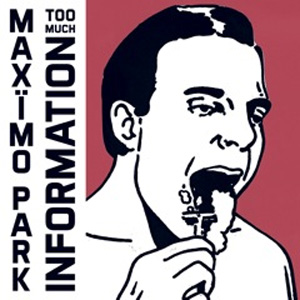
Image source:
http://www.contactmusic.com/press/maximo-park-announce-new-album-too-much-information-released-3rd-february-2014

Tuesday, 18 March 2014

Speaker's corner

INTERPERSONAL : SCIENCES
humanistic ------------------------------------------- mechanistic
SOCIOLOGY : POLITICAL
individual

canto do orador


Le coin de l'auditeur, Rincón del oyente
الزاوية المستمع 听者的角落,
Canto do ouvinte, Listener's corner
音箱的边角


Le coin des haut-parleurs
       الزاوية المتكلم


esquina del orador
Speaker's corner
group - population


Image source: http://rebbls.dk/rebblog/speakers-corner/

Friday, 7 March 2014

Living with Practical Realities, 1978: Courtesy the Artist © Stephen Willats

Within Intermediate Support, Older Adults we are short-staffed at present. I was asked to work this Saturday - tomorrow - but was able to take Wednesday off. This helpfully coincided with a half-day event in Liverpool - Developing (research) proposals for Research for Patient Benefit (RfPB).

In the afternoon I took two hours (with reading to do also) at the Tate, this included:

Keywords: Art, Culture and Society in 1980s Britain

The exhibition included the three photographs displayed below by Stephen Willats. They are usually presented side-by-side. Since the 1970s and 80s the photographs made me wonder about social policy, social care, change and progress.

I was also prompted to recall a visit to a pensioner's club with my nan (maternal grandmother as we called her) in Liverpool in 1969-70.
[Clicking on the photos provides a more legible copy, or see collection link below ].

INTERPERSONAL : SCIENCES
humanistic ------------------------------------------- mechanistic
SOCIOLOGY : POLITICAL
individual

?


group - population

Image source:
Stephen Willats
Living with Practical Realities, 1978
Photographs
Letraset, gouache and ink on card
3 panels, each 109 x 76 cm

Collection: Tate London

Courtesy the Artist
© Stephen Willats

Saturday, 22 February 2014

Call for contributions: 'Interpreting the Information Age' new avenues for research and display

November 24 – 26 2014
Science Museum, London

In autumn 2014, the Science Museum will open a new permanent gallery, Information Age. The gallery will expose, examine and celebrate how information and communication technologies have transformed our lives over the last 200 years. To mark this launch, the Museum is hosting a three day conference which will discuss how the history and material culture of information can be made relevant for today’s audiences.

From the development of global telegraph and computer networks, the creation of constellations of satellites that silently orbit our earth, and the growth of radio, telephony and cellular networks; each technology can be understood through a network of people, practices, devices and infrastructure. Approaches which focus on overly technical histories, individual innovation or inevitable progress fail to acknowledge the role of users in the history of technologies and marginalise a majority of readers or visitors who are engaged by human stories and social history. By contrast, Information Age has taken a user-centric approach, not only in the stories and objects selected for display, but in the way the gallery has been designed and developed. Participation with a diverse range of audiences has been at the heart of the process, providing new avenues for research, fresh perspectives on our collections and original ways to interpret the information networks of which we are all part. We invite papers that include insights from researchers, academics, museum professionals, community partners and participants.

The conference structure is proposed to include:

Day 1: New avenues in the history of information and communication technologies

Day 2: Interpreting and displaying the history of information and communication technologies

Day 3: Reflections on the process and practicalities of participatory practice

We are especially interested in papers that address the following themes, but are happy to consider other proposals. Please contact the organisers for guidance. 

New avenues in the history of information and communication technologies

  • From devices to networks: taking a broader approach to the history of information and communication. How has historical analysis expanded our understanding of information networks as inherently social-cultural phenomena? How can museums move beyond displays of devices, to reveal how networks unite people, places and ideas?
  • User-driven innovation: technological change does not only occur at the moment of invention, but in the hands of users, who adapt and appropriate new technologies. What tools and techniques can we use to reveal previously hidden user stories?
  • Spaces and places of information: How are institutions celebrating the local and global stories in the history of information and communication technology? What partnerships are being formed to support this?

Interpreting and displaying the history of information and communication technologies

  • Collecting information: what are the challenges of collecting the material culture of information and communication? How can opening collecting processes to wider audiences enhance understanding, and what are the benefits for both researchers and the wider public?
  • Displaying information: innovative approaches to the history, present or future of information and communication technologies.
  • Preserving information: the challenges for museums, libraries and archives in preserving our increasingly digital lives.
  • Whose story? As institutions strive to tell the story of information and communication technologies from the perspective of users and co-producers, how can we ensure that we are representing a diverse range of voices? 

Reflections on the process and practicalities of participatory practice

  • Breaking down barriers: what approaches are being taken to ensure museum collections are accessible to wider audiences? What interpretation approaches can be adopted?
  • Collaborative interpretation and design: how are institutions and audiences working together in exhibition development? What are the benefits to the museum, participant and ultimately the gallery visitor? What are the perceived risks to the museum’s authority?
  • Ensuring legacy: how do museums capture the process of participatory practice in a meaningful way? What evaluation methodologies can be adopted? How can museums support partners and participants in the longer-term? 

How to contribute

To submit a proposal, please send a 250 abstract outlining the topic of your paper, along with a 100 word biography, to [ research AT sciencemuseum.ac.uk ] by Friday 28th March 2014.

We welcome proposals which could be delivered either as paper presentations or for consideration as panel discussions with other contributors, along with proposals for workshops which practically address the conference themes.

My source: HUMANIST list

Monday, 27 January 2014

'Intellectual brutalisation' and the saving grace and power of poetry

BBC Radio 4 Today: An eminent cardiologist has organised and funded a poetry competition for his medical students to stop them becoming, in his words, intellectually brutalised.
Gabrielle Gascoigne, pictured, is a previous winner.
The BBC’s Jane Dreaper discovers more.

PBS: For these medical students, poetry nurtures the soul

Here's (source: http://www.bbc.co.uk/programmes/b03s6mdp/live ) the full version of Mastectomy - For His Wife, by Gabrielle Ruth Gascoigne:

It will be an honour
to bathe the scars.
Don’t think my tears imply
an ounce of sorrow -
only joy
could fill my eyes.

It will be a pleasure
to hold you close.
Know this – your precious flesh
calls the bluff on gold
and silver -
makes me a king.

It will be a delight
to talk with you
into the night we thought
stolen, clean away -
until day
renews our hope.

It would be too heartless
if all this love,
these sinner’s prayers and more
should fall to nothing
more than rain
on empty streets.

INTERPERSONAL : SCIENCES
humanistic ------------------------------------------- mechanistic
SOCIOLOGY : POLITICAL

individual
subjectivity
insight, rapport, empathy
emotional control, detachment, engagement
risk of burnout
objectivity
anatomy, physiology         
physicality, processes, mechanistic
intellectual brutalisation
humanistic
communication, relationships
(medic) poetry

funding, crowded curricula
hidden curriculum
group - population

Sunday, 12 January 2014

Book: Thinking as Communicating - Sfard (the intra- interpersonal domain)

Previously I wondered about a term that might combine thinking and the formation and process of mental mapping, the creation of a conceptual map - a mental conceptual geography - cogneography?

Thinking as Communicating
Finding Anna Sfard's 1998 paper this past week led me to her book. The following is from the introduction:
I define thinking as individualized form of interpersonal communication. The disappearance of the time-honored dichotomy is epitomized in the term commognition, which combines communication with cognition. The commognitive tenet implies that verbal communication, with its distinctive property of recursive self-reference, may be the primary source of humans’ unique ability to accumulate the complexity of their action from one generation to another.

Sfard's work will have to go on the 'to read' pile (part-time studies begin tomorrow), but it may help provide ways to understand and unravel the intra- and interpersonal domain within Hodges' model. The mathematical emphasis (even though I may struggle with this) is an added bonus.

Sfard, A. Thinking as communicating: Human development, the growth of discourses, and mathematizing. Cambridge, UK: Cambridge University Press.

Sfard, A. (1998). On two metaphors for learning and the dangers of choosing just one. Educational Researcher, 27(2), pp. 4-13.
http://www.colorado.edu/physics/phys4810/phys4810_fa08/4810_readings/Sfard.pdf