Showing posts with label public engagement. Show all posts

Friday, 19 September 2014

Saturday, 13 September 2014

In political hands person-centred care is a quantum phenomena (entanglement)

individual
INTERPERSONAL : SCIENCES
humanistic ------------------------------------------- mechanistic
SOCIOLOGY : POLITICAL
group
Acute mental health needs
RISK
Self-harm

Local care?
Empowering the individual?
Accessibility
Cognitive distance
Let therapy commence
Continuity
(dist-ress)
Remote policy touch
Organisational (distance) dementia?

threshold  
↘
RISK
 Self-neglect
personal hygiene
domestic environment


local-regional-national? 

metrics: Km or Miles or time?
Gallons or Litres?
Cost?
Illusory savings?

threshold
↓
RISK 
 Harm to others


to integrated care 
multidisciplinary care


     threshold →
Beds

Lintern, S. (2014) Mental health patients sent hundreds of miles for a bed, HSJ, 14 August.

Beds shortage = Gathered Sobs
Mental Health = Lethal Anthem?
Mental health = Lean Halt Them

Bed image:
By kieran jones (http://www.clker.com/clipart-bed-icon.html) [Public domain], via Wikimedia Commons

Thursday, 31 July 2014

NHScitizen twitter chat 6 August 7-8pm #nhscitizen

NHS citizen
C/o Twitter -

@NHSCitizen

If you are on twitter:

Pls RT :) We're having a twitter chat on Wed 6 Aug at 7-8pm for and we'd love you to join
 

(Above link not active at present) 

http://www.nhscitizen.org.uk/

Research Initiative: Test the Impact of a Radio Campaign Addressing Child Mortality

Source:

DEVELOPMENT NETWORKS - The Communication Initiative's Social Networking Space


Introduction and comments:
http://networks.comminit.com/healthcommunication/node/200774


Development Media International (DMI) is conducting a 3-year randomised controlled trial to test the hypothesis that a radio campaign can reduce the large number of children dying before their fifth birthday in Burkina Faso. As detailed at the link below (see Related Summaries), the research involves the broadcast, beginning in March 2012, of health messages using radio spots (60-second adverts) and radio phone-in programmes. With the goal of engaging the public with health issues in order to change behaviours, this is a research initiative to evaluate a public health intervention delivered to 7 randomised geographic areas (clusters) across Burkina Faso with 7 additional clusters being used as controls.

Methodologies: 
 
Supervised by 2 people affiliated with the London School of Hygiene and Tropical Medicine (LSHTM), this independent survey is based on interviews with 5,000 mothers in the 7 intervention zones and 7 control zones halfway into the research intervention period (midline data).

Practices:

....

"For a full summary of the midline results please go to this link where there is also a link to the DMI summary paper."

Saturday, 19 April 2014

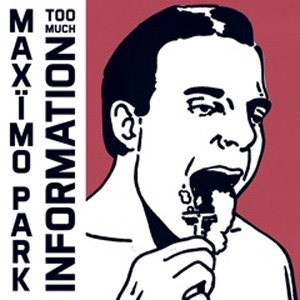
care.data: too much information?

individual
INTERPERSONAL : SCIENCES
humanistic ------------------------------------------- mechanistic
SOCIOLOGY : POLITICAL
group

individual - person
ethics
'personal'
My identity:
 lost in numbers Vs. specificity of patterns
*my attitude to my 'sensitive' information
health literacy
personal responsibility, self care, quantified self
my understanding of care.data
Trust


datasets, BIG data
hospital episodes, treatments
research
privacy research
 anonymising process for nhs data
*care.data is a natural step towards personalised medicine?
axon - neurobiology
Axon - data warehouse
statistics
service development and innovation

data security, law, information governance
NHS
commercial, contract
potential for abuse - assumptions
public mental health
public health
policy, consultation
policy communication
public engagement, primary care
informed consent, opt-out
data definitions, standards
ISO27001
population, insurance


Additional links:
Allyson Pollock - Protecting confidential patient information and promoting public health research. Three proposed amendments to the Care Bill

Building trust in the use of personal data for medical research, 1 April 2014, AMRC

Image source:
http://www.contactmusic.com/press/maximo-park-announce-new-album-too-much-information-released-3rd-february-2014

Tuesday, 18 March 2014

Speaker's corner

INTERPERSONAL : SCIENCES
humanistic ------------------------------------------- mechanistic
SOCIOLOGY : POLITICAL
individual

canto do orador


Le coin de l'auditeur, Rincón del oyente
الزاوية المستمع 听者的角落,
Canto do ouvinte, Listener's corner
音箱的边角


Le coin des haut-parleurs
       الزاوية المتكلم


esquina del orador
Speaker's corner
group - population


Image source: http://rebbls.dk/rebblog/speakers-corner/

Saturday, 22 February 2014

Call for contributions: 'Interpreting the Information Age' new avenues for research and display

November 24 – 26 2014
Science Museum, London

In autumn 2014, the Science Museum will open a new permanent gallery, Information Age. The gallery will expose, examine and celebrate how information and communication technologies have transformed our lives over the last 200 years. To mark this launch, the Museum is hosting a three day conference which will discuss how the history and material culture of information can be made relevant for today’s audiences.

From the development of global telegraph and computer networks, the creation of constellations of satellites that silently orbit our earth, and the growth of radio, telephony and cellular networks; each technology can be understood through a network of people, practices, devices and infrastructure. Approaches which focus on overly technical histories, individual innovation or inevitable progress fail to acknowledge the role of users in the history of technologies and marginalise a majority of readers or visitors who are engaged by human stories and social history. By contrast, Information Age has taken a user-centric approach, not only in the stories and objects selected for display, but in the way the gallery has been designed and developed. Participation with a diverse range of audiences has been at the heart of the process, providing new avenues for research, fresh perspectives on our collections and original ways to interpret the information networks of which we are all part. We invite papers that include insights from researchers, academics, museum professionals, community partners and participants.

The conference structure is proposed to include:

Day 1: New avenues in the history of information and communication technologies

Day 2: Interpreting and displaying the history of information and communication technologies

Day 3: Reflections on the process and practicalities of participatory practice

We are especially interested in papers that address the following themes, but are happy to consider other proposals. Please contact the organisers for guidance. 

New avenues in the history of information and communication technologies

  • From devices to networks: taking a broader approach to the history of information and communication. How has historical analysis expanded our understanding of information networks as inherently social-cultural phenomena? How can museums move beyond displays of devices, to reveal how networks unite people, places and ideas?
  • User-driven innovation: technological change does not only occur at the moment of invention, but in the hands of users, who adapt and appropriate new technologies. What tools and techniques can we use to reveal previously hidden user stories?
  • Spaces and places of information: How are institutions celebrating the local and global stories in the history of information and communication technology? What partnerships are being formed to support this?

Interpreting and displaying the history of information and communication technologies

  • Collecting information: what are the challenges of collecting the material culture of information and communication? How can opening collecting processes to wider audiences enhance understanding, and what are the benefits for both researchers and the wider public?
  • Displaying information: innovative approaches to the history, present or future of information and communication technologies.
  • Preserving information: the challenges for museums, libraries and archives in preserving our increasingly digital lives.
  • Whose story? As institutions strive to tell the story of information and communication technologies from the perspective of users and co-producers, how can we ensure that we are representing a diverse range of voices? 

Reflections on the process and practicalities of participatory practice

  • Breaking down barriers: what approaches are being taken to ensure museum collections are accessible to wider audiences? What interpretation approaches can be adopted?
  • Collaborative interpretation and design: how are institutions and audiences working together in exhibition development? What are the benefits to the museum, participant and ultimately the gallery visitor? What are the perceived risks to the museum’s authority?
  • Ensuring legacy: how do museums capture the process of participatory practice in a meaningful way? What evaluation methodologies can be adopted? How can museums support partners and participants in the longer-term? 

How to contribute

To submit a proposal, please send a 250 abstract outlining the topic of your paper, along with a 100 word biography, to [ research AT sciencemuseum.ac.uk ] by Friday 28th March 2014.

We welcome proposals which could be delivered either as paper presentations or for consideration as panel discussions with other contributors, along with proposals for workshops which practically address the conference themes.

My source: HUMANIST list

Wednesday, 15 January 2014

Book review: Values-Based Commissioning of Health and Social Care

This book was a welcome change from the last review, being quite brief in comparison at 155 pages including the index. This isn't a criticism, it just helps in clearing the decks for other reading and distance learning.

The text is no lightweight, however; and should be mandatory reading for all health and social care personnel. Well maybe not all; but that is part of the problem. The clinical and social care workforce are trained to care. Commissioning (and clinical coding) is something done in another location, by other personnel.

If there is a recurring criticism of public services it is that they are cossetted, protected, removed from many of the financial realities of the world. The book, published in 2012, was written anticipating the structural and financial change brought in by the Coalition government and the need for austerity. Therefore, the public sector and clinical staff are not  immune from the vagaries of finance as might be assumed. For the past couple of years I've witnessed the regular shakes of the sieve and heard of the same within local authorities.

Christopher Heginbotham's book provides the background and tensions of commissioning and delivers much needed insight on several fronts by conjoining what so often seems remote. The lesson of the book for me is how distinct finance and commissioning are. I can sum this up as: if person-centred clinicians are concerned with sense-making for and with patients and their families, then commissioning is the sense-making of the available finance. Viewed this way you see the importance of commissioning.  Clinicians are concerned with evidence-based care, ethics, the health reforms, outcomes, quality, and of course values. Add to this patient involvement and public engagement and you have a read that opens a field that many clinicians dash by as they manage various clinical priorities.

Chapter 1 and 2 set the scene of values-based commissioning, definitions, the fact-value distinction; and the post-Labour NHS. The health reforms (chapter 3) are central to the text, but despite the date of publication which the author acknowledges there is little loss of significance. The health and social care commissioning landscape is still taking shape, outcomes based commissioning (chapter 9) can make the news as implementation is delayed (Williams, 2013). Chapter 4 describes the seven fat years followed by seven lean years; an excellent overview with the major influences at work, The Wanless Reports and Marmot Review for example. It is salutary in these times to see NPfIT as a footnote, with IT benefits still to be accrued (p.32). The need to respond to the public health challenges are noted (chapter 6), as with the potential mental health impact of climate change.

The book's figures and tables are a great asset, very useful to educate student nurses about commissioning, value and values. There are a couple of references to colour (p.72) in what are black and white - grey illustrations. 'Reading' the diagrams you can follow them. The author's background comes across, as with location and mental health experience. The book is I believe relevant to readers across all sectors. Heginbotham also indicates that the book is one of a series by CUP, and points to Fulford et al. as a sibling. There are a couple of repeated words but otherwise the production is excellent.  I was a little surprised to find a catastrophe in the text - catastrophe theory (p.51). It is well deployed in explaining complexity and values. When I say surprised perhaps I would really like to see more on this theme of complexity and emergence, but Mr Heginbotham stays clearly on track.

My bias - Hodges' model - found the following standout points:

http://www.cambridge.org/gb/academic/subjects/medicine/medicine-general-interest/values-based-commissioning-health-and-social-careThe number of sentences and figures that describe the individual, group, community and population (the structure of Hodges' model). The way that values can act as a counterpoint and essential adjunct to evidence (subjective - objective; qualitative - quantitative).

Some situations are more biological than others - in certain sorts of surgery, for example - and some have a much larger values base - such as in psychiatry (p.40).

 Reference to (Cronje and Fullan, 2003):
The medical literature demonstrates an equivocal attitude which suggests a 'collective need to better integrate scientific quantitative data . . . and the art of human judgement . . . into a common definition of "rational" medical practice (p.40).
Figure 7.8 Filtering the evidence through a values-based matrix (values across four care domains?).

The use of models to test the real world and reference to a values space.

I posted previously about the nhm - new holistic model (p.80).
(back to the review..!)

Technical aspects (a law and index) and ethical issues that beset commissioning are introduced (space is limited), and recur helping to integrate the book as a whole. Chapter 5 deals with public involvement and engagement and how it can be enacted. Chapter 7 on integrative commissioning invariably raises patient and service user care pathways.

Is this the Rorschach test for patient, care professional and commissioner: please draw your care pathway? 

The book admirably deals with the ideal and realised in the space available. As such even when there is a linear care pathway it is how it is experienced that counts (values and outcomes...). (It is sadly the person-affirming life-story pathway that is so often lost.) 

Perhaps, this is what I have in mind above in referring to emergence. Despite the existence of care pathways in practice the route in-through health and social care is probably found in a rather chaotic way (sudden care transitions); with delays, placement changes, ward movement(s)-stasis, choices to be taken into account, lack of attendance, missed appointments. ... This is why trying to define pathways may certainly assist, but it is the granularity of those definitions and their experience that snags at our clothes along the way. As Heginbotham advises - care pathways are not something to use in a slavish way. This excellent and well referenced book should provoke and establish interest in this very important health and social care activity. An activity and process that must be informed by the values of the public and those of patients and be more than a process, but realised in shared purposes and practise.

Many thanks to CUP for the copy.

Williams, D. Trust forces delay in outcomes based commissioning plan, Health Service Journal, 6 December 2013. p. 4-5.

Heginbotham, C. (2012) Values-Based Commissioning of Health and Social Care. Cambridge, Cambridge University Press.

Wednesday, 20 November 2013

Consultation on the proposed withdrawal of the SNOMED CT national care planning content

In addition to responding myself, I notice on the actual consultation page on 'Citizen Space' there is an option to share this consultation.

Dear Peter,

You are registered for the care planning content via the HSCIC Technology Reference data Update Distribution website.

The national Care Planning Content is designed for use to support care planning functionality across health and social care. This functionality crosses many professions/sectors which may have differing descriptions for a care plan in the traditional health record (e.g. treatment plans, birthing plans, support plans, intervention plans or care order sets). The content can support the interoperation of care plans across boundaries and paper based care plans based on the pack have also been used successfully to gain greater familiarity with structured terminology (SNOMED CT).

More details at: http://www.infostandards.org/careplanning

The absence of a declared owner or sponsor for this product means that we are proposing to withdraw it and are keen to hear views and understand the impact of not maintaining this content and its associated services.

We have a number of questions to determine how information Standards could best support the development of a standard for care planning, the consultation can be found at:

https://consultations.infostandards.org/bdea/snomed-ct-care-planning/consult_view

- and we would value and encourage your feedback on this proposal.

If you have any questions regarding the above you can contact us by sending an e-mail to information.standards AT hscic.gov.uk. This is the preferred form of communication.

You can also telephone for advice and support. Our telephone number is +44 845 13 00 114
We are available weekdays from 9am to 5pm.

Regards
The TRUD support team
Health and Social Care Information Centre

Friday, 27 September 2013

Budgeting for Public Involvement in Research

Dear Colleagues,

INVOLVE and the Mental Health Research Network teamed up to produce a new resource to help with budgeting for the costs of public involvement in research. It can be used for everything from putting together an involvement budget for an entire study to working out how much it will cost to run a one-off consultation event.

The first part of the resource is a guide which:
  • provides practical advice on what costs are associated with involvement in research
  • includes a step-by-step process for identifying the associated costs and planning the budget
  • presents examples of research projects with well-developed budgets for involvement work
  • contains tips, links to useful websites, and references.
The second part of the resource is an online ‘involvement cost calculator' to work out the costs for your research study.

Please forward this information to your colleagues and networks.

If you have any questions or queries about Budgeting for involvement please contact:

Thomas Kabir
MHRN Service Users in Research Coordinator
Email: thomas.kabir AT kcl.ac.uk
Tel: 0207 848 0609
To find out about INVOLVE visit www.invo.org.uk

To find out more about the Mental Health Research Network visit
www.mhrn.info


My source: Laura Gardner: Research Design Service North West’s e-mail list.

Thursday, 12 September 2013

Stayin' Alive - a fun, guided, stigma busting cultural walk and celebration of World Mental Health Day


Dear friends of CoolTan Arts,

We would like to invite you to join us for Stayin' Alive - a fun, guided, stigma busting cultural walk and celebration of World Mental Health Day.

Saturday 12 October 2013, 11.30am-approx 4pm
Start:  Maudsley Hospital, Denmark Hill, SE5 8AZ (outside the main entrance)
Finish: South Bank
Length: 4.8 miles

By taking part in this sponsored walk you will help raise much needed funds for CoolTan Arts, enabling us to support more people with mental distress, through creative arts workshops and self-advocacy training.

This year’s walk theme is ‘Stayin’ Alive’ - exploring the idea of hope. As we walk the route together we will share what inspires us and makes life worth living through talks, discussion, performance and art!  CoolTan Arts have created a Hope Wall to share ideas before the walk: http://cooltanartshopewall.tumblr.com/

How to register for the walk:
There is a registration fee of £5 unwaged, £10 waged.

•    Register Online at www.cooltanarts.org.uk 
•    Call us on 020 7701  2696.
•    Email emmathatcher@cooltanarts.org.uk

Sponsorship:
•    Once you are registered CoolTan Arts can provide you with a sponsorship form.
•    Or, create your own online fundraising page on JustGiving.

Further info:
The Largactyl Shuffle is a guided, stigma-busting cultural walk, designed to encourage mental and physical wellbeing, through art, exercise, humour and history. The walk is named after the oldest anti-psychotic drug Largactil that can have extreme physical side effects including a distinctive shambolic gait, or ‘shuffling’. Largactyl Shuffle walks have been running since 2006 and are designed and led by CoolTan Arts volunteers who entertain walkers with talks and other surprises along the way.

The whole walk is 4.8 miles long and is suitable for people with disabilities and wheel chair users – do as much as you like. Please bring a packed lunch and drinks, wear suitable clothes and sensible footwear. The walk leaders wear orange high-viz vests and rucksacks. Call CoolTan Arts on 07985 658443 if you cannot find the group of walkers on the day.

Friday, 23 August 2013

HIFA publishes paper in The Lancet Global Health: Governments are legally obliged to ensure adequate access to health information

The Lancet Global Health published a paper on 2nd August 2013 that we can all use in our advocacy to increase the availability and use of healthcare information in low- and middle-income countries. The paper was written by three HIFA Country Representatives for India – Soumyadeep Bhaumik, Tamoghna Biswas, Pranab Chetterjee – together with the HIFA Coordinator, Neil Pakenham-Walsh. The full text is freely available, open-access, here.

Here is a brief extract: ‘Should governments be held responsible for ensuring that every citizen and every health professional has access to the information they need to protect their own health and the health of those they care for? Should governments be held to account for, and to stop, any action that denies the availability of health information, or that misinforms the public or health professionals contrary to scientific evidence? The answers to these questions are yes and yes, as clearly stated in international human rights law.’
My source - above text: HIFA2015

Sunday, 30 June 2013

ForAge International Conference, Budapest 30 Sept - 1 Oct 2013

The Future of Learning for Older People in Europe
Learning from Experience    
30 September – 1 October 2013
Budapest, Hungary


To coincide with the United Nations International Day of Older People on 1 October, the ForAge Grundtvig Multilateral Network is holding a Pan-European Conference to examine trends and developments in learning in later-life and what can be learned from the experience of European initiatives in this field. The programme includes the following topics:
  • The context for later-life learning in 21st Century Europe and the role of ForAge
  • Improving the quality of training of those trying to reach potential older learners
  • The benefits of later-life learning and the supporting evidence
  • Experiences of other European networks as information sources and influencers as well as providing expert opinion about future actions
  • Perspectives from international adult education organisations
  • Emerging issues and the further development of later-life learning
  • Older learners’ perspectives
  • Oral and poster presentations of European Projects on later-life learning

Keynote speakers include:
  • Hungarian Ministry of Human Resources, Department of Social Affairs 
  • Professor Dr László Iván, President of the Hungarian Academy of Elder People
  • Dr Alan Tuckett OBE, President of the International Council for Adult Education (ICAE)
  • Dr Michael Sommer, Infonet coordinator, Akademie Klausenhof, Germany
  • Professor Franz Kolland, University of Vienna, Austria
More details.

Saturday, 16 March 2013

Piloting (online) health literacy - 'easy as she goes?'

On Thursday afternoon I introduced Hodges' model to six student nurses. In wrapping up the session I suggested the students look up 'health literacy' indicating how Hodges' model can incorporate reflections on the many literacies essential for life (and death) in the 21st century. For one student this small kernel of news was unfortunately too late, a piece of work having just been handed in.

Great to see the following item in this week's HSJ - Health literacy training on offer for 100,000:
The NHS Commissioning Board will work with a charity to offer 100,000 people access to training in online health literacy over the next year, it has announced.
The board’s national director for patients and information Tim Kelsey said on Thursday it had made the agreement with UK Online Centres, an organisation which specialises in tackling digital exclusion.
The work comes in the run up to the board’s deadline of 2015 for patients to have access to their GP health records. ...
Health literacy training on offer for 100,000, Health Service Journal. 14 March 2013, p.10.
In terms of health literacy as a whole this is one aspect, but as the previous post point out we need to consider human factors. Innovation  also involves physical and cognitive access, relationships, referral, the interplay and dependencies between existing literacies (poor functional literacy and yet high health literacy?), differentiating between literacies, motivations and to what extent can participants themselves be mobilised as a force for change beyond 100,000 ...?

The Telehealth supplement in the same issue of HSJ notes that small companies struggle when they are offered yet more pilot projects with 30 patients.

100,000 - well that should be a good shot in the arm.

Trueland, J. (2013) The six billion dollar question, Telehealth supplement. HSJ, 14 March, 8-9.

Additional link:
http://www.hsj.co.uk/news/commissioning/kelsey-plans-action-on-health-technology-education/5055974.article

Saturday, 2 March 2013

Citizen 2013 Conference - June (attending)


Jeff Peel has sent you a message.
Subject: You're Invited


On June 13th we'll be holding our annual CITIZEN conference. It will be held at the Park Plaza Westminster Bridge - just across the Bridge from the Palace of Westminster. I was wondering if you'd like to attend as my guest.

CITIZEN 2013 will draw upon the latest thinking in citizen focused service provision and will look at the types of technologies that are emerging that make public bodies better at responding to citizen needs. We’ll look at how traditional interactions need to be embraced, but also web and social media based interactions.

The conference will draw upon the experience of civil servants, policy makers, technologists, bloggers and market watchers. The 2013 event will look in detail at government service provision in an age of austerity, the move from open data to open services, and the ‘digital by default’ agenda.

The event will last all day and we'll provide refreshments throughout the day and a buffet lunch. There will also be a drinks reception at the end of the day.

If you'd like to attend please just reply to this message and provide me with an email address. I'll take care of the rest.

You can also get the latest information about speakers etc. by visiting our Lanyrd page here:
http://lanyrd.com/2013/citizen2013/ - and we'll also be announcing speakers and schedule via the event site at http://citizen2013.com over the next few weeks.

Hope to see you on June 13.

Kind regards,
Jeffrey Peel
www.citizen2013.com

Thursday, 31 January 2013

HealthTap: Invited to add their widget... I asked a question...

No doubt it was a bulk email, but I received an invitation from HealthTap to add their widget here on W2tQ. The widget provides the means to access their service, that of putting questions to medical experts.

I have minimized the side bar content, stripping out buttons and other media paraphernalia and yet suitably intrigued I asked a question - ;-)

Q. Is there a conceptual framework that can help
 assure holistic (physical - mental, social) and integrated care 
that is also person-centered? 

Fourteen hours later news of an answer duly arrived by email:

I believe that Holistic Medicine, when properly practiced, assures all of that. For the principles delineated by the American Holistic Medical Association see http://www.holisticmedicine.org/content.asp?pl=2&sl=22&contentid=22 Also see http://www.abihm.org/general-public Holistic Medicine
I believe that Holistic Medicine, when properly practiced, assures all of that. For the principles delineated by the American Holistic Medical Association see http://www.holisticmedicine.org/content.asp?pl=2&sl=22&contentid=22

Also see http://www.abihm.org/general-public


I greatly appreciate Dr. Randy S. Baker's response and the above links. This is helpful in several respects despite not exactly being the answer I was hoping for.

The answer is itself holistic in a sense in wrapping the question up in an organisational wrapper. That's a safe response, with medicine in there for wholistic measure. Who ever said medicine is reductionist! Judging from his profile holistic medicine is Dr Baker's forte.

Also interesting in the answer is the way the hook in the question was deemed to be the reference to 'holistic' and not the conceptual framework element.

Another point in Dr Baker's reply that reflects on Hodges' model and the health news media in England (UK) next week* is the bit about when properly practiced.

The adoption of Hodges' model is no guarantee of 
person-centered, 
integrated, 
holistic care.

Although the term conceptual framework (Hodge's model !) is not given in the answer: assure is.

What ever conceptual framework (care model, care philosophy...) is adopted to deliver health care, they must contribute towards the assurance of high quality care - that which ultimately positively engages the patient, carer, family and communities.

My question still remains and is usefully extended, passed to the above organisations.

So does the AHMA and the American Board of Integrative Holistic Medicine have a conceptual framework that helps support their holistic objectives and assurance of care? I will contact them to see if I can obtain a further response.

Thanks again to Dr Baker and HealthTap.

* The Francis Inquiry Report is anticipated on Wednesday.

Wednesday, 23 January 2013

In orbit*: Where a model of global health care should be


What platform are you using 
to monitor and positively impact 
the minutiae of care 
and the whole picture?

* and in mind.

On 25 May, NASA's Phoenix lander was 10 kilometres above the surface of Mars and less than three minutes from landing when it was captured passing in front of Heimdall crater by the HiRISE camera on the Mars Reconnaissance Orbiter (MRO).

http://www.nature.com/news/2008/080604/full/453712a/box/1.html
Published online 4 June 2008 | Nature 453, 712-713 (2008) Eric Hand

Additional link:
Phoenix: A tribute

Sunday, 18 November 2012

International Antibiotics Awareness Day

Dear HIFA2015 and CHILD2015 colleagues,

Today is International Antibiotics Awareness Day. The message below is forwarded from the forum of the International Federation of Medical Students Associations (IFMSA), which is a longstanding official HIFA Supporting Organisation.

"Inappropriate use of antibiotics has become a serious threat to public health globally". It is a major cause of needless death and suffering today, and threatens death and suffering on an unimaginable scale in the future. A major contributing factor is lack of access to relibable, unbiased information for prescribers and consumers. Information is either absent, or is restricted to biased marketing materials from big pharma.

I have invited Students Targeting Antibiotics Resistance Today (START) and IFMSA members worldwide to join us to promote a future where every prescriber and user has access to reliable, independent information on medicines, including and especially antibiotics.

A suggested starting point would be to make independent, reliable publications such as the British National Formulary freely available to all on the internet.

Best wishes,
Neil
-----

Today, Nov 18th  is International Antibiotics Awareness day.

What is the problem? Antibiotic resistance is now an everyday problem in hospitals across the globe. The selection and spread of resistant bacteria in hospitals is a major patient safety issue. Infections with antibiotic resistant bacteria increase morbidity and mortality, as well as the length of stay in hospitals. Inappropriate use of antibiotics may increasingly cause patients to become colonised or infected with resistant bacteria. There are few new antibiotics in the development pipeline. As resistance in bacteria grows it will become more difficult to treat infection and this affects patient care

Why do we need an  Antibiotic Awareness Day? The inappropriate use of antibiotics has become a serious threat to public health globally, Taking antibiotics for the wrong reasons or incorrectly causes bacteria to develop resistance against antibiotic treatments with a risk of rendering antibiotics ineffective in the future.

What is the aim of Antibiotic Awareness Day? The aim of European Antibiotic Awareness Day is to emphasis the importance of taking antibiotics responsibly by putting an end to unnecessary use of antibiotics and encouraging people to follow their doctor’s instructions on how to take antibiotics in the appropriate way. The purpose of the day is to build on and reinforce the success of national campaigns on responsible use of antibiotics

Why is responsible use of antibiotics important? Keeping antibiotics effective is everyone’s responsibility. Responsible use of antibiotics can help reverse the growing trend of antimicrobial resistance and keep antibiotics effective for the use of future generations. On this basis, it is appropriate to inform the public, health professionals and carers of the sick, elderly and children about when and how to take antibiotics responsibly.

How can I get involved? Here are several ideas on how to help support this initiative: Spread the word Talk about the International  Antibiotic Awareness Day and its significance with your friends, family, colleagues and your Patients Make use of the materials by advertising the International Antibiotic Awareness Day in newsletters, on websites, in the media and on the Internet, by inserting a link on your website, in your e-mail signature or in your blog. Organise and participate in activities.

LET'S SAVE ANTIBIOTICS FOR THE NEXT GENERATION.

On behalf of Students Targeting Antibiotics Resistance Today (START) Team
Cecilia Kallberg, Jannie Dressler, Oluwasaanu Bunmi Michael.

My source: HIFA2015

Thursday, 8 November 2012

Evidence Bibliography 4 - Public Involvement in NHS, Public Health and Social Care Research

October 2012. References on public involvement in NHS, public health and social care research.
Author: Kristina Staley, TwoCan Associates

invoNET is a network of people working to build evidence, knowledge and learning about public involvement in NHS, public health and social care research.
The invoNET library is an electronic library of references that is available on the invoNET section of the INVOLVE website. The library includes references (reports and articles) that cover:
  • the nature and extent of public involvement in research, for example mapping public involvement
  • the impact of public involvement on research
  • reflections on public involvement in research
It also includes other pieces of work that shed new light or provide a new perspective on public involvement in research.

Source from the link above - my source INVOLVE email.

Tuesday, 2 October 2012

Hodges' model: Lazy data, organisations and domain outreach (HSJ Ack.)

In the (northern) summer Dr Mark Davies (NHS Information Centre) noted that:
We have lots of data but it's lazy data. We have to make it work and turn it into actionable data - data we can do something with.
Interview: The hard data man's soft spot. Health Service Journal, 2 August, 2012. p.17.
There are many ways that we can put data to work. In the interview with HSJ Dr Davies also highlighted the common and not unexpected emphasis upon the organisational views of the world. Here in England in management the current preoccupation is the preparation for April 2013 of clinical commissioning groups. The NHS has an incredible resource in its data. Whether or not the volume involved qualifies as big data is debatable, but in the interview Dr Davies continues:
 Professionals have a duty to measure, to compare and open up their data to scrutiny. "We talk about the purchaser provider split," he says. "But I think that is the wrong purchaser and provider. It is the split between the tax payer and public services that is important. ..." p.17.
I've mapped this to Hodges' model below. You could say that taxation is POLITICAL and it clearly is, but it is also part of what is frequently termed the social contract. For me this is why Dr Davies' views matter.

Looking at the model we can also see the task ahead in the many ways (domains) in which data can be put to work.

INTERPERSONAL : SCIENCES
SOCIOLOGY : POLITICAL

PURPOSE
lazy data (inertia!)
actionable data
(information - knowledge)
public


tax payers
ORGANISATIONS
/                    \
PURCHASER  PROVIDER

(citizens)
public services