Showing posts with label exhibition. Show all posts

Saturday, 27 September 2014

Rijksmuseum Amsterdam - health in art : art in health

I arrived in Amsterdam last night and spent today, 8 hours in the Rijksmuseum. It is an amazing experience, even to just scratch the surface. Early on it was not busy! Entering the building, is as publicised, to discover a remarkable series of spaces.

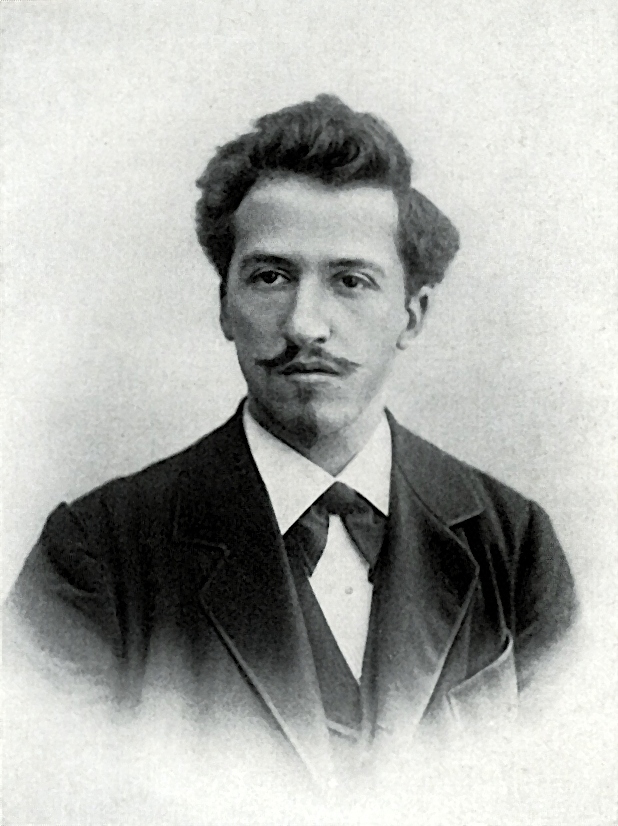
There are so many highlights of a rewarding day. One must be within the final hour 1610 finding one of Van Gogh's self portraits. Van Gogh finds himself placed in the interpersonal domain not just by virtue of this self portrait, but his struggle with mental health and  hospitalisations.
individual
INTERPERSONAL : SCIENCES
humanistic ------------------------------------------- mechanistic
SOCIOLOGY : POLITICAL
group
http://www.vangoghmuseum.nl/en


The Anemic Woman
Samuel Dirksz van Hoogstraten [Public domain], via Wikimedia Commons
There were many other (ill-)health related examples (and many that are also bright and humorous).

The sick child. The Sick Woman....

When initially viewing Visiting the Sick you have some searching to do. The sick individual themselves and the doctor are rather lost in the background. The painting stresses the sociological, domestic aspects of health past and present.

In Visiting the Sick and The Anemic Woman we get a view of the way outside (possibly of spiritual significance?) and another room through doorways. From TV, reading and my visit today, this is a common device within Dutch genre painting. If we have a diagnosis now in the 21st century, we still need to look through the windows and doors that relate to the individual and their social situation. In the age of the interface and partitions we still need to negotiate them.  Doorways, windows and portals as changes in knowledge content, can in the form of care domains illuminate the boundary of what is objective and subjective. This is central in health and social care.


Van Gogh self portrait source:
http://historiek.net/chinezen-zeer-geinteresseerd-in-van-gogh/13217/#.VCb5mRbivTo

The Anemic Woman image source:
http://commons.wikimedia.org/wiki/File:Samuel_van_Hoogstraten_-_The_Anaemic_Lady_-_WGA11719.jpg

Tuesday, 9 September 2014

UK: Health Insights - how innovations support in health and care communities


Hi Peter

We are delighted to introduce our new series of Health Insights. These free to attend events for healthcare professionals feature interactive round table activities, news on how the latest innovations support the health and care community, and best practice experiences from NHS Trust colleagues.

CLICK HERE TO SEE NEW DATES AND LOCATIONS

Starting in Leeds and Newbury this October and held in association with NHS England, each one day conference will feature:

Digital Discovery Sessions

- facilitated round tables exploring procurement issues

An update from NHS England on Tech Funds and Open Source Programme
Host Roy Lilley, popular Healthcare Broadcaster, with lively panel debates

Speakers will include Rob Webster, CEO of NHS Confederation, Tim Straughan, Director of Health and Innovation at Leeds and Partners, and Clive Kay, Chief Executive of Bradford Teaching Hospitals.

REGISTER FREE TODAY

We hope to see you at your local Health Insights.

Kind regards

Samantha Phillips
HIMSS UK

Tuesday, 12 August 2014

Disobedient Objects

individual
INTERPERSONAL : SCIENCES
humanistic ------------------------------------------- mechanistic
SOCIOLOGY : POLITICAL
group


personal ethics


objects

social justice


The Victoria and Albert Museum 26 July 2014 – 1 February 2015
Disobedient Objects:
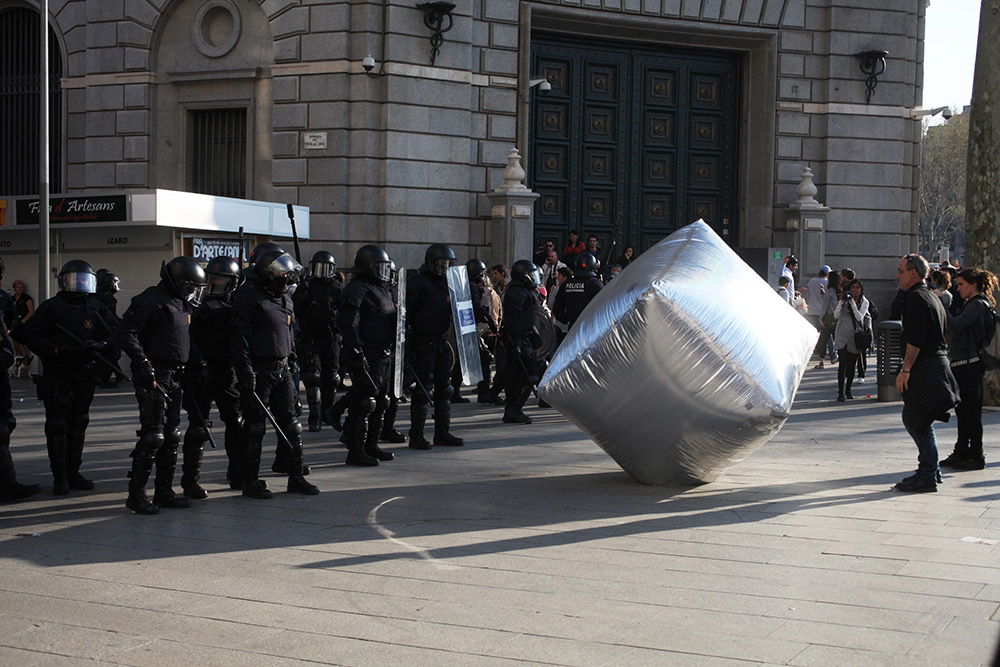
From Suffragette teapots to protest robots, this exhibition is the first to examine the powerful role of objects in movements for social change. It demonstrates how political activism drives a wealth of design ingenuity and collective creativity that defy standard definitions of art and design.

Image source: Inflatable cobblestone, action of Eclectic Electric Collective in cooperation with Enmedio collective during the General Strike in Barcelona 2012.
© Oriana Eliçabe/Enmedio.info

Sunday, 23 March 2014

Sensing Spaces: Care architecture - memories of choice

Good architecture is often invisible,
but it allows whatever is happening in that space to
be the best experience possible.

Pezo von Ellrichshausen


Good architecture may have something in common with good health; it is something that can be taken for granted. When things go awry and are wrong then architecture and health suddenly impose upon us, a major intrusion.

As I may have mentioned before, in the past I've been asked how I've managed entering such and such care facility for so long. Within health there is recognition of heartsink patients. There are still heartsink buildings too. Not purpose built, seemingly either all narrow dark corridors, interrupted when doors let in shafts of light and assault dignity and privacy; or large 'lounges' that still invite armchairs to be flung against walls.

Architecture like this is not invisible. Walls are walls, blanc, flat and solid. Pictures removed due to safety concerns. Two holes and exposed plaster testify to what? Now, after six months....?

Even for the confused there are few potential found spaces, spaces to sit, stand, be; spaces towards which some personal impetus might have a person gravitate. A space of relative quite, looking out on some-thing relaxing even if not a small garden feature.

"Where's Joan, her friend's here to see her?"
"It's OK, I know where she'll be."

Royal Academy: Sensing Spaces
Education guide


Friday, 7 March 2014

Living with Practical Realities, 1978: Courtesy the Artist © Stephen Willats

Within Intermediate Support, Older Adults we are short-staffed at present. I was asked to work this Saturday - tomorrow - but was able to take Wednesday off. This helpfully coincided with a half-day event in Liverpool - Developing (research) proposals for Research for Patient Benefit (RfPB).

In the afternoon I took two hours (with reading to do also) at the Tate, this included:

Keywords: Art, Culture and Society in 1980s Britain

The exhibition included the three photographs displayed below by Stephen Willats. They are usually presented side-by-side. Since the 1970s and 80s the photographs made me wonder about social policy, social care, change and progress.

I was also prompted to recall a visit to a pensioner's club with my nan (maternal grandmother as we called her) in Liverpool in 1969-70.
[Clicking on the photos provides a more legible copy, or see collection link below ].

INTERPERSONAL : SCIENCES
humanistic ------------------------------------------- mechanistic
SOCIOLOGY : POLITICAL
individual

?


group - population

Image source:
Stephen Willats
Living with Practical Realities, 1978
Photographs
Letraset, gouache and ink on card
3 panels, each 109 x 76 cm

Collection: Tate London

Courtesy the Artist
© Stephen Willats

Saturday, 1 March 2014

Drupalcamp London 2014: The Government Digital Service, Drupal 8 Multilingual features, Twig

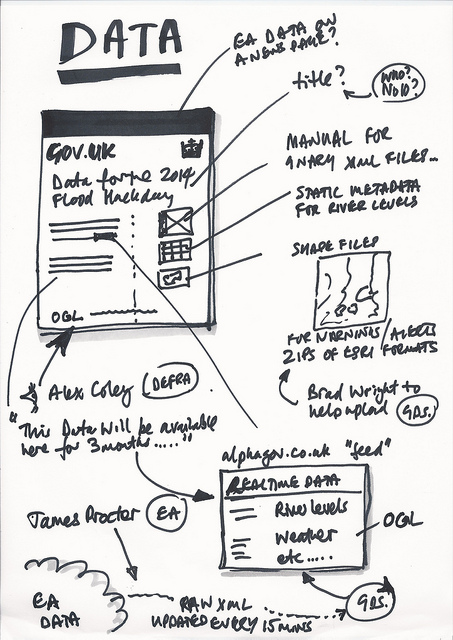
https://gds.blog.gov.uk/2014/02/23/flood-hack-developing-solutions/
Flood hack
DrupalCamp London today got underway with a keynote Delivering User-centred Digital Services by Mark O'Neill from the UK Government Digital Service.

Given the record of public and private sector led IT projects it was refreshing to hear of the GDS's approach being user-centred, the extension of 7 design principles and Mark's previous experience. It's clearly too late for the health care sector to coin and create the Needotron - GDS beat us to it.

Drupal 8 is looking formidable both in its potential and the (learning) stack it presents. Another great session to pick out was - A whole new world for multilingual sites in Drupal 8 by Gábor Hojtsy. The progress here is phenomenal and even though incomplete it is a major achievement and a credit to the Drupal community.

It's humbling as it reminds me to post some introductions to Hodges' model on W2tQ in several languages.

As to being user-centred, the Harmony Forum is a real tease. I know a forum will not moderate itself (is that the new Sorcerer's Apprentice?) and yet time is of the essence. Harmony is one for me to watch - so I'm signed up for the newsletter. Two sessions on Twig and Entities rounded up a busy few days.

This began on Thursday with Cutty Sark, the Royal Greenwich Observatory (learned much from their interactive designs), Turner and the Sea, The British Library - Beautiful Science (60-90 mins ample), and Ibsen's Ghosts at Trafalgar Studios.

I was also able to visit a university yesterday and meet a member of faculty who used Hodges' model many years ago. Here's hoping that some of the materials can be retrieved even though it seems unlikely. I hope to keep in touch with this nursing contact (and not just for the dinner!). I've met several other people here, the Drupal community is another great asset - and with thanks to the sponsors who make these events feasible for many of us.

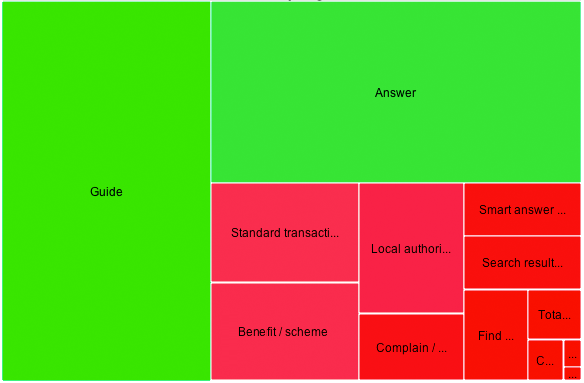
Output from Needotron


I'll end this post back with Mr O'Neill and the GDS.

I wonder to what extent healthcare figured in the flood deliberations?

It seems that an output from the Needotron may not be so far removed from h2cm?

Happy St David's Day too - in the closing minutes here!


Tuesday, 25 February 2014

NW England: Pathways to Health and Wealth 31st March 2014 (4-7pm)

Dear all

As discussed in our meeting, here is the website for the LU Cross Faculty KE event Pathways to Health and Wealth taking place on 31st March 2014 (4-7pm):

http://www.lancaster.ac.uk/healthandwealth/

Please let me or Becky Gordon b.gordon AT lancaster.ac.uk know if you have any queries and please pass on to any of your industry connections who you think might be interested to find out what we do, how we do it and how we can help them do it too!

Thanks, Karen

Dr Karen L Wright
Peel Trust Lecturer in Biomedicine
Faculty of Health and Medicine
Division of Biomedical and Life Sciences
Furness College
Lancaster University
Lancaster LA1 4YG
Email: karen.wright AT lancaster.ac.uk

[ Just to note I have not attended these meetings, the post is copied here to help in a small way with local publicity. PJ ]

Saturday, 22 February 2014

Call for contributions: 'Interpreting the Information Age' new avenues for research and display

November 24 – 26 2014
Science Museum, London

In autumn 2014, the Science Museum will open a new permanent gallery, Information Age. The gallery will expose, examine and celebrate how information and communication technologies have transformed our lives over the last 200 years. To mark this launch, the Museum is hosting a three day conference which will discuss how the history and material culture of information can be made relevant for today’s audiences.

From the development of global telegraph and computer networks, the creation of constellations of satellites that silently orbit our earth, and the growth of radio, telephony and cellular networks; each technology can be understood through a network of people, practices, devices and infrastructure. Approaches which focus on overly technical histories, individual innovation or inevitable progress fail to acknowledge the role of users in the history of technologies and marginalise a majority of readers or visitors who are engaged by human stories and social history. By contrast, Information Age has taken a user-centric approach, not only in the stories and objects selected for display, but in the way the gallery has been designed and developed. Participation with a diverse range of audiences has been at the heart of the process, providing new avenues for research, fresh perspectives on our collections and original ways to interpret the information networks of which we are all part. We invite papers that include insights from researchers, academics, museum professionals, community partners and participants.

The conference structure is proposed to include:

Day 1: New avenues in the history of information and communication technologies

Day 2: Interpreting and displaying the history of information and communication technologies

Day 3: Reflections on the process and practicalities of participatory practice

We are especially interested in papers that address the following themes, but are happy to consider other proposals. Please contact the organisers for guidance. 

New avenues in the history of information and communication technologies

  • From devices to networks: taking a broader approach to the history of information and communication. How has historical analysis expanded our understanding of information networks as inherently social-cultural phenomena? How can museums move beyond displays of devices, to reveal how networks unite people, places and ideas?
  • User-driven innovation: technological change does not only occur at the moment of invention, but in the hands of users, who adapt and appropriate new technologies. What tools and techniques can we use to reveal previously hidden user stories?
  • Spaces and places of information: How are institutions celebrating the local and global stories in the history of information and communication technology? What partnerships are being formed to support this?

Interpreting and displaying the history of information and communication technologies

  • Collecting information: what are the challenges of collecting the material culture of information and communication? How can opening collecting processes to wider audiences enhance understanding, and what are the benefits for both researchers and the wider public?
  • Displaying information: innovative approaches to the history, present or future of information and communication technologies.
  • Preserving information: the challenges for museums, libraries and archives in preserving our increasingly digital lives.
  • Whose story? As institutions strive to tell the story of information and communication technologies from the perspective of users and co-producers, how can we ensure that we are representing a diverse range of voices? 

Reflections on the process and practicalities of participatory practice

  • Breaking down barriers: what approaches are being taken to ensure museum collections are accessible to wider audiences? What interpretation approaches can be adopted?
  • Collaborative interpretation and design: how are institutions and audiences working together in exhibition development? What are the benefits to the museum, participant and ultimately the gallery visitor? What are the perceived risks to the museum’s authority?
  • Ensuring legacy: how do museums capture the process of participatory practice in a meaningful way? What evaluation methodologies can be adopted? How can museums support partners and participants in the longer-term? 

How to contribute

To submit a proposal, please send a 250 abstract outlining the topic of your paper, along with a 100 word biography, to [ research AT sciencemuseum.ac.uk ] by Friday 28th March 2014.

We welcome proposals which could be delivered either as paper presentations or for consideration as panel discussions with other contributors, along with proposals for workshops which practically address the conference themes.

My source: HUMANIST list

Monday, 25 November 2013

Winter Exhibition at Wellcome Trust: Foreign Bodies, Common Ground

INTERPERSONAL : SCIENCES
SOCIOLOGY : POLITICAL
individual


Art in Global Health: Reflections


http://www.wellcome.ac.uk/News/2013/WTP054754.htmThe exhibition brings together artworks including painting, photography, sculpture, film and performance, made during residencies at medical research centres funded by the Wellcome Trust in Kenya, Malawi, South Africa, Thailand, Vietnam and the UK.

The contributing artists were given a simple and wide-ranging brief: to find out about research being undertaken and produce work responding to their investigations. The result is a series of varied, moving and humorous works, recording journeys taken within the complex realm that lies between scientific processes and local communities, often on the frontlines of communicable diseases.
http://www.wellcome.ac.uk/News/2013/WTP054754.htm
"Health issues are usually addressed by women
because of their standing in society.
The question is: how do we bring the
 
men
into the picture?"
Elson Kambalu
About Art in Global Health

‘Global health’ is a phrase we hear more and more frequently. As it attracts more attention it attracts more investment and more research. But what does it mean? ...
group - population


‘Foreign Bodies, Common Ground’ at Wellcome Collection


My source: FT Weekend Magazine

Thursday, 24 October 2013

Arts: "Reflection on a sofa" Hodges' model as a 'memory palace' I

Prior to the New Dynamics in Ageing Showcase this Monday (a great event) I travelled down to London on Sunday morning. I wasn't 100% that morning, nothing specific.

I arrived at noon dropped the bags at the B&B and then took the nine stops from Kings Cross to South Kensington. A few minutes walk brought me to the Victoria and Albert Museum. I was early to collect my timed ticket for the Sky Arts Ignition: Memory Palace exhibition.

After queuing for ten minutes (we Brits eh!) at the proper sign to be told I just had to approach the entrance at the allotted time. I went to check the cafe. This was very nice, on the pricey side and rather busy. It's not easy to find a seat, do self-service and be secure. Anyway it was time for a walk, find somewhere else. Before doing so I went to shop and bought the exhibition book, not a huge tome and quite interesting.

Not far away around the corner I found the Brompton cafe. There were seats here. I ordered a cappucinno. There was a large communal table so I sat there. I was ok for about twenty minutes and then came over all hot and increasingly dizzy. I realised I had to move and quickly so took my jumper off and walked around to the right where there was a bookshop.

It was empty and there was sofa with 'LOVE' emblazoned on it - three times - if I registered this correctly. I could hear the cafe and just see one table through the passage way. At that moment I'd had enough of the individual-group axis and the humanistic-mechanistic took over as I went semi-horizontal.

After a couple of minutes I recovered myself and was able to get up - yes the gyro functions - and carry on my way. I am really grateful for that little space and rest. I was still determined to visit the exhibition and attend the showcase. This was fortunate timing with Sunday the 20th the last day of the exhibition and I wanted to keep it that way.
In the post-apocalyptic world of British author Hari Kunzru’s specially commissioned 10,000 word novella, London has been ravaged by a magnetic storm; all memory, art, writing, and recording has been banned. As one man attempts to remember, alone in his cell, the narrative unfolds.
Zoe Pilger, The Independent - Art review.
“misremembered” ambulance by London-based illustration collective Le Gun
“Once there were great palaces called Hospitals.” In contrast to a dystopian future when the NHS and indeed all medical knowledge has been erased, the idea of basic public services appears miraculous. “It was a time of great wonder,” he writes, referring to the present. This fragment of text is accompanied by a fabulous sculpture of a “misremembered” ambulance by London-based illustration collective Le Gun. A ghoulish figure brandishes a whip and pulls a cart filled with potions that promise ad-hoc, alchemical healing.
Zoe Pilger, The Independent - Art review and image
See page 18-19 of Kunzru’s book.
I started in a memory palace, a book shop. I left to visit another, carrying my own memory palace in my mind.

Hodges' model is a memory palace, vacant, awaiting occupancy by patient, client, or carer. The model acts as a great prompt past, future and the here and now.

Monday, 3 June 2013

Tiles, gates, gems and beds


Hansje van Halem

'On a tile just by the head of my bed, I have placed a list of the ancient gates. It looks like a gold ring, with gems set into it, each a different kind of stone'.


Part of: Memory Palace exhibition at V&A 

More to follow.

Wednesday, 19 December 2012

My coat, Your coat, the Community cloakroom

'Untitled' 2012 (coats, wire, screws), by Jannis Kounellis


"Such wall-mounted three-dimensional pieces seem to me to talk the language of painting rather than sculpture. So does a massive, poignantly flopping black cross created from several navy coats tied together with wire and screws, hung against a wall. Each coat is a human measure, a stand-in for a human presence." p.20.

Wullschlager, J. (2012) Arts: Beauty in a burlap sack, Financial Times, 8-9 December. p. 20.


Bunzl, J. (2001) writes:
"Expressed in terms of a community-building process, we could thus identify the entity of the nation state as representing the equivalent of the individual person: the prime agent through which community or chaos in the world will ultimately be determined." p.20.

Additional link:
Parasol unit (Jannis Kounellis exhibition)

Bunzl, J. (2001) The Simultaneous Policy – An Insider’s Guide to Saving Humanity and the Planet. New European Publications.
Image source:
Wullschlager, J. (2012) Arts: Beauty in a burlap sack, Financial Times, 8-9 December. p. 20.

Tuesday, 11 December 2012

H2CM: the 'title wall'

Museums and other organisations will often use a 'Title Wall' to present an exhibition. I read about this in the current IdN World and as I did thought about the Tate (London and Liverpool) and the visit to the National Gallery last February. The title wall will feature dedicated design, specific use of colour, typography and layout to communicate the promise that is the exhibition inside.

Perhaps Hodges' model is a Title Wall for health and social care?

Immediately, what title are we to use?

To begin with it is "Mrs Moore", until "Jessica - is fine."

The title wall is an invitation for a dialogue with an artist or artists. Hodges' model is an invitation to patient, carer, health professional and student to engage in a care dialogue.

The story still needs to be told whether by an artist or the patient. Listen to the wall. It should say nothing, despite the divide. Self. Other.

Words. Icons. Threaded in time. Often disjoint in mind.

What a job that combines the arts and the sciences - to collaborate in formulating THE BIG PICTURE of a person's health and social care situation.

A museum such as MOMA apparently has an in-house design team.

In-house ... this is our prize.

Can we provide the patient, carer and the general public with the level of health literacy for them to engage in self-care?

Care4grafitti anyone?


Image source: http://www.moma.org/explore/inside_out/tag/ann-temkin

Monday, 8 October 2012

Call for Papers: 2nd European Design4Health Conference


I am pleased to [announce] the Call for Papers for the 2nd European Design4Health Conference, which will be held at Sheffield Hallam University, Sheffield, UK from Wed 3rd to Fri 5th July 2013.


The conference provides a platform for dialogue between designers, healthcare professionals, funding bodies, researchers and users. We invite submissions to the conference in the following forms:
  • Abstract submissions: extended abstracts that address the conference themes
  • Exhibition proposals: exhibits of innovative artefacts or systems that make significant progress in design for health
Please visit www.design4health.org.uk for full details.

Kind regards
Kirsty Christer and Dr Alaster Yoxall

Edited from source - JISCMAIL for context (no attachments). PJ

Friday, 17 August 2012

Context, locus, photos and festival-non-goer (Ack. FT)

In the Financial Times, Life & Arts section, June 23/June 24 2012 Francis Hodgson wrote Hocus-focus about the 15th PHotoEspaña festival.

The curator Gerardo Mosquera introduced the broad theme of the festival -

From Here: Context and Internationalisation

- which Hodgson feels provides 'no secure binder between disaprate elements':
' "Context," he writes opaquely, "has ceased to be a 'closed' locus linked to a reductive concept of what is local; instead it is projected as a space from which international culture is naturally constructed."
Apart from giving a broad hint that pictures will come from around the world, I'm not sure that is much help for a festival-goer.' p.10.
Although I'm a festival-non-goer in this case and my access to the images is limited to the three published in the FT and online, I wonder if a link here is the interposition of local and global? The conurbation that can be described as glocal? This is what that single sentence says to me.

In accord with our economic times the festival website notes that:
PHotoEspaña has cut its budget by 25%. The public-private partnership model has been adapted to ensure a broad-based programme of exhibitions and activities.
In this sense here at least art reflects health care. The reliance on partnership, overcoming constraints whilst providing an experience that coheres.

25%
This context.
One care domain.

Which domain do we cut - the interpersonal, the social, political, the scientific? Do we vary the top-slicing across the domains? In health too we must grasp what is local, global and glocal to us.

Monday, 13 February 2012

Leonardo: models, limbs and spirit


On the 3rd February I headed off to London for the weekend to visit the National Gallery with (two) tickets for the Leonardo exhibition. This was an amazing experience on the Saturday afternoon. The exhibition was small in terms of room sizes and across two floors, but it was very busy and warm even with timed ticketed entry. The show comprised much more than the main exhibits; the drawings, several inspired works by Leonardo's students and audio commentary adding context. Text descriptions and several quotations also proved informative:


A good painter has two main objects to paint, man and the intention of his soul. The former is easy, the latter hard as he has to represent it by the attitude and movement of the limbs.

Leonardo da Vinci


animation by peter jonesAdditional links:

Nursing: Art and Science ... Fra Angelico to Leonardo

Visualization & Diagrams

Catalogue image source:
http://www.nationalgallery.co.uk/products/leonardo_exhibition/leonardo_da_vinci_exhibition_catalogue/p_leonardoEC

Monday, 30 January 2012

A Bigger Picture: David Hockney RA


The same year [2007], he continues, "the RA offered me this whole space, all 10 rooms, for 2011. I took a couple of days to say yes but I said it had to be 2012 - because I needed four springs: first to observe and prepare, then to paint. ..."


My source: Wullschlager, J. Blue-sky painting. FTWeekend, Life & Arts, January 14-15, 2012.  pp. 1-2.