Showing posts with label emotion. Show all posts

Friday, 10 October 2014

WMHD II c/o LSE: Investing in crisis care for people with schizophrenia makes moral and economic sense

“When someone has a mental health crisis, it is distressing and frightening for them as well as the people around them. Urgent and compassionate care in a safe place is essential – a police cell should never need to be used because mental health services are not available. For me, crisis care is the most stark example of the lack of equality between mental and physical health.” 
(The Rt Hon Norman Lamb MP, Care and Support Minister)
There is a strong moral and economic case for investing in innovative approaches that support people with schizophrenia to live independently in the community. Crisis resolution and home treatment teams and crisis houses can help reduce the need for expensive hospital admissions with some studies suggesting that the costs of care can be reduced by up to 30% through these service models. There is a clear potential for Clinical Commissioning Groups to make better use of their resources by investing in home treatment teams and crisis houses as approaches to crisis resolution.
My source: The London School of Economics and Political Science, Health and Social Care blog email

Hodges' model in recovery ...
Jones P. (2014) Using a conceptual framework to explore the dimensions of recovery and their relationship to service user choice and self-determination. International Journal of Person Centered Medicine. Vol 3, No 4, (2013) pp.305-311.

Tuesday, 30 September 2014

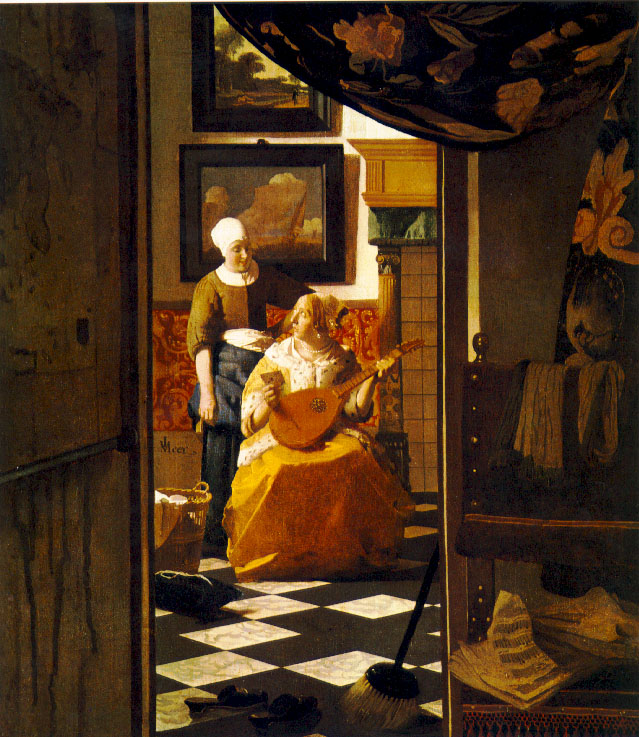
Bits of information a-cross the centuries - Bad Tidings & The Love Letter

As noted previously on W2tQ the significance of information practically and as a concept is very obvious in health and social care. Not just the debate about assuring privacy and confidentiality of clinical records and professional disclosure, but the meaning of information to an individual. This is assuming that the person concerned has the mental capacity to recognise what a particular circumstance, event, item of news means; and not just this morning, but tomorrow...

A diagnosis, lab result, a date for this procedure or that operation all can be a major source of anxiety and stress.

This week's visit to Amsterdam also included a visit to the Stedelijk Museum, where I saw Jobstijding (Bad Tidings), 1932 / Carel Willink (1900-1983). On Saturday I marvelled at Vermeer's The Love Letter and many other great works at the Rijksmuseum. ...

Through art and these works in particular we can contrast the social impact of information, of news - its meaning past and present with our ongoing preoccupation with binary representation and the information age.

Snail mail may be less common and yet the impact of decisions, news, life events ... remains.

individual
INTERPERSONAL : SCIENCES
humanistic ------------------------------------------- mechanistic
SOCIOLOGY : POLITICAL
group

https://www.rijksmuseum.nl/en/collection/SK-A-1595
Vermeer - The Love Letter
1 0
0 1
http://www.stedelijk.nl/en/artwork/3872-de-jobstijding
Carel Willink - Jobstijding (Bad Tidings)

0 1
1 0

Image sources:
The Love Letter, Vermeer
http://www.sai.msu.su/wm/paint/auth/vermeer/vermeer.love-letter.jpg

Jobstijding (Bad Tidings), 1932, Carel Willink (1900-1983)Stedelijk Museum, Amsterdam, The Netherlands

http://www.pinterest.com/pin/567383253025365412/

Saturday, 5 July 2014

i c u

individual
INTERPERSONAL : SCIENCES
humanistic ------------------------------------------- mechanistic
SOCIOLOGY : POLITICAL
group


tears


tears


Avatar image "I see me through your eyes."
te ar s

Wired: Avatar 2, 3 and 4

ICU - Intensive Care Unit
Image: http://i1.ytimg.com/vi/Ek5C0NhnNlA/maxresdefault.jpg

Saturday, 29 March 2014

Amelia: with Human Steps Lalala

INTERPERSONAL : SCIENCES
humanistic ------------------------------------------- mechanistic
SOCIOLOGY : POLITICAL
individual

Just-be


with us


NO!
Be still!
Just-ice
group - population

My source: Sky Arts 1 and Amelia - my grandmother

Monday, 2 December 2013

Book review: "Selfhood"

http://www.amazon.co.uk/SELFHOOD-Emotional-Wellbeing-Prevention-Psychology/dp/1908561009/ref=sr_1_1?s=books&ie=UTF8&qid=1318237775&sr=1-1The vertical axis of Hodges' model denotes the individual and hence the self, the person and the group, the populous. As such when I came across Dr Terry Lynch's book Selfhood it was ideal as a book review candidate.

The book declares itself as a self-help book and clearly and quickly qualifies in this through its content. Section two of the book from page 51 through to page 272 (of 281 in total) is devoted to raising an individual's level of selfhood.

At first I wondered if this was going to be a fuzzy read that might also prove repetitious. I'll explain the latter shortly. The former does not apply, even though the 'self' is a very fuzzy concept especially in the hands of philosophers. Some of the content in section two may well overlap, but amongst self-awareness, self-talk, self-care, self-contact – these contributing components to selfhood are clearly explained.  The book utilises diagrams throughout, from page 3; and these support the text and are used to cross reference material.

Section one on basic principles and concepts fosters a sense of self-regulation for the self-help that the intended readership will pursue. The need to take one’s time with recovery of selfhood is stressed initially, the reader reminded of this through the actions, minimising the perception and occurrence of failure. There is no crash program and pacing is vital, small steps, return to some actions if necessary we are told early on. While not stated explicitly section one helps to foster hope. Although this is a self-help book, resort to a good therapist is mentioned on a couple of occasions. The central risk to the self of suicide is also examined and given due regard in terms of safety.

There is little new in a technical sense for a mental health professional, but the way the ideas are explained is very informative. The diagrams and the metaphors that are sometimes employed are very useful as teaching aids. If you are at the latter stages of your career then self-actualisation (p.258), as ever, and  creativity provides hope. I did wonder about the reading-grammar level and how this might exclude some people. Could this be another project? I enjoyed reading of the need to create a life-long solid level of selfhood (p.40), which also emphasizes the general need for life-long learning. Relating selfhood to overall 'health literacy' might be informative. You will not find assessment and methods here, which is liberating. Assessment is integral to the reflective process but not explicit and process bound as it is in mental health services. This may in itself provide a benchmark for the future progress of 'selfhood' and health literacy?

One thing I am still reflecting upon - is distinguishing between being able to have an overview of the route to selfhood and having a ‘big picture’ – holistic - perspective of ones situation (p.42). This concern resurfaced in the risk of being overwhelmed by the ‘big picture’ (p.45) and here am I wondering about the therapeutic uses of the big picture – as a summariser - ready reckoner for health, social care and recovery. 

As a champion for Hodges’ model I can also identify with the call for a flexible balance between the two poles of self and others and the call to reflect carefully. Action as harmony of action (p.54) amid the frequent chaos of our lives and health care systems is a very helpful definition. If you seek another perspective on self-efficacy there's a lead here. I was struck by the first case study about Craig and his initial wish for self-admission to hospital. I smiled somewhat ruefully at this, considering the changes in the number of NHS beds (-1700 HSJ) even in the brief years since Lynch’s book was written and published in 2011. This stresses the need for self-care and supports the advent of the 'recovery' movement in mental health. 

My previous note regards the literacy level of readers, is obviously a factor as users are encouraged to reflect upon each selfhood component and also write a diary/journal. The spatial definitions of selfhood also engaged me, given my preoccupation with cognitive spaces. This discussion of physical space, self, personal space and self-centredness and the notion of polluted environment in the context of emotions and feelings prompted much reflection.

At the end the reader is invited to read through the text again. I can see how a second pass and one that uses the book as a self-help manual could pay dividends. The self-help quality of the book is clear as after each attribute is described several actions are outlined. There are affirmations for the reader to utilise that are also listed in an appendix. The case histories should assist readers, who seeking to improve or recover their level of selfhood, may identify with at least one of several. The thought about repetition is not surprising as this is self-soup so to speak. There are just short of sixty instances of self-'  ' in the very helpful index.

Ultimately, this is not so much a statement about the book but perhaps the mental health challenge that faces the self in dealing with the other and the world at large. Overall the books 281 pages reveal the rich complexity of a vital concept and contributor to mental health and wellbeing. This is a very practical book which is to say it is an excellent self-help book.

Lynch, T. (2011) SELFHOOD, Limerick, Mental Health Publishing.


Saturday, 16 November 2013

Call for papers: Social Robots: Form, Content, Critique - International Journal of Social Robotics

Dear Humanists,

With the usual apologies for duplications and request for cross-posting to suitable lists and potentially interested colleagues - on behalf of my co-editors:

Call for Papers: Social Robots: Form, Content, Critique
special issue of The International Journal of Social Robotics

Co-editors: Michaela Pfadenhauer (Karlsruhe University / Karlsruhe Institute of Technology), Satomi Sugiyama (Franklin College, Switzerland), Charles Ess (University of Oslo).
 
We invite papers from scholars and researchers across the disciplines (including philosophy, robot ethics, artificial intelligence, cognitive science, media/sociology, information science, art history) that examine and explore social robots through three distinct but inextricably interwoven frameworks:
    http://www.springer.com/engineering/robotics/journal/12369
  • Form/appearance (e.g., human/animal likeness in appearance; everyday media forms and robotic functions; cultural attitudes toward robot forms, etc.)
  • Content/AI/applications (e.g., implications of artificial intelligence in everyday human experiences such as memories, relationships, and conceptions of the self and self-understanding;  applications that shape human-robot interactions; applications of mobile media and their implications in human's robotic experiences, etc.)
  • Critical issues that undergird the above, including; ethics, intimacy, emotions, authenticity, etc.

Paper submission deadline: 1 January 2014
Notification to authors: 1 March 2014
Submission of authors' revised papers: 1 May 2014
Final acceptance: 1 June 2014
(accepted papers will be immediately published at the IJSR webpage with a Digital Object Identifier for citation purposes)
Publication: August, 2014


The call is an outcome of the COST Strategic Workshop on Social Robotic and Sustainability that took place in Brussels, Belgium, on 10-13 June 2013.
http://www.cost.eu/events/socialrobotics

The online submission system is available at:
http://www.editorialmanager.com/soro/
Authors are required to register on the website and to follow the Journal's Instructions for Authors' as provided there.

Many thanks in advance,

- Charles Ess
Professor in Media Studies
Department of Media and Communication
Director, Centre for Research on Media Innovations
http://www.hf.uio.no/imk/english/research/center/media-innovations/

My latest book, Digital Media Ethics, is now available from Polity:
http://www.politybooks.com/book.asp?ref=0745656056

University of Oslo
P.O. Box 1093 Blindern
NO-0317
Oslo Norway
email: charles.ess AT media.uio.no


My source: http://digitalhumanities.org/humanist

Saturday, 8 June 2013

New Scientist: Article on Cotard's syndrome [ and Hodges' model ]

Nine years ago, Graham woke up and discovered he was dead.

He was in the grip of Cotard's syndrome. People with this rare condition believe that they, or parts of their body, no longer exist.

... more
INTERPERSONAL : SCIENCES
SOCIOLOGY : POLITICAL

individual
Cotard's syndrome
Belief    "I am dead"   delusion (or?)
depression      self                                   suicide
 "I have no brain"    theory of mind         consc
psychotherapy           
                senses - taste smell
PET - positron emission tomography
ICD 11 - classification?
 attempts               'default network mode'
iousness          body (parts)        brain function
frontal and parietal lobes  anaesthesia
 low metabolic activity   physiology 
social impact, family, friends, carers
sense making  social understanding
stigma      interview
Jules Cotard (1840–1889), a French neurologist
media      unemployment
quality of life   autonomy   control
research funding      access to treatment
specialist services     referral processes
group - population


Source: New Scientist, 1 June 2013.
Mindscapes: First interview with a dead man

Wikipedia: Cotard delusion

Tuesday, 24 July 2012

Olympic Torches, History and Nostalgia for the Light


I never got to see the Olympic torch procession,  although I crossed its path on a couple of occasions.

This for me has much significance    +

In Euxton, Lancashire and more recently I found myself ahead of the relay in Oxford.


I saw a torch at the Disability Awareness Day in Warrington.


A prized possession: a keepsake of a lifetime.


Image source: http://www.warringtonguardian.co.uk/news/9825966.Disability_Awareness_Day_marks_21st_event_with_Olympic_glow/


Over the weekend I went to see the film - Nostalgia for the Light. A documentary that is simultaneously challenging, troubling, poetic and beautiful. A journey through history in its multiple forms; astronomy, and archaeology - ancient and modern. The setting is the Atacama desert. The astronomers using various telescopes explore celestial bodies, taking advantage of the elevation and transparency of the sky. The extremely low humidity that also supports such observations also preserves human bodies. Not just those thousands of years old, but human bodies from more recent times. Those of Chile's "disappeared" those who have been found and those still lost to their families.

Skeletons abounded. Ancient mummies, more recent explorers and miners. I noticed how these skeletons can give up their secrets from belongings, clothing, identified by relatives.

How telescopes themselves are skeletized in their design to save weight, cost. Today the affluent can purchase a skeletized watch - to make a statement. Mechanism. To mark their personal history. History.

What legacy? What cost? 

Around the world : dictatorship.

The search of the few for the many against the sun and the turn of stars.
Light seeking light, seeking peace and a final release.

Monday, 13 February 2012

Leonardo: models, limbs and spirit


On the 3rd February I headed off to London for the weekend to visit the National Gallery with (two) tickets for the Leonardo exhibition. This was an amazing experience on the Saturday afternoon. The exhibition was small in terms of room sizes and across two floors, but it was very busy and warm even with timed ticketed entry. The show comprised much more than the main exhibits; the drawings, several inspired works by Leonardo's students and audio commentary adding context. Text descriptions and several quotations also proved informative:


A good painter has two main objects to paint, man and the intention of his soul. The former is easy, the latter hard as he has to represent it by the attitude and movement of the limbs.

Leonardo da Vinci


animation by peter jonesAdditional links:

Nursing: Art and Science ... Fra Angelico to Leonardo

Visualization & Diagrams

Catalogue image source:
http://www.nationalgallery.co.uk/products/leonardo_exhibition/leonardo_da_vinci_exhibition_catalogue/p_leonardoEC