Showing posts with label images. Show all posts

Saturday, 27 September 2014

Rijksmuseum Amsterdam - health in art : art in health

I arrived in Amsterdam last night and spent today, 8 hours in the Rijksmuseum. It is an amazing experience, even to just scratch the surface. Early on it was not busy! Entering the building, is as publicised, to discover a remarkable series of spaces.

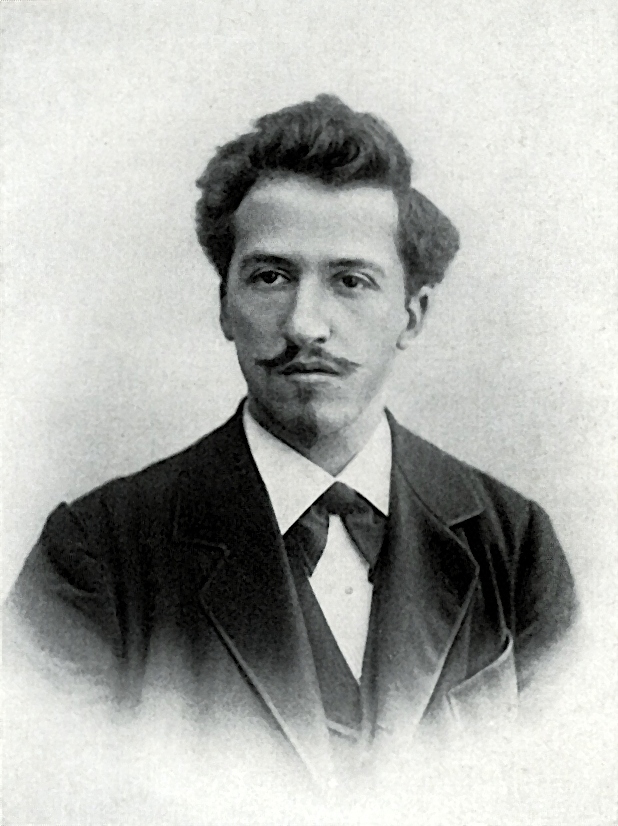
There are so many highlights of a rewarding day. One must be within the final hour 1610 finding one of Van Gogh's self portraits. Van Gogh finds himself placed in the interpersonal domain not just by virtue of this self portrait, but his struggle with mental health and  hospitalisations.
individual
INTERPERSONAL : SCIENCES
humanistic ------------------------------------------- mechanistic
SOCIOLOGY : POLITICAL
group
http://www.vangoghmuseum.nl/en


The Anemic Woman
Samuel Dirksz van Hoogstraten [Public domain], via Wikimedia Commons
There were many other (ill-)health related examples (and many that are also bright and humorous).

The sick child. The Sick Woman....

When initially viewing Visiting the Sick you have some searching to do. The sick individual themselves and the doctor are rather lost in the background. The painting stresses the sociological, domestic aspects of health past and present.

In Visiting the Sick and The Anemic Woman we get a view of the way outside (possibly of spiritual significance?) and another room through doorways. From TV, reading and my visit today, this is a common device within Dutch genre painting. If we have a diagnosis now in the 21st century, we still need to look through the windows and doors that relate to the individual and their social situation. In the age of the interface and partitions we still need to negotiate them.  Doorways, windows and portals as changes in knowledge content, can in the form of care domains illuminate the boundary of what is objective and subjective. This is central in health and social care.


Van Gogh self portrait source:
http://historiek.net/chinezen-zeer-geinteresseerd-in-van-gogh/13217/#.VCb5mRbivTo

The Anemic Woman image source:
http://commons.wikimedia.org/wiki/File:Samuel_van_Hoogstraten_-_The_Anaemic_Lady_-_WGA11719.jpg

Tuesday, 12 August 2014

Disobedient Objects

individual
INTERPERSONAL : SCIENCES
humanistic ------------------------------------------- mechanistic
SOCIOLOGY : POLITICAL
group


personal ethics


objects

social justice


The Victoria and Albert Museum 26 July 2014 – 1 February 2015
Disobedient Objects:
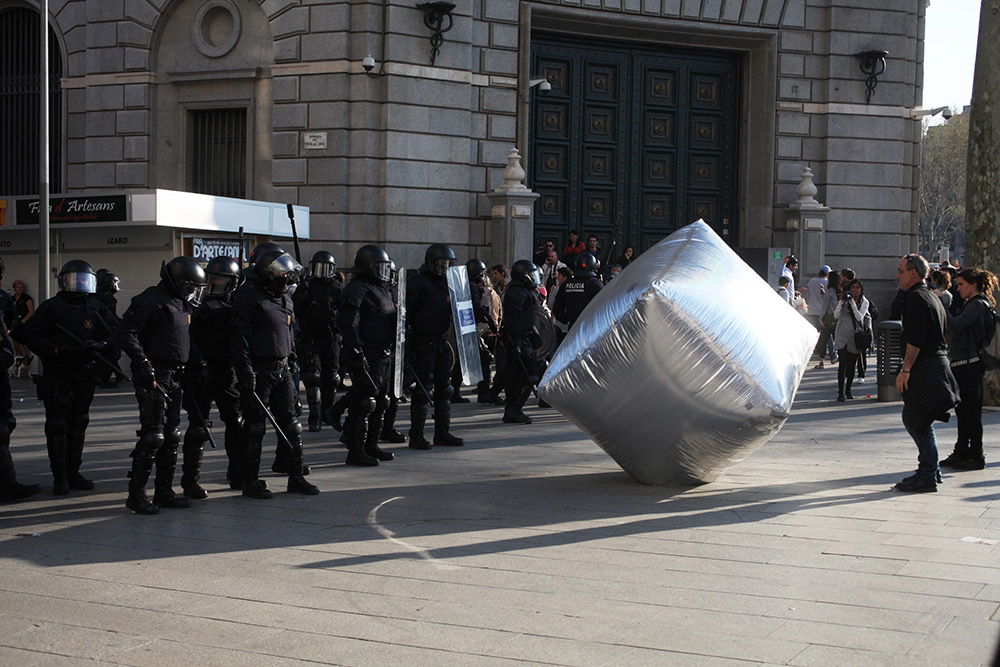
From Suffragette teapots to protest robots, this exhibition is the first to examine the powerful role of objects in movements for social change. It demonstrates how political activism drives a wealth of design ingenuity and collective creativity that defy standard definitions of art and design.

Image source: Inflatable cobblestone, action of Eclectic Electric Collective in cooperation with Enmedio collective during the General Strike in Barcelona 2012.
© Oriana Eliçabe/Enmedio.info

Tuesday, 13 May 2014

Thursday, 20 March 2014

[c/o hipnet] Data Visualization Enthusiast? Join us on the Data Viz Hub!

Dear Colleagues

The recently launched Data Viz for Development Hub [http://datavizhub.co] is a vibrant community for sharing resources, tools, examples, and ideas about data visualization. Using graphs, charts, maps, tables, infographics, and other visualizations can improve how we communicate information to stakeholders and the larger development community. With a wealth of resources available, and a growing interest across international development practitioners to build effective visualizations, the Hub will help keep communicators, evaluators, developers and others in the know about data viz best practices and new tools, connecting visualizers from all domains of expertise.

Check out the Hub at datavizhub.co, and join the community listserv by emailing:
dataviz AT knowledge-gateway.org with the subject "Join." We look forward to connecting with you about all things data viz!

Questions? Contact Libby Skolnik at libby.skolnik AT jhu.edu

Source: http://www.hipnet.org/

Friday, 7 March 2014

Living with Practical Realities, 1978: Courtesy the Artist © Stephen Willats

Within Intermediate Support, Older Adults we are short-staffed at present. I was asked to work this Saturday - tomorrow - but was able to take Wednesday off. This helpfully coincided with a half-day event in Liverpool - Developing (research) proposals for Research for Patient Benefit (RfPB).

In the afternoon I took two hours (with reading to do also) at the Tate, this included:

Keywords: Art, Culture and Society in 1980s Britain

The exhibition included the three photographs displayed below by Stephen Willats. They are usually presented side-by-side. Since the 1970s and 80s the photographs made me wonder about social policy, social care, change and progress.

I was also prompted to recall a visit to a pensioner's club with my nan (maternal grandmother as we called her) in Liverpool in 1969-70.
[Clicking on the photos provides a more legible copy, or see collection link below ].

INTERPERSONAL : SCIENCES
humanistic ------------------------------------------- mechanistic
SOCIOLOGY : POLITICAL
individual

?


group - population

Image source:
Stephen Willats
Living with Practical Realities, 1978
Photographs
Letraset, gouache and ink on card
3 panels, each 109 x 76 cm

Collection: Tate London

Courtesy the Artist
© Stephen Willats

Monday, 3 March 2014

The limitations of the healthcare sector


4
many
decades there 
have been recurring 
issues, austerity measures, 
requirements, policy challenges, 
policy initiatives, gaps between theory 
and practice, a crisis in compassionate care, 
rising waiting times and a plethora of other concerns.

All these then and much more 
affect the
 healthcare
 sector

Clearly, there is no 'magic wand', but there must be a way to address some of the difficulties? 
Within health and social care, locally, nationally and globally we need a tool to help improve interprofessional reflective practice, to support person-centered, holistic care across physical, emotional, social, political and spiritual domains of care. 

The future demands a resource (free, open, easy to learn) that can also facilitate self-care, health literacy and the many carers within families and communities.
 
So, how big is your picture?


Monday, 30 December 2013

Le Ballet Mécanique (1924, Fernand Leger) & the axes of Hodges' model

INTERPERSONAL : SCIENCES
humanistic ------------------------------------- mechanistic
SOCIOLOGY : POLITICAL

individual
Le Ballet ?


Le Ballet ?


Le Ballet ?

group - population

The Ballet mécanique faq
http://www.antheil.org/faq.html

My source: Budick, A. (2013) Hymn to progress, Life&Arts, FT Weekend, 14-15 December. p.16.

Tuesday, 15 October 2013

ERCIM News No. 95 Special theme: "Image Understanding"

Dear ERCIM News Reader,

ERCIM News No. 95 has just been published at
http://ercim-news.ercim.eu/en95

Special Theme: "Image Understanding"
Guest editors: Michal Haindl, Institute of Information Theory and Automation, Academy of Sciences of the Czech Republic, and Josef Kittler, University of Surrey, UK
http://ercim-news.ercim.eu/en95/special/

Keynote: "Image Understanding – An EU Perspective"
by Libor Král, Head of Unit A2 – Robotics in Directorate General Communication Networks, Content & Technology, European Commission

This issue for download
pdf
: http://ercim-news.ercim.eu/images/stories/EN95/EN95-web.pdf
epub: http://ercim-news.ercim.eu/images/stories/EN95/EN95.epub

Next issue: No. 96, January 2014 - Special Theme: "Linked Open Data"
(see Call at http://ercim-news.ercim.eu/call)

Thank you for your interest in ERCIM News.
Feel free to forward this message to others who might be interested.

Best regards,
Peter Kunz
ERCIM News central editor

------------------------------------------------------------------------
ERCIM "Alain Bensoussan" Fellowship Programme
ERCIM offers fellowships for PhD holders from all over the world. The next round is open!
Next deadline 31 October 2013
http://fellowship.ercim.eu/

Monday, 30 September 2013

Time, History, Technology, Institutions, Transparency and Reflective Practice


Despite the passing of time
refactored as
institutional history
 and
 technical solutions,
reflective practice
and
transparency
in care
remain aspirational.


Image: Sculpture at Prague Congress Center

Thursday, 1 August 2013

The Hundred-Year-Old Man Who Climbed Out the Window and Disappeared

 It all starts on the one-hundredth birthday of Allan Karlsson. Sitting quietly in his room in an old people's home, he is waiting for the party he-never-wanted-anyway to begin. The mayor is going to be there. The press is going to be there. But, as it turns out, Allan is not...Slowly but surely Allan climbs out of his bedroom window, into the flowerbed (in his slippers) and makes his getaway. And so begins his picaresque and unlikely journey involving criminals, several murders, a suitcase full of cash, and incompetent police.
 

As his escapades unfold, we learn something of Allan's earlier life in which - remarkably - he helped to make the atom bomb, became friends with American presidents, Russian tyrants, and Chinese leaders, and was a participant behind the scenes in many key events of the twentieth century. Already a huge bestseller across Europe, The Hundred-Year-Old Man Who Climbed Out of the Window and Disappeared is a fun, feel-good book for all ages.

Image: Sincerely, Anna
Text: Waterstones

Monday, 3 June 2013

Tiles, gates, gems and beds


Hansje van Halem

'On a tile just by the head of my bed, I have placed a list of the ancient gates. It looks like a gold ring, with gems set into it, each a different kind of stone'.


Part of: Memory Palace exhibition at V&A 

More to follow.

Tuesday, 19 February 2013

Every incredible view...

The Shard, London, UK

Every incredible view, whether achieved 
by natural, artificial or conceptual means
relies upon a structure, a framework.


Image source: The view from The Shard
http://www.theviewfromtheshard.com/

Wednesday, 23 January 2013

In orbit*: Where a model of global health care should be


What platform are you using 
to monitor and positively impact 
the minutiae of care 
and the whole picture?

* and in mind.

On 25 May, NASA's Phoenix lander was 10 kilometres above the surface of Mars and less than three minutes from landing when it was captured passing in front of Heimdall crater by the HiRISE camera on the Mars Reconnaissance Orbiter (MRO).

http://www.nature.com/news/2008/080604/full/453712a/box/1.html
Published online 4 June 2008 | Nature 453, 712-713 (2008) Eric Hand

Additional link:
Phoenix: A tribute

Wednesday, 2 January 2013

Personalised care and gravitas (literally)

The Einstein Cross Gravitational Lens
Original Image Credit & Copyright: 
  J. Rhoads (Arizona State U.) et al.

Today's Astronomy Picture of the Day is described as follows:

Most galaxies have a single nucleus -- does this galaxy have four? The strange answer leads astronomers to conclude that the nucleus of the surrounding galaxy is not even visible in this image. The central cloverleaf is rather light emitted from a background quasar. The gravitational field of the visible foreground galaxy breaks light from this distant quasar into four distinct images. The quasar must be properly aligned behind the center of a massive galaxy for a mirage like this to be evident. The general effect is known as gravitational lensing, and this specific case is known as the Einstein Cross. ...

Health care problems can weigh very heavy on the individual affected by them and their loved ones. To deliver personalised care we first need to resolve the four care domains (five including the spiritual). If personalised care is to be realised (aligned and integrated) in practice and not just two words in policy (political lensing), then we need to remember personalised care can be an illusion in itself.

Additional post:
Person centred care, wormholes, pesterers, care domains (iii)

Saturday, 17 November 2012

The Bigger Picture - Hockney: Hodges' model 4 dynamic perspectives


In the decades to follow the patient, the carer, the health and social care professional must all be dynamic. All must be capable of movement - that is taking in several perspectives. As always composition is vital. So is choreography. As Hockney indicates the picture comprises both ordinary perspective and reverse perspective.


If static, found only for a moment: an assessment, plan, evaluation. A snapshot. Then moving a-gain.

Ever seeking the dynamic.
 
Acknowledgement: David Hockney


My source:
'The mass media has lost its perspective'.
David Hockney, The Financial Times, Page 11, October 27-28, 2012 

Image source:
http://www.tumblr.com/tagged/a-bigger-picture

Additional post:
http://hodges-model.blogspot.co.uk/2012/01/bigger-picture-david-hockney-ra.html

Friday, 17 August 2012

Context, locus, photos and festival-non-goer (Ack. FT)

In the Financial Times, Life & Arts section, June 23/June 24 2012 Francis Hodgson wrote Hocus-focus about the 15th PHotoEspaña festival.

The curator Gerardo Mosquera introduced the broad theme of the festival -

From Here: Context and Internationalisation

- which Hodgson feels provides 'no secure binder between disaprate elements':
' "Context," he writes opaquely, "has ceased to be a 'closed' locus linked to a reductive concept of what is local; instead it is projected as a space from which international culture is naturally constructed."
Apart from giving a broad hint that pictures will come from around the world, I'm not sure that is much help for a festival-goer.' p.10.
Although I'm a festival-non-goer in this case and my access to the images is limited to the three published in the FT and online, I wonder if a link here is the interposition of local and global? The conurbation that can be described as glocal? This is what that single sentence says to me.

In accord with our economic times the festival website notes that:
PHotoEspaña has cut its budget by 25%. The public-private partnership model has been adapted to ensure a broad-based programme of exhibitions and activities.
In this sense here at least art reflects health care. The reliance on partnership, overcoming constraints whilst providing an experience that coheres.

25%
This context.
One care domain.

Which domain do we cut - the interpersonal, the social, political, the scientific? Do we vary the top-slicing across the domains? In health too we must grasp what is local, global and glocal to us.

Wednesday, 8 August 2012

Ways of Seeing John Berger - Conference

5-8 September 2012
King’s College London, Strand, London WC2

2012 marks the 40th Anniversary of two of John Berger’s major works: the novel G, winner of the Booker and James Tait Black Memorial Prizes, and the collaborative, SFTA/BAFTA-winning BBC TV series and book Ways of Seeing.

In celebration, the Centre for Life-writing Research at King's College London, and the Department of English and Drama at the British Library - home, since 2009, to the major collection of Berger’s papers - are holding a series of events.

For full details of the programme, and to book, please visit our website:
http://www.kcl.ac.uk/artshums/ahri/centres/lifewriting/berger/index.aspx  
Centre for Life-Writing ResearchAHRI - Arts & Humanities Research Institute

Room K1.26 | School of Arts and Humanities | King’s College London | Strand | WC2R 2LS |
e
: life-writing at kcl.ac.uk | w: http://www.kcl.ac.uk/artshums/ahri/index.aspx