Showing posts with label concepts. Show all posts

Friday, 5 September 2014

ICN and IHTSDO extend collaboration to advance harmonisation of health terminology

Press Information   .   Communiqué de presse   .   Comunicado de prensa


Geneva, Switzerland & Copenhagen, Denmark, 1 September 2014

The International Council of Nurses (ICN) and the International Health Terminology Standards Development Organisation (IHTSDO) today announced an updated collaboration agreement to advance terminology harmonisation and foster interoperability in health information systems.  The new collaboration agreement signed today will be reviewed on completion of the work or in April 2016, whichever is earliest.

The overarching goals of this collaboration are to ensure that nurses worldwide have the tools they need to carry out their jobs effectively, that they are not disenfranchised from the global informatics infrastructure, and that they remain active in the collection of meaningful and useful health information.

As part of the collaboration agreement, ICN, owner of the International Classification for Nursing Practice (ICNP), and IHTSDO, owner of SNOMED CT, have agreed to undertake further work that defines the relations between SNOMED CT and ICNP to enable their interoperability in health information systems globally. It builds on work already undertaken to produce an equivalence table for nursing diagnoses.

In the coming years IHTSDO and ICN will focus on two key areas of work: joint publication of a completed equivalence table between SNOMED CT and ICNP for Nursing Diagnoses, and joint publication of a completed equivalence table between SNOMED CT and ICNP for nursing interventions.

“ICN is delighted to extend our collaboration with IHTSDO,” said David Benton, ICN’s Chief Executive Officer.  “This agreement will be of mutual benefit to both organisations as well as to patients and will improve the description and comparison of nursing practice locally, regionally, nationally and internationally.

“IHTSDO is pleased to be continuing its collaboration with the ICN”, said Jane Millar, Head of Collaboration at IHTSDO. “Our joint work in linking SNOMED CT and ICNP will be of benefit to the nursing profession worldwide to ensure a common understanding and interoperability, and also to support sharing with other members of the healthcare team.”

The first collaborative agreement between the two organisations was signed in 2010, and in January 2014 the cooperation was further advanced by the announcement of an equivalence table between ICNP concepts and SNOMED CT concepts.

Notes to the Editor:

ICN and IHTSDO are the developers of the International Classification for Nursing Practice (ICNP) and SNOMED Clinical Terms (CT), respectively. The ICNP terminology serves a critical role for ICN in representing the domain of nursing practice worldwide, thus providing nurses at all levels with data-based information used for practice, administration, education and research. SNOMED CT is a multidisciplinary healthcare terminology designed to support the entry and retrieval of clinical concepts in electronic record systems and the safe, accurate, and effective exchange of health information.

About ICN:
The International Council of Nurses (ICN) is a federation of more than 130 national nurses associations representing the millions of nurses worldwide. Operated by nurses and leading nursing internationally, ICN works to ensure quality care for all and sound health policies globally. (www.icn.ch).

About IHTSDO:
IHTSDO determines global standards for health terms, an essential part of improving the health of humankind. Its experts work collaboratively with diverse stakeholders to ensure that SNOMED CT, its world-leading terminology product, is accepted around the world as the common language for health (www.ihtsdo.org).

My source: Amy L Amherdt

Thursday, 7 August 2014

Health and Social Care Policy: Always - from a distance

individual
INTERPERSONAL : SCIENCES
humanistic ------------------------------------------- mechanistic
SOCIOLOGY : POLITICAL
group

"Cura te ipsum." - "Take care of your own self."


mental health


physical

social


policy


Additional link:
http://en.wikipedia.org/wiki/Cura_te_ipsum


Latin source: Mediawatch, tpm the philosophers' magazine, 2nd quarter 2014, p.14.

(which cites: http://www.3ammagazine.com/3am/cura-te-ipsum/ )

Sunday, 13 July 2014

H2CM workshop at Threshold Concepts Conference 11th July 2014 Durham

Prior to the workshop I did not know how many people would be interested. In the end I had four attendees. With the session located in a large dining hall I had to improvise. I explained the model on paper sat in the middle. The presentation worked on the laptop, with a little swapping of seats for vision. As always with Hodges' model (I believe) the questions and discussion that ensues is primary engagement and this can mitigate environmental limitations. This is also why I believe Hodges' model is applicable to the global community.

I had twenty 2-sided A4 templates to hand-out. The format was as follows:
  • What is Hodges’ model?
  • A concept sorting exercise
  • A case study exercise
  • Some examples of links to threshold concepts
  • Q & A - discussion
  • Feedback
The exercises appeared to go very well, prompting, as hoped, people to think about the model as presented, their own work and threshold concepts. The case study seemed quite realistic and yet it is of course fictional.

Where did I slip up? In at least three ways: I did not have my own feedback form. This is frustrating as I've used these routinely in sessions delivered in residential and nursing homes. I did not complete all the slides. We ran for 85 minutes starting 5 minutes later than intended. On reflection I could have attended for the two days as there were, some really relevant presentations on the Thursday also. I'm really grateful to the people who took part in the workshop. Their work included computer science, law, migration and mathematics.

Durham from TC2014 website
They suggested I identify existing threshold concepts from the health and social care literature and relate these to Hodges' model. Another suggestion pointed to a pre-populated conceptual space using Hodges' model that can act a guide. I've wondered about this before in terms of how to avoid the care reduced to a checklist critique. Although lists play an evidence-based role in assuring safety and situational awareness, the check box mentality is viewed as undermining nursing and high quality personalised care? There is definitely scope for a paper combining #h2cm and threshold concepts.

The TEL course at Lancaster is proving a challenge as anticipated, because I do not have first-hand access to learning management systems and the more formal educational context. I am working on this with an ongoing secondment application, but I never hold my breath.  Doing the TEL course is (also) a test, it forces me to focus and produce small studies and very quickly too. I had wondered about using the workshop to this end, but in light of very helpful supervision and discussion with peers online I directed attention to a semi-structured questionnaire and the reflective content of LMSs used by local students.

Significantly, the four participants in Durham is more than needed for a 4000 word study, so the workshop is a great experience and further 'demonstrator'.

I am still reflecting on the workshop and will be in touch with several people as a result. I would also like to thank the organisers for my being able to contribute. The slides will also be posted online soon. I will add some notes to act as instructions.

In 2016 the conference will be in Nova Scotia, when available I will add the updated link in the sidebar.

Friday, 13 June 2014

Books: The Geometry of Meaning, Gärdenfors & Geometry and Meaning, Widdows

http://mitpress.mit.edu/books/geometry-meaning
http://www.mitpressjournals.org/doi/pdf/10.1162/coli.2006.32.1.155There are two additions to my library. They are technical in parts and beyond my math and technical abilities, but as background this is essential reading.

The module 1 study, still to be marked provided a prompt to install R and obtain some summary statistics. Widdow's Geometry and Meaning includes details of the software used in the text. See the companion website below. While Gärdenfors' book The Geometry of Meaning is new, Widdow's text is a decade old and so demands some checking of software. I notice there are broken links on the companion site. The book, both in fact are great resources even as they increase the permanence of the geometry upon my furrowed brow...

Dominic Widdows, Geometry and Meaning - Companion website

Related posts:
http://hodges-model.blogspot.co.uk/search/label/conceptual%20spaces

Tuesday, 27 May 2014

From: Slow is beautiful (Bloomstein, net, July 2014)

http://www.creativebloq.com/net-magazine


The quotes below are from a one page article in the July issue of net magazine. The message is that while efficiency in online experiences is critical especially in ecommerce and business there is still a place for 'slow' and content that asks questions (I hope so):


"Second thoughts undermine efficient ecommerce experiences. But if we only value efficiency, we ignore opportunities for learning and validation that characterise effective, less transactional experiences.

... (How several brands - "Foster Good Decisions")

DESIGN FOR QUESTIONS

These content types and design patterns aren't necessarily the fastest way for users to complete transactions. Instead, they help users engage with purchases with greater confidence, satisfaction and certainty. When content pushes us to weigh options and wrestle with difficult concepts, it pushes us to ask questions - and place greater weight on their answers."

It does not take a giant leap of imagination to consider this in health and social care contexts?

Margot Bloomstein, .net, July 2014, Issue 255, p. 42.

Saturday, 26 April 2014

Alex through the Looking-Glass: How Life Reflects Numbers and Numbers Reflect Life

Alex through the Looking-Glass: How...

individual
INTERPERSONAL : SCIENCES
humanistic ------------------------------------------- mechanistic
SOCIOLOGY : POLITICAL
group


...Numbers Reflect Life
Life Reflects Numbers...


Image source:
http://pages.bloomsbury.com/favouritenumber/2

Saturday, 12 April 2014

Making learning visible dodging bullet points

Since January and the start of the course in Technology Enhanced Education there's been - and still is - a lot of reading to do. I've gained new and renewed insights into possible research methods and I'll share some of this in the next few weeks. The figure below is from:

Hay, D., Kinchin, I., Lygo‐Baker, S., 2008. Making learning visible: the role of concept mapping in higher education. Studies in Higher Education. 33, 295–311. doi:10.1080/03075070802049251

Figure 4 from Hay.
Over the years I've noticed and been rewarded when after a session on the care domains model some audience members have commented that the exercise made them think. There's nothing special in that of course, simple maths makes me think. Perhaps, people felt relief for a change from the passive absorption of facts, images, acting as static targets for a slew of bullet points. What comes across though is that there was some effort involved. In the figure above we can imagine the energy needed to not only create new and maintain existing concepts, but reject others. This might also constitute one front of the theory - practice gap?

This in a way reflects my thinking that although we refer to person-centred care in theory, practice and policy, this does not automatically follow. Person-centredness should take effort, work and energy. If that is the case, it also needs time.

Saturday, 1 March 2014

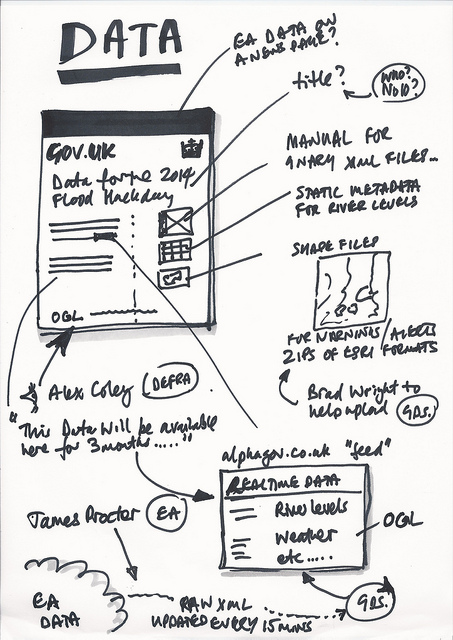
Drupalcamp London 2014: The Government Digital Service, Drupal 8 Multilingual features, Twig

https://gds.blog.gov.uk/2014/02/23/flood-hack-developing-solutions/
Flood hack
DrupalCamp London today got underway with a keynote Delivering User-centred Digital Services by Mark O'Neill from the UK Government Digital Service.

Given the record of public and private sector led IT projects it was refreshing to hear of the GDS's approach being user-centred, the extension of 7 design principles and Mark's previous experience. It's clearly too late for the health care sector to coin and create the Needotron - GDS beat us to it.

Drupal 8 is looking formidable both in its potential and the (learning) stack it presents. Another great session to pick out was - A whole new world for multilingual sites in Drupal 8 by Gábor Hojtsy. The progress here is phenomenal and even though incomplete it is a major achievement and a credit to the Drupal community.

It's humbling as it reminds me to post some introductions to Hodges' model on W2tQ in several languages.

As to being user-centred, the Harmony Forum is a real tease. I know a forum will not moderate itself (is that the new Sorcerer's Apprentice?) and yet time is of the essence. Harmony is one for me to watch - so I'm signed up for the newsletter. Two sessions on Twig and Entities rounded up a busy few days.

This began on Thursday with Cutty Sark, the Royal Greenwich Observatory (learned much from their interactive designs), Turner and the Sea, The British Library - Beautiful Science (60-90 mins ample), and Ibsen's Ghosts at Trafalgar Studios.

I was also able to visit a university yesterday and meet a member of faculty who used Hodges' model many years ago. Here's hoping that some of the materials can be retrieved even though it seems unlikely. I hope to keep in touch with this nursing contact (and not just for the dinner!). I've met several other people here, the Drupal community is another great asset - and with thanks to the sponsors who make these events feasible for many of us.

Output from Needotron


I'll end this post back with Mr O'Neill and the GDS.

I wonder to what extent healthcare figured in the flood deliberations?

It seems that an output from the Needotron may not be so far removed from h2cm?

Happy St David's Day too - in the closing minutes here!


Tuesday, 21 January 2014

ICN and IHTSDO partner to provide a new Informatics Resources for nurses

International Council of Nurses (ICN) and International Health Terminology Standards Development Organization (IHTSDO)
partner to provide a new Informatics Resources for nurses

Geneva, Switzerland, Copenhagen, Denmark, 20 January 2014 - The International Council of Nurses (ICN) and the International Health Terminology Standards Development Organisation (IHTSDO) are pleased to announce an equivalency table between the International Classification for Nursing Practice (ICNP) concepts and SNOMED CT concepts. The table contains ICNP Diagnosis and Outcomes Statements that have semantic equivalencies with SNOMED CT concepts.

ICNP is an international standard that facilitates the description and comparison of nursing practice locally, regionally, nationally and internationally. The ICNP terminology serves a critical role for ICN in facilitating representation of the domain of nursing practice worldwide to promote evidenced based quality care. ICNP provides nurses with content solutions for electronic health records (EHRs) at all levels to support data-based information for use in practice, administration, education and research. SNOMED CT, a multidisciplinary international healthcare terminology, is designed to support the entry and retrieval of clinical concepts in electronic record systems and the safe, accurate, and effective exchange of health information.

“This equivalency table between ICNP and SNOMED CT is a tangible demonstration of how collaboration among standards development organisations can contribute to improved and standardized documentation of healthcare delivery,” noted ICN CEO David Benton. “Greater standardization supports the larger goal of interoperability of systems as well as better understanding of the contributions that each discipline makes to health outcomes and the effective and efficient use of health resources.“

“The IHTSDO is pleased to see this work being made available to users internationally and hopes that there will be feedback on its usage over time in supporting the care of individuals on a multidisciplinary basis. Continued collaboration with ICN is important to the IHTSDO going forward, providing a key link to the nursing profession internationally” said Jane Millar, Head of Collaboration at IHTSDO.

This new product advances the collaboration on terminology development agreed between ICN and IHTSDO in their 2010 harmonization agreement by allowing ICN to make the equivalency table available through its website at the ICNP Download page ( http://www.icn.ch/pillarsprograms/icnp-download/ ). Although this table is not formally endorsed by IHTSDO, persons interested in using it should review the terms of the SNOMED CT Affiliate License before downloading ( www.ihtsdo.org/licence.pdf ).

The product can be a useful resource to nurses and healthcare facilities interested in using SNOMED CT for documentation in EHRs and using ICNP to help identify clinically relevant content for use in documentation of nursing care.

An additional product from ICN, the ICNP Technical Implementation Guide, was also recently released with the intent of supporting ICNP users, from vendors to nurses in care delivery settings. When used alongside documentation available on the IHTSDO website ( http://ihtsdo.org/fileadmin/user_upload/doc/ ), the Implementation Guide will be of particular use to those who choose to access and use the ICNP-SNOMED CT Equivalency Table in that it gives details about applications that use ICNP, approaches to implementation, structure and content of ICNP, and technical overview. The ICNP Implementation Guide is available on the ICN website ( www.icn.ch/pillarsprograms/implementing-icnpr/ ).

My source: Amy L Amherdt, icn-ehealth

Sunday, 12 January 2014

Book: Thinking as Communicating - Sfard (the intra- interpersonal domain)

Previously I wondered about a term that might combine thinking and the formation and process of mental mapping, the creation of a conceptual map - a mental conceptual geography - cogneography?

Thinking as Communicating
Finding Anna Sfard's 1998 paper this past week led me to her book. The following is from the introduction:
I define thinking as individualized form of interpersonal communication. The disappearance of the time-honored dichotomy is epitomized in the term commognition, which combines communication with cognition. The commognitive tenet implies that verbal communication, with its distinctive property of recursive self-reference, may be the primary source of humans’ unique ability to accumulate the complexity of their action from one generation to another.

Sfard's work will have to go on the 'to read' pile (part-time studies begin tomorrow), but it may help provide ways to understand and unravel the intra- and interpersonal domain within Hodges' model. The mathematical emphasis (even though I may struggle with this) is an added bonus.

Sfard, A. Thinking as communicating: Human development, the growth of discourses, and mathematizing. Cambridge, UK: Cambridge University Press.

Sfard, A. (1998). On two metaphors for learning and the dangers of choosing just one. Educational Researcher, 27(2), pp. 4-13.
http://www.colorado.edu/physics/phys4810/phys4810_fa08/4810_readings/Sfard.pdf

Monday, 2 December 2013

Book review: "Selfhood"

http://www.amazon.co.uk/SELFHOOD-Emotional-Wellbeing-Prevention-Psychology/dp/1908561009/ref=sr_1_1?s=books&ie=UTF8&qid=1318237775&sr=1-1The vertical axis of Hodges' model denotes the individual and hence the self, the person and the group, the populous. As such when I came across Dr Terry Lynch's book Selfhood it was ideal as a book review candidate.

The book declares itself as a self-help book and clearly and quickly qualifies in this through its content. Section two of the book from page 51 through to page 272 (of 281 in total) is devoted to raising an individual's level of selfhood.

At first I wondered if this was going to be a fuzzy read that might also prove repetitious. I'll explain the latter shortly. The former does not apply, even though the 'self' is a very fuzzy concept especially in the hands of philosophers. Some of the content in section two may well overlap, but amongst self-awareness, self-talk, self-care, self-contact – these contributing components to selfhood are clearly explained.  The book utilises diagrams throughout, from page 3; and these support the text and are used to cross reference material.

Section one on basic principles and concepts fosters a sense of self-regulation for the self-help that the intended readership will pursue. The need to take one’s time with recovery of selfhood is stressed initially, the reader reminded of this through the actions, minimising the perception and occurrence of failure. There is no crash program and pacing is vital, small steps, return to some actions if necessary we are told early on. While not stated explicitly section one helps to foster hope. Although this is a self-help book, resort to a good therapist is mentioned on a couple of occasions. The central risk to the self of suicide is also examined and given due regard in terms of safety.

There is little new in a technical sense for a mental health professional, but the way the ideas are explained is very informative. The diagrams and the metaphors that are sometimes employed are very useful as teaching aids. If you are at the latter stages of your career then self-actualisation (p.258), as ever, and  creativity provides hope. I did wonder about the reading-grammar level and how this might exclude some people. Could this be another project? I enjoyed reading of the need to create a life-long solid level of selfhood (p.40), which also emphasizes the general need for life-long learning. Relating selfhood to overall 'health literacy' might be informative. You will not find assessment and methods here, which is liberating. Assessment is integral to the reflective process but not explicit and process bound as it is in mental health services. This may in itself provide a benchmark for the future progress of 'selfhood' and health literacy?

One thing I am still reflecting upon - is distinguishing between being able to have an overview of the route to selfhood and having a ‘big picture’ – holistic - perspective of ones situation (p.42). This concern resurfaced in the risk of being overwhelmed by the ‘big picture’ (p.45) and here am I wondering about the therapeutic uses of the big picture – as a summariser - ready reckoner for health, social care and recovery. 

As a champion for Hodges’ model I can also identify with the call for a flexible balance between the two poles of self and others and the call to reflect carefully. Action as harmony of action (p.54) amid the frequent chaos of our lives and health care systems is a very helpful definition. If you seek another perspective on self-efficacy there's a lead here. I was struck by the first case study about Craig and his initial wish for self-admission to hospital. I smiled somewhat ruefully at this, considering the changes in the number of NHS beds (-1700 HSJ) even in the brief years since Lynch’s book was written and published in 2011. This stresses the need for self-care and supports the advent of the 'recovery' movement in mental health. 

My previous note regards the literacy level of readers, is obviously a factor as users are encouraged to reflect upon each selfhood component and also write a diary/journal. The spatial definitions of selfhood also engaged me, given my preoccupation with cognitive spaces. This discussion of physical space, self, personal space and self-centredness and the notion of polluted environment in the context of emotions and feelings prompted much reflection.

At the end the reader is invited to read through the text again. I can see how a second pass and one that uses the book as a self-help manual could pay dividends. The self-help quality of the book is clear as after each attribute is described several actions are outlined. There are affirmations for the reader to utilise that are also listed in an appendix. The case histories should assist readers, who seeking to improve or recover their level of selfhood, may identify with at least one of several. The thought about repetition is not surprising as this is self-soup so to speak. There are just short of sixty instances of self-'  ' in the very helpful index.

Ultimately, this is not so much a statement about the book but perhaps the mental health challenge that faces the self in dealing with the other and the world at large. Overall the books 281 pages reveal the rich complexity of a vital concept and contributor to mental health and wellbeing. This is a very practical book which is to say it is an excellent self-help book.

Lynch, T. (2011) SELFHOOD, Limerick, Mental Health Publishing.


Wednesday, 27 November 2013

Playing and working with words and music - étude : ctude

étude

An étude (/ ˈeɪtjuːd /; French pronunciation: ​[eˈtyd], a French word meaning study) is an instrumental musical composition, usually short, of considerable difficulty, and designed to provide practice material for perfecting a particular musical skill.
Source: http://en.wikipedia.org/wiki/%C3%89tude

ctude

A ctude is a care assessment and evaluation instrument, a composition that is usually short, in summary form comprised of key concepts, and yet capable of representing the complexity of health and social care contexts. The ctude is designed to provide practice material for developing expertise in care assessment, holistic and integrated care that is also person-centred. Coined from étude (/ ˈeɪtjuːd /; French pronunciation: ​[eˈtyd], a French word meaning study) it is a study in care and can be a snapshot, or a dynamic series.

Friday, 9 August 2013

Papers in progress, book reviews and volcanoes

There are three papers currently in process. There is some good and bad news; plus some similarity with volcanoes. This is in the sense of active, dormant and extinct.

The papers are - with no prizes for guessing the common feature:
  1. The Scope of Nursing and Hodges' model
  2. Case Formulation (Conceptualization), Diagrams and Hodges' model
  3. Recovery and Hodges' model
Two papers are active, that's Case Formulation and Recovery. On the stove is Recovery and it's cookin. I've two co-authors providing invaluable input.

I've just read Terry Marks-Tarlow's Clinical Intuition in Psychotherapy The Neurobiology of Embodied Response and a review will follow my recommending this book right now.

There's a review copy of another book in the post that I believe can inform the recovery paper:

Values-Based Commissioning of Health and Social Care (thanks CUP)

I'm sure the concept of values-based commissioning is a gift to Hodges' model and the recovery paper. A theme to return to on W2tQ. The paper includes the Recovery STAR and relates this to Hodges' model.

The case formulation effort is with my co-author, and after a meeting in Manchester one early evening may incorporate risk formulation too.

The good news is none of these projects are extinct. The first nursing scope paper was rejected. The nursing scope paper is dormant, but is stirring following the symposium on person centredness in nursing early in May 2013.

There are two other books to get to grips with and a project that is in danger of extinction. The sight of Vesuvius next month may help: shift matters.

Sunday, 7 July 2013

Part II: Pensioners, 'Health students' and Children

For decades the reactive health care system has been founded, loved and sustained through the primary care - secondary care hospital system, together with its complex range of referral systems and processes.

Now demographic trends and economic pressures have seen the emergence and ongoing development of the virtual hospital. Call centers and teams that deliver nursing and medical care in the home to prevent admission and facilitating early discharge are still basically reactive.

What is needed is a cognitive hospital.

A form of hospital that acknowledges the health care system but can finally progress the preventive agenda on an individual, educational basis, fostering self-efficacy, health literacy and if necessary self-care.

Saturday, 1 June 2013

Review: Philosophical And Theoretical Perspectives For Advanced Nursing Practice

http://www.jblearning.com/catalog/9780763765705/
If you are a miner for insight, a pearl diver for knowledge or seeking blue sky wisdom this book can deliver and sign-post in plenty through its references. In summary: this book is a history book that nods at futurology.

I had high expectations for the text, also anticipating an exacting read. After all, as a 5th edition this is a well established text. The expectations were not wholly realized, however; many of the papers are quite dated being published originally in the 1990s.

The book is an important collection and can certainly be regarded as essential reading for advanced nursing practitioners and those pursuing post-graduate nursing studies. Several chapters hail from the same journal publisher and perhaps - as a positive - this contributes to the readable and accessible style throughout the book. The text format and size are also easy to read. I found one spelling mistake within the index entry for 'diagnosis' p.387. In addition to the historical development in part 1 the book's division into five parts - 31 chapters in total - acknowledges the reliance on the past and from it appears from a previous edition the arrival of the 21st century. Apart from the current date of issue 2013 I cannot accurately place the most recent additions to the volume. The contents listing and preface are limited in this respect. Judging from the references they are not that recent. 2010 is one of the most recent references I could find, and this, the 75ed of Toby & Mariner.

Many of the papers are seminal and include an overview of particular aspects of nursing thought - analysis and synthesis. Unsurprisingly, there is philosophy and ethics in great abundance, together with ecocentricism, several forms of feminism, aboriginal peoples and their world views, evidence, health, beliefs, art, professionalism, research, patterns, advanced practice, theory and much more. The distinction between evidence based theory and evidence based practice is something of which all nurse students should be aware.

There is specific reference to Advanced Nursing Practitioners. There could obviously be some variation in how this professional group are considered as opposed to Advanced Nursing Practice. Having just returned from Belfast and the University of Ulster there is ongoing currency in McCormack's chapter 17 A Conceptual Framework for Person Centered Practice with Older People. While dated 2003 McCormack's work was emphasized at a recent conference in Ulster I was able to attend (and there are plans for another). I am sure other chapters may be enlivened by such reviewer found co-incidences as this.

I wonder if the scope of the book and acknowledgement of the passing of time seems to shout for a two-volumed approach. As suggested above, the previous acknowledgement of the future seems to have hailed from the 20th century and got lost. We are now after all more than a 1/10 of the way into the 21st century.

Having started my nursing career in the RN, chapter 22 on military metaphor in nursing and the need for another. A researcher contacted me several years ago about using Hodges' model (a conceptual framework) in a study on bullying in nursing. I've never heard anything since, but Hodges' can help in such research in two respects. The inclusion of a political domain and the organization of groups of people, emphasizes process, procedure, protocol, routine, and may proceed to regimentation, discipline, hierarchy so to a degree language games will follow. As this chapter notes, several professions, including nursing are said to eat their young. A commentary after the chapter provides a useful balance and makes this point. The chapter is nonetheless a reminder of the role of language and how professionalism arises and is sustained (disciplines too?). The proposal of frontier as a new metaphor is fitting as Hodges' model identifies five conceptual fronts - frontiers that must be integrated. 

As a frontier - Chapter 21 on rapture and suffering with technology in nursing holds many lessons and insights. Heidegger's "standing reserve", the human-technology interface, what it means to live like a human being and the distinction of being a human being. Mobile technology, m-health, e-health are making a huge contribution to global health and need a place here. I found Macurdy's four principles 326-327 on what patients need to assume power and control over their care very illuminating, especially in highlighting information access and the importance of health literacy.

In the text and the index I could not find specific reference to capacity, as in mental capacity, informatics, global health, information (access), justice, law, legal, management, human rights, literacy, mental, political, psych-, long-term medical conditions and recovery. While the book would become incoherent if a disease/diagnosis-based approach was adopted, we might ask: does dementia deserve specific inclusion? This is an interesting (and potentially vociferous) debate in itself - to what extent should such a book record change through several decades? Of course the book is not an encyclopedia and it is easy to critique according to omission. These are pressing times demographically, however; while there is a population focus: global communities and aboriginal communities in chapter 23 and 24, this merely scratches the surface of very large world.

This book is a valuable asset and has stimulated many ideas here (and potential blog posts). I am very pleased to have read it and would recommend it to students and practitioners alike. I am grateful to the publishers for the review copy.

Friday, 10 May 2013

Learning theory: an A3 poster

Source: Richard Millwood - A new learning landscape


As the poster demonstrates and Millwood's notes explain learning theories are very varied and yet a constant in terms of teacher education. What is less permanent is the significance of learning styles, which are included above. I wonder if there is an A3 poster addressing that question? A different treatment would be needed, one that might for example show the ups and downs of the literature? What theoretical underpinning has been proposed for learning styles? What are the connections to forms of literacy? I had a brief search, but found nothing to compare with the above effort.

Richard Millwood has provided a great resource and is seeking feedback. The pdf version is very readable on my laptop in HD; plus there is a CMap tools version with links.

It seems blended learning really is the hybrid? It is traditional in face-to-face sense, but can be found in multiple combinations within Millwood's formulation. Is there a place for gestalt learning - a further link with learning styles?

I'm subscribed to a Vygotsky list that is very active; most of the posts pass like e-leaves in the wind-e, a case of info overload.

Vygotsky has a place above:
it is a small place.
So it looks like there really is a lot to take in. Oh joy!

Sunday, 7 April 2013

3rd Int. Conference on Integrated Information: IC-ININFO, Prague Sept

Hi everyone!

I have been invited to Chair a session at the IC-ININFO 2013 conference in Prague in September and am now looking for abstracts by people interested in attending.

I am particularly interested in papers around sociotechnology or knowledge management. At this stage an abstract is required of around 250 words to me in the first instance and if I accept it, then it will go through the online review system. After acceptance of their abstract the authors have to prepare their Conference paper of up to 8 pages.

The paper submission will initiate a further single blind peer review process and the final paper will be published in the Conference Proceedings Book. More over, each author can submit a full paper to one of the supporting journals.

Please get in touch if you have an idea for this conference.

Elayne Coakes (Dr)
Senior Lecturer, Information and Knowledge Management
Room M112
The University of Westminster
coakese at WESTMINSTER.AC.UK

My source: SOCIOTECH at JISCMAIL.AC.UK