Showing posts with label data. Show all posts

Thursday, 9 October 2014

Privacy: Open Data, Individual and Group

The vertical axis of Hodges' model is the individual - group, or self through to collective. Health and social care constantly negotiates this from the ideals and delivery of person-centred care to public mental health. So often for health professionals the emphasis is on the individual, the person's care needs, their strengths, their rights, outcomes and feedback on care received. The same individual focus is also ascribed to records and information. Protection of data, maintaining confidentiality is an essential duty of health care  professionals.  

Earlier this year the government's care.data scheme was placed on hold. 'Open' is the way of the world: open access, open source, open data and open government. Increasingly the group as an entity needs to considered in what may be a new way, as Floridi writes:
The idea that groups may have a right to privacy is not new, and it is open to debate, but it has not yet received all the attention it deserves, although it is becoming increasingly important.
 ...
Open data is more likely to treat types (of customers, users, citizens, demographics population, etc.) rather than tokens (you, Alice, me), and hence groups rather than individuals. But re-identifiable groups are ipso facto targetable groups.It is therefore a very dangerous fallacy to think that, if we protect personal data that identify individuals, the protection of the groups will take care of itself. p.23.

Luciano Floridi. Group Privacy. The Philosophers' Magazine. Issue 65, 2nd Quarter 2014. Pages 22-23.


http://grantabooks.com/The-Private-Life

Here is a related book (on my list) a BMJ award winner:

The Private Life, Josh Cohen

The war over private life spreads inexorably. Some seek to expose, invade and steal it, others to protect, conceal and withhold it. Either way, the assumption is that privacy is a possession to be won or lost.

But what if what we call private life is the one element in us that we can't possess? Could it be that we're so intent on taking hold of the privacy of others, or keeping hold of our own only because we're powerless to do either? ...


Friday, 5 September 2014

ICN and IHTSDO extend collaboration to advance harmonisation of health terminology

Press Information   .   Communiqué de presse   .   Comunicado de prensa


Geneva, Switzerland & Copenhagen, Denmark, 1 September 2014

The International Council of Nurses (ICN) and the International Health Terminology Standards Development Organisation (IHTSDO) today announced an updated collaboration agreement to advance terminology harmonisation and foster interoperability in health information systems.  The new collaboration agreement signed today will be reviewed on completion of the work or in April 2016, whichever is earliest.

The overarching goals of this collaboration are to ensure that nurses worldwide have the tools they need to carry out their jobs effectively, that they are not disenfranchised from the global informatics infrastructure, and that they remain active in the collection of meaningful and useful health information.

As part of the collaboration agreement, ICN, owner of the International Classification for Nursing Practice (ICNP), and IHTSDO, owner of SNOMED CT, have agreed to undertake further work that defines the relations between SNOMED CT and ICNP to enable their interoperability in health information systems globally. It builds on work already undertaken to produce an equivalence table for nursing diagnoses.

In the coming years IHTSDO and ICN will focus on two key areas of work: joint publication of a completed equivalence table between SNOMED CT and ICNP for Nursing Diagnoses, and joint publication of a completed equivalence table between SNOMED CT and ICNP for nursing interventions.

“ICN is delighted to extend our collaboration with IHTSDO,” said David Benton, ICN’s Chief Executive Officer.  “This agreement will be of mutual benefit to both organisations as well as to patients and will improve the description and comparison of nursing practice locally, regionally, nationally and internationally.

“IHTSDO is pleased to be continuing its collaboration with the ICN”, said Jane Millar, Head of Collaboration at IHTSDO. “Our joint work in linking SNOMED CT and ICNP will be of benefit to the nursing profession worldwide to ensure a common understanding and interoperability, and also to support sharing with other members of the healthcare team.”

The first collaborative agreement between the two organisations was signed in 2010, and in January 2014 the cooperation was further advanced by the announcement of an equivalence table between ICNP concepts and SNOMED CT concepts.

Notes to the Editor:

ICN and IHTSDO are the developers of the International Classification for Nursing Practice (ICNP) and SNOMED Clinical Terms (CT), respectively. The ICNP terminology serves a critical role for ICN in representing the domain of nursing practice worldwide, thus providing nurses at all levels with data-based information used for practice, administration, education and research. SNOMED CT is a multidisciplinary healthcare terminology designed to support the entry and retrieval of clinical concepts in electronic record systems and the safe, accurate, and effective exchange of health information.

About ICN:
The International Council of Nurses (ICN) is a federation of more than 130 national nurses associations representing the millions of nurses worldwide. Operated by nurses and leading nursing internationally, ICN works to ensure quality care for all and sound health policies globally. (www.icn.ch).

About IHTSDO:
IHTSDO determines global standards for health terms, an essential part of improving the health of humankind. Its experts work collaboratively with diverse stakeholders to ensure that SNOMED CT, its world-leading terminology product, is accepted around the world as the common language for health (www.ihtsdo.org).

My source: Amy L Amherdt

Monday, 25 August 2014

Heat maps and hotbeds in Hodges' model

individual
INTERPERSONAL : SCIENCES
humanistic ------------------------------------------- mechanistic
SOCIOLOGY : POLITICAL
group


"Out of area placements are a good indicator of heat within the system and how over-stretched it is." p.5

Prof. Paul McCrone,
Lintern (2014).


Sources:
Image: http://www.usability.gov/sites/default/files/images/eye-tracking-full-option1.jpg

Lintern, S. (2014) Analysis reveals mental health trust funding cuts, Health Service Journal. 124, 6411, 4-5.

Saturday, 9 August 2014

HIFA Voices Database - launched 12 August 2014

The HIFA Voices database will bring together the experiential knowledge of HIFA members: more than 12,000 professionals from over 2500 organisations in 170 countries, ranging from senior executives at the World Health Organization in Geneva to community health workers in rural Gambia. Our common vision is a world where every person and every health professional has access to the information they need to protect their own health and the health of those for whom they are responsible. HIFA Voices will be launched on 12 August 2014.

HIFA Voices harnesses the practical expertise of providers and users of healthcare information, together with relevant health information sciences literature. This helps us to understand the healthcare information needs of different users in different contexts and how these needs can be more effectively addressed. Further information about HIFA Voices.

Read the blog about HIFA Voices on the ElsevierConnect website, and the press release from mPowering Frontline Health Workers and Intel Corporation.

We are currently seeking further financial and technical support to enable us to develop HIFA Voices through 2015 and beyond. Please contact us for details.

My source: HIFA2015 list.

Sunday, 25 May 2014

CAPITAL [ take ] II or III ...

Thomas Piketty's economic data 'came out of thin air'

(The Guardian)

French economist's bestselling book on growing inequality in west undermined by 'inexplicable' data, says Financial Times

While they debate the data
the evidence
and how this looks 
from the left:                               :from the right

let's not forget the center and ask

where is the neutral, objective space where values must reside?

global health, development, nursing, health information, education


My original source:
FT Weekend, 24-25 May, 2014.

Update 17 June 2014 c/o Channel 4 News UK:

Saturday, 19 April 2014

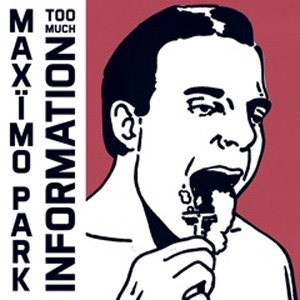
care.data: too much information?

individual
INTERPERSONAL : SCIENCES
humanistic ------------------------------------------- mechanistic
SOCIOLOGY : POLITICAL
group

individual - person
ethics
'personal'
My identity:
 lost in numbers Vs. specificity of patterns
*my attitude to my 'sensitive' information
health literacy
personal responsibility, self care, quantified self
my understanding of care.data
Trust


datasets, BIG data
hospital episodes, treatments
research
privacy research
 anonymising process for nhs data
*care.data is a natural step towards personalised medicine?
axon - neurobiology
Axon - data warehouse
statistics
service development and innovation

data security, law, information governance
NHS
commercial, contract
potential for abuse - assumptions
public mental health
public health
policy, consultation
policy communication
public engagement, primary care
informed consent, opt-out
data definitions, standards
ISO27001
population, insurance


Additional links:
Allyson Pollock - Protecting confidential patient information and promoting public health research. Three proposed amendments to the Care Bill

Building trust in the use of personal data for medical research, 1 April 2014, AMRC

Image source:
http://www.contactmusic.com/press/maximo-park-announce-new-album-too-much-information-released-3rd-february-2014

Thursday, 17 April 2014

IEEE Computer, Special issue on Physical-Cyber-Social Computing

Physical-Cyber-Social Computing

Final submissions due: 1 September 2014
Publication issue: May/June 2015

Please email the guest editors a brief description of the article you plan to submit by 15 August 2014

Guest Editors: Payam Barnaghi, Manfred Hauswirth, Amit Sheth, and Vivek Singh (ic3-2015 AT computer.org)

Computing, communication, and mobile technologies are among the most influential innovations that shape our lives today. Technology advancements such as mobile devices that reach over half of Earth's population, social networks with more than a billion members, and the rapid growth of Internet-connected devices (the Internet of Things) offer a unique opportunity to collect and communicate information among everybody and everything on the planet. Interacting with the physical world enriches our existing methods of information exchange — sharing our thoughts, communicating social events, and work collaboration via the new dimension of physical computing. This all-encompassing "new world of information" requires that we be able to process extremely large volumes of data to extract knowledge and insights related to our surrounding environment, personal life, and activities, on both local and global scales.

These trends have led to an emergence of physical-cyber-social (PCS) computing, which involves a holistic treatment of data, information, and knowledge from the physical, cyber, and social worlds to integrate, understand, correlate, and provide contextually relevant abstractions to humans and the applications that serve them. PCS computing builds on and significantly extends current progress in cyber-physical, socio-technical, and cyber-social systems. This emerging topic seeks to provide powerful ways to exploit data that are available through various IoT, citizen and social sensing, Web, and open data sources that have either seen or will soon see explosive growth. Providing interoperable information representations and extracting actionable knowledge from the deluge of human and machine sensory data are key issues.

This special issue seeks innovative contributions to computer systems and interaction design, information processing and knowledge engineering, and adaptive solutions associated with PCS computing and the novel applications it enables. Potential topics include:
  • semantics and information modeling; semantic integration, fusion, and abstraction strategies;
  • stream processing and reasoning on complex PCS data; real-time feedback control and response systems; human/event/situation-centered views of data streams;
  • pattern recognition, trend detection, anomaly and event detection, semantic event processing, and inferring actionable knowledge techniques;
  • spatio-temporal, location-aware, continuous, scalable, and dynamic analysis;
  • security, privacy, and trust issues in collection, storage, and processing; and
  • novel and significant PCS applications, deployments, and evaluations in areas including personalized and contextualized information and alerts, health, biomedicine, smart cities, and human/social/economic development.
Submission Guidelines

All submissions must be original manuscripts of fewer than 5,000 words, focused on Internet technologies and implementations. All manuscripts are subject to peer review on both technical merit and relevance to IC's international readership — primarily practicing engineers and academics who are looking for material that introduces new technology and broadens familiarity with current topics. We do not accept white papers, and we discourage strictly theoretical or mathematical papers. To submit a manuscript, please log on to ScholarOne (https://mc.manuscriptcentral.com:443/ic-cs) to create or access an account, which you can use to log on to IC's Author Center and upload your submission.

My source:
Announcements mailing list
Announcements AT ubicomp.org
http://ubicomp.org/mailman/listinfo/announcements_ubicomp.org

Friday, 21 March 2014

Informatics in Primary Care - journal

http://hijournal.bcs.org/index.php/jhi
Informatics in Primary Care Journal
On Wednesday I visited HC2014. Having the week off and with the event literally on the doorstep (London in 2015) it was very convenient.

I'd received an email the evening before on the new informatics federation and heard the official announcement in the opening session. My last HC event was 2005, my first 1986 also in Manchester if I remember correctly.

I posted the federation news this morning. On the BCS stand I picked up a copy of the INFORMATICS IN PRIMARY CARE.

This journal is open access. Despite the title and perhaps illustrative of the dependencies within and need to integrate health (and social care) the journal's coverage is broad and inclusive:
We are interested in how computerised medical records can better record the clinical status of patients and can be used to measure the quality, safety and efficiency of health care professionals and organisations – including primary care, hospital, mental health, and social and community care.  The scope of the journal also includes integrated care and how genetic data might be used to enhance health care.

I will reflect a little more on HC2014 soon.


BCS, UKCHIP and IHRIM announce a new vision for the health informatics profession at HC2014

UKCHIP IHRIM

19 March 2014

BCS, The Chartered Institute for IT, the UK Council of Health Informatics Professions (UKCHIP) and the Institute of Health Records and Information Management (IHRIM) are working collaboratively to create a new federation for the Informatics profession. The three autonomous bodies will work closely together in a federation to ensure that UK health informatics is recognised as a valued profession. 

Justin Whatling, Chair of BCS Health, part of the Chartered Institute for IT, explains: “This is a very exciting moment for health informatics. Today technology has an immense and profound impact on the health and wellbeing of people. Therefore it’s time for the profession to mature to meet the increasing demand on our skills and capability. We want health to be an attractive place for informatics professionals from other sectors to come and work, and we want to provide a clear career path and professional development opportunities to retain those already working in health. The federation will help us to achieve this.”

The initiative comes as the NHS is under increasing pressure to find and implement new models of health and social care that will provide services closer to people’s homes. This requires health professionals to share accurate information securely and confidentially. In addition, the Caldicott 2 Review has introduced a Duty of Care to Share health information. Both of these things have happened at a time when public trust in the NHS’ ability to handle personal health information has taken a hit.

The federation will be open to all other informatics professional bodies, the private sector, the home countries and lay representation. It will provide leadership of the overall profession with a single professional register and point of entry for professionals, oversee an agreed regulatory framework with a common code of ethical practice and coordinate access to resources providing a unified set of capabilities for all professional areas of practice.

Read more

Thursday, 20 March 2014

[c/o hipnet] Data Visualization Enthusiast? Join us on the Data Viz Hub!

Dear Colleagues

The recently launched Data Viz for Development Hub [http://datavizhub.co] is a vibrant community for sharing resources, tools, examples, and ideas about data visualization. Using graphs, charts, maps, tables, infographics, and other visualizations can improve how we communicate information to stakeholders and the larger development community. With a wealth of resources available, and a growing interest across international development practitioners to build effective visualizations, the Hub will help keep communicators, evaluators, developers and others in the know about data viz best practices and new tools, connecting visualizers from all domains of expertise.

Check out the Hub at datavizhub.co, and join the community listserv by emailing:
dataviz AT knowledge-gateway.org with the subject "Join." We look forward to connecting with you about all things data viz!

Questions? Contact Libby Skolnik at libby.skolnik AT jhu.edu

Source: http://www.hipnet.org/

Saturday, 1 March 2014

Drupalcamp London 2014: The Government Digital Service, Drupal 8 Multilingual features, Twig

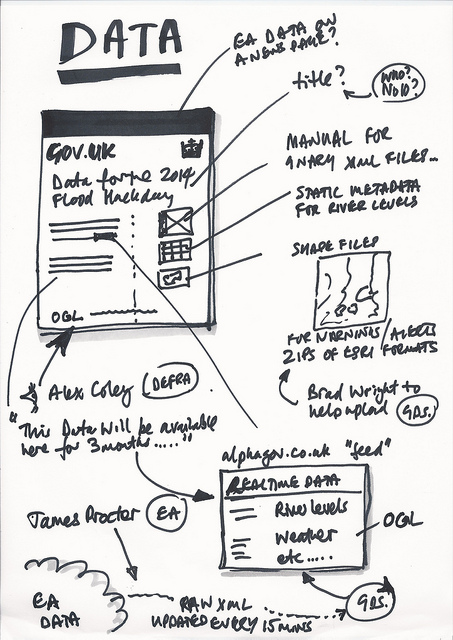
https://gds.blog.gov.uk/2014/02/23/flood-hack-developing-solutions/
Flood hack
DrupalCamp London today got underway with a keynote Delivering User-centred Digital Services by Mark O'Neill from the UK Government Digital Service.

Given the record of public and private sector led IT projects it was refreshing to hear of the GDS's approach being user-centred, the extension of 7 design principles and Mark's previous experience. It's clearly too late for the health care sector to coin and create the Needotron - GDS beat us to it.

Drupal 8 is looking formidable both in its potential and the (learning) stack it presents. Another great session to pick out was - A whole new world for multilingual sites in Drupal 8 by Gábor Hojtsy. The progress here is phenomenal and even though incomplete it is a major achievement and a credit to the Drupal community.

It's humbling as it reminds me to post some introductions to Hodges' model on W2tQ in several languages.

As to being user-centred, the Harmony Forum is a real tease. I know a forum will not moderate itself (is that the new Sorcerer's Apprentice?) and yet time is of the essence. Harmony is one for me to watch - so I'm signed up for the newsletter. Two sessions on Twig and Entities rounded up a busy few days.

This began on Thursday with Cutty Sark, the Royal Greenwich Observatory (learned much from their interactive designs), Turner and the Sea, The British Library - Beautiful Science (60-90 mins ample), and Ibsen's Ghosts at Trafalgar Studios.

I was also able to visit a university yesterday and meet a member of faculty who used Hodges' model many years ago. Here's hoping that some of the materials can be retrieved even though it seems unlikely. I hope to keep in touch with this nursing contact (and not just for the dinner!). I've met several other people here, the Drupal community is another great asset - and with thanks to the sponsors who make these events feasible for many of us.

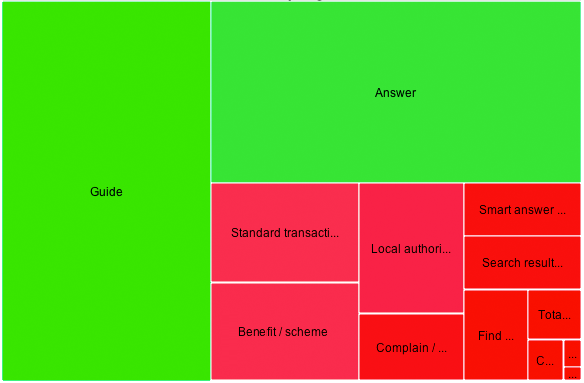
Output from Needotron


I'll end this post back with Mr O'Neill and the GDS.

I wonder to what extent healthcare figured in the flood deliberations?

It seems that an output from the Needotron may not be so far removed from h2cm?

Happy St David's Day too - in the closing minutes here!


Wednesday, 19 February 2014

Social Science Research Questions & Methodological Challenges in the 21st Century

ICOSS, University of Sheffield
219 Portobello, Sheffield, S1 4DP

This seminar series will explore some of the key methodological challenges that the social sciences face in addressing research priorities in the 21st Century. Some of these areas involve continuity in topic and approach, whereas others involve new characteristics and aspects of social life.

The seminars will involve researchers discussing the kinds of research questions they are beginning to ask and looking at the methodological approaches and challenges that these questions pose. We will explore this in four seminars that relate to contemporary social issues, covering:
  • Wellbeing and disadvantage
  • Diversity and community
  • Vulnerabilities and risks
  • The relationship between social and digital worlds.
Following these four seminars, there will be a roundtable event, where there will be broad discussion about the methodological challenges and how the research community might address these.


Read more about the seminars.

Seminar dates:
• Tuesday 20 May 2014
• Monday 30 June 2014
• Wednesday 16 July 2014
• Wednesday 15 October 2014

Final roundtable event:
• Wednesday 26 November 2014

How to participate:
There are a number of ways in which you can participate in the series and join the conversation:
* All submissions will be subject to peer review.

1. Submit an abstract to present a 20-minute paper at one of the four seminars
We welcome abstracts for papers related to one of the 4 seminar themes. Based on ESRC priority areas, these themes are purposefully broad and papers may be based on work in progress, methodological or empirical issues you are currently grappling with as well as thoughts on future research potential and papers relating to completed projects. We welcome paper presentations from researchers of all career stages.

If you would like to present a paper please submit a title and abstract of no more than 250 words by completing the online abstract submission form(link)/by emailing your abstract to http://methodologicalchallenges.group.shef.ac.uk/ (please indicate which seminar you would like to present at and state whether you will be presenting in person or via weblink) three abstracts will be selected for each seminar.
The deadline for abstracts is 14th April 2014.

2. Submit a written ‘think piece’ for dissemination on the seminar series’ website
We invite 400 word peer reviewed ‘think pieces’ for dissemination on the website. These could include (but are not limited to): reflections upon a particular research issue, experience or dilemma; thoughts or opinions on a particular issue affecting today’s research community; an annotated extract from your data or field diary. Think pieces may or may not relate to the themes of the seminars. Think pieces can be emailed to http://methodologicalchallenges.group.shef.ac.uk/ for peer review from 14th April. Think pieces will be accepted throughout the duration of the series.

3. Submit a poster to be displayed on the accompanying website
We invite posters for dissemination on the website. Posters should be in PDF format… and could be based on a particular project, method, idea or experience. Posters may or may not relate to the themes of the 4 seminars. If you would like to submit a poster please submit an expression of interest using the abstract submission form http://methodologicalchallenges.group.shef.ac.uk/. Posters will be accepted throughout the duration of the series.

4. Attend a seminar and/or the roundtable event either in person or virtually
You are very welcome to attend the seminars and round table event and join in the discussion. You can do this in person by coming along to an event here in Sheffield or by joining us via web link. However you wish to attend, please register first by contacting Jayne Parkin, j.e.parkin AT sheffield.ac.uk.

If you wish to attend the seminar series in person, you can find directions to ICOSS here. If you would prefer to participate virtually, join us here at http://methodologicalchallenges.group.shef.ac.uk/ and submit your questions via Twitter, using the hashtag: #socmethods. You can also follow us at: @SocMethods

* This seminar series is funded by The Faculty of Social Sciences at the University of Sheffield, with additional support and guidance from NatCen Learning.
* Seminar series organiser: Dr Bridgette Wessels.

Best wishes,

Jenny Smith
Marketing Officer
Department of Politics / Department of Sociological Studies
The University of Sheffield
Elmfield, Northumberland Road
Sheffield, S10 2TU.

Wednesday, 22 January 2014

Better information means better care

BBC Radio 4: Inside Health 21 January 2013
Margaret McCartney and Mark Porter ask whether the anonymity of patient records on a new NHS database can be guaranteed?
NHS: Your records:
Using information about the care you have received, enables those involved in providing care and health services to improve the quality of care and health services for all. The role of the Health and Social Care Information Centre (HSCIC) is to ensure that high quality information is used appropriately to improve patient care. 
NHS England has therefore commissioned a programme of work on behalf of the NHS, public health and social care services to address gaps in information. Our aim is to ensure that the best possible evidence is available to improve the quality of care for all.  ...
http://www.nhs.uk/NHSEngland/thenhs/records/healthrecords/Pages/care-data.aspx


INTERPERSONAL : SCIENCES
humanistic ------------------------------------------- mechanistic
SOCIOLOGY : POLITICAL

individual
my interests

scientific interests


social interests

commercial interests
group - population

Monday, 20 January 2014

ERCIM News No. 96 Special theme: "Linked Open Data"

Dear ERCIM News Reader,

ERCIM News No. 96 has just been published at
http://ercim-news.ercim.eu/en96

Special Theme: "Linked Open Data"
http://ercim-news.ercim.eu/en96/special/
Guest editors
: Irini Fundulaki (Institute of Computer Science, FORTH) and Sören Auer (University of Bonn and Fraunhofer IAIS)

http://ercim-news.ercim.eu/en96
Keynote: "Linked Data: The Quiet Revolution" by Wendy Hall

This issue for download
pdf
: http://ercim-news.ercim.eu/images/stories/EN96/EN96-web.pdf
epub: http://ercim-news.ercim.eu/images/stories/EN96/EN96.epub

Next issue: No. 97, April 2014 - Special Theme: "Cyber-Physical Systems"
(see the call at http://ercim-news.ercim.eu/call)

Thank you for your interest in ERCIM News.
Feel free to forward this message to others who might be interested.

Best regards,
Peter Kunz
ERCIM News central editor

--------------------------------------------------
An initiative for the ERCIM members: Call for Participation - identifying the emerging grand challenges in ICST http://kwz.me/74

Wednesday, 1 January 2014

Book review: "Nursing Informatics and the Foundation of Knowledge" (long book - long review)

Happy New Year to everyone!

Last spring I requested a book for review and received three c/o and with thanks to Jones & Bartlett Learning Nursing. Finally, I've picked up the second - and about time it seems - as on this first day of 2014 the publishers are planning the 3rd edition. This book provided a break from virtual matters being a door-stop of a book; 538 pages, excluding abbreviations, glossary and index. In addition to this physical rendering the publishers emphasize an online presence for this and other books. Inside the cover there is a card with an access code to unlock the companion website for online resources for readers, students and lecturers. The account setup is straightforward and there are additional student exercises beyond those in the book.

Informatics is by definition a challenge for authors and publishers. Even though published in 2011 - 2012 time is at work. From the outset then the team involved in this text are to be congratulated on what is a monumental task in scale and time.

The foundation of knowledge in the title refers to the adopted conceptual framework - the foundation of knowledge model, which is illustrated at the start of the book's sections and especially section I on the building blocks of nursing informatics.

http://www.jblearning.com/catalog/9781449631741/
The foundation of knowledge model was itself quite a hook for me.
The model includes bits, bytes, data and information and from this arise:
  • knowledge acquisition
  • knowledge processing
  • knowledge generation
  • and knowledge dissemination
- with all of these influenced by and influencing feedback (there is an illustration in the sample chapter). The model describes people as information systems. Although the diagram presents a structure for the model, and it fits this informatics context very well and provides a link throughout the book it is not convincing in terms of subjects, agents, and knowledge disciplines. Admittedly the foundation of knowledge model is high level like Hodges’ model. Similarly, it is not prescriptive in terms of how events, phenomena are characterised. Data, information, knowledge and wisdom are however, the most fuzzy of concepts and subject to ongoing philosophical debate. I'll reflect a little more on this later. As already noted the model works here and I see online that a couple of students (and no doubt a great many more) have utilised the model in e-portfolios.

Each chapter has a listing of key terms, which are highlighted in the text. There are reflective questions at the end of each chapters. Chapters are concise, well referenced across various media and are all accessible and evident of a great editorship. There are a couple of longer treatments of certain and well chosen topics. Within chapters there are brief diversions in boxes on a related theme, for example in chapter 3, box 3.2 on ‘storage capacities’. I’d almost forgotten about EPROM and RAM, even though I used to purchase computer programs on EPROMS and ROMS in the 90s. Although abbreviations still abound, these abbreviations have become rather transparent now - and may say more about the generational scope of the authors - including this one? If these are going to be included then where is ‘GPU’, ‘SSD’ …? This is a difficult balance to strike, but mention of these struck me as antiquated and date the text. ('GPU' is hardly new - 1998 c/o Nvidia)

With two major companies referred to early on, open source is explained on page 43 and in the examples of software programs that are listed. The book is courageous in several respects introducing the model, listing software and specific technology examples, some of which can be brief in terms of market longevity. The emergence of the cloud is discussed and provides a current flavour, as with usability (‘UX’). Although the authors are clearly leaders and advocates for nursing informatics and the technologic, the enthusiasm is tempered.

The limits and complexity of AI artificial intelligence are raised in addition to the revolutionary progress. Chapter 4 on cognitive informatics I found personally fascinating, as it reassures me about my interest in the potential of combining conceptual spaces, threshold concepts with Hodges’ model. As a result I previously posted items from the book about cognitive informatics and another relating Beauchamp and Childress’s four principles of health care ethics to Hodges’ model.

Chapter 5 continues the consideration of the limits and challenges posed by technology in exploring the theoretical approaches to health care ethics. The standards for e-health ethics will now be tested with the fate of the .health domain (deliberated online at HIFA2015 to follow...). I wonder if this debate will figure in the 3rd edition? Clearly there are implications for the governance of such a domain. As the chapter points out many ethical e-health standards are voluntary.

As an individual and a reviewer of book with international scope and a discipline with international global aspirations you are acutely aware of your parochial situation. When I look at the UK (Northwest England!) and nursing informatics it seems, with some exceptions to have failed to make a mark in nursing. Yes, colleagues and I use an electronic health record, but there is so much more that could be provided in terms of purposes, functionality and reports. The majority of student nurses I speak to do not seem to be primed let alone tutored for the wider informatics world they will enter as practitioners. So much more that could be done with mobile technology, caseload management tools, research tools. Perhaps this is why as I read of - the use of decision support systems and expert systems (p.77) – I thought “Get real!”. How accessible are such tools to the majority of nurses? Speaking from Wigan Pier at least, if it is 'nursing informatics' you seek then you must be westward bound. It appears there is quite a difference in the esteem of nursing informatics in the USA and UK? - and my review reflects this. Jocularity aside there are two serious points here.

1. The book is clearly USA centric, but it really is relevant to readers elsewhere (I thought there might be a problem registering on the website, but there was no .
2. The other point concerns activism.

When there is an opportunity should we advocate for nursing? Is there scope for this within a nursing informatics text? Even in ‘developed’ nations we should take nothing for granted be that the UK - rickets, TB, sexually transmitted diseases in older adults, obesity; or the United States with the potential impact of climate change and health inequality (MacKenzie, 2013, America's hidden epidemic of tropical diseases). The complexity of nursing and health is also apparent while reading that informatics can serve to check compliance with antibiotic regimes, you simultaneously reflect on the need to reduce the general prescribing of antibiotics and the correct administration and management when they are utilized.

My interest in and exposure to informatics and the humanistic-mechanistic axis within Hodges’ model brought me to the socio-technical literature. Even though socio-technical aspects of nursing and nursing informatics abound implicitly in the book (chapter 6, page 100 and elsewhere – chapter 16) ‘sociotechnical’ or ‘socio-technical’ does not have a place in the index. Although they rarely come across it – hence my thoughts above – I explain something of classification and coding to the student nurses who visit our team. Chapter 7 is a very informative contribution on this subject by one of several international contributors (all listed at the book’s start). How can nursing informatics make an impact if nursing students are not aware of the existence of nursing terminologies and approaches – enumerative and ontological - to the same? Nurses should be aware of the international standards associated with their profession - nursing terminologies included. Chapter 8 on nursing roles, competencies and skills prompted me to wonder about other forms of informatics and to what extent there can (should) be dialogue between these other disciplines?

In, Information and Knowledge needs of nurses in the 21st century (chapter 9), as an individual practitioner you are always situated (p.531) in a local nursing experience. I think this is where the model needs to be extended to facilitate the incorporation of local, global and glocal perspectives. Surely informatic's role as the latest technical means to communicate across a diaspora and it seems create a reverse diaspora through online communities and virtual worlds is worthy of a political stance? Global initiatives such as Health Information for All 2015 (what year is it next and still so much to do...) and other groups (maternal and infant care) need nursing's support and this extended information-informatics awareness (wisdom!) might also pay local and national dividends?

Chapter 10 is lengthy as befits legislative matters which nevertheless maintain the readable tone, clearly there is an ongoing evaluation by systems suppliers and users on the potential of the Cloud (Chapter 17). Chapter 11 was a nice surprise and the impact of which I have already referred to in e-portfolios. Individuals act as their own portal – p.187. This is a subject that (I hope) will occupy me for the next couple of years. The use of e-media by nurses for reflective commentary using web publishing tools is addressed very well. Having just ordered a second hand copy of Etienne Wenger’s book on communities of practice I find this discussed here:
In the future it is hoped that the use of communities of practice in nursing will grow beyond knowledge sharing and promote more knowledge discovery and sense making. p.189.
I’m not sure if e-portfolios have affected the EU populace with the rapidity and extent expected (by 2010), but there is a series of ongoing conferences dedicated to the cause. In the 1990s and early 2000s you could not miss the emphasis on benefits realization. If this concept has had its day what exactly happened? (There is no longer a need to prove the worth, potential of the computer at the bedside, nurses station.) We should still focus on outcomes as noted in several  chapters.

The sections also take on a practical – application focus across administration and nursing functions. Open source is further examined p.212. If SQL is mentioned would it help to acknowledge the development of noSQL approaches? Memory and processing power (for indexing) are less of a constraint on systems now. There is another challenge presented to editors: is 2004 really a ‘recent’ study? ‘Recent’ and its synonyms ‘currently’ need to be checked throughout the book and revised accordingly. The same applies to references to demographics and changes in nursing numbers (p.320-321). The trends in the numbers are established and remain, but perhaps there are more up-to-date sources? Throughout the book there are also case studies and pointers to research that provide practical and personal insights to the subject at hand.

While the context is nursing and informatics I think the discussion on ‘health literacy’ requires a critical review. It seems that health literacy may be being construed as synonymous with health technology literacy, computer and information literacy which are also noted in the text. There is admittedly a great deal of overlap.

‘Health literacy’ needs to be considered before a specific health problem arises – it is too late then. Health literacy does not mean, should not be equated with the deployment and use of e-tech applied to people with diabetes, coronary heart disease. Is this specific health education aimed at self-care, relapse prevention, staying well? Is health literacy concerned with positive health?

http://www.healthliteracy.org.uk/why-it-is-important

I’m sure the authors – editors are only too aware of this but this understanding of the wider context of ‘health literacy’ as a field of research and practice is not conveyed at present. I also don't necessarily see a wiki as a search tool, yes you can search a wiki but it is a type of repository and as such the effectiveness of a search must depend on the contributions made and the preceding searches. Perhaps a dedicated wiki could become a form e-grey literature?

A highpoint for this reviewer was to read: Learning is a multispatial function, … (p.406). It certainly is. The discussion on creating learning resources is an excellent introduction, especially on using the electronic health record as the learning resource.

In considering the future chapter 29 does not explicitly utilize the framework of knowledge. This may provide an opportunity to extend the framework to more readily integrate bio-psychosocial-political and spiritual perspectives through time. The framework of knowledge within informatics is a great resource. As mentioned this drew my interest to the book, in 1996 I sought to relate informatics concepts to nursing and mental health (redundancy, entropy.... see bibliography). Whatever the differences between the USA and UK nursing informatics the framework might benefit from a way to integrate context, specific concepts and practices, self-care, interprofessional education and wisdom.

This is a great book, one that is also courageous in its scope and execution. The third edition will be very well worth not just purchasing, but applying. Thanks again to Jones & Bartlett Learning for this copy.

MacKenzie, D. (2013). America's hidden epidemic of tropical diseases, New Scientist. 11 December 2013, 2947.
http://www.newscientist.com/article/mg22029473.200-americas-hidden-epidemic-of-tropical-diseases.html?full=true
 
McGonigle, D., Mastrian, K.G. (2012) Nursing Informatics and the Foundation of Knowledge, Second Edition. Jones & Bartlett Learning, Burlington, MA.

Sunday, 22 December 2013

mEDucator 3.0 | Open Linked Education - Melina+ (Drupal)

http://www.meducator3.net/melinaplus/
Checking through links yesterday I came across the mEDucator initiative and Melina+ which is part and noticed it is built using Drupal.

There is a thread on Drupal.org on science applications:

https://groups.drupal.org/science-applications

I posted in 2009 about the Science Collaboration Framework - SCF (for creating biomedical resources).

The link to SCF no longer works; there is an archive of this and other work that was part of Harvard's Initiative in Innovative Computing (IIC).

So it's important to consider these initiatives at least in terms of their longevity, their scale and number of participants, as examples of funded research and as Drupal projects.

Friday, 22 November 2013

Call for Papers Springer Personal and Ubiquitous Computing Journal: Issue Topic; Behaviour and Health

Mobile and wearable sensors are increasingly permeating everyday life and becoming an integral part of it. Information gathered from these sensors can provide unprecedented insights into diverse aspects of human behaviour. Analysis of human behaviour is of special interest in healthcare, since the health state of a person depends on behaviour aspects, including physical activity levels, amount of social activity, work-life balance and other aspects that are relevant for specific health conditions.

The main goal of this special issue is to explore the link between human behaviour and health. In particular, sensing modalities, data processing methods and behaviour capturing techniques that facilitate this exploration are of interest. Considering the interdisciplinary nature of the work in this area, papers are invited from both technical and medical perspectives that provide new understandings of the link between behaviour and health.

For this special issue topics of interest include, but are not limited to:

1. Technology for behaviour sensing:

- Exploitation of pervasive sensors: Activity sensors,
- connectivity sensors, microphones and webcams as included in smart phones, tablets, game consoles, etc.
- Development of new mobile medical sensor systems for outpatient use
- Unobtrusive sensor systems for long-term behaviour monitoring
- Sensors and actuators for wellness, fitness and rehabilitation
- Bio and physiological measurement technology
- Sensor systems for specific pathologic behaviour, illnesses or mental disorders
- Wearable sensors and brain computer interfaces
- Solutions for usability issues (textile sensors, unobtrusive power supply, data storage and communication, etc.)

2. Application of behaviour sensors in health domain:

- Feasibility studies on new behaviour sensor modalities
- Cross-section studies on the usability
- Longitudinal studies / medical trials on accuracy / effectiveness of applied behaviour sensors
- Ethical and legal requirements concerning sensor systems
- Health monitoring in clinical and daily life environment
- Games in assessment and therapy
- Cognitive behavioural therapy, speech therapy, music therapy and experiences with new therapies
- Supporting maintenance of mental wellness

3. Signal processing of behaviour data:

- Innovative algorithms for assessment of long-term physiological and behavioural data
- Identification of clinical meaningful features based on measured sensor data
- Approaches for data fusion of different sensor modalities
- Activity recognition for health applications
- Machine-learning and classification problems
- Handling missing or untrusted data
- Models for interpreting medical sensor data
- HCI for patients, caregivers and health insurance
- Prediction of disease or episode onset
- Decision support for therapy planning
- Virtual reality systems for therapy
- Support for preventative measures

4. Organizational and legal aspects:

- Inclusion of behaviour data in electronic health records
- Privacy/security issues of extensive behaviour data collections
- Business cases / market analysis for behaviour based health applications in home and clinical environments
- Tele health and mobile technology
- Interaction Designs and Applications for patient self-care
- Persuasive technologies and approaches for behaviour shaping
- Practical inclusion of behaviour data recording and analysis in daily clinical work, regarding prevention, monitoring and treatment of diseases

Submissions:

Deadline for manuscript submission: (EXTENDED) March 14th, 2014
Notification: April 30th, 2014
Tentative publication: Summer 2014

Papers should be around 10-15 pages (soft limit) using the journal
Instructions for Authors.

Please submit the initial manuscript to:
https://www.easychair.org/conferences/?conf=puchealth2014

Submissions should be blind, with no author identifying information.
With your submission, please also suggest three potential reviewers.

Guest Editors:
Franz Gravenhorst (gravenhorst AT ife.ee.ethz.ch), ETH Zurich, Switzerland
Venet Osmani, CREATE-NET, Italy
Bert Arnrich, Bogazici University, Turkey
Amir Muaremi, ETH Zurich, Switzerland

Tuesday, 29 October 2013

Student engagement survey UK pilot – Year 2: HEA

Forwarded from the HEA

The National Survey of Student Engagement (NSSE) was designed to measure students’ participation in activities and practices that are known to relate to improvements in learning. It asks about the amount and quality of effort that students invest in their studies, as well as the extent to which their courses and institutions are supportive and encouraging. It was developed and first used in North America in 2000, and has now been adapted and implemented in Australia, New Zealand, South Africa and Ireland.

In early 2013, nine UK institutions piloted a range of survey questions derived from NSSE. The questions were focused on four key areas:

  • Critical thinking. Four questions asked students about the emphasis their coursework placed on a range of mental activities such as evaluating and applying information.
  • Course challenge. Three questions focused on how their courses have encouraged them to work hard.
  • Collaborative learning. Three questions asked students how often they had interacted with other students in a range of ways.
  • Academic integration. Five questions explored students’ interaction with academic staff, participation in class and discussions with others outside class.

8500 students responded, and the report of the first year of the pilot will be published on 6 November 2013 and will be available at www.heacademy.ac.uk/surveys. The report contains analysis of the results, as well as findings from interviews with students about the questions used.

In order to allow more institutions to take part in this project, and to collect more data for research purposes, the project will run again in spring/summer 2014.

Participation in this project allows institutions to ask students about the extent to which they are investing effort in their studies, to identify areas where more encouragement and opportunities to engage may be required. Institutions will be able to benchmark their own results against the aggregate UK results, both at institutional and subject level, to better understand their students’ engagement.

For full information on the pilot and how to be involved, along with all related documentation please see our website at http://www.heacademy.ac.uk/resources/detail/engagement_survey/pilot_call_2014

Kind Regards
Celia

Dr Celia R Brigg
Academic Lead (Business Development)

 celia.brigg at heacademy.ac.uk
The Higher Education Academy, Innovation Way, York Science Park, Heslington, York, YO10 5BR
www.heacademy.ac.uk – Twitter @HEAcademy

Tuesday, 15 October 2013

ERCIM News No. 95 Special theme: "Image Understanding"

Dear ERCIM News Reader,

ERCIM News No. 95 has just been published at
http://ercim-news.ercim.eu/en95

Special Theme: "Image Understanding"
Guest editors: Michal Haindl, Institute of Information Theory and Automation, Academy of Sciences of the Czech Republic, and Josef Kittler, University of Surrey, UK
http://ercim-news.ercim.eu/en95/special/

Keynote: "Image Understanding – An EU Perspective"
by Libor Král, Head of Unit A2 – Robotics in Directorate General Communication Networks, Content & Technology, European Commission

This issue for download
pdf
: http://ercim-news.ercim.eu/images/stories/EN95/EN95-web.pdf
epub: http://ercim-news.ercim.eu/images/stories/EN95/EN95.epub

Next issue: No. 96, January 2014 - Special Theme: "Linked Open Data"
(see Call at http://ercim-news.ercim.eu/call)

Thank you for your interest in ERCIM News.
Feel free to forward this message to others who might be interested.

Best regards,
Peter Kunz
ERCIM News central editor

------------------------------------------------------------------------
ERCIM "Alain Bensoussan" Fellowship Programme
ERCIM offers fellowships for PhD holders from all over the world. The next round is open!
Next deadline 31 October 2013
http://fellowship.ercim.eu/