Showing posts with label safety. Show all posts

Saturday, 13 September 2014

In political hands person-centred care is a quantum phenomena (entanglement)

individual
INTERPERSONAL : SCIENCES
humanistic ------------------------------------------- mechanistic
SOCIOLOGY : POLITICAL
group
Acute mental health needs
RISK
Self-harm

Local care?
Empowering the individual?
Accessibility
Cognitive distance
Let therapy commence
Continuity
(dist-ress)
Remote policy touch
Organisational (distance) dementia?

threshold  
↘
RISK
 Self-neglect
personal hygiene
domestic environment


local-regional-national? 

metrics: Km or Miles or time?
Gallons or Litres?
Cost?
Illusory savings?

threshold
↓
RISK 
 Harm to others


to integrated care 
multidisciplinary care


     threshold →
Beds

Lintern, S. (2014) Mental health patients sent hundreds of miles for a bed, HSJ, 14 August.

Beds shortage = Gathered Sobs
Mental Health = Lethal Anthem?
Mental health = Lean Halt Them

Bed image:
By kieran jones (http://www.clker.com/clipart-bed-icon.html) [Public domain], via Wikimedia Commons

Wednesday, 3 September 2014

Five Domains - Five Gyres

There are five domains in Hodges' model that can help us assess, plan and formulate health and social care, support reflection upon interventions and evaluate progress over time. An aide-memoire indeed!
individual
INTERPERSONAL : SCIENCES
humanistic ------------------------------------------- mechanistic
SOCIOLOGY : POLITICAL
group


Brain Plasticity


Plastic Brain

With five domains to support short and longer-term memory do we really need to force the oceans to remember when we fail to care...?

Monday, 14 July 2014

Sense making? miss-il-es civil-ians te-ears

individual
INTERPERSONAL : SCIENCES
humanistic ------------------------------------------- mechanistic
SOCIOLOGY : POLITICAL
group


tears


tears


civilians
to
defend
m
i
s
s
i
l
e
s
m
i
s
s
i
l
e
s
to
defend
civilians


Source: Various news media over several days - current and past...
 

Friday, 6 June 2014

ENS4Care: Evidence Based Guidelines for Nurses and Social Care Workers for the deployment of eHealth services

From the ENS4Care website:

“Innovative, high quality, safe and cost-effective national healthcare systems are dependent upon policy-makers and stakeholders developing and implementing high-quality eHealth services”
(Sheikh et al., 2011)

This is particularly the case under the current social and economic situation plaguing EU Member States. ENS4Care is designed as response to this need with an ultimate aim of contributing to an evidence based deployment of eHealth services in the EU and Europe. While Member States are individually striving to respond to a growing demand for quality, safety, equity and access, they are at the same time challenged to be innovative with regards to the sustainability of their healthcare system. Furthermore, in order to render health and social protection more adequate and sustainable, there is a need to invest in health and social care staff´s skills and capabilities to support people in need (Social Investment Package, 2013). The identification of these skills together with the exchange of good, innovative, implemented and cost-effective solutions and approaches is increasingly needed. In this context, the policy initiatives set out in the Digital Agenda ensure that the European Commission, closely cooperates with EU Member States, and different stakeholders, are the driving forces to making clear implementation proposals in the field of eHealth services. http://www.ens4care.eu/projects/policy/

My source: GANM (Global Alliance for Nursing and Midwifery)

Friday, 16 May 2014

If you must rumple the care domains - rumple them together

individual
INTERPERSONAL : SCIENCES
humanistic ------------------------------------------- mechanistic
SOCIOLOGY : POLITICAL
group

'A Man’s body and his mind, 
with the utmost reverence to both I speak it, 
are exactly like a jerkin, and a jerkin’s lining; – 
rumple the one – you rumple the other.’ 1


1 Sterne L. The Life and Opinions of Tristram Shandy, Gentleman (1761), vol. 3, ch. 4 (eds M New, J New). University of Florida Press, 1978.

Source: Royal College of Psychiatrists (2013) Whole-person care: from rhetoric to reality Achieving parity between mental and physical health. Occasional Paper 88, March 2013. p.2.

Sunday, 23 March 2014

Sensing Spaces: Care architecture - memories of choice

Good architecture is often invisible,
but it allows whatever is happening in that space to
be the best experience possible.

Pezo von Ellrichshausen


Good architecture may have something in common with good health; it is something that can be taken for granted. When things go awry and are wrong then architecture and health suddenly impose upon us, a major intrusion.

As I may have mentioned before, in the past I've been asked how I've managed entering such and such care facility for so long. Within health there is recognition of heartsink patients. There are still heartsink buildings too. Not purpose built, seemingly either all narrow dark corridors, interrupted when doors let in shafts of light and assault dignity and privacy; or large 'lounges' that still invite armchairs to be flung against walls.

Architecture like this is not invisible. Walls are walls, blanc, flat and solid. Pictures removed due to safety concerns. Two holes and exposed plaster testify to what? Now, after six months....?

Even for the confused there are few potential found spaces, spaces to sit, stand, be; spaces towards which some personal impetus might have a person gravitate. A space of relative quite, looking out on some-thing relaxing even if not a small garden feature.

"Where's Joan, her friend's here to see her?"
"It's OK, I know where she'll be."

Royal Academy: Sensing Spaces
Education guide


Friday, 21 March 2014

Informatics in Primary Care - journal

http://hijournal.bcs.org/index.php/jhi
Informatics in Primary Care Journal
On Wednesday I visited HC2014. Having the week off and with the event literally on the doorstep (London in 2015) it was very convenient.

I'd received an email the evening before on the new informatics federation and heard the official announcement in the opening session. My last HC event was 2005, my first 1986 also in Manchester if I remember correctly.

I posted the federation news this morning. On the BCS stand I picked up a copy of the INFORMATICS IN PRIMARY CARE.

This journal is open access. Despite the title and perhaps illustrative of the dependencies within and need to integrate health (and social care) the journal's coverage is broad and inclusive:
We are interested in how computerised medical records can better record the clinical status of patients and can be used to measure the quality, safety and efficiency of health care professionals and organisations – including primary care, hospital, mental health, and social and community care.  The scope of the journal also includes integrated care and how genetic data might be used to enhance health care.

I will reflect a little more on HC2014 soon.


Sunday, 23 February 2014

Man Runs a Loop-the-Loop (in Hodges' model - discuss?)

INTERPERSONAL : SCIENCES
humanistic ------------------------------------------- mechanistic
SOCIOLOGY : POLITICAL
individual


group - population

Saturday, 8 February 2014

HCA training: Knock, knock, knocking on the political domain's door

INTERPERSONAL : SCIENCES
humanistic ------------------------------------------- mechanistic
SOCIOLOGY : POLITICAL

individual
emotional care

physical care


social care


FRANCIS - a year on: 
How much training do healthcare assistants have before their first shift on a ward?

25% = none
 
group - population


Although that 25% sits nicely in the POLITICAL domain, what is the impact of this finding across the domains overall? Whether or not the impact is equally shared across the interpersonal, sciences and social domain, upon which domain will it end up knocking?


Calkin, S. (2014) Francis impacts on culture and patient safety, HSJ, 7 February. 124, 6376, 4-5.

Saturday, 1 February 2014

Care pathways: 15 minutes on Monday - how far is that?

On Monday I have a quick visit for 15 minute slot on care pathways at an interprofessional study day for 2nd and 3rd year students.

After the short presentation I'll ask the question of what difference the students can make to the patient's care pathway. There may be value in continuing the 'journey' metaphor?

They can ensure the care pathway is well-documented (otherwise it doesn't exist, and travel on it never happened) they can check it is accessible (an achievable goal) and that it does not trip anyone up (we don't do - iatrogenic).

There are further tests: is it navigable, tried and tested, a safe (evidenced-based) route? As the student's contemplate a major step in their health career, we really need them to focus on the health career of the persons in their care.

[ There won't be time for this: but do we need to wait until the 'end' for the outcome and capturing that (feedback). Or can do we this verbally, incrementally (positive impact on quality)? ]

I could ask them all to stand and make like sign-posts, but for the risk of poked eyes. It's true though, sign-posting is an important job, but how we do that is another post (the value of self-discovery as learning).

Once medically fit the key thing should be checking the person's (not viewing them totally as patient) wayfaring skills.
OK, who took my care pathway?

Can they read the map (are they health literate)? Can they find a map? Do they have a stay-well, recovery and well-being ... compass (a conceptual framework, an app, care plan)? If there literally is no self-care pathway under the patient at present, then the student can help them and their carer if necessary to find or create this compass - across the required care domains.

THEN this person (potential future patient) can avoid having to step off their self-care pathway and onto the health care pathway. You see there's a risk and a cost in that particular transfer.


Image source: http://www.farlandgroup.com/customer-journey-mapping/

Tuesday, 12 November 2013

TO: EU -omics research community; if you are seeking a holistic approach for personalised medicine...

The relevance of Hodges' model as a resource in 21st century health care and research can be found within personalised medicine.

This is in addition to the need to assure holistic bandwidth within existing health care delivery, when it is person centered care that is the concern. Personalised medicine brings with it further challenges as it emphasizes the scientific, the inevitable reductionist work can potentially increase the distance between the humanistic and the mechanistic. The working document from the European Commission -

Brussels, 25.10.2013 SWD(2013) 436 final COMMISSION STAFF WORKING DOCUMENT. Use of '-omics' technologies in the development of personalised medicine
http://ec.europa.eu/health/files/latest_news/2013-10_personalised_medicine_en.pdf

on page 7 we read:
The figure is instructive as it shows that a holistic approach is needed to fully appreciate the challenges and opportunities presented by personalised medicine. 
'Holistic' is a much maligned word, with its fuzzy, new age connotations. Especially when the word count = '1'. Another related document also picks up the holistic call:
IMI2 will deliver tools, methods and prevention and treatment options (directly or indirectly) that will progress the vision of personalised medicine and prevention. Through providing the framework required to support collaboration between scientists, regulators, HTAs, patients and healthcare providers, IMI2 will ensure that research is translated into implementable solutions to current healthcare challenges. Solutions that are not purely focussed on the development of new medicines, but that provide a holistic personalised healthcare package as well as maintain people healthy and productive through out their lifetime. Reclassification of diseases based on their root cause and not symptoms will help addressing unmet needs even in areas where a range of options exist but patients do not respond, because their symptoms are misleading therapy choices.
[ IMI - Innovative Medicines Initiative ]

Outline Strategic Research Agenda for a biomedical research public private partnership under Horizon 2020: (draft) The right prevention and treatment for the right patient at the right time. 08 July 2013http://www.efpia.eu/uploads/Modules/MCMedias/1373296554546/IMI2%20Strategic_Research_Agenda_v%208%20July%202013.pdf

On page 10:
A sustainable healthcare system is a holistic one in which the patients are responsible for their wellness and quality of life; physicians, therapists, nutritionists, community carers, and all other actors in the value chain are motivated to this goal; delivery of care takes into account patient beliefs, values and both rational and irrational behaviors; the care is affordable to both public and private payers and promotes health; sustainable businesses can thrive; and the education, prevention and management of chronic conditions are aligned to achieve this goal.
The focus of these documents is -omics and the development of new medicines. By its very nature this research, data and knowledge lies deep within many sciences: new sciences no less. This recognition of the need for holistic approaches and perspectives is still very encouraging. As the first document on personalised medicine notes, future treatments must be from "bench to bedside". We can equate this as "mechanistic to humanistic", but only as long as the patient in that bed is a person and not just viewed as a diagnosis with an associated -omic profile.

Have a look also at the figure on page 7, the medical innovation cycle. As discussed previously on W2tQ patient safety needs situated awareness and holistic perspectives.

My original (and seemingly incomplete) source:
http://www.researchresearch.com/index.php?option=com_news&template=rr_2col&view=article&articleId=1339313

Thursday, 7 November 2013

Calling all healthcare radicals!

Rocking the boat and staying in it: how to succeed as a radical in healthcare


Corporate Rebels United is a global movement of “corporate rebels” across multiple industries and sectors. Many healthcare rebels/radicals are part of this. This is the manifesto of Corporate Rebels United which perfectly captures the mission of organisational radicals in healthcare to deliver the new truth of healthcare transformation.

Through Hodges' model I am an advocate for 'radical history', nursing care lessons from the past can (must!) inform future health and social care.
 

Tuesday, 17 September 2013

Study on attitudes to epistemic uncertainty in safety - Call for participants

From: Eugenio Alberdi, e.alberdi AT CSR.CITY.AC.UK
To: SOCIOTECH AT JISCMAIL.AC.UK
Sent: Tuesday, 17 September 2013, 19:57
Subject: Study on attitudes to epistemic uncertainty in safety - Call for participants

The Centre of Software Reliability and the Department of Psychology at City University London are running a study on reactions to epistemic uncertainty in decision problems about safety.

Perceived errors in such decisions are often debated hotly after the fact, but there is still a need to study how the input to the decision maker can help or hinder correct decisions.

If you are involved in any capacity with probabilistic reasoning about safety and risk, we would be grateful if you take the survey at:


This study arises from research project UnCoDe -
(UNcertainty and COnfidence in safety arguments: effect on expert DEcision makers):


All participants will have the opportunity to read the final report from the study and the other project outputs.

Regards,

_eugenio

Dr. Eugenio Alberdi
Research Fellow, Centre for Software Reliability,
City University, London, Northampton Square, London EC1V 0HB
Tel: +44 (0)20 7040 8424  Fax: +44 (0)20 7040 8585


Saturday, 17 August 2013

High quality nursing care: Staff numbers + Management + Complexity = Goat (Rabbit or Duck)?

When did someone last get your goat?
For me I owe a vote of thanks to Mr Harry Cayton in the (print) Health Service Journal, 2012
 The wrong answer to the wrong question. 

I know it's hard to believe, but I've been simmering for a year and a half; especially watching, listening and reading about the NHS and the state of nursing in the media.

The subtitle of this short opinion piece (p. 16-17) reads:  

"There is no direct link between staff numbers and care quality, 
so a minimum staff ratio is a fig leaf performance measure." 

Online it is: 15 March 2012 'Mandating staffing levels is not the answer to reducing poor care'
 - so you get the gist...?

As a nurse, the subtitle did its trick, it rubbed against the whole tree of experience, not just a branch or two.

It is a long time since I was a deputy charge nurse on what was then 'psychogeriatrics'. Relatives would arrive on the ward for the first time and start to weep. We had to reassure and demonstrate that we cared not just in words, but actions: nursing care. We got things wrong: teeth, clothing. ... A variety of 'lists' and books signified institutional care. That Victorian institution is no more, this is progress. The change has been amazing. It is also a long time since I was a charge nurse on acute female admission. The thing is numbers always counted. How many times did we, the team, wonder what we could have done with another two, or four hands? Within mental health care risk is a positive and negative companion to all our patient contacts. There may be confusion in numbers, but there is safety too.

You know that numbers do count.

As Mr Cayton points out - poor management is a primary factor in poor care. He quite rightly refers to the complexity that arises. As I have posted here several times, staff attitudes and skills are central to the quality of care that follows. Mr Cayton highlights the same.

If evidence based health care is so powerful why are we still deliberating upon this?

This isn't just complex, it's complex as in complexity science. In the late 70s - 80s and even today there is discussion of dependency and workload measures. There is a real illusion at work.

As a nurse in this context you recognised the limitations of know thyself. You have to know yourself, especially: can I delegate effectively? Am I a manager's manager? How can I balance the office and the ward?

The limitation is: do I know my team? Since the 1980s I wonder how well ward managers know their team. What is the impact of agency workers - nursing and medical? How has this workforce development influenced the work and performance of the FY1s (foundation - first year doctors)?

We ensured we had covered the 'basics' as comprehensively as we could. Everyone was safe, warm, clean, skin clean and intact, dressings completed, fed, watered, given a smile, (if possible) gave a smile and as much reassurance as could be provided. Any care outstanding was reported to the next shift to ensure it was completed as a priority.

Returning to the question of evidence and the illusory, chimeric character of this debate. There is a great post-grad student essay on the relative and normative dimensions of nursing staffing to be written. Health services must wrestle with standards, local responsiveness, person-centredness, outcomes and umpteen other requirements in care delivery. If funding (staffing!) results in nurses having an arm tied behind their back, perhaps mandated staffing levels does the same for managers?

There is undoubtedly much to consider in relation to the equations that abound in staffing numbers and quality of care. As we think of trees of knowledge,  experience and branches, let's remember the leaves; everyone unique.

Update: 24 Aug 2013
News, Health Service Journal, 23 August 2013, Minimum safe staffing work yet to begin, 123, 6364, p.7. 123
"We need tools that are relevant to the care environment; we need leadership locally that has the resources and responsibility to meet the levels the tools are demanding and we need some degree of professional responsibility and decision making at ward level."
(Prof. Jim Buchan)
Additional links:

Policy Unit. Royal College of Nursing (2010) Guidance on safe nurse staffing levels in the UK
http://www.rcn.org.uk/__data/assets/pdf_file/0005/353237/003860.pdf

Safe Staffing Alliance

Kay, J. (2013). Making the case for more nurses, Health Service Journal, 123, 6355, 30-31.

NHS pays £1,600 a day for nurses as agency use soars, The Telegraph, 14 Jul 2012.

http://hodges-model.blogspot.co.uk/2013/03/bbc-horizon-ii-processes-step-this-way.html

26/02/2014:
New [Lancet] study shows degree level nursing education cuts unnecessary hospital deaths
http://www.councilofdeans.org.uk/2014/02/new-study-shows-degree-level-nursing-education-cuts-unnecessary-hospital-deaths/#comment-28

Sunday, 14 July 2013

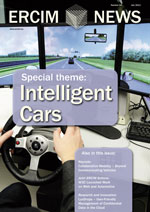
ERCIM News No. 94 Special theme: "Intelligent Cars" (memory and driving - PJ)


Dear ERCIM News Reader,

ERCIM News No. 94 has just been published at
http://ercim-news.ercim.eu/en94

Special Theme: "Intelligent Cars"
Guest editors: Jaroslav Machan (Å KODA AUTO a.s., Czech Republic) and Christian Laugier (Inria, France)
http://ercim-news.ercim.eu/en94/special/


Keynote: "Collaborative Mobility – Beyond Communicating Vehicles"
by Ilja Radusch, Ilja Radusch, head of department “Automotive Services and Communication Technologies” at Fraunhofer FOKUS and head of the Daimler Center for Automotive IT Innovations

This issue for download
pdf
: http://ercim-news.ercim.eu/images/stories/EN94/EN94-web.pdf
epub format: http://ercim-news.ercim.eu/images/stories/EN94/EN94.epub

Next issue: No. 95, October 2013 - Special Theme: "Image Understanding" (see Call at http://ercim-news.ercim.eu/call)

Thank you for your interest in ERCIM News.
Feel free to forward this message to others who might be interested.

Peter Kunz
ERCIM News central editor
------------------------------------------------------------------------
About ERCIM
ERCIM - the European Research Consortium for Informatics and Mathematics - aims to foster collaborative work within the European research community and to increase co-operation with European industry. Leading European research institutes are members of ERCIM. ERCIM is the European host of W3C.
http://www.ercim.eu/
<>

Each issue of ERCIM NEWS is a gift and for me it does not have to be a special theme that speaks directly to the health care, informatics or education communities. I have followed this publication and posted on W2tQ about many fascinating new issues. I'm sure it is over a decade ago since I also subscribed to Technicity, a magazine from Daimler. I bring the two publications together for two reasons (not due to sponsorship - how I wish):

Firstly, this is such a difficult time socio-economically in the EU, evinced in the proportions of younger adults who are unemployed. Publications like this show the opportunities for young people who aspire, but to do so they need the support and opportunities. Safety, design, materials science, energy systems and storage, city transport infrastructure and planning, security, nanotechnology, communications, vehicular informatics ... the possibilities for youths are amazing. In turn, however we need to recognize and respond to the employment potential of those whose path is not primarily academic and research based.

Secondly, in community mental health nursing services for older adults we often come across people who are still driving when their competency is most likely compromised. They should report an admission to hospital, prescribed medication or a specific diagnosis to the DVLA. ERCIM and Technicity both presage the arrival of autonomous vehicles. At present of course an 'intelligent car' depends on the intelligence of the driver. Which is why we get so annoyed when someone drives like an *^%$£!

Driving is a great responsibility and privilege. It is central to who we are, how we define ourselves, our independence, sustaining real social networks and - in my case livelihood. I recognised decades ago there will come a time to hand over the keys. Doing so gracefully, informed by insight and self-awareness is the trick. I don't envy family doctors who have to deal with this when a patient  insists that they are safe behind the wheel. Sometimes we are ageist, hoping that a meeting with their doctor of some 20-30 years might carry some gravitas that their generation will still respond to. Add to this though that the person concerned is not always elderly. It can be very difficult for the driver (person, patient) concerned and their families too. Amid all this, as a community nurse you are trying to establish trust, empathy and rapport. Each time this issue is encountered: it is novel.

I don't want to suggest that suddenly the person behind the wheel is 'unintelligent', far from it. Evidence shows that a diagnosis of dementia does not immediately mean surrender of a driver's license. Behind dementia, however lie altered faculties that add up to more than synonyms: cognitive impairment, impaired perception, recall, and decision making, reduced concentration and attention. I thought there might be something in this issue of ERCIM related to dementia; monitoring the physiological state of the driver, reactions, attention, stress levels, eye movement. Is there a signature for health in driving behaviours?
Unlike other methods of detecting tiredness, the Mercedes-Benz system evaluates a series of indicators in order to assess the alertness of the driver and to recognise the gradual transition between being awake and being tired. AME.info
Our sense of being, of personhood is heightened by movement. When do we feel most alive? What is the most important factor in health and well-being? There are moments when we are stationary and time passes us by. There are other occasions when we move through time. We literally project our ego through time. We enjoy sharing with friends where will be in the future and when we can also suspend time. Cars and air travel extend these abilities, AND mobilities.

The danger is when we pass through not only time but distance at speed without a reliable sense of judgement, without a wholly coherent sense of self and responsibility.

In the not too distant future all this of course could lead us to a new definition of self-care at least in this context?

"Self-care - put your trust in a self-driving vehicle"

 SOME PAPERS via Athens: (other suggestions welcome)

Title: Driving and dementia: what nurses need to know.
Citation: Journal of Gerontological Nursing, Aug 2011, vol. 37, no. 8, p. 10-13, 0098-9134 (August 2011)
Author(s): Flanagan, Nina M.
Source: BNI

Title: Driving with dementia.
Citation: Nursing in the Community, Jan 2005, vol. 6, no. 1, p. 27., 1649-0657 (Jan-Feb 2005)
Source: BNI

Title: Transitions in dementia care: theoretical support for nursing roles.
Citation: Online Journal of Issues in Nursing, May 2012, vol. 17, no. 2, p. 14 unnumbered pages, 1091-3734 (May 2012)
Author(s): Rose, Karen M*, Lopez, Ruth Palan
Source: BNI

Title: Dementia and driving: screening, assessment and advice.
Citation: Lancet, Oct 1996, vol. 348, no. 9035, p. 1114., 0140-6736 (October 26, 1996)
Author(s): O'Neill, D
Source: BNI

Title: Imposed versus involved: different strategies to effect driving cessation in cognitively impaired older adults.
Citation: Geriatric Nursing, Mar 2005, vol. 26, no. 2, p. 111-116, 0197-4572 (Mar-Apr 2005)
Author(s): Jett, K, Tappen, R, Rosselli, M
Source: BNI

Title: A prospective study of cognitive tests to predict performance on a standardised road test in people with dementia.
Citation: International Journal of Geriatric Psychiatry, May 2010, vol. 25, no. 5, p. 489-496, 0885-6230 (May 2010)
Author(s): Lincoln, N, Taylor, J, Vella, K
Source: BNI

Title: Effects of Alzheimer's disease and mild cognitive impairment on driving ability: a controlled clinical study by simulated driving test.
Citation: International Journal of Geriatric Psychiatry, 01 March 2009, vol./is. 24/3(232-238), 08856230
Author(s): Frittelli C, Borghetti D, Iudice G, Bonanni E, Maestri M, Tognoni G, Pasquali L, Iudice A
Source: CINAHL

Title: A community based survey of cognitive functioning, highway-code performance and traffic accidents in a cohort of older drivers.
Citation: International Journal of Geriatric Psychiatry, 01 March 2009, vol./is. 24/3(247-253), 08856230
Author(s): Ingley S, Chinnaswamy S, Devakumar M, Bell D, Tranter R
Source: CINAHL


Additional links:
Alzheimer’s Society - Driving and dementia
DVLA, UK Guide to the current medical standards of fitness to drive
The University of Nottingham - Predicting fitness to drive speed = (total distance traveled)/(total time taken)

Friday, 12 July 2013

BCS: Webinar - Standards for the delivery of patient-centred care in the Safer Hospitals, Safer Wards initiative

Healthcare information standards are essential for the delivery of joined-up patient information and joined-up patient care, in the DoH Information Strategy and in the NHS ‘Safer Hospitals, Safer Wards’ Technology Fund. The establishment of Integrated Digital Care Records (IDCR) across all care settings is a firm expectation by 2018 according to the Secretary of State for Health.

This free webinar provides vital orientation for managers, clinicians and IT staff wishing to participate in these initiatives, who need to understand:
  • Why standards – their role in better patient care
  • How standards should be applied in the NHS ‘Safer Hospitals, Safer Wards’ Technology Fund
  • Which standards to use for exchange and storage of clinical documents
  • Which standards to use for mobile health devices and applications
  • Practical experience in the deployment of standards
Tuesday 16th July, 12.00 80 minute duration – lines open from 11.45 British Summer Time

Speakers:
  • Neil Robinson: IHE UK Chair:
    • Introduction and Closing Remarks
  • Kathy Farndon: Head of Health Information Standards and IG NHS England:
    • The Role of Standards
  • Inderjit Singh: NHS England:
    • Safer Hospitals, Safer Wards Technology Fund initiative
  • Dr Robert Worden: HL7 UK:
    • Clinical Documents and deployment of CDA & XDS
  • Dr Justin Whatling: BCS Health Chair:
    • The clinical need for standards
  • Dr Dave Harvey: IHE UK:
    • Standards needs in mobile applications
Registration:

To register for the free webinar please cut and paste the following link into your browser:
https://connectingforhealth.webex.com/connectingforhealth/j.php?ED=219725507&RG=1&UID=1629531582

SUPPORTED BY HSCIC & NHS ENGLAND

Monday, 24 June 2013

Nursing Informatics 2014 - Call for Submissions


Please forward this message via to your own networks and contacts.

We are pleased to announce that NI 2014, the 12th International Congress on Nursing Informatics, will be held in Taipei, Taiwan, June 21-25, 2014.

The theme of the conference is “eSmart + ” where “e” stands for eHealth, “S” implies simplicity, “m” represents mobility and meaningful use, “a” denotes advanced leadership, “r” indicates revolution, “t” means translational technologies, and “+” symbolizes People Leading uCare Safely. The acronym is also used to convey the idea of adopting smart technology to help health providers deliver higher quality care.

The online submissions system is now open and will remain open until mid-September 2013. Decisions on manuscripts will be made by mid-December 2013.

You can find more information at the conference website: www.ni2014.org

We very much look forward to seeing your submissions and to meeting you in Taiwan next year.

With best wishes

Nick Hardiker & Heimar Marin

Co-Chairs, Scientific Programme Committee, NI2014


Sunday, 7 April 2013

"The Deprofessionals" BBC radio4: nursing, teaching and social work

Driving to Milton Keynes late afternoon for DTMD2013 Mon-Weds, I listened to a BBC radio 4 programme about the political assault on several public professions - The Deprofessionals
What does it mean to be a professional today, at a time when the public services are in a state of turmoil?
Time was when a professional was easily recognised for what he or she did by virtue of their qualifications and experience, when their competence could be measured against ...
It should be available for the next week.

When I think about community mental health nursing since 1985 I can identify with many of the points raised. How the role has changed, the former therapeutic skills focus, the change in skill mix, the advent of Agenda for Change and the existence of staff who may miss being clinically 'banded' altogether.

Friday, 22 March 2013

BBC Horizon II: Processes - step this way ... safely

Following the BBC TV Horizon programme last night "How to Avoid Mistakes in Surgery" I came across the following list concerned with processes:
Sequential steps. Where one step follows another.

Alternative steps. Where conditional logic specifies which of several paths should be traversed.

Iterative steps. Where a single step is repeated multiple times.

Composite steps. Where steps are nested within other steps.

Optional steps. Where any one of a set of steps may be traversed, depending on the results of a boolean operation.

Checklist. Where all of a number of steps must be traversed, but in any order. p.126.
The list is related to software development and manufacturing as per the reference source below. Within informatics and project management I've noticed and written here about the emphasis placed on processes. Process, process and yet more - in one form or other. As A&E doctor Kevin Fong revealed people can get lost in a process (intubation), especially experts within organisational hierarchies - complex teams in urgent circumstances. In information system projects the need for a socio-technical perspective is essential, and is synonymous with due consideration of human factors. Processes are an essential ingredient to understanding the world and there's a huge literature on events, co-ordination, timing, logistics, value ... but as the Horizon programme pointed out there's also a need for reflection, stepping back, taking in or trying to grasp the big picture. Maintaining situation awareness is vital to assure safety and as the program showed in a crisis hindsight makes a blind spot visible. This is why process is one of four P's in Hodges model (the others - purpose, practice and policy). Processes count, but they are only part of the bigger picture.

The steps above are intended for software developers, but the descriptions throw up some points when subject to a more literal - human - interpretation (which might be a problem?).

The 'alternative' steps: could that mean skipping one in turn as in 'alternate'?

And crucially for the checklist are there any risks associated with its being completed in any order?

There is a world of difference between programming methods and logic on the one hand; and human language and dialogue on the other.

Fayad, M.E., Johnson, R.E. Domain-Specific Application Frameworks: Frameworks Experience by Industry.