Showing posts with label governance. Show all posts

Thursday, 9 October 2014

Privacy: Open Data, Individual and Group

The vertical axis of Hodges' model is the individual - group, or self through to collective. Health and social care constantly negotiates this from the ideals and delivery of person-centred care to public mental health. So often for health professionals the emphasis is on the individual, the person's care needs, their strengths, their rights, outcomes and feedback on care received. The same individual focus is also ascribed to records and information. Protection of data, maintaining confidentiality is an essential duty of health care  professionals.  

Earlier this year the government's care.data scheme was placed on hold. 'Open' is the way of the world: open access, open source, open data and open government. Increasingly the group as an entity needs to considered in what may be a new way, as Floridi writes:
The idea that groups may have a right to privacy is not new, and it is open to debate, but it has not yet received all the attention it deserves, although it is becoming increasingly important.
 ...
Open data is more likely to treat types (of customers, users, citizens, demographics population, etc.) rather than tokens (you, Alice, me), and hence groups rather than individuals. But re-identifiable groups are ipso facto targetable groups.It is therefore a very dangerous fallacy to think that, if we protect personal data that identify individuals, the protection of the groups will take care of itself. p.23.

Luciano Floridi. Group Privacy. The Philosophers' Magazine. Issue 65, 2nd Quarter 2014. Pages 22-23.


http://grantabooks.com/The-Private-Life

Here is a related book (on my list) a BMJ award winner:

The Private Life, Josh Cohen

The war over private life spreads inexorably. Some seek to expose, invade and steal it, others to protect, conceal and withhold it. Either way, the assumption is that privacy is a possession to be won or lost.

But what if what we call private life is the one element in us that we can't possess? Could it be that we're so intent on taking hold of the privacy of others, or keeping hold of our own only because we're powerless to do either? ...


Monday, 8 September 2014

Interviews: In the political melee don't forget the green corner...!

individual
INTERPERSONAL : SCIENCES
humanistic ------------------------------------------- mechanistic
SOCIOLOGY : POLITICAL
group

Therapeutic
alliance


"Sir Robin cited research conducted by two psychologists on interviews during the 1987 general election campaign. Dr Peter Bull and Kate Mayer found that Kinnock and Thatcher avoided more than half the questions put to them. They concluded the party leaders used 31 different forms of evasion, among them ignoring the question, acknowledging the question without answering, questioning the question, attacking the question, attacking the interviewer, declining to answer, giving an incomplete answer, repeating a previous answer and claiming already to have answered the question." FT Weekend. p.1


Source:
Katz, Ian, (2014) The death of the political interview. FT Weekend, Life & Arts, September 6-7th. p.1.

Friday, 28 March 2014

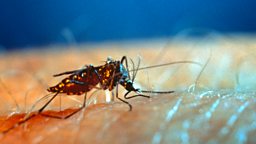
Five Fever Tales: Fact-based dramas about malaria, one of the oldest human diseases

The following radio broadcasts may be of interest:

Five Fever Tales by Lavinia Greenlaw

http://www.bbc.co.uk/programmes/b03yzlhk
Five Fever Tales by Lavinia Greenlaw


These brief plays are very interesting as they present history in a docu-drama approach. The science behind the discovery of what the 'fever' was/is and the challenge for those who first saw new 'living' things through the microscope and then convincing the scientific establishment is quite fascinating.


The economic incentives to solving the 'fever' are also salutary and give pause for thought in considering global health today (and tomorrow - global warning) as is recognition of resistance and current genetic research programmes.

I believe these programmes are freely accessible worldwide, for a limited time period.

Also posted on HIFA2015 c/o the moderator.


Thursday, 13 March 2014

Is it a Ship, Mars Mission I, a Biscuit, IPO, or Cyber Attack ...?

No!

It's a 3rd year student nurse, 
several in fact
launched 
on their careers.

It is quite a poignant life changing and affirming moment for everyone involved. Of course, there are instances were qualification is problematic, but this is about the +ve.

For the student of course, this represents a great achievement and the realisation of the responsibilities that suddenly apply. This is tempered by preceptorship as mentor and sign-off mentors remind and reassure.

Our students have jobs and this is heartening to hear. They really are off and up-and-running.

There are graduation celebrations and parties to follow for them, but this past week I wondered about another way to signify this literally professional defining event. A way that accompanies and yet transcends the final page 'sign-off' that clearly does carry volumes of meaning and learning.

There was a fleeting thought that I shared: should I form an arch with the student's mentor for the student to pass through? A laugh.

Heaven forbid that this week and day should be for any student an anticlimax. Speaking of heaven there are of course pledges out there. Which also includes:

Nursing is an art;
and if it is to be made an art,
it requires as exclusive a devotion,
as hard a preparation,
as any painter's or sculptor's work;

for what is the having to do with
dead canvas or cold marble,
compared with having to do with the
living body - the temple of God's spirit?

It is one of the Fine Arts;
I had almost said
the finest of the Fine Arts

- Florence Nightingale, 1868.

As I would like to pass on the (twinned-)baton that is Hodges' model, could there be a form of words that can reflect the entry of a new nurse into our midst; an exchange of words that captures the moment for the student, the mentors, nursing and the public we care for and with?

This may seem twee, archaic, a nod to times of formality, the sense of duty, vocation and hierarchy. This wouldn't be about hierarchy, experience yes. It would be reflexive, a dialogue between these 'professionals' that acknowledges the student's rite of passage, the present moment and the collective future of nursing, of caring and their position in time and the professions' values.


Wednesday, 22 January 2014

Better information means better care

BBC Radio 4: Inside Health 21 January 2013
Margaret McCartney and Mark Porter ask whether the anonymity of patient records on a new NHS database can be guaranteed?
NHS: Your records:
Using information about the care you have received, enables those involved in providing care and health services to improve the quality of care and health services for all. The role of the Health and Social Care Information Centre (HSCIC) is to ensure that high quality information is used appropriately to improve patient care. 
NHS England has therefore commissioned a programme of work on behalf of the NHS, public health and social care services to address gaps in information. Our aim is to ensure that the best possible evidence is available to improve the quality of care for all.  ...
http://www.nhs.uk/NHSEngland/thenhs/records/healthrecords/Pages/care-data.aspx


INTERPERSONAL : SCIENCES
humanistic ------------------------------------------- mechanistic
SOCIOLOGY : POLITICAL

individual
my interests

scientific interests


social interests

commercial interests
group - population

Wednesday, 4 December 2013

The EQUATOR Network: Support for “Declaration of transparency”

http://www.equator-network.org/

Following publication in the BMJ, in October 2013, of a proposed declaration of transparency a number of journals have now expressed their support for the transparency declaration and now ask lead authors to sign a declaration affirming that:
"this manuscript is an honest, accurate, and transparent account of the study being reported; that no important aspects of the study have been omitted; and that any discrepancies from the study as planned (and, if relevant, registered) have been explained".

The following journals have now expressed their support:

BMJ
BMJ Open
BJOG: An International Journal of Obstetrics and Gynaecology
Canadian Journal of Anesthesia
NIHR Journals Library

Reference: Altman DG, Moher D. Declaration of transparency for each research article. BMJ 2013;347:f4796 [free full text].


My source: equator network - newsletter December 2013

Saturday, 16 November 2013

[hifa2015] How can we stop ICANN decision that could profoundly damage global health?

Dear HIFA colleagues,

A few weeks ago I posted the Lancet article below, which highlights the threat of a commercial sale of the new top-level domain ".health".

The authors point out that ICANN (Internet Corporation for Assigned Names and Numbers), which controls all internet naming, could be about to make a decision to sell ".health" to the highest commercial bidder. The decision is imminent. I have indeed heard that an ICANN meeting that will include discussion of ".health" is being held over the *next few days*.

As the authors of the Lancet article point out, sale of ".health" to a commercial enterprise "could have a profound effect on health information access and quality for generations to come". This is something that should concern all of us, everywhere.

ICANN hosts a wiki which apparently can only be edited by them and which briefly describes the issue in rather difficult-to-follow language, without actually explaining the nature of the objections that have been raised by leading health organisations, including WHO, and by national governments:
http://icannwiki.com/index.php/.health

These objections may be found elsewhere by googling. Essentially, there is a *great* deal of concern among health agencies worldwide, and a small handful of governments, of the public health consequences of commercialising ".health". In particular, there will be little if any assurance that the content of websites carrying the ".health" domain name will contain reliable health information. There is a serious risk that misinformation and/or commercially biased information could be propagated using the ".health" suffix. It is likely that many citizens worldwide will see the ".health" suffix as an indication that the information is primarily intended for their health, whereas the reality would be that much of the information would inevitably be wholly unreliable, and driven by commercial (or even ideological) motives.

I was especially concerned to read the latest news on this wiki, which read as follows: "The IO [Independent Objector - see below] lost its objection to Afilias' applicant for .health in a ICC determination by 3 panelists made on 6 November 2013. The determination was the first Limited Public Interest Objection to be decided, as well as the first objection filed by the IO to be decided. [19]

I am not entirely clear how the proceedings work, but the wiki tells us that "[ICANN's Independent Objector] is an appointed authority on international law whose role is to object to strings on the grounds of Community harm and Limited Public Interest were detailed in the applicant guidebook. His objections are official objections and are funded by ICANN, though his office is otherwise independent. Reasons for the specific case against .health were not initially given, but, in the case of Limited Public Interest, "the applied-for gTLD string must be contrary to generally accepted legal norms of morality and public order that are recognized under fundamental principles of international law. The expert panel appointed by the ICC will base its decision on the existence of such a contradiction." The applied for string must threaten an incitement to violence of lawless action, discrimination, child pornography, or "be contrary to specific principles of international law as reflected in relevant international instruments of law.""

This reference to "violence of lawless action, discrimination, child pornography..." is bizarre and I cannot claim to understand how this is relevant. What is at issue here is the availability of reliable versus unreliable healthcare information. I hope that others on HIFA may be able to enlighten us further.

Regrettably, there has been an almost total absence of advocacy and awareness-raising about the issue, apart from The Lancet article. Other than the authors of the Lancet article, there is no advocacy leadership of which I am aware. This is the kind of issue that needs a prominent global health leader to speak out. I do not know whether Margaret Chan, Director-General of WHO, is free to speak out on this, but I feel that we need a strong statement from someone at the highest level.

In the meantime, what can we (HIFA members) do to stop ICANN making - or at least deferring - a decision that could profoundly damage global health?

Best wishes,
Neil
HIFA profile: Neil Pakenham-Walsh is the coordinator of the HIFA2015 campaign and co-director of the Global Healthcare Information Network. ...
[ As mentioned above Neil also posted the Lancet article - I have just copied the link below ]

Below is the citation and extracts of a new article in The Lancet. The full text is freely available here:
http://www.thelancet.com/journals/lancet/article/PIIS0140-6736(13)62215-1/fulltext

Ensuring the future of health information online
Tim K Mackey, Bryan A Liang, Amir Attaran, Jillian C Kohler
The Lancet, Volume 382, Issue 9902, Page 1404, 26 October 2013
doi:10.1016/S0140-6736(13)62215-1Cite or Link Using DOI

Tuesday, 8 October 2013

Zero, One, Fifteen, (Thirty, Sixty...?)

SOCIETY
care-S S-cares
context: UK news media 15 minute carer visits to elderly clients

INTERPERSONAL : SCIENCES
SOCIOLOGY : POLITICAL
individual
Reflecting on Social Care with Hodges' model
The one, self, me, a person. Carers: ethics (and common sense? when is 15 minutes of 'fame' enough?), demonstration of rapport, empathy, dignity, loneliness, independence. Carer stress. Job satisfaction. Staff knowledge and skills. Observation. Mental state. Mood. Choices - personal preferences. Personal - carer's values. Cognition - Re-cognition. Case review. Individualized care? Expressed concerns (wither...?) theory: task vs. person-centered care
mechanistic aspects of care, travel, geography, arrival, tasks, plan, recording, constraints - esp. time, practical problems encountered. Number of carers involved. Safety. Protective clothing. Seasonal factors. Evidence base? Best practice? Relapse rates? Telecare role? Physical mobility - movement. Systems, processes, logistics and scheduling. Degrees of freedom - flexibility. Data, information, datasets. Admissions - depth of data?
practice: task vs. person-centered care
Caring relationship building, trust - very personal - intimate care, subjective: time with someone I like / don't like? Relatives experience. Social care infrastructure - community centers. Ability to go out shopping with a carer. Media: BBC 2 Newsnight 7/10/13; The Times; C4 News. Social contact. Social mores (time?)
Policy, professionalism, recording, outcome measures. Agreement - care plan. Care reviews. Ban on 15 minute visits? Management. Standards. Supervision. Zero hour contracts. Pay and conditions. Staff turnover. Vulnerable adults. Personal development, training. Risk of organization's reputations being damaged. Corporate responsibility, values. 'Value for money'. New commissioning systems. Advocacy (position significant). Whistleblowing. 'Francis effect' increase in nursing posts. HSJ, 25 Oct 2013, p.6. 'Funded establishment'.

group - population

Discount the contract, you can then 'discount' the individual worker and the client.
Care Relationship = Care Transaction

Wikipedia: "15 minutes of fame"

Saturday, 20 July 2013

Monday, 1 July 2013

Hodges' model - DSM V: the Politics of (Well-being (Health [Mental Health])) salience, books and domains

INTERPERSONAL : SCIENCES
SOCIOLOGY : POLITICAL

individual
Diagnostic and Statistical Manual of Mental Disorders (DSM-5)
'salience' 
‘Salience syndrome’ replaces ‘schizophrenia’ in DSM-V and ICD-11: psychiatry’s evidence-based entry into the 21st century? J. Van Os

bereavement
medical, bio-psycho-social, recovery model
self-efficacy
self-stigma

DSM5 and Ethical Relativism

Ultimate terminology: 
self, person, patient, service user, client, 
Mr, Miss .....
Diagnostic process
'Evidence', objectivity, 
repeatability, validity, treatment, drugs
Credit Heidi Cartwright, Wellcome Images
The history of DSM: APA : Wikipedia
stigma
social services
social network (size, quality)
anti-psychiatry
social norms?

Media: Books review - essay;
Stevenson, T. (2013) Mind field, FT Weekend, May 25-26. p.8.
American Psychiatric Association APA

dx revision watch

Opinion - commentary:

DSM-5: Caught between Mental Illness Stigma and Anti-Psychiatry Prejudice

Is Criticism of DSM-5 'Anti-psychiatry'?

Goldacre: Bad Pharma
.... and much more...!

group - population


Image: http://wellcomeimages.org/

Monday, 17 June 2013

Walking the line of signs of movement in fresh air ...


P Being mobile and active is one
H of the most important
Y factors in longevity
S and quality of life.
I  A model of activity in residential
C and nursing home care should be a right.
O I often enquire about
-
P the possibility of residents who
O tend to become
L agitated at a certain time of
I of the day, to be taken, or assisted to
T have a walk, or at least
I  feel the fresh
C air on their faces.
A This can make a real
L difference, as Nature's natural sedative.


Prompted by a question posed by Jackie Pool on LinkedIn:
Supporting individuals through activity - a positive role for carers?

Jackie's description of an everyday indoor activity being used to promote movement and mobility flags a real issue. Access to the outdoors is still very difficult for many residents on units that are located upstairs.

Residential homes should (must) have sufficient staff to facilitate a full range of activities. This month in the Northern hemisphere it is summer: outside.

In terms of taking people out, staff often look at me and I them, as together we acknowledge the constraints that frequently operate. I've walked outside with residents myself a great opportunity to assess and engage. Staff know the benefits of movement and activity. This helps us all to get out-side of our-selves. The gift it that this diversion of sun and air (and rain) can reach through confusion and agitation, even if only for a short period of time. Hence it can be acutely frustrating when this basic need can not be fulfilled. Holding on to life's essential repertoire is vital.

Friday, 7 June 2013

Information Commissioner's Office (ICO) fines Glasgow City Council £150,000

The Information Commissioner's Office (ICO) has fined Glasgow City Council £150,000 for the loss of two unencrypted laptops, one of which contained personal details about more than 20,000 people.

...

An ICO investigation discovered that - despite previous warnings - Glasgow City Council had provided staff with unencrypted laptops after there had been problems with encryption software. At least 74 of these laptops remain unaccounted for, with at least six of them known to have been stolen.

Thursday, 6 June 2013

Government steps in to settle medical dispute over digital patient records - Canada

REGINA - The Saskatchewan government has stepped in to help three Regina doctors who were having problems getting their patients' digital medical records from the clinic where they used to work.

The office manager at the Gateway Alliance Medical Clinic says efforts to get the electronic records from the Midway Walk-in Healthcare Centre had been ongoing for two months.
Robin Anderson says Midway transferred paper files as required by Saskatchewan law, but not the digital records.

http://bit.ly/14xRYgS

My source: Peter Kurilecz - Records Management List

Information and Records Management Society

Thursday, 21 March 2013

"How to Avoid Mistakes in Surgery" BBC TV Horizon 21/03/2013 2100 UT

On 03/18/13 9:45 AM, Martin Bromiley wrote:
--------------------
About two years ago I approached Dr Kevin Fong with an idea for a BBC scientific programme, and at last it’s happened. Since September I’ve been working with Kevin and the BBC Horizon team to pull together a programme about human factors in healthcare. It looks at how learning about the human in the system and the system itself can bring about enormous improvements in safety and outcomes that technology and medical science can only aspire to.

Kevin and the Horizon team have produced something inspirational yet scientific, and - just as importantly - is by a clinician, for clinicians. It's written in a way that will appeal to both those in healthcare and the public. It uses a tragic death to highlight human factors that all of us are prone to, and looks at how we can learn from others both in and outside healthcare to make a real difference in the future.

Although the BBC Management chose a surgery based title for the programme to gain mass public appeal the lessons of this programme are for everyone in healthcare.

It would wonderful if you could pass on details of the programme to anyone you know who works in healthcare. My goal is that by the end of this week, every one of the 1 million or so people who work in healthcare in the UK will be able to watch it (whether on Thursday or on iPlayer). BBC 2 Thursday 21 March 2100 UK

Cheers

Martin Bromiley


My source: Joy Whitlock via LinkedIn

Monday, 8 October 2012

The Information Centre: October bulletin

Welcome to the October edition of IC Knowledge

Welcome back to IC Knowledge, the online bulletin that keeps you up-to-date with new data releases, service news and forthcoming events.

In our first edition we look at:

  • New data linkage service now available
  • GPES to provide data for QOF payments from April 2013
  • Data workshop set to inspire innovation in use of information
  • National Diabetes Audit set for busy autumn of activity
  • First ever Social Care Outcomes Framework published
  • Updated commissioning data sets due next month
  • Improved mental health report among new statistics due out soon

Read the latest edition now

My source: IC subscription

Copyright © 2012, Re-used with the permission of the Health and Social Care Information Centre. All rights reserved.

Thursday, 16 August 2012

[Two related items] Public consultation opens for World Conference on International Telecommunications (WCIT-12)

Firstly:
Stakeholders from across industry, civil society and general public
are encouraged to make their voices heard 

Geneva, 15 August 2012 – The public consultation process for WCIT-12 opened today, with interested parties able to make their written contributions to the WCIT-12 discussions via ITU’s website in any of the six official UN languages.

The site opened for contributions today at 15:00 CET. It can be accessed at
 www.itu.int/en/wcit-12/Pages/public.aspx

The site is the result of a decision by ITU Council on 11 July 2012 to make a draft of the principal input document to the WCIT-12 conference publicly accessible, and to establish a website where all stakeholders can express their views and opinions on the content of that document or any other matter related to WCIT.
 
Paul Budde Communication Pty Ltd
5385 George Downes Drive
Bucketty NSW 2250, Australia
email: paul AT budde.com.au

Secondly:
 
---------- Forwarded message ----------
From:
Date: Tue, Aug 7, 2012 at 8:40 AM
Subject: [ISOC] NEWS RELEASE: Internet Society Board of Trustees Expresses Concern about the Potential Impact of the World Conference on International Telecommunications on the Internet
To: isoc-members-announce AT elists.isoc.org

Internet Society Board of Trustees Expresses Concern about the Potential Impact of the World Conference on International Telecommunications on the Internet

[Washington, D.C. and Geneva, Switzerland – 07 August 2012] – The Internet Society Board of Trustees, during its recent meeting in Vancouver, Canada, discussed the upcoming World Conference on International Telecommunications (WCIT) and expressed concern that some proposed changes to the International Telecommunication Regulations (ITRs) Treaty could have a negative impact on the Internet.

Eva Frölich, Chair of the Internet Society Board of Trustees, remarked, “The Internet Society believes that the International Telecommunication Regulations should contain high level principles and that revisions should focus on things that have clearly worked in the field of global communications: competition, privatization, and transparent and independent regulation.  It is our sincere hope that revisions to the ITRs will not interfere with the continued innovation and evolution of telecommunications networks and the Internet.”

The Board noted that the success of the Internet has been driven by open, consensus-based standards processes embodied in organizations such as the Internet Engineering Task Force and other critical parts of the Internet ecosystem that rely on openness and transparency.

The Internet Society Board of Trustees highlighted concerns about certain changes to the ITRs, which it found troubling.  Among other things, these proposals would:
  • Make ITU-T standards mandatory;
  • Create a new model for Internet interconnection via the ITRs;
  • Adversely impact Internet naming, numbering, and addressing;
  • Regulate network aspects that have never been part of telecommunications, including IP routing; and,
  • Extend the scope and application of the ITRs to the Internet and Internet providers.
The Board is of the view that these types of provisions, if adopted, could jeopardize global connectivity and the future growth of the Internet, particularly in developing countries; impact the architecture, security, and global interoperability of the Internet; and impose detrimental burdens on the free and open Internet that billions of people around the world depend upon today.

Recognizing that developing countries face challenges in building Internet infrastructure and in bringing down connectivity costs, the Board of Trustees emphasized the Internet Society’s commitment to helping these countries overcome those challenges in ways that support global interoperability and the free flow of information, such as via the development of Internet Exchange Points to improve Internet performance and drive down Internet connectivity costs.

The Internet Society is a strong proponent of the open, consensus-based, multistakeholder model for standards setting and Internet policy development.  “Transparency and the multistakeholder model are essential to developing sustainable and effective Internet public policy,” said Internet Society President and Chief Executive Officer, Lynn St. Amour.

The Internet Society Board of Trustees called on governments not to adopt changes to the ITRs that would undermine the security, stability, and innovative potential of networks worldwide. In preparing for the WCIT, the Board urged all governments to engage in an open and participatory national dialogue, and encouraged Internet Society members to contribute actively to these national discussions that have a global impact.

For more information on WCIT, visit http://internetsociety.org/wcit

Link: http://www.internetsociety.org/news/internet-society-board-trustees-expresses-concern-about-potential-impact-world-conference

My source: Community Informatics List

Friday, 15 June 2012

RCN survey on NMC fee increase: what do you think?

FROM the RCN:
BREAKING: The RCN has today launched a new survey to find out what YOU think about the proposal by the NMC to increase your annual registration fee from £76 to £120.

We oppose the move strongly, but we need to know what you think too. You answers will help shape our official response to their consultation so it's vital that you have your say.
Complete the survey now, it takes two minutes. (Alex)
http://frontlinefirst.rcn.org.uk/page/s/NMCsurvey

My comment:
No doubt like a huge majority of the population I have personal reasons for total disbelief, disrespect in the banking - finance sector. This is in addition to the bailouts that we are ALL still paying for and it isn't over yet of course.

This NMC fee increase makes me very angry too. If you're a UK nurse you should be incensed.

As the public sector cuts continue with worse to follow apparently the pressures on nurses will increase. As a result resources will be further pinched, with short-cuts in care mistakes will inevitably follow. So the increase in costs incurred in managing disciplinary matters are bound to rise as a consequence. This is a trend that must be stopped and properly addressed now.

Now you want me to contribute to an NMC bailout?

This is no way to manage professionalism, accountability and governance. ...

I appreciate that as an organisation the NMC's hands are tied - it must seek funds to maintain its work, fulfill its role. But, please don't hold me and the UK nursing workforce hostage at the same time.

Additional link:
http://www.rcm.org.uk/midwives/news/unions-rally-against-proposed-nmc-hike/

Friday, 16 March 2012

Dame Fiona Caldicott to lead confidentiality review

Dame Fiona Caldicott has agreed to lead an independent from Government review of the balance between protecting patient information and its sharing, to improve patient care.

The Department expects to respond to the panel’s recommendations when the review publishes during 2012.

The recommendation for a review of the balance between protecting patient information and its sharing, to improve patient care was part of the Future Forum’s recommendations to Government on the modernisation of health and care.

... more.

My source:
IHTSDO CoP