Showing posts with label BBC. Show all posts

Saturday, 4 October 2014

Bits of information in 2049

individual
INTERPERSONAL : SCIENCES
humanistic ------------------------------------------- mechanistic
SOCIOLOGY : POLITICAL
group
Who?Kill the Moon
1 0
0 1
Dr

Friday, 28 March 2014

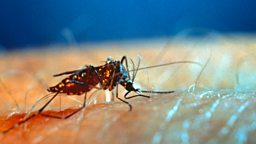
Five Fever Tales: Fact-based dramas about malaria, one of the oldest human diseases

The following radio broadcasts may be of interest:

Five Fever Tales by Lavinia Greenlaw

http://www.bbc.co.uk/programmes/b03yzlhk
Five Fever Tales by Lavinia Greenlaw


These brief plays are very interesting as they present history in a docu-drama approach. The science behind the discovery of what the 'fever' was/is and the challenge for those who first saw new 'living' things through the microscope and then convincing the scientific establishment is quite fascinating.


The economic incentives to solving the 'fever' are also salutary and give pause for thought in considering global health today (and tomorrow - global warning) as is recognition of resistance and current genetic research programmes.

I believe these programmes are freely accessible worldwide, for a limited time period.

Also posted on HIFA2015 c/o the moderator.


Sunday, 13 October 2013

Health, Art and The Reith Lectures 2013 (and the search for the perpetual umbilicus)

This week sees the start of The Reith Lectures on BBC Radio 4 by Grayson Perry.

The question is: who decides on what makes art good?

Perry writes in the Financial Times Weekend:
Clement Greenberg, a famous art critic in the 1950s, said that art will always be tied to money by an umbilical cord of gold, either state money or market money. I'm pragmatic about it: one of my favourite quotes is you'll never have a good art career unless your work fits into the elevator of a New York apartment block.
Once born into the world, the umbilical cord that transfers and imbues life and sustenance no longer matters physically. It is the social ties that bind, according to the lyrics and life experience.

In health and social care we need to find a perpetual umbilical cord that makes well-being and health not just something to take for granted. Not some thing that is only noticed when the piece of art won't fit into the elevator any longer.

This is the challenge in health care. A challenge that will see art movements and markets come and go. The solutions will rely on science, technology and art.

@science @technology @art 
each brings its own engineering.

We need tools that facilitate self-care when needed. Cognitive engineering that people can call upon by virtue of the combined literacies they possess. Self-care that is delayed due to self-knowledge.

Cognitive tools people can take anywhere; from elevators in New York and doors to apartments, yurts in Mongolia, the multitude of tents in Jordan to the terraced houses near Wigan Pier ...


Financial Times, Grayson Perry’s Reith Lectures: Who decides what makes art good? October 11, 2013 7:16 pm

Tuesday, 2 July 2013

Living in the Memory Room: BBC Radio 4

Some people have no choice - they must become time travellers ....
There are 800,000 dementia sufferers in the UK. Kim Normanton presents a personal programme about memory and dementia, inspired by her mother's illness. She explores a new approach to treatment - recreating the past.

As her mother's memory of recent events was destroyed ... more

Sunday, 12 May 2013

International Nurses' Day 2013: "The drama of it All"

There is a new nursing drama series starting on BBC TV next week - Frankie:
District nurse Frankie Maddox is a saint. At least she would be if it weren’t for her fondness for red wine, loud music, ghastly singing and fast cars.

Whether it’s an elderly man with dementia, a pregnant woman whose husband is on duty in Afghanistan or a sickly young child who’s never at school, nothing is too much trouble for this caring, smiley character. “Why do you always insist there’s something we can do, when sometimes there isn’t?” snaps Dr Evans (Jemma Redgrave). Because “the world is my patient,” Frankie explains, although she has the grace to grimace after delivering such a clunking line (from Radio Times).
That line may be clunking as a piece of dramatic prose, but there is a need to make some noise that extends beyond nursing's one-to-one encounters.

We are well aware of the challenges that the NHS faces, the themes are well known and read like a script that is increasingly played out on wards, the media and in parliament. The latest playwright is Francis. This is the drama we cannot ignore locally.

What of nursing globally on IND 2013?

The nursing communities within the various nations must also listen to the world. We can make a difference as individuals by challenging our often parochial perspectives; by trying to travel, seeking to engage with others electronically and learn what global nursing organizations are doing on our behalf.

Best wishes to nurses everywhere.


Sunday, 7 April 2013

"The Deprofessionals" BBC radio4: nursing, teaching and social work

Driving to Milton Keynes late afternoon for DTMD2013 Mon-Weds, I listened to a BBC radio 4 programme about the political assault on several public professions - The Deprofessionals
What does it mean to be a professional today, at a time when the public services are in a state of turmoil?
Time was when a professional was easily recognised for what he or she did by virtue of their qualifications and experience, when their competence could be measured against ...
It should be available for the next week.

When I think about community mental health nursing since 1985 I can identify with many of the points raised. How the role has changed, the former therapeutic skills focus, the change in skill mix, the advent of Agenda for Change and the existence of staff who may miss being clinically 'banded' altogether.

Thursday, 21 March 2013

"How to Avoid Mistakes in Surgery" BBC TV Horizon 21/03/2013 2100 UT

On 03/18/13 9:45 AM, Martin Bromiley wrote:
--------------------
About two years ago I approached Dr Kevin Fong with an idea for a BBC scientific programme, and at last it’s happened. Since September I’ve been working with Kevin and the BBC Horizon team to pull together a programme about human factors in healthcare. It looks at how learning about the human in the system and the system itself can bring about enormous improvements in safety and outcomes that technology and medical science can only aspire to.

Kevin and the Horizon team have produced something inspirational yet scientific, and - just as importantly - is by a clinician, for clinicians. It's written in a way that will appeal to both those in healthcare and the public. It uses a tragic death to highlight human factors that all of us are prone to, and looks at how we can learn from others both in and outside healthcare to make a real difference in the future.

Although the BBC Management chose a surgery based title for the programme to gain mass public appeal the lessons of this programme are for everyone in healthcare.

It would wonderful if you could pass on details of the programme to anyone you know who works in healthcare. My goal is that by the end of this week, every one of the 1 million or so people who work in healthcare in the UK will be able to watch it (whether on Thursday or on iPlayer). BBC 2 Thursday 21 March 2100 UK

Cheers

Martin Bromiley


My source: Joy Whitlock via LinkedIn

Thursday, 29 November 2012

(Extreme) sensitivity to initial conditions: Employment - Sickness

There was an item today on BBC Radio 4's You and Yours on the government's Fit for Work tests.

The new fitness for work assessments have been under review. The discussion featured Professor Malcolm Harrington and his final report on the Work Capability Assessment Review and highlighted the humanistic and mechanistic dimensions of this very complex issue (see also the back-to-work programme?). Points raised include:
  • the impact of certain medications and treatments on an individual's ability to partake in an interview;
  • the meaningfulness of an appeals process that once won, then sees subsequent recalls;
  • 4/10 appeals are won;
  • the need to balance decision making and the computer based process, with the former utilising documentary evidence;
  • people with mental health and cognitive problems may be less able to advocate for themselves.
What troubled me is (the admittedly) single example were a client attending a review was advised not to bring documentary evidence. What this does is to effectively switch OFF three of four care domains: SOCIAL, INTERPERSONAL and (remarkably) the SCIENTIFIC.

What are the purposes to which clinical assessments, tests, reviews can be put? Why do clinicians and the social care team create records?

Relying primarily upon, or being driven by a computer based algorithm makes this a POLITICAL 'exercise'.

As such it will be seen SPIRITUALLY as cold and uncaring.
POLITICAL neglect reinforcing similar neglect and disinterest in the CITIZENRY.