Showing posts with label economics. Show all posts

Friday, 10 October 2014

WMHD II c/o LSE: Investing in crisis care for people with schizophrenia makes moral and economic sense

“When someone has a mental health crisis, it is distressing and frightening for them as well as the people around them. Urgent and compassionate care in a safe place is essential – a police cell should never need to be used because mental health services are not available. For me, crisis care is the most stark example of the lack of equality between mental and physical health.” 
(The Rt Hon Norman Lamb MP, Care and Support Minister)
There is a strong moral and economic case for investing in innovative approaches that support people with schizophrenia to live independently in the community. Crisis resolution and home treatment teams and crisis houses can help reduce the need for expensive hospital admissions with some studies suggesting that the costs of care can be reduced by up to 30% through these service models. There is a clear potential for Clinical Commissioning Groups to make better use of their resources by investing in home treatment teams and crisis houses as approaches to crisis resolution.
My source: The London School of Economics and Political Science, Health and Social Care blog email

Hodges' model in recovery ...
Jones P. (2014) Using a conceptual framework to explore the dimensions of recovery and their relationship to service user choice and self-determination. International Journal of Person Centered Medicine. Vol 3, No 4, (2013) pp.305-311.

Friday, 19 September 2014

Thursday, 4 September 2014

Wednesday, 3 September 2014

Five Domains - Five Gyres

There are five domains in Hodges' model that can help us assess, plan and formulate health and social care, support reflection upon interventions and evaluate progress over time. An aide-memoire indeed!
individual
INTERPERSONAL : SCIENCES
humanistic ------------------------------------------- mechanistic
SOCIOLOGY : POLITICAL
group


Brain Plasticity


Plastic Brain

With five domains to support short and longer-term memory do we really need to force the oceans to remember when we fail to care...?

Thursday, 14 August 2014

Paper: Low-cost strategies to improve dementia care

An interest in health and science invites some thought about chaos, complexity and catastrophe theory. These suggest quite a cold - mechanistic - perspective of reality. So trying to think of clinical and nursing examples beyond fluid dynamics, the heart muscle... to more socially oriented applications demands some creative thinking.

In my work within intermediate support in the community for decades my colleagues and I come across cases were husband, wife, partner have looked their significant other to the nth degree. That degree can include hiding the extent of a person's cognitive problems from other family members. Suddenly there is a real catastrophe as the carer is taken acutely ill and hospitalised.

Left at home soon the dependency is revealed. Trying to negotiate care at home can then be a real challenge.

Alternately, when people living with dementia are hospitalised for physical reasons another host of challenges arise.

I've a relative who works over at Warrington General Hospital and it's great to be able to help highlight a paper written by Michelle Beavan their dementia champion and published in Nursing Times:

Beavan M (2014) Low-cost strategies to improve dementia care. Nursing Times; 110: online issue.


Tuesday, 12 August 2014

Disobedient Objects

individual
INTERPERSONAL : SCIENCES
humanistic ------------------------------------------- mechanistic
SOCIOLOGY : POLITICAL
group


personal ethics


objects

social justice


The Victoria and Albert Museum 26 July 2014 – 1 February 2015
Disobedient Objects:
From Suffragette teapots to protest robots, this exhibition is the first to examine the powerful role of objects in movements for social change. It demonstrates how political activism drives a wealth of design ingenuity and collective creativity that defy standard definitions of art and design.

Image source: Inflatable cobblestone, action of Eclectic Electric Collective in cooperation with Enmedio collective during the General Strike in Barcelona 2012.
© Oriana Eliçabe/Enmedio.info

Tuesday, 5 August 2014

Trade winds and time: The Clock of the South

S
INTERPERSONAL : SCIENCES
E --------------------------------------- W
SOCIOLOGY : POLITICAL
N
G7
G8
 ..


Alt


trade-winds
Socio-
(political)

Clock of the South
individual
INTERPERSONAL : SCIENCES
humanistic ------------------------------------------- mechanistic
SOCIOLOGY : POLITICAL
group

C/o BBC: Bolivian Congress clock changed to turn anti-clockwise

The clock displayed on the Bolivian Congress building, located in the city of La Paz, has been re-set to run in reverse.

Its hands turn left and the numbers have been inverted to go from one to twelve to the left.

It's the latest measure taken by the government of President Evo Morales to promote the indigenous identity of the Andean country. ...
http://www.bbc.co.uk/news/world-latin-america-28040065

Additional link:
World Economic Forum

updated 26 August 2014
BBC Radio 4 20:00: Whatever Happened to Global Governance?
http://www.bbc.co.uk/programmes/b04f9rdr

Original image source:
http://bubblear.com/wp-content/uploads/2014/06/clock1-1110x400.jpg

Monday, 21 July 2014

The Cost of Things: The quality of what is fixed and what is marginal

individual
INTERPERSONAL : SCIENCES
humanistic ------------------------------------------- mechanistic
SOCIOLOGY : POLITICAL
group

Internet of Things 
(IoT)
http://www.thezeromarginalcostsociety.com/
The Zero Marginal Cost Society

IoT is not just an incredible prospect it is an incredible happening.

Let us not forget however
the Fixed Costs of Social Care


Should some of the costs that assure High Quality be fixed, or remain intangible?

Monday, 14 July 2014

Sense making? miss-il-es civil-ians te-ears

individual
INTERPERSONAL : SCIENCES
humanistic ------------------------------------------- mechanistic
SOCIOLOGY : POLITICAL
group


tears


tears


civilians
to
defend
m
i
s
s
i
l
e
s
m
i
s
s
i
l
e
s
to
defend
civilians


Source: Various news media over several days - current and past...
 

Monday, 7 July 2014

Book: The social atlas of Europe

www.europemapper.orgSee Europe as never before!

The social atlas of Europe
Dimitris Ballas, University of Sheffield
Danny Dorling, University of Oxford
Benjamin Hennig, University of Oxford

"An insightful look at today's Europe - through the underlying realities that Europeans live every day, all brought to life in charts and maps that reveal the human geography of this vitally important area of the world." Robert B. Reich, University of California at Berkeley.

The social atlas of Europe is the first human geography atlas to consider the European economy, culture, history, human and physical geography as a single land mass and a more unified European people. It provides an accessible overview of Europe and a human geography contribution to debates about a wide range of topics. It includes:

- Maps on over 80 topics ranging from life expectancy, greenhouse gas emissions to Eurovision Song Contest voting patterns
- Uses innovative full colour visualisation methods
- Explores Europe's society, culture, economy, politics and the environment
- State-of-the-art Geographical Information Systems (GIS) and new human cartography techniques

More information about the book is available on its website www.europemapper.org

Available at the special price of £19.99 (plus p&p) at www.policypress.co.uk/display.asp?K=9781447313533
Kathryn King
Marketing Manager
Policy Press, University of Bristol
6th Floor, Howard House, Queen's Avenue, Clifton, Bristol BS8 1SD
Tel: +44 (0) 117 331 5369
Email: kathryn.king AT bristol.ac.uk

My source: EUROPEAN-SOCIOLOGIST list at JISCMAIL.AC.UK

Saturday, 5 July 2014

i c u

individual
INTERPERSONAL : SCIENCES
humanistic ------------------------------------------- mechanistic
SOCIOLOGY : POLITICAL
group


tears


tears


Avatar image "I see me through your eyes."
te ar s

Wired: Avatar 2, 3 and 4

ICU - Intensive Care Unit
Image: http://i1.ytimg.com/vi/Ek5C0NhnNlA/maxresdefault.jpg

Monday, 30 June 2014

Two-day symposium ‘Concerning Relations: Sociologies of Conduct, Care and Affect’ 28-29 Nov. 2014

We are pleased to announce a two-day symposium ‘Concerning Relations: Sociologies of Conduct, Care and Affect’, 28/29 Nov. 2014, University of Exeter. The aim of this exciting international workshop is to bring together leading researchers, practitioners and scholars from care studies, sociology of health and illness, science and technology studies, humanities and philosophy to rethink care. We also plan to publish the results of the workshop.

This interdisciplinary symposium, funded by Foundation for the Sociology of Health and Illness (FSHI) and Exeter University, aims to interrogate the implications of shifting the focus of health care away from ‘delivery’ towards care as an ongoing everyday accomplishment. The situatedness of care relations and how situated care relations are practiced and experienced are vital to understanding the impacts care has upon patients, families and healthcare staff. This shift represents a contrasting view on care, from one that is predicated upon a discourse of absence (of care) or lack (of dignity) to the affective interactional relations between social actors. Such shifts of focus are of prime concern as care may be viewed less as a commodity which can be lost, saved, traded or withheld, but as a relation that is deeply embedded within institutional contexts, of individuals and the social worlds they inhabit.

This symposium examines spaces of collisions, elisions or alignments of social worlds, within which the affective dimension of social life in healthcare may be fruitfully examined. Drawing upon relational concerns as a distinct and distinctive mode of sociological inquiry, the symposium seeks to develop an understanding of care and its consequences that help us get beyond the economics of care as a commodified and managed form of engagement with the ‘other’. Making this shift has huge potential for addressing long-standing, global concerns around ‘cultures of poor care’ or ‘care as absence’, the seemingly intractable problems that are not readily amenable to a quick or even a slow fix.

The symposium examines how the fix, the cure, remains an issue of perspective. Central questions include:
  • What if the ‘problem’ of caring in health care settings was viewed differently, how would the issues be seen through an affective, situated relational perspective, how would an affective orientation resolve or heighten long standing and seemingly intractable problems of institutional care?
  • Is the demand for a cure (the fix) a manifestation of a broader political economy at work, is it a question of the mundane interaction order where contemporary modes of conduct reinforces distance, or is the organisational ‘cure’ simply a manifestation of organisational disease?
  • Can materials, economies, institutional practices and modes of accounting contribute to poor clinical and managerial conduct and do such devices legitimate a focus away from the patient?
Rather than provide a critique with no visible solution, or provide a simplification of institutional mores, a more cogent question may be what or who is now being cared for. Once such questions of central importance to a relational sociology have been attended to, the case for re-imagining the organization of care as a situated accomplishment can be made, a case based upon sound sociological reasoning. This symposium challenges what it means to care.

The organizers would appreciate general information about your possible participation before 15.07.2014. Please reply to: m.schillmeier AT exeter.ac.uk

Kind regards

Michael Schillmeier (Exeter)
Joanna Latimer (Cardiff)
Paul White (Swansea)
Alexandra Hillman (Cardiff)
----------------------
Professor Michael Schillmeier
Schumpeter Fellow / VolkswagenStiftung
Department of Sociology, Philosophy and Anthropology
Centre for the Studies of Life Sciences
Byrne House
University of Exeter
Exeter EX4 4PJ

New Nuevo Neu
Eventful Bodies: The Cosmopolitics of Illness. Ashgate (forthcoming)

http://www.nanomedizin.soziologie.uni-muenchen.de

Tuesday, 3 June 2014

L-earning a Living with McLuhan

individual
INTERPERSONAL : SCIENCES
humanistic ------------------------------------------- mechanistic
SOCIOLOGY : POLITICAL
group

In 1964, Marshall McLuhan predicted that the future of work would involve -


 "learning a living"... .


production


communities of practice
earning a living


Source:
Parchoma, G. (2006). A proposed e-learning policy field for the Academy. International Journal of Teaching and Learning in Higher Education, 18(3), 230-40. (p.232).
Reading for module 2.

Sunday, 25 May 2014

CAPITAL [ take ] II or III ...

Thomas Piketty's economic data 'came out of thin air'

(The Guardian)

French economist's bestselling book on growing inequality in west undermined by 'inexplicable' data, says Financial Times

While they debate the data
the evidence
and how this looks 
from the left:                               :from the right

let's not forget the center and ask

where is the neutral, objective space where values must reside?

global health, development, nursing, health information, education


My original source:
FT Weekend, 24-25 May, 2014.

Update 17 June 2014 c/o Channel 4 News UK:

Thursday, 1 May 2014

Wellbeing: A Complete Reference Guide

Several years ago well-being was everywhere so it seemed. I even blogged about this wondering about the professional side of caring and the care professions:

Well-being and the dilution of 'caring'

What triggered the reflections above in 2010 was the appearance of the British Journal of Wellbeing (BJW). I subsequently learned that the journal launched in April 2010 was published until the end of 2011; the publisher (MA Healthcare) then launched a new journal the British Journal of Mental Health Nursing (BJMHN). I was also advised that although BJMHN has some similarities to BJW, it has more of a nursing focus. 

So, perhaps there was some merit in my thoughts back in 2010 and yet well-being (or wellbeing) is a central discussion point. It has to be if we are to conjoin:

health education : health care 
'being' - 'well' (physically, mentally, ....)
self care : care services
health literate - health 'expert' / professional
.....

I now wonder if the scope of the volumes in a complete reference guide on wellbeing as indicated below, might benefit from an overarching conceptual framework?
This reference set comprises six volumes that focus on the ways wellbeing has been studied and can be applied across different aspects of the life course.
  • The first multi-volume examination of all elements of wellbeing.
  • Volumes cover children and families; the workplace; the environment; aging and later life; economics; and policies of wellbeing
  • Each volume brings together leaders of their respective fields in an edited volume of original articles
  • Presents a synthesis of the latest research on this growing and interdisciplinary area of study
Wellbeing: A Complete Reference Guide
Edited by Cary L. Cooper, CBE
Distinguished Professor of Organizational Psychology and Health at Lancaster University, UK
Now available in print and online
6 volumes • 3,000 pages • Hardcover
Print Edition ISBN: 978-1-118-53882-1


Personal communication: Sam Gournay
Sent: Wednesday, 20 March 2013, 11:30
Subject: FW: Message from MA Healthcare website

Friday, 28 March 2014

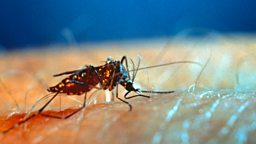
Five Fever Tales: Fact-based dramas about malaria, one of the oldest human diseases

The following radio broadcasts may be of interest:

Five Fever Tales by Lavinia Greenlaw

http://www.bbc.co.uk/programmes/b03yzlhk
Five Fever Tales by Lavinia Greenlaw


These brief plays are very interesting as they present history in a docu-drama approach. The science behind the discovery of what the 'fever' was/is and the challenge for those who first saw new 'living' things through the microscope and then convincing the scientific establishment is quite fascinating.


The economic incentives to solving the 'fever' are also salutary and give pause for thought in considering global health today (and tomorrow - global warning) as is recognition of resistance and current genetic research programmes.

I believe these programmes are freely accessible worldwide, for a limited time period.

Also posted on HIFA2015 c/o the moderator.


Sunday, 9 March 2014

THE LANCET From public to planetary health: a manifesto

http://t.co/TUIj0MRVb7

A new vision for planetary health

Copyright: European Space Agency/Science Photo Library
This manifesto for transforming public health calls for a social movement to support collective public health action at all levels of society. Our aim is to respond to the threats we face: threats to human health and wellbeing, threats to the sustainability of our civilisation, and threats to the natural and human-made systems that support us.

Our vision is for a planet that nourishes and sustains the diversity of life with which we co-exist and on which we depend. Our goal is to create a movement for planetary health.

If you agree with the broad thrust of the manifesto (not necessarily every detail), please register your agreement here.

Saturday, 1 February 2014

Care pathways: 15 minutes on Monday - how far is that?

On Monday I have a quick visit for 15 minute slot on care pathways at an interprofessional study day for 2nd and 3rd year students.

After the short presentation I'll ask the question of what difference the students can make to the patient's care pathway. There may be value in continuing the 'journey' metaphor?

They can ensure the care pathway is well-documented (otherwise it doesn't exist, and travel on it never happened) they can check it is accessible (an achievable goal) and that it does not trip anyone up (we don't do - iatrogenic).

There are further tests: is it navigable, tried and tested, a safe (evidenced-based) route? As the student's contemplate a major step in their health career, we really need them to focus on the health career of the persons in their care.

[ There won't be time for this: but do we need to wait until the 'end' for the outcome and capturing that (feedback). Or can do we this verbally, incrementally (positive impact on quality)? ]

I could ask them all to stand and make like sign-posts, but for the risk of poked eyes. It's true though, sign-posting is an important job, but how we do that is another post (the value of self-discovery as learning).

Once medically fit the key thing should be checking the person's (not viewing them totally as patient) wayfaring skills.
OK, who took my care pathway?

Can they read the map (are they health literate)? Can they find a map? Do they have a stay-well, recovery and well-being ... compass (a conceptual framework, an app, care plan)? If there literally is no self-care pathway under the patient at present, then the student can help them and their carer if necessary to find or create this compass - across the required care domains.

THEN this person (potential future patient) can avoid having to step off their self-care pathway and onto the health care pathway. You see there's a risk and a cost in that particular transfer.


Image source: http://www.farlandgroup.com/customer-journey-mapping/