Showing posts with label agriculture. Show all posts

Tuesday, 5 August 2014

Trade winds and time: The Clock of the South

S
INTERPERSONAL : SCIENCES
E --------------------------------------- W
SOCIOLOGY : POLITICAL
N
G7
G8
 ..


Alt


trade-winds
Socio-
(political)

Clock of the South
individual
INTERPERSONAL : SCIENCES
humanistic ------------------------------------------- mechanistic
SOCIOLOGY : POLITICAL
group

C/o BBC: Bolivian Congress clock changed to turn anti-clockwise

The clock displayed on the Bolivian Congress building, located in the city of La Paz, has been re-set to run in reverse.

Its hands turn left and the numbers have been inverted to go from one to twelve to the left.

It's the latest measure taken by the government of President Evo Morales to promote the indigenous identity of the Andean country. ...
http://www.bbc.co.uk/news/world-latin-america-28040065

Additional link:
World Economic Forum

updated 26 August 2014
BBC Radio 4 20:00: Whatever Happened to Global Governance?
http://www.bbc.co.uk/programmes/b04f9rdr

Original image source:
http://bubblear.com/wp-content/uploads/2014/06/clock1-1110x400.jpg

Saturday, 30 November 2013

The Resurgence of - Soul Soil Society - in h2cm

On my travels into Manchester for Drupal NW and other monthly meetings I sometimes have time to call at the Cornerhouse. It's an independent cinema and visual arts venue. The shop is open until about 7pm and amongst many interesting publications I discovered Resurgence which is now Resurgence & ECOLOGIST. It is a great read - as per its banner - on the environment, activism, social justice, arts and ethical living. The great read lies not just in the content, but the fact that it challenges your way of life.

The welcome in the latest issue Nov/Dec 2013 by Satish Kumar the editor-in-chief includes mention of two books, one by Satish Kumar himself: Soul Soil Society.

As technology races ahead and governments chase economic growth through capitalist-based socio-economic systems what stands out is the failure of political systems to keep up.

The question is not how soil is created through a natural process that takes time and is itself a vital variable in a complex ecosystem. The question is how hard can we push soil?

What are the global effects of giant excavators that can move mountains, cut swathes of tarmac through rain forests? What is the natural value of soil, of land for individual farmers against synthetic fertilisers, genetically modified seed, land grabs ...? Why do we call the rainforests - rainforests#? The impacts are local, global and glocal as this issue of Resurgence and others highlights.

Below I've transposed the book's title on to Hodges' model:
INTERPERSONAL : SCIENCES
SOCIOLOGY : POLITICAL

individual
Soul


Soil

Society


What is missing?
group - population

# See also: PHYSICS & THE RAINFOREST, Peter Bunyard, pp.12-14.

Additional book:
Jonathon Porritt, The World We Made

Monday, 8 July 2013

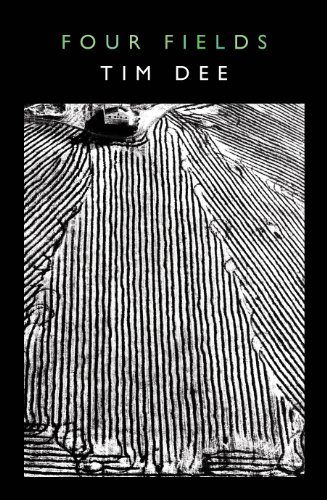
Four Fields

On my wish list:
In his first book since the acclaimed The Running Sky Tim Dee tells the story of four green fields. Four fields spread around the world: their grasses, their hedges, their birds, their skies, and their natural and human histories. Four real fields - walkable, mappable, man-made, mowable and knowable, but also secretive, mysterious, wild, contested and changing. Four fields - the oldest and simplest and truest measure of what a man needs in life - looked at, thought about, worked in, lived with, written.

Dee's four fields, which he has known for more than twenty years, are the fen field at the bottom of his Cambridgeshire garden, a field in southern Zambia, a prairie field in Little Bighorn, Montana, USA, and a grass meadow in the exclusion zone at Chernobyl, Ukraine. Meditating on these four fields, Dee makes us look anew at where we live and how. He argues that we must attend to what we have made of the wild, to look at and think about the way we have messed things up but also to notice how we have kept going alongside nature, to listen to the conversation we have had with grass and fields.

Four Fields is a profound, lyrical book by one of Britain's very best writers about nature.

Source image and text: Amazon