Showing posts with label government. Show all posts

Thursday, 9 October 2014

Privacy: Open Data, Individual and Group

The vertical axis of Hodges' model is the individual - group, or self through to collective. Health and social care constantly negotiates this from the ideals and delivery of person-centred care to public mental health. So often for health professionals the emphasis is on the individual, the person's care needs, their strengths, their rights, outcomes and feedback on care received. The same individual focus is also ascribed to records and information. Protection of data, maintaining confidentiality is an essential duty of health care  professionals.  

Earlier this year the government's care.data scheme was placed on hold. 'Open' is the way of the world: open access, open source, open data and open government. Increasingly the group as an entity needs to considered in what may be a new way, as Floridi writes:
The idea that groups may have a right to privacy is not new, and it is open to debate, but it has not yet received all the attention it deserves, although it is becoming increasingly important.
 ...
Open data is more likely to treat types (of customers, users, citizens, demographics population, etc.) rather than tokens (you, Alice, me), and hence groups rather than individuals. But re-identifiable groups are ipso facto targetable groups.It is therefore a very dangerous fallacy to think that, if we protect personal data that identify individuals, the protection of the groups will take care of itself. p.23.

Luciano Floridi. Group Privacy. The Philosophers' Magazine. Issue 65, 2nd Quarter 2014. Pages 22-23.


http://grantabooks.com/The-Private-Life

Here is a related book (on my list) a BMJ award winner:

The Private Life, Josh Cohen

The war over private life spreads inexorably. Some seek to expose, invade and steal it, others to protect, conceal and withhold it. Either way, the assumption is that privacy is a possession to be won or lost.

But what if what we call private life is the one element in us that we can't possess? Could it be that we're so intent on taking hold of the privacy of others, or keeping hold of our own only because we're powerless to do either? ...


Friday, 19 September 2014

Wednesday, 17 September 2014

The Lyon Declaration on Access to Information and Development

Dear all,

The Lyon Declaration on Access to Information and Development 
http://www.lyondeclaration.org/ was successfully launched at the World Library and Information Congress 2014 in Lyon. Since then, over 280 organisations from across the library and development community have signed the document and called upon United Nations Member States to incorporate access to information in the new post-2015 development framework. The Declaration has now been translated into 13 languages.

Following the release of the Open Working Group Outcome Document in July, IFLA is now waiting to see what UN Secretary General Ban Ki-Moon will present to the UN General Assembly later this year in New York. The Secretary General is currently overseeing preparation of a ‘synthesis report’ that will bring together the outputs of various processes on the post-2015 development agenda and help UN Member States find a way forward in negotiations over the next twelve months. The synthesis report is expected to be released at the end of October/early November.

What are the next steps?

Once the synthesis report is issued it is crucial that policymakers in the capitals of UN Member States get to hear what libraries want to see in the new framework. As outlined in the Lyon Declaration, IFLA wants the United Nations to acknowledge that access to information, and the skills to use it effectively, are required for sustainable development, and to make sure that the framework’s goals, targets and means of implementation reflects this.

Your voice will be needed for us to achieve this goal.

IFLA is currently preparing an advocacy toolkit which will help library representatives to approach decision-makers in order to talk to them about the importance of access to information in development. IFLA wants to help its members and partners to take the opportunity to position themselves inside development debates in their home countries, so that their governments recognise the value libraries bring to development. Ultimately, libraries can benefit from being included in the national plans that will implement the new development agenda from January 1st, 2016.

The advocacy toolkit will be available in early October 2014.

What can you do to help?
  • You can sign the Lyon Declaration and add your voice to the call at the United Nations.
  • You can translate the Lyon Declaration into your language and share it with colleagues in your own country.
  • You can encourage others in the library and development sectors to sign the Lyon Declaration.
  • You can organise meetings with policy makers in your country and use the toolkit provided by IFLA in order to make the library voice heard on a national level.
  • You can promote the principles of the Lyon Declaration throughout your network and ensure that the message gets spread as widely as possible.
The Lyon Declaration is available here.

Contact Julia.brungs AT ifla.org for more information on IFLA’s post-2015 activities.

Background

The Lyon Declaration on Access to Information and Development calls upon United Nations Member States to make an international commitment through the post-2015 development agenda to ensure that everyone has access to, and is able to understand, use and share the information that is necessary to promote sustainable development and democratic societies. It was prepared by IFLA and a number of strategic partners in the library and development communities.

Please also see the webversion.

Julia Brungs
Policy and Projects Officer
International Federation of Library Associations and Institutions (IFLA)
P.O. Box 95312
2509 CH The Hague
Netherlands
Email: Julia.brungs AT ifla.org

My source: HIFA2015

Saturday, 13 September 2014

In political hands person-centred care is a quantum phenomena (entanglement)

individual
INTERPERSONAL : SCIENCES
humanistic ------------------------------------------- mechanistic
SOCIOLOGY : POLITICAL
group
Acute mental health needs
RISK
Self-harm

Local care?
Empowering the individual?
Accessibility
Cognitive distance
Let therapy commence
Continuity
(dist-ress)
Remote policy touch
Organisational (distance) dementia?

threshold  
RISK
 Self-neglect
personal hygiene
domestic environment


local-regional-national? 

metrics: Km or Miles or time?
Gallons or Litres?
Cost?
Illusory savings?

threshold
RISK 
 Harm to others


to integrated care 
multidisciplinary care


     threshold
Beds

Lintern, S. (2014) Mental health patients sent hundreds of miles for a bed, HSJ, 14 August.

Beds shortage = Gathered Sobs
Mental Health = Lethal Anthem?
Mental health = Lean Halt Them

Bed image:
By kieran jones (http://www.clker.com/clipart-bed-icon.html) [Public domain], via Wikimedia Commons

Monday, 8 September 2014

Interviews: In the political melee don't forget the green corner...!

individual
INTERPERSONAL : SCIENCES
humanistic ------------------------------------------- mechanistic
SOCIOLOGY : POLITICAL
group

Therapeutic
alliance


"Sir Robin cited research conducted by two psychologists on interviews during the 1987 general election campaign. Dr Peter Bull and Kate Mayer found that Kinnock and Thatcher avoided more than half the questions put to them. They concluded the party leaders used 31 different forms of evasion, among them ignoring the question, acknowledging the question without answering, questioning the question, attacking the question, attacking the interviewer, declining to answer, giving an incomplete answer, repeating a previous answer and claiming already to have answered the question." FT Weekend. p.1


Source:
Katz, Ian, (2014) The death of the political interview. FT Weekend, Life & Arts, September 6-7th. p.1.

Tuesday, 12 August 2014

Disobedient Objects

individual
INTERPERSONAL : SCIENCES
humanistic ------------------------------------------- mechanistic
SOCIOLOGY : POLITICAL
group


personal ethics


objects

social justice


The Victoria and Albert Museum 26 July 2014 – 1 February 2015
Disobedient Objects:
From Suffragette teapots to protest robots, this exhibition is the first to examine the powerful role of objects in movements for social change. It demonstrates how political activism drives a wealth of design ingenuity and collective creativity that defy standard definitions of art and design.

Image source: Inflatable cobblestone, action of Eclectic Electric Collective in cooperation with Enmedio collective during the General Strike in Barcelona 2012.
© Oriana Eliçabe/Enmedio.info

Saturday, 7 June 2014

This May Hurt A Bit ...

individual
INTERPERSONAL : SCIENCES
humanistic ------------------------------------------- mechanistic
SOCIOLOGY : POLITICAL
group

 Here -


Here -


- Here (especially)
and Here...


and here - all around these care domains in the Spiritual domain.

Saturday, 1 March 2014

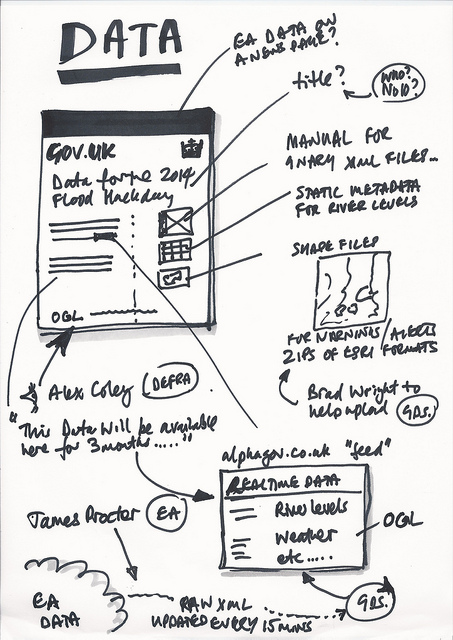
Drupalcamp London 2014: The Government Digital Service, Drupal 8 Multilingual features, Twig

https://gds.blog.gov.uk/2014/02/23/flood-hack-developing-solutions/
Flood hack
DrupalCamp London today got underway with a keynote Delivering User-centred Digital Services by Mark O'Neill from the UK Government Digital Service.

Given the record of public and private sector led IT projects it was refreshing to hear of the GDS's approach being user-centred, the extension of 7 design principles and Mark's previous experience. It's clearly too late for the health care sector to coin and create the Needotron - GDS beat us to it.

Drupal 8 is looking formidable both in its potential and the (learning) stack it presents. Another great session to pick out was - A whole new world for multilingual sites in Drupal 8 by Gábor Hojtsy. The progress here is phenomenal and even though incomplete it is a major achievement and a credit to the Drupal community.

It's humbling as it reminds me to post some introductions to Hodges' model on W2tQ in several languages.

As to being user-centred, the Harmony Forum is a real tease. I know a forum will not moderate itself (is that the new Sorcerer's Apprentice?) and yet time is of the essence. Harmony is one for me to watch - so I'm signed up for the newsletter. Two sessions on Twig and Entities rounded up a busy few days.

This began on Thursday with Cutty Sark, the Royal Greenwich Observatory (learned much from their interactive designs), Turner and the Sea, The British Library - Beautiful Science (60-90 mins ample), and Ibsen's Ghosts at Trafalgar Studios.

I was also able to visit a university yesterday and meet a member of faculty who used Hodges' model many years ago. Here's hoping that some of the materials can be retrieved even though it seems unlikely. I hope to keep in touch with this nursing contact (and not just for the dinner!). I've met several other people here, the Drupal community is another great asset - and with thanks to the sponsors who make these events feasible for many of us.

Output from Needotron


I'll end this post back with Mr O'Neill and the GDS.

I wonder to what extent healthcare figured in the flood deliberations?

It seems that an output from the Needotron may not be so far removed from h2cm?

Happy St David's Day too - in the closing minutes here!


Wednesday, 12 February 2014

Joint Strike Care F-4(5)

INTERPERSONAL : SCIENCES
humanistic ------------------------------------------- mechanistic
SOCIOLOGY : POLITICAL

individual(?)


Social Reflections on Power
Joint Strike Fighter F-35 Lightning II
group - population

Saturday, 4 January 2014

Ballets of corporate, Governmental, Social and Individual conscience

INTERPERSONAL : SCIENCES
humanistic ------------------------------------- mechanistic
SOCIOLOGY : POLITICAL

individual
c ons cien ce
Health services and services infrastructure


Why do we pay taxes as a society?


2012
Apple UK turnover £1,178m
Corporation tax paid on UK profits £1.7m
(2011: £1,013m £15.7m)
group - population


Q. Does the current state of corporate taxation globally influence the scope, efficacy and ability of governments and WHO to recommend and direct global public health and positive health promoting policies?

My source: Houlder, V., Pickard, J. (2014) Tech giants' £54m bill fuels tax row, Financial Times, FT Weekend, 4-5th January, 2014. p.1.

Saturday, 30 November 2013

The Resurgence of - Soul Soil Society - in h2cm

On my travels into Manchester for Drupal NW and other monthly meetings I sometimes have time to call at the Cornerhouse. It's an independent cinema and visual arts venue. The shop is open until about 7pm and amongst many interesting publications I discovered Resurgence which is now Resurgence & ECOLOGIST. It is a great read - as per its banner - on the environment, activism, social justice, arts and ethical living. The great read lies not just in the content, but the fact that it challenges your way of life.

The welcome in the latest issue Nov/Dec 2013 by Satish Kumar the editor-in-chief includes mention of two books, one by Satish Kumar himself: Soul Soil Society.

As technology races ahead and governments chase economic growth through capitalist-based socio-economic systems what stands out is the failure of political systems to keep up.

The question is not how soil is created through a natural process that takes time and is itself a vital variable in a complex ecosystem. The question is how hard can we push soil?

What are the global effects of giant excavators that can move mountains, cut swathes of tarmac through rain forests? What is the natural value of soil, of land for individual farmers against synthetic fertilisers, genetically modified seed, land grabs ...? Why do we call the rainforests - rainforests#? The impacts are local, global and glocal as this issue of Resurgence and others highlights.

Below I've transposed the book's title on to Hodges' model:
INTERPERSONAL : SCIENCES
SOCIOLOGY : POLITICAL

individual
Soul


Soil

Society


What is missing?
group - population

# See also: PHYSICS & THE RAINFOREST, Peter Bunyard, pp.12-14.

Additional book:
Jonathon Porritt, The World We Made

Tuesday, 12 November 2013

Held in equal esteem: Physical health and Mental health

As a mental health nurse you are familiar with concept of ‘esteem’. Self-esteem is central within assessments of clients, central to all care workers as safe and effective practitioners; and self esteem tests carers in those people for whom their condition means self-esteem is something attributed by proxy.

I noticed just recently use of the term esteem applied to the disparity between physical health and mental health. The two upper-most domains in Hodges' model (interpersonal and sciences) draw attention to the historical duality of mind and body. To integrate the two means acknowledging differences and this is acute in terms of finance, research and treatment plus many other measures.

The limitations of my emphasis in a series of previous posts on holism, holistic care, holistic approaches become apparent as long as the political domain is not addressed. You can be as holistic as you like, identifying, processing and integrating the full remit of health care concepts relevant in a case. If esteem is not achieved then the benefits of being holistic must be severely damaged. They may even be considered futile politically (speaking - just a whisper)?

Through the links below this post demonstrates that esteem is stirring in the political, policy and legislative domain and is being addressed, even if a solution will not arrive overnight.

My original sources: New Scientist, the HSJ and BBC.

Nick Craddock (2013) Opinion: Where's our Higgs? New Scientist, 27 April, 2914; pp.30-31.
Psychiatry needs the star quality of physics to help recruit top academics and fight the scourge of mental illness - this opinion piece concludes:

So, in 2013, psychiatry has powerful scientific tools and a developing narrative that already points to strong theoretical bases. Yet, in the UK research into mental illness is stalled at around 5 per cent of the annual medical research budget, and the picture is similar in other rich countries. That will have to change – and governments and funders are starting to see this. The door is open: all that is needed is for more of the best to come in and find out just how hot psychiatry really is.

‘Esteem gap’ between mental and physical health remains
10 October, 2013 | By Alastair McLellan
The government knows the challenges the facing mental health sector, but without radical solutions the goal of treating mental and physical health service users on an equal footing seems as far away as ever
http://www.hsj.co.uk/opinion/leader/esteem-gap-between-mental-and-physical-health-remains/5064120.article

Debate on 10 October: Parity of Esteem for Mental and Physical Health - Lords Library Note
http://www.parliament.uk/briefing-papers/lln-2013-024/debate-on-10-october-parity-of-esteem-for-mental-and-physical-health

Lords debate – Parliament TV:
http://www.parliamentlive.tv/Main/Player.aspx?meetingId=13879&st=11:51:20

Royal College of Psychiatrists: OP88. Whole-person Care: from rhetoric to reality (Achieving parity between mental and physical health)
http://www.rcpsych.ac.uk/usefulresources/publications/collegereports/op/op88.aspx

Tuesday, 27 August 2013

Monday, 26 August 2013

An International Bill of the Rights of Man (reissued)

INTERPERSONAL : SCIENCES
SOCIOLOGY : POLITICAL

individual
How do we address the mental
health status of our leaders?
How can science and technology work positively to assure the Rights of All, to secure evidence of war crimes?
Where does the biosphere stand
(side-by-side : hand-in-hand)?
Should war crimes once perpetrated be relegated to cultural memory:
baggage carried forward for generations anew to avenge? How must they do this other than learning (remembering) how to hate?
What are the important lessons; of what must be remembered and what we should forget? 
An International Bill of the Rights of Man
group - population

Saturday, 24 August 2013

50 years "I have a dream..."

INTERPERSONAL : SCIENCES
SOCIOLOGY : POLITICAL

individual
"I have a dream!"Do things and science and technology have to dictate humanity's dreams?
We have a dream...A man had a dream...
group - population

Friday, 23 August 2013

HIFA publishes paper in The Lancet Global Health: Governments are legally obliged to ensure adequate access to health information

The Lancet Global Health published a paper on 2nd August 2013 that we can all use in our advocacy to increase the availability and use of healthcare information in low- and middle-income countries. The paper was written by three HIFA Country Representatives for India – Soumyadeep Bhaumik, Tamoghna Biswas, Pranab Chetterjee – together with the HIFA Coordinator, Neil Pakenham-Walsh. The full text is freely available, open-access, here.

Here is a brief extract: ‘Should governments be held responsible for ensuring that every citizen and every health professional has access to the information they need to protect their own health and the health of those they care for? Should governments be held to account for, and to stop, any action that denies the availability of health information, or that misinforms the public or health professionals contrary to scientific evidence? The answers to these questions are yes and yes, as clearly stated in international human rights law.’
My source - above text: HIFA2015

Friday, 21 June 2013

Opaque

INTERPERSONAL : SCIENCES
SOCIOLOGY : POLITICAL

individual
anxiety, mood, anger, frustration, coping abilities, vulnerability, personal communication - masks, poor sleep, helplessness, apathy, personal memory, personal ethics 'Blaze season' - June to September, Smog - duration?, geography, fires, public health, asthma, respiration, bronchitis, conjunctivitis, vision, eye care, cardiovascular system, weather, create rain, environment, daily physical activities of living, ecosystem impact, elderly, young, measures, monitoring,
pollution standard index: 400 1100hrs, stay indoors, building workers, Loss of Habitat
public opinion, quality of life, media, social media, public perception, communication - advice to population, 
(public anger in China over that country's appalling environmental record)
Illegal forest fires, Indonesia, Singapore, Politics,
Commerce, Globalization, Governments, Governance, Diplomacy, Corporations, Regulation, Law, Enforcement, Tourism, Employment, Economic impact, Health Care System Burden, Political Tension, Accountability, Trust, Companies involved? Ecocide (not in Europe)
group - population

Additional source: The Independent Friday 21 June 2013

Friday, 7 June 2013

Information Commissioner's Office (ICO) fines Glasgow City Council £150,000

The Information Commissioner's Office (ICO) has fined Glasgow City Council £150,000 for the loss of two unencrypted laptops, one of which contained personal details about more than 20,000 people.

...

An ICO investigation discovered that - despite previous warnings - Glasgow City Council had provided staff with unencrypted laptops after there had been problems with encryption software. At least 74 of these laptops remain unaccounted for, with at least six of them known to have been stolen.