Showing posts with label human ecology. Show all posts

Wednesday, 3 September 2014

Five Domains - Five Gyres

There are five domains in Hodges' model that can help us assess, plan and formulate health and social care, support reflection upon interventions and evaluate progress over time. An aide-memoire indeed!
individual
INTERPERSONAL : SCIENCES
humanistic ------------------------------------------- mechanistic
SOCIOLOGY : POLITICAL
group


Brain Plasticity


Plastic Brain

With five domains to support short and longer-term memory do we really need to force the oceans to remember when we fail to care...?

Sunday, 29 June 2014

"ICU" - Technical Haemorrhage & Chlorophyllic Clots

individual
INTERPERSONAL : SCIENCES
humanistic ------------------------------------------- mechanistic
SOCIOLOGY : POLITICAL
group


ICU - Intensive Care Unit
GIS - Geographical Information System

Saturday, 30 November 2013

The Resurgence of - Soul Soil Society - in h2cm

On my travels into Manchester for Drupal NW and other monthly meetings I sometimes have time to call at the Cornerhouse. It's an independent cinema and visual arts venue. The shop is open until about 7pm and amongst many interesting publications I discovered Resurgence which is now Resurgence & ECOLOGIST. It is a great read - as per its banner - on the environment, activism, social justice, arts and ethical living. The great read lies not just in the content, but the fact that it challenges your way of life.

The welcome in the latest issue Nov/Dec 2013 by Satish Kumar the editor-in-chief includes mention of two books, one by Satish Kumar himself: Soul Soil Society.

As technology races ahead and governments chase economic growth through capitalist-based socio-economic systems what stands out is the failure of political systems to keep up.

The question is not how soil is created through a natural process that takes time and is itself a vital variable in a complex ecosystem. The question is how hard can we push soil?

What are the global effects of giant excavators that can move mountains, cut swathes of tarmac through rain forests? What is the natural value of soil, of land for individual farmers against synthetic fertilisers, genetically modified seed, land grabs ...? Why do we call the rainforests - rainforests#? The impacts are local, global and glocal as this issue of Resurgence and others highlights.

Below I've transposed the book's title on to Hodges' model:
INTERPERSONAL : SCIENCES
SOCIOLOGY : POLITICAL

individual
Soul


Soil

Society


What is missing?
group - population

# See also: PHYSICS & THE RAINFOREST, Peter Bunyard, pp.12-14.

Additional book:
Jonathon Porritt, The World We Made

Friday, 4 October 2013

Thursday, 3 October 2013

two books two islands two doctors - beyond a cappuccino

My uncle Doug (I do miss him) mentioned a book to me when I was some time around 1974. I think I found a copy in their bookcase when the whole family used to visit on a Sunday afternoon.
A decade later 1983, the year before I got married I visited Sorrento and during this holiday took a day trip to Capri.

With my fiancé I found myself walking around the Villa San Michele. The book was The Story of San Michele by Axel Munthe. I don’t recall consciously deciding to go to Anacapri, but I found myself there. It really made an impression on the 24 year old. What an amazing place to be, study, to try to be creative if not grandiose.

I’m sure I read the book after this visit, it dawning on me that this was - not just - that place, but the story too.

In between on holiday in Kefalonia in 1995 and read Captain Corelli’s Mandolin while there. Axel Munthe was a doctor and there’s a doctor in de Bernières’ book.

Two islands, two doctors, two books: fact and fiction and the spaces in between.

Thirty years later it was a lovely experience to take the bus to Anacapri this September and spend some time at San Michele.

Now the mix of history and styles is a bit jarring, but it is still, for me at least, an amazing space to be. The views of the Bay of Naples are stunning.

The light, the air, the sky.

Inspirational.

At some point if I could spend some time there, beyond a cappuccino...


The Bay of Naples - Vesuvius from San Michele 4 Sept 2013

literatureandmedicine

Monday, 8 July 2013

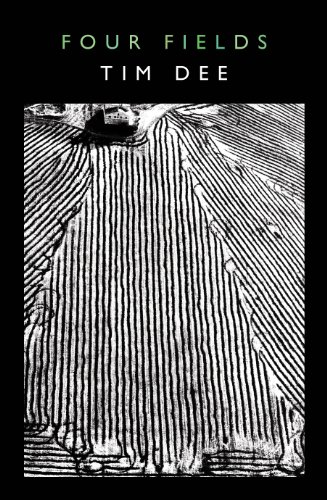
Four Fields

On my wish list:
In his first book since the acclaimed The Running Sky Tim Dee tells the story of four green fields. Four fields spread around the world: their grasses, their hedges, their birds, their skies, and their natural and human histories. Four real fields - walkable, mappable, man-made, mowable and knowable, but also secretive, mysterious, wild, contested and changing. Four fields - the oldest and simplest and truest measure of what a man needs in life - looked at, thought about, worked in, lived with, written.

Dee's four fields, which he has known for more than twenty years, are the fen field at the bottom of his Cambridgeshire garden, a field in southern Zambia, a prairie field in Little Bighorn, Montana, USA, and a grass meadow in the exclusion zone at Chernobyl, Ukraine. Meditating on these four fields, Dee makes us look anew at where we live and how. He argues that we must attend to what we have made of the wild, to look at and think about the way we have messed things up but also to notice how we have kept going alongside nature, to listen to the conversation we have had with grass and fields.

Four Fields is a profound, lyrical book by one of Britain's very best writers about nature.

Source image and text: Amazon

Friday, 21 June 2013

Opaque

INTERPERSONAL : SCIENCES
SOCIOLOGY : POLITICAL

individual
anxiety, mood, anger, frustration, coping abilities, vulnerability, personal communication - masks, poor sleep, helplessness, apathy, personal memory, personal ethics 'Blaze season' - June to September, Smog - duration?, geography, fires, public health, asthma, respiration, bronchitis, conjunctivitis, vision, eye care, cardiovascular system, weather, create rain, environment, daily physical activities of living, ecosystem impact, elderly, young, measures, monitoring,
pollution standard index: 400 1100hrs, stay indoors, building workers, Loss of Habitat
public opinion, quality of life, media, social media, public perception, communication - advice to population, 
(public anger in China over that country's appalling environmental record)
Illegal forest fires, Indonesia, Singapore, Politics,
Commerce, Globalization, Governments, Governance, Diplomacy, Corporations, Regulation, Law, Enforcement, Tourism, Employment, Economic impact, Health Care System Burden, Political Tension, Accountability, Trust, Companies involved? Ecocide (not in Europe)
group - population

Additional source: The Independent Friday 21 June 2013

Tuesday, 28 May 2013

Countries, places and maps (Lahiri)


“The place to which you feel the strongest attachment
 isn’t necessarily the country you’re tied to by blood or birth:
 it’s the place that allows you to become yourself. 
This place may not lie on any map.”

– Jhumpa Lahiri
  

My source: Fred Dervin via mailinglist at cosmobilities.net

Wednesday, 23 January 2013

In orbit*: Where a model of global health care should be


What platform are you using 
to monitor and positively impact 
the minutiae of care 
and the whole picture?

* and in mind.

On 25 May, NASA's Phoenix lander was 10 kilometres above the surface of Mars and less than three minutes from landing when it was captured passing in front of Heimdall crater by the HiRISE camera on the Mars Reconnaissance Orbiter (MRO).

http://www.nature.com/news/2008/080604/full/453712a/box/1.html
Published online 4 June 2008 | Nature 453, 712-713 (2008) Eric Hand

Additional link:
Phoenix: A tribute

Saturday, 3 November 2012

'Semantic Reefs' - All at Sea, on Land and in Mind

In reviewing some literature recently I came across the phrase 'semantic reef'. In forwarding a copy of the paper Dr Trina Myers described the semantic reef as: an architecture created to automatically infer phenomenon or alerts about coral reefs using Semantic technologies (aka. Linked Data).

The coinage of semantic reef in the paper by Myers and Atkinson really captured my imagination. While the semantic web is of interest to me and the environment is the oxygen to the human ecosystem, to our very existence and well-being; Myers and Atkinson's semantic reef is very specific:
The Semantic Reef Knowledge Representation system is an eco-informatics application designed to assist in the integration of remotely sensed data streams and historic data sets supporting flexible hypothesis design and knowledge extraction. The system is an ontology-based architecture built to allow researchers to combine disjoint data sets into a single Knowledge Base for modelling the impact of climate change on coral reef ecosystems. p.16.
I've written previously of the conceptual role that the axes of Hodges' model can play. How they act as a distinct, idealised boundary between the disciplines. Most evident is the MECHANISTIC-HUMANISTIC divide between the hard sciences and the humanities. Academics, researchers, health practitioners can become trapped in a disciplinary silo. Reefs are often a Great Barrier. Mariners have to find navigable waters to find a way through. Safe passage is recorded.

The last thing anyone wants is a shipwreck; whether in the ecosphere, designing software or health care.
Maybe this is another (long-winded-yes) way of recognising the collapse of holistic bandwidth at the point of a medical emergency, a crisis. The situation IS a shipwreck. A disaster of a very personal kind. What lies beyond the information required in that specific instant, what lies outside that atoll is suddenly not important.


More positively though a reef also represents an opportunity. It is a sign, a measure of global health. As such it IS a community. It is community. Harmony. Balance. It is the community around which others revolve. And we need to recognise; nOt that, but this and nOw. ...:

Trina Myers, Ian Atkinson (2013). Eco-informatics modelling via semantic inference. Information Systems. 38, 1, March 2013, 16–32.

Thanks to Dr Trina Myers.

Image sources:
Australian National Maritime Museum

http://en.wikipedia.org/wiki/File:Atafutrim.jpg

Monday, 6 August 2012

reVision Launch, 20th September 2012, Liverpool, UK

My source: MHHE list

Invitation to the Launch of reVision (formerly The Joint Forum)

We are a coalition of radical activists who believe in the social model of mental health.
We are seeking to be a voice for change by promoting and exploring knowledge and understandings of the social, economic and political causes of mental distress, and by proposing socially derived alternatives to medicalised approaches.

 Our vision is a society in which the social causes of mental distress are understood and treated with socially based solutions that improve individual lives and bring about wider social change.

We are launching our organisation on Thursday 20th on September 2012
At Liverpool John Moores University, Room 5.04, Avril Robarts, 79 Tithebarn Street,
Liverpool, L2 2ER from 1.00 to 4.00pm

We will be welcoming new members to the organisation at the launch, and are looking for people who seek radical alternatives to psychiatry and who have a critical, political understanding of the social causes of mental distress.

Our keynote speakers will be:
  • Helen Spandler, member of Asylum and contributer to Critical Psychiatry
  • Malcolm Kinney, Senior Lecturer in Mental Health Social Work: LJMU
  • Phil O’Hare, Senior Lecturer: School of Social Work: UCLAN
  • Naphtali Titus Chondol, mental health activist
  • Jackie Patiniotis, freelance researcher with a particular interest in women’s mental health and working to end violence against women and girls
More info in the Who_we_are_looking_for PDF.

Please email revision.liverpool at hotmail.co.uk to confirm your attendance.