Showing posts with label statistics. Show all posts

Friday, 13 June 2014

Books: The Geometry of Meaning, Gärdenfors & Geometry and Meaning, Widdows

http://mitpress.mit.edu/books/geometry-meaning
http://www.mitpressjournals.org/doi/pdf/10.1162/coli.2006.32.1.155There are two additions to my library. They are technical in parts and beyond my math and technical abilities, but as background this is essential reading.

The module 1 study, still to be marked provided a prompt to install R and obtain some summary statistics. Widdow's Geometry and Meaning includes details of the software used in the text. See the companion website below. While Gärdenfors' book The Geometry of Meaning is new, Widdow's text is a decade old and so demands some checking of software. I notice there are broken links on the companion site. The book, both in fact are great resources even as they increase the permanence of the geometry upon my furrowed brow...

Dominic Widdows, Geometry and Meaning - Companion website

Related posts:
http://hodges-model.blogspot.co.uk/search/label/conceptual%20spaces

Sunday, 25 May 2014

CAPITAL [ take ] II or III ...

Thomas Piketty's economic data 'came out of thin air'

(The Guardian)

French economist's bestselling book on growing inequality in west undermined by 'inexplicable' data, says Financial Times

While they debate the data
the evidence
and how this looks 
from the left:                               :from the right

let's not forget the center and ask

where is the neutral, objective space where values must reside?

global health, development, nursing, health information, education


My original source:
FT Weekend, 24-25 May, 2014.

Update 17 June 2014 c/o Channel 4 News UK:

Saturday, 26 April 2014

Alex through the Looking-Glass: How Life Reflects Numbers and Numbers Reflect Life

Alex through the Looking-Glass: How...

individual
INTERPERSONAL : SCIENCES
humanistic ------------------------------------------- mechanistic
SOCIOLOGY : POLITICAL
group


...Numbers Reflect Life
Life Reflects Numbers...


Image source:
http://pages.bloomsbury.com/favouritenumber/2

Saturday, 19 April 2014

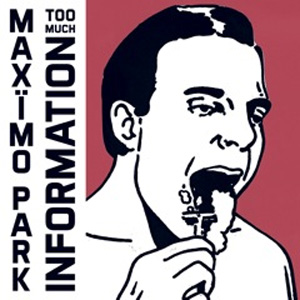
care.data: too much information?

individual
INTERPERSONAL : SCIENCES
humanistic ------------------------------------------- mechanistic
SOCIOLOGY : POLITICAL
group

individual - person
ethics
'personal'
My identity:
 lost in numbers Vs. specificity of patterns
*my attitude to my 'sensitive' information
health literacy
personal responsibility, self care, quantified self
my understanding of care.data
Trust


datasets, BIG data
hospital episodes, treatments
research
privacy research
 anonymising process for nhs data
*care.data is a natural step towards personalised medicine?
axon - neurobiology
Axon - data warehouse
statistics
service development and innovation

data security, law, information governance
NHS
commercial, contract
potential for abuse - assumptions
public mental health
public health
policy, consultation
policy communication
public engagement, primary care
informed consent, opt-out
data definitions, standards
ISO27001
population, insurance


Additional links:
Allyson Pollock - Protecting confidential patient information and promoting public health research. Three proposed amendments to the Care Bill

Building trust in the use of personal data for medical research, 1 April 2014, AMRC

Image source:
http://www.contactmusic.com/press/maximo-park-announce-new-album-too-much-information-released-3rd-february-2014

Thursday, 27 February 2014

Rare Disease Day 28 February 2014


INTERPERSONAL : SCIENCES
humanistic ------------------------------------------- mechanistic
SOCIOLOGY : POLITICAL
I am honored to stand, in her graceful place, and shine a light on a delicate group of individuals who, nevertheless, in sheer numbers are a force to be reckoned with.
Thank you,

Sean Hepburn Ferrer
A disease or disorder is defined as rare in Europe when it affects fewer than 1 in 2000.
A disease or disorder is defined as rare in the USA when it affects fewer than 200,000 Americans at any given time. One rare disease may affect only a handful of patients in the EU (European Union), and another touch as many as 245,000. In the EU, as many as 30 million people alone may be affected by one of over 6000 rare diseases existing.
  • 80% of rare diseases have identified genetic origins whilst others are the result of infections (bacterial or viral), allergies and environmental causes, or are degenerative and proliferative.
  • 50% of rare diseases touch children.
In the words of Audrey Hepburn,

“We cannot save everyone… but the knowledge that someone is coming to their rescue… that we care as a society is ultimately as important…”.

It is in this spirit that we invite you, alongside Sean Hepburn Ferrer, to Join Together for Better Care.
group - population

Winwick Hospital remembered

Image source: Metro

Thursday, 10 October 2013

Recent Advances in Research on Housing Transitions and the Life Course - a one-day symposium

Meeting of the Royal Statistical Society Social Statistics section.
DATE: Tuesday 10 December 2013
TIME: 10am-5pm (followed by a drinks reception)
LOCATION: Royal Statistical Society, 12 Errol Street, London EC1Y 8LX

We are pleased to announce a one-day symposium on recent developments in research on housing transitions through the life course.  The event will feature presentations from leading international demographers, geographers and economists on different aspects of housing careers. Topics include:

  • the interrelationship between housing and fertility: childbearing patterns by housing conditions and housing changes after the birth of a child
  • wage, employment and house-price effects on migration
  • intergenerational transmission of home ownership and neighbourhood poverty
  • residential mobility, neighbourhood poverty dynamics and neighbourhood choice among families
The symposium is sponsored by the ESRC-funded project “Interrelationships between housing transitions and fertility” (see http://www.bristol.ac.uk/cmm/research/housing for further details). 

SPEAKERS:
William A.V. Clark (University of California, Los Angeles) Clara Mulder (University of Groningen), Heather Joshi (Institute of Education) Hill Kulu (University of Liverpool) David Manley (University of Bristol) Birgitta Rabe (University of Essex) Elizabeth Washbrook (University of Bristol)

A programme and abstracts are at http://www.bristol.ac.uk/cmm/research/housing/symposium/index.html

REGISTRATION AND QUERIES: All are welcome and attendance is free.  Refreshments will be provided, including lunch and a drinks reception.  However, advance registration is essential.  Please complete the online registration form at http://www.cmm.bris.ac.uk/clients/booking/91/ to reserve your place.


[ I mentioned to the organisers about the ongoing transitions I have posted about before; that of older adults moving house (home) often in response to a bereavement to be nearer other family members. This is not the symposium's focus, but remains a question in terms of the potential impact on the individuals concerned and health and social services. pj ]

Sunday, 8 September 2013

Research Design Service North West (RDS NW) September 2013 e-bulletin

A very useful resource:
Dear Colleague,
Please follow the link below to the September 2013 e-bulletin from the Research Design Service North West (RDS NW).
In this issue:
  • is my study research?
  • NIHR showcases the clinical research that could bring hope to the nation’s dementia sufferers
  • funding opportunities
  • events and training
  • approaching funding deadlines.
We hope you find this helpful and as always welcome any feedback.
Thanks,
RDS NW
Research Design Service North West
Central Coordinating Office
Tel: +44 (0) 1524 593209
Follow the Research Design Service on Twitter: @NIHR_RDS

Source: Thanks to RDS NW and Paul Dolby

Friday, 12 April 2013

New Dynamics of Ageing: Newsletter & Research


There are some really informative resources on the NDA site, several themes link with the DTMD conference (of which more to follow) notably - information, technology, media, art and identity.


Wednesday, 6 February 2013

Extrasolar planets, x-phi and The Francis report

I'm sure there is a planet out there - extrasolar - with the physical make-up such that be it an incredible water fall, tidal surge, or rolling polished mega-rocks - the noise, could we hear it, would do far more than make your ears bleed.

Today, here in England there is a legal, health and political media event of very serious import. The ruckus in health and political circles might also make for more than bleeding noses and definitely thousands of continuing broken hearts.

The Francis report will be published today. Further insights and findings will be revealed c/o the Public Inquiry with recommendations on the Mid Staffordshire NHS Foundation Trust health care debacle.

In Philosophy Now Jan/Feb 2013 Tibor Fischer's editorial mentions the need for marketing within philosophy and literature, with the suggestion of placing x-phi on a T-shirt.

'X-phi' of course reads as experimental philosophy.

In health care, nursing and social care evidence counts for everything (and for h2cm too). Evidence based practice that is founded upon research is essential. Experiments are needed that can be reproduced, extended, validated. ...

Today is a profoundly sad day for everyone in the NHS, as many commentators have already predicted. The future constantly beckons, but today reflect we must that in the clamour for evidence based care, does this mean we must don T-shirts?:
x-care

Have we forgotten the principles of what it is to care: compassion - our duty of care?

No, but amid the cacophony of technology, technical care, the targets, statistics, budget cuts, the challenges to morale and nursing's values we need to be ever more vigilant.

We must learn how to x-listen and x-shout in the 21st century health care environment(s).

But experiments in how to listen, how to blow a whistle? Surely not.

Well yes: as clearly here basic care systems did not work they failed terribly: individually, organisationally and across the FIVE care domains of h2cm.

Monday, 8 October 2012

The Information Centre: October bulletin

Welcome to the October edition of IC Knowledge

Welcome back to IC Knowledge, the online bulletin that keeps you up-to-date with new data releases, service news and forthcoming events.

In our first edition we look at:

  • New data linkage service now available
  • GPES to provide data for QOF payments from April 2013
  • Data workshop set to inspire innovation in use of information
  • National Diabetes Audit set for busy autumn of activity
  • First ever Social Care Outcomes Framework published
  • Updated commissioning data sets due next month
  • Improved mental health report among new statistics due out soon

Read the latest edition now

My source: IC subscription

Copyright © 2012, Re-used with the permission of the Health and Social Care Information Centre. All rights reserved.

Tuesday, 2 October 2012

Hodges' model: Lazy data, organisations and domain outreach (HSJ Ack.)

In the (northern) summer Dr Mark Davies (NHS Information Centre) noted that:
We have lots of data but it's lazy data. We have to make it work and turn it into actionable data - data we can do something with.
Interview: The hard data man's soft spot. Health Service Journal, 2 August, 2012. p.17.
There are many ways that we can put data to work. In the interview with HSJ Dr Davies also highlighted the common and not unexpected emphasis upon the organisational views of the world. Here in England in management the current preoccupation is the preparation for April 2013 of clinical commissioning groups. The NHS has an incredible resource in its data. Whether or not the volume involved qualifies as big data is debatable, but in the interview Dr Davies continues:
 Professionals have a duty to measure, to compare and open up their data to scrutiny. "We talk about the purchaser provider split," he says. "But I think that is the wrong purchaser and provider. It is the split between the tax payer and public services that is important. ..." p.17.
I've mapped this to Hodges' model below. You could say that taxation is POLITICAL and it clearly is, but it is also part of what is frequently termed the social contract. For me this is why Dr Davies' views matter.

Looking at the model we can also see the task ahead in the many ways (domains) in which data can be put to work.

INTERPERSONAL : SCIENCES
SOCIOLOGY : POLITICAL

PURPOSE
lazy data (inertia!)
actionable data
(information - knowledge)
public


tax payers
ORGANISATIONS
/                    \
PURCHASER  PROVIDER

(citizens)
public services

Monday, 13 August 2012

A question. An answer - in response to recent media (HSJ Ack.)

Here are a couple of quotes from HSJ Roundtable meetings:
"What I hear around the country is that we have masses of information but we need to turn that into something that is intelligible and can be used for strategic decision making."...

"We need to look at how information links together to get a holistic picture of the situation." p. 20.
Dr Shahid Ali, (2012) Commissioning Information. Full Measures. HSJ, June 28, 20-23.

 "I don't think we should be integrating systems, we should be integrating around patients."  p. 20.
Dr Shahid Ali, (2012) Integrated Care. Let the Data Flow. HSJ, June 21, 20-25. 

"There's no integrated view of integrated care. The danger is that you have an integrated care system and everyone says, 'I will do one as well', and you end [up] with six of them." p. 22.
Owen Powell, (2012) Integrated Care. Let the Data Flow. HSJ, June 21, 20-25.


A question or two, or three ...

Is there a generic framework that can be shared and utilised across all health and social care?

A free resource that can be deployed in imagination, in solo on paper, in tandem and within a group potentially shaping collaboration, innovation, change and transformation. Applied in the clinical environment, the home, the lecture theater, the sports field...

A tool that can help support reflective practice not only at a strategic level, but the tactical and operational. What is happening on the ground floor? A framework that can help represent not only processes and policy, but practice, individual and group purposes.

Yes, policy maker and CEO meet with your information manager ... and discuss strategy.

But what is data, information, knowledge ....? What is 'health care' for it appears above we do not know?

Is there really no integrated view - even at a basic level that deserves further study?

Yes, health care practitioner meet your patient (client), their carer, your other partners (social enterprise...) and pursue what really counts: the best quality of care you can deliver given several constraints.

What is the outcome to be?

For the majority of the population (those not living with a long term medical condition) the transformation must be self-efficacy:
if 'shift happens' it must be from ill-health to health through education.

One answer:
The health care system cannot do this alone.

Saturday, 4 August 2012

IdN Extra 07: Infographics — Designing Data

Visiting Manchester twice this past fortnight I'd noticed this IdN special issue on infographics in the Cornerhouse shop. The shop's only small but there is lots to dive into - arts, media, design and philosophy.

When a database becomes a thing of beauty

Infographics or information graphics are visual representations of information, data or knowledge. They are often used when complex information needs to be presented as quickly and effectively as possible, such as signs and maps. Infographics can be as simple as a bar chart or a pie graph to represent percentages in business information; or as elaborative as some of the examples in this book to communicate stories in newspapers and magazine.

Infographics can be entertaining when the information they represent is of personal interest; but it is especially fun and challenging when the topic may be as dry as representing concepts in technical manuals or scientific statics.

 <->

I don't know if it's the reduced scale, or my right eye talking but some of the text descriptions are difficult to read. The graphics and ideas are stunning, both in themselves and the questions they provoke.

Wednesday, 28 December 2011

[HIFA2015] Women and Children First

As we draw towards the end of the year, Ros Davies, executive director of
Women and Children First (www.wcf-uk.org) reminds us:

'This Christmas Day, 1000 women will die in childbirth.
1000 women will die this way on Boxing Day too.
In fact 1000 women die every day whilst pregnant or giving birth.

... the vast majority of these deaths could be prevented by the provision of simple information and equipment which many of us take for granted.'

http://hosted.verticalresponse.com/786283/74890f4030/1470640645/8fd055e22b/
Click here to read online.
My source:
HIFA2015: Healthcare Information For All by 2015: www.hifa2015.org

Saturday, 3 December 2011

Update blog (Feedburner pain), papers, Drupal and future

Up to early summer I had c. 470 subscribers according to the Feedburner counter. The highest this reached was around 482 and for a good while the momentum had been slow, but upward.

Since summer the counter fell back to 150 and more recently 130 and now for two days it is '0'. Apparently the Feedburner service has created problems across the blogosphere. I've decided to take the counter down for the time being.

There are no conference paper or poster presentations pending, but I have a paper to write based on the Dublin CARDI conference poster working with George (Prof. Kernohan). With two other papers being reviewed, this leaves space for Drupal.

I've a hosting account and was about to upload my first Drupal site when domestic matters took a deafening, but final turn. So now back to Drupal and a need to take up a permanent 'residency' there. The NW Drupal user group meeting this coming week always helps.

This domestic resolution also begs reflection on work, 2012 and beyond. It feels strange and exciting to find after a very turbulent three years a new freedom has opened up. This freedom can be taken even further. Let's see ...