Showing posts with label environment. Show all posts

Wednesday, 3 September 2014

Five Domains - Five Gyres

There are five domains in Hodges' model that can help us assess, plan and formulate health and social care, support reflection upon interventions and evaluate progress over time. An aide-memoire indeed!
individual
INTERPERSONAL : SCIENCES
humanistic ------------------------------------------- mechanistic
SOCIOLOGY : POLITICAL
group


Brain Plasticity


Plastic Brain

With five domains to support short and longer-term memory do we really need to force the oceans to remember when we fail to care...?

Thursday, 14 August 2014

Paper: Low-cost strategies to improve dementia care

An interest in health and science invites some thought about chaos, complexity and catastrophe theory. These suggest quite a cold - mechanistic - perspective of reality. So trying to think of clinical and nursing examples beyond fluid dynamics, the heart muscle... to more socially oriented applications demands some creative thinking.

In my work within intermediate support in the community for decades my colleagues and I come across cases were husband, wife, partner have looked their significant other to the nth degree. That degree can include hiding the extent of a person's cognitive problems from other family members. Suddenly there is a real catastrophe as the carer is taken acutely ill and hospitalised.

Left at home soon the dependency is revealed. Trying to negotiate care at home can then be a real challenge.

Alternately, when people living with dementia are hospitalised for physical reasons another host of challenges arise.

I've a relative who works over at Warrington General Hospital and it's great to be able to help highlight a paper written by Michelle Beavan their dementia champion and published in Nursing Times:

Beavan M (2014) Low-cost strategies to improve dementia care. Nursing Times; 110: online issue.


Wednesday, 9 July 2014

ERCIM News No. 98 Special theme: "Smart Cities"

http://ercim-news.ercim.eu/en98
ERCIM NEWS #98
Dear ERCIM News Reader,

ERCIM News No. 98 has just been published at:
http://ercim-news.ercim.eu/en98

Special Theme: "Smart Cities"
http://ercim-news.ercim.eu/en98/special/

featuring a keynote by Eberhard van der Laan, Mayor of Amsterdam
http://ercim-news.ercim.eu/en98/keynote-smart-cities

Guest editors:
- Ioannis Askoxylakis, ICS-FORTH, Greece
- Theo Tryfonas, Faculty of Engineering, University of Bristol, UK

This issue is also available for download as:
pdf:  http://ercim-news.ercim.eu/images/stories/EN98/EN98-web.pdf
epub: http://ercim-news.ercim.eu/images/stories/EN98/EN98.epub

Next issue: No. 99, October 2014 - Special Theme: "Quality Software"
(see Call at http://ercim-news.ercim.eu/call)

Thank you for your interest in ERCIM News.
Feel free to forward this message to others who might be interested.

Best regards,
Peter Kunz
ERCIM News central editor

Includes:
Urban Civics - Democratizing Urban Data for Healthy Smart Cities
CityLab@Inria - A Lab on Smart Cities fostering Environmental and Social Sustainability
‘U-Sense’, A Cooperative Sensing System for Monitoring Air Quality in Urban Areas 
---------------------------------
ERCIM News
is published quarterly by ERCIM, the European Research Consortium for Informatics and Mathematics.
The printed edition will reach about 6000 readers.
This email alert reaches over 7500 subscribers.
-------------------------------------------------------
About ERCIM
ERCIM - the European Research Consortium for Informatics and Mathematics - aims to foster collaborative work within the European research community and to increase co-operation with European industry. Leading European research institutes are members of ERCIM. ERCIM is the European host of W3C.
http://www.ercim.eu/

Follow us on twitter http://twitter.com/#!/ercim_news
and join the open ERCIM LinkedIn Group
http://www.linkedin.com/groups/ERCIM-81390

Monday, 7 July 2014

Book: The social atlas of Europe

www.europemapper.orgSee Europe as never before!

The social atlas of Europe
Dimitris Ballas, University of Sheffield
Danny Dorling, University of Oxford
Benjamin Hennig, University of Oxford

"An insightful look at today's Europe - through the underlying realities that Europeans live every day, all brought to life in charts and maps that reveal the human geography of this vitally important area of the world." Robert B. Reich, University of California at Berkeley.

The social atlas of Europe is the first human geography atlas to consider the European economy, culture, history, human and physical geography as a single land mass and a more unified European people. It provides an accessible overview of Europe and a human geography contribution to debates about a wide range of topics. It includes:

- Maps on over 80 topics ranging from life expectancy, greenhouse gas emissions to Eurovision Song Contest voting patterns
- Uses innovative full colour visualisation methods
- Explores Europe's society, culture, economy, politics and the environment
- State-of-the-art Geographical Information Systems (GIS) and new human cartography techniques

More information about the book is available on its website www.europemapper.org

Available at the special price of £19.99 (plus p&p) at www.policypress.co.uk/display.asp?K=9781447313533
Kathryn King
Marketing Manager
Policy Press, University of Bristol
6th Floor, Howard House, Queen's Avenue, Clifton, Bristol BS8 1SD
Tel: +44 (0) 117 331 5369
Email: kathryn.king AT bristol.ac.uk

My source: EUROPEAN-SOCIOLOGIST list at JISCMAIL.AC.UK

Saturday, 5 July 2014

i c u

individual
INTERPERSONAL : SCIENCES
humanistic ------------------------------------------- mechanistic
SOCIOLOGY : POLITICAL
group


tears


tears


Avatar image "I see me through your eyes."
te ar s

Wired: Avatar 2, 3 and 4

ICU - Intensive Care Unit
Image: http://i1.ytimg.com/vi/Ek5C0NhnNlA/maxresdefault.jpg

Sunday, 29 June 2014

"ICU" - Technical Haemorrhage & Chlorophyllic Clots

individual
INTERPERSONAL : SCIENCES
humanistic ------------------------------------------- mechanistic
SOCIOLOGY : POLITICAL
group


ICU - Intensive Care Unit
GIS - Geographical Information System

Thursday, 1 May 2014

Wellbeing: A Complete Reference Guide

Several years ago well-being was everywhere so it seemed. I even blogged about this wondering about the professional side of caring and the care professions:

Well-being and the dilution of 'caring'

What triggered the reflections above in 2010 was the appearance of the British Journal of Wellbeing (BJW). I subsequently learned that the journal launched in April 2010 was published until the end of 2011; the publisher (MA Healthcare) then launched a new journal the British Journal of Mental Health Nursing (BJMHN). I was also advised that although BJMHN has some similarities to BJW, it has more of a nursing focus. 

So, perhaps there was some merit in my thoughts back in 2010 and yet well-being (or wellbeing) is a central discussion point. It has to be if we are to conjoin:

health education : health care 
'being' - 'well' (physically, mentally, ....)
self care : care services
health literate - health 'expert' / professional
.....

I now wonder if the scope of the volumes in a complete reference guide on wellbeing as indicated below, might benefit from an overarching conceptual framework?
This reference set comprises six volumes that focus on the ways wellbeing has been studied and can be applied across different aspects of the life course.
  • The first multi-volume examination of all elements of wellbeing.
  • Volumes cover children and families; the workplace; the environment; aging and later life; economics; and policies of wellbeing
  • Each volume brings together leaders of their respective fields in an edited volume of original articles
  • Presents a synthesis of the latest research on this growing and interdisciplinary area of study
Wellbeing: A Complete Reference Guide
Edited by Cary L. Cooper, CBE
Distinguished Professor of Organizational Psychology and Health at Lancaster University, UK
Now available in print and online
6 volumes • 3,000 pages • Hardcover
Print Edition ISBN: 978-1-118-53882-1


* 
Personal communication: Sam Gournay
Sent: Wednesday, 20 March 2013, 11:30
Subject: FW: Message from MA Healthcare website

Wednesday, 9 April 2014

Angling for Ideas

The Angler by Paul Klee (1879-1940, Switzerland)

This is just a rock pool
I reflect

So is this, even before Pollock
just a single drip in the ocean

Fishing for praise

Here we trawl, as we do we maul.
Why owns the holistic ocean?
Does it bleed, does it leak?
Abs-orbs all angles?
just?


Image source: http://en.wahooart.com/@@/8LT48X-Paul-Klee-The-Angler

Tuesday, 8 April 2014

From local field to global arena: the rough and tumble of conceptual sport

Jo hit the deck. it was a foul tackle, an apt description for a move that Jo did not see coming.

Talk about a change of perspective!! Sheesh! Was it bone crunching, did I hear something?

It could have been worse. At least the ground knows it’s March and not January.

There was no anticipation, no reflex adjustment, no ability to shift, just in time, no poetry in motion this time.

The coach and physio dashed on to the field. Jo looked up and said “OK, tell me straight, what’s the damage?”

Coach looked down. "Well you're talking that's a start." Assessing rapidly though and through gritted teeth he replied:

“It’s not looking good Jo.”
“Wha?

[Silence]

Oh come on tell me…”

“Well, kid it’s bad, yes, really bad.
You’ve got an academic detachment.”

Jo groaned, "Oh no, not that! What about the future!!"

<->

OK, sorry about that and I do realise that a great many world class athletes are very well educated people.

The tendency of young and promising athletes to relinquish contact with their academic side and really be the best they can be - remains a challenge for some, but this post concerns academic detachment as in - educational institutions and students with the world.

Call it a paradox, a contradiction in this hyper-connected world, what with gap years, travel opportunities.... that there seem so many examples of a lack of awareness of the bigger picture that is the international stage. Not just in students, in education, but the wider citizenry.

Does this matter. Well it does, at least according to the 2012 Conference of The Association of International Education Administrators (AIEA) which included:

Academic detachment is not an option in the 21st Century

on the theme “Building a Secure World through International Education.”

The point I’d like to make is that Hodges’ model is fit to assist in some of the objectives that the AIEA outlines in this context:
Keynote speaker Abiodan Williams, Senior Vice ‐ President of the US Institute for Peace, offered remarks at the opening plenary. Mr. Williams said that his own international education began with post ‐ secondary level study at the Lester B. Pearson College, United World College of the Pacific, in Victoria, BC. To develop graduates committed to peace and security, he urged educational institutions to teach:
  • Knowledge – including greater interdisciplinarity and learning about conflict prevention
  • International outlook – to shape the attitudes and outlook of a new generation, encourage all students to spend at least six months studying abroad, learn at least one new language and take at least one course about another country
  • Sensibility – alluding to Fielding’s definition of ‘good nature’, developing people of benevolent and amiable temper of mind, who sympathize with the problems of others and who enjoy the happiness of others
“Academic detachment from the world is not an option in the 21st Century,” he said. Globalization is here to stay, and international education is playing a key role in contributing positive answers to many of the challenges that it presents.

Many institutions are actively engaged in programs that further environmental and energy sustainability, broader access to health care and education, resolution of conflicts, pursuit of fundamental human rights, economic development, and greater cross‐cultural understanding around the world. Harnessing the collective effort, and lessons learned, from each of these individual initiatives is important in moving internationalization forward. [AIEA conference website]
With thanks to Katy Rosenbaum:
27 March 2014:
Good morning,
Thank you for your email. I will check with my colleagues to see if they have any suggestions for someone who might be able to provide more information on work within this theme, and if they have any insights on this, I will certainly forward these on to you.
In the meantime, all conference session materials that presenters made available to download are available at the link below. The zip files include multiple presentations and handouts; underneath are links to these materials hosted on other websites: http://www.aieaworld.org/2012-conference#Presentations
The article you referred to mentioned Abiodan Williams' keynote address, which is available here: http://www.aieaworld.org/assets/docs/Conference_Materials/2012/abiodunwilliamsspeech2012.pdf
Thank you for your interest; I hope this information is useful. If my colleagues have other suggestions, I will certainly pass them on.

Best,
Katy Rosenbaum
Program Associate - AIEA
Association of International Education Administrators
www.aieaworld.org
kathryn.rosenbaum AT duke.edu

Additional link:
http://www.ruthnestvold.com/tomjones.htm
Thanks Dad.

Sunday, 23 March 2014

Sensing Spaces: Care architecture - memories of choice

Good architecture is often invisible,
but it allows whatever is happening in that space to
be the best experience possible.

Pezo von Ellrichshausen


Good architecture may have something in common with good health; it is something that can be taken for granted. When things go awry and are wrong then architecture and health suddenly impose upon us, a major intrusion.

As I may have mentioned before, in the past I've been asked how I've managed entering such and such care facility for so long. Within health there is recognition of heartsink patients. There are still heartsink buildings too. Not purpose built, seemingly either all narrow dark corridors, interrupted when doors let in shafts of light and assault dignity and privacy; or large 'lounges' that still invite armchairs to be flung against walls.

Architecture like this is not invisible. Walls are walls, blanc, flat and solid. Pictures removed due to safety concerns. Two holes and exposed plaster testify to what? Now, after six months....?

Even for the confused there are few potential found spaces, spaces to sit, stand, be; spaces towards which some personal impetus might have a person gravitate. A space of relative quite, looking out on some-thing relaxing even if not a small garden feature.

"Where's Joan, her friend's here to see her?"
"It's OK, I know where she'll be."

Royal Academy: Sensing Spaces
Education guide


Sunday, 9 March 2014

THE LANCET From public to planetary health: a manifesto

http://t.co/TUIj0MRVb7

A new vision for planetary health

Copyright: European Space Agency/Science Photo Library
This manifesto for transforming public health calls for a social movement to support collective public health action at all levels of society. Our aim is to respond to the threats we face: threats to human health and wellbeing, threats to the sustainability of our civilisation, and threats to the natural and human-made systems that support us.

Our vision is for a planet that nourishes and sustains the diversity of life with which we co-exist and on which we depend. Our goal is to create a movement for planetary health.

If you agree with the broad thrust of the manifesto (not necessarily every detail), please register your agreement here.

Thursday, 27 February 2014

Rare Disease Day 28 February 2014


INTERPERSONAL : SCIENCES
humanistic ------------------------------------------- mechanistic
SOCIOLOGY : POLITICAL
I am honored to stand, in her graceful place, and shine a light on a delicate group of individuals who, nevertheless, in sheer numbers are a force to be reckoned with.
Thank you,

Sean Hepburn Ferrer
A disease or disorder is defined as rare in Europe when it affects fewer than 1 in 2000.
A disease or disorder is defined as rare in the USA when it affects fewer than 200,000 Americans at any given time. One rare disease may affect only a handful of patients in the EU (European Union), and another touch as many as 245,000. In the EU, as many as 30 million people alone may be affected by one of over 6000 rare diseases existing.
  • 80% of rare diseases have identified genetic origins whilst others are the result of infections (bacterial or viral), allergies and environmental causes, or are degenerative and proliferative.
  • 50% of rare diseases touch children.
In the words of Audrey Hepburn,

“We cannot save everyone… but the knowledge that someone is coming to their rescue… that we care as a society is ultimately as important…”.

It is in this spirit that we invite you, alongside Sean Hepburn Ferrer, to Join Together for Better Care.
group - population

Winwick Hospital remembered

Image source: Metro

Sunday, 16 February 2014

Conference: Design as Caring in an Urban World - Final Call for Papers

Design as caring in an urban world: Royal Geographical Conference, London, Tuesday 26 to Friday 29 August 2014

In his essay, “Building, Dwelling, Thinking”, Heidegger considers the interrelationships between care and design by arguing that we are only capable of building well when we know how to dwell, that is, cultivating attachments to our environments and, through this cultivation, giving and receiving care. Recent work in areas such as urban and cultural geographies, and science and technology studies, has further elaborated on this connection between care and design by exploring the affective and relational work that goes into shaping and repairing the fragile attachments between the human and non-human materials that compose the urban world. At the same time, the materiality of urban environments is often found to be inattentive to human difference and diversity, and rarely shaped by, or exposed to, a caring design ethic.

In this session, we seek to bring concepts and practices of care and design into a closer dialogue with one another in order to develop new ways of thinking about the (co) production of urban environments. It is our belief that now, more than ever, a rethinking is required about the relationships between urban design and care, as issues such as sustainability and inclusivity ask for modes of designing and dwelling that convey the affective and relational sensibilities and values of caring.

We are interested in stimulating an exchange of ideas and inspirations between urban design and care by engaging with the ways in which caring skills and sensibilities can become expressed through design practice and thinking, and also the ways in which caring knowledge can be a resource for reconfiguring urban spaces. The questions explored in the session include, but are not limited to, the following:
  • How is caring embedded and expressed in daily encounters between people and urban environments, including buildings, spaces and technologies?
  • What kinds of skills and values of urban design do these encounters cultivate and what can be done to make public and support these?
  • How can an ethics and politics of care and caring be instilled into the design of places and what does a caring design ethic refer to and entail for practice?
  • What are the pedagogic and practical challenges in creating caring design values and practices?
  • How could an ethics and politics of care be mobilised as a form of constructive critique of current urban design discourses where the sensibilities and values of care have often received less attention?
Session convenors: Charlotte Bates, Rob Imrie, and Kim Kullman

Please send a proposed abstract of 200-300 words to Charlotte Bates (c.bates AT gold.ac.uk) or Kim Kullman (k.kullman AT gold.ac.uk) by February 19th 2014.

Saturday, 30 November 2013

The Resurgence of - Soul Soil Society - in h2cm

On my travels into Manchester for Drupal NW and other monthly meetings I sometimes have time to call at the Cornerhouse. It's an independent cinema and visual arts venue. The shop is open until about 7pm and amongst many interesting publications I discovered Resurgence which is now Resurgence & ECOLOGIST. It is a great read - as per its banner - on the environment, activism, social justice, arts and ethical living. The great read lies not just in the content, but the fact that it challenges your way of life.

The welcome in the latest issue Nov/Dec 2013 by Satish Kumar the editor-in-chief includes mention of two books, one by Satish Kumar himself: Soul Soil Society.

As technology races ahead and governments chase economic growth through capitalist-based socio-economic systems what stands out is the failure of political systems to keep up.

The question is not how soil is created through a natural process that takes time and is itself a vital variable in a complex ecosystem. The question is how hard can we push soil?

What are the global effects of giant excavators that can move mountains, cut swathes of tarmac through rain forests? What is the natural value of soil, of land for individual farmers against synthetic fertilisers, genetically modified seed, land grabs ...? Why do we call the rainforests - rainforests#? The impacts are local, global and glocal as this issue of Resurgence and others highlights.

Below I've transposed the book's title on to Hodges' model:
INTERPERSONAL : SCIENCES
SOCIOLOGY : POLITICAL

individual
Soul


Soil

Society


What is missing?
group - population

# See also: PHYSICS & THE RAINFOREST, Peter Bunyard, pp.12-14.

Additional book:
Jonathon Porritt, The World We Made

Friday, 4 October 2013

Thursday, 3 October 2013

two books two islands two doctors - beyond a cappuccino

My uncle Doug (I do miss him) mentioned a book to me when I was some time around 1974. I think I found a copy in their bookcase when the whole family used to visit on a Sunday afternoon.
A decade later 1983, the year before I got married I visited Sorrento and during this holiday took a day trip to Capri.

With my fiancé I found myself walking around the Villa San Michele. The book was The Story of San Michele by Axel Munthe. I don’t recall consciously deciding to go to Anacapri, but I found myself there. It really made an impression on the 24 year old. What an amazing place to be, study, to try to be creative if not grandiose.

I’m sure I read the book after this visit, it dawning on me that this was - not just - that place, but the story too.

In between on holiday in Kefalonia in 1995 and read Captain Corelli’s Mandolin while there. Axel Munthe was a doctor and there’s a doctor in de Bernières’ book.

Two islands, two doctors, two books: fact and fiction and the spaces in between.

Thirty years later it was a lovely experience to take the bus to Anacapri this September and spend some time at San Michele.

Now the mix of history and styles is a bit jarring, but it is still, for me at least, an amazing space to be. The views of the Bay of Naples are stunning.

The light, the air, the sky.

Inspirational.

At some point if I could spend some time there, beyond a cappuccino...


The Bay of Naples - Vesuvius from San Michele 4 Sept 2013

literatureandmedicine

Tuesday, 6 August 2013

A New Dynamic of Ageing: The NDA Programme & Age UK research showcase of the decade

London, The Business Design Centre, 52 Upper Street, Greater London N1 0QH

You’ll know that the UK population is ageing. You’ll know that there is significant work to be done to be better prepared for ageing in our society. So it’s crucial that all of us who work in and for later life use latest evidence on ageing to support those preparations. The New Dynamics of Ageing (NDA) Programme and Age UK are proud to provide a unique opportunity to present that evidence at our joint event, held on Monday 21 October, at the stylish Business Design Centre, Islington, London.

This is the ageing research showcase of the decade, presenting the most comprehensive selection of state-of-the-art ageing research ever seen in the UK. This includes active ageing, quality of life, independence, dignity, money, work, environments, participation and connectivity to name a few. Throughout the day, you can hear from high profile speakers, pick up latest knowledge through our themed sessions, interact with exhibits in our innovative marketplace and meet the researchers. It will also be your chance to network with a wide range of colleagues from the public, private and charity sectors.

http://www.newdynamics.group.shef.ac.uk/showcase.html

Hope to see you there! PJ

Thursday, 25 July 2013

Training Needs of Psychiatric Mental Health Nurses: Study

Dear all,

We're currently collecting data for a study regarding the training needs of psychiatric mental health nurses in collaboration with Horatio - European psychiatric nurses. Anyone interested in receiving an online (editable pdf) self administered questionnaire or a printed version is more than welcome to contact me on / off list (stephendemicoli@yahoo.com).

Thanks in advance and kind regards to all,

Steve Demicoli
E-mail: 
stephendemicoli@yahoo.com


Source: Psychiatric Nursing list
The questionnaire is not long, I will be taking part.

Monday, 8 July 2013

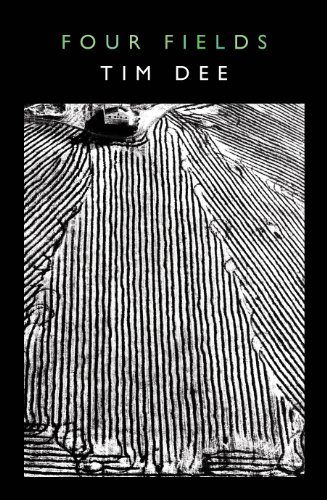
Four Fields

On my wish list:
In his first book since the acclaimed The Running Sky Tim Dee tells the story of four green fields. Four fields spread around the world: their grasses, their hedges, their birds, their skies, and their natural and human histories. Four real fields - walkable, mappable, man-made, mowable and knowable, but also secretive, mysterious, wild, contested and changing. Four fields - the oldest and simplest and truest measure of what a man needs in life - looked at, thought about, worked in, lived with, written.

Dee's four fields, which he has known for more than twenty years, are the fen field at the bottom of his Cambridgeshire garden, a field in southern Zambia, a prairie field in Little Bighorn, Montana, USA, and a grass meadow in the exclusion zone at Chernobyl, Ukraine. Meditating on these four fields, Dee makes us look anew at where we live and how. He argues that we must attend to what we have made of the wild, to look at and think about the way we have messed things up but also to notice how we have kept going alongside nature, to listen to the conversation we have had with grass and fields.

Four Fields is a profound, lyrical book by one of Britain's very best writers about nature.

Source image and text: Amazon