Showing posts with label UK. Show all posts

Friday, 19 September 2014

Tuesday, 9 September 2014

UK: Health Insights - how innovations support in health and care communities


Hi Peter

We are delighted to introduce our new series of Health Insights. These free to attend events for healthcare professionals feature interactive round table activities, news on how the latest innovations support the health and care community, and best practice experiences from NHS Trust colleagues.

CLICK HERE TO SEE NEW DATES AND LOCATIONS

Starting in Leeds and Newbury this October and held in association with NHS England, each one day conference will feature:

Digital Discovery Sessions

- facilitated round tables exploring procurement issues

An update from NHS England on Tech Funds and Open Source Programme
Host Roy Lilley, popular Healthcare Broadcaster, with lively panel debates

Speakers will include Rob Webster, CEO of NHS Confederation, Tim Straughan, Director of Health and Innovation at Leeds and Partners, and Clive Kay, Chief Executive of Bradford Teaching Hospitals.

REGISTER FREE TODAY

We hope to see you at your local Health Insights.

Kind regards

Samantha Phillips
HIMSS UK

Saturday, 30 August 2014

Welcome to the QUAD to be archived by The British Library

http://www.webarchive.org.uk/ukwa/The old website is archived on the Internet Archive Wayback Machine going back to 1999 and so is W2tQ.

The British Library also has a web archive, UK based of course. The website's there and now I've news that Welcome to the QUAD will be too.

Wednesday, 27 August 2014

Global Research Nurses competition: win attendance to UK research nursing conference

The Global Research Nurses’ network is pleased to announce the second competition for nurses working in clinical research …

THE WINNER WILL BE INVITED TO ATTEND THE ROYAL COLLEGE OF NURSING INTERNATIONAL NURSING RESEARCH CONFERENCE IN NOTTINGHAM, UK, 20th – 22nd APRIL 2015, ALL EXPENSES PAID.

SECOND PRIZE – ONE YEAR’S SUBSCRIPTION TO 2 ONLINE JOURNALS:

THE JOURNAL OF ADVANCED NURSING & THE JOURNAL OF CLINICAL NURSING

To enter, research nurses should write a 1,000-1,500 word article to discuss the role of the research nurse: “Using examples from research projects that you have worked on discuss what skills nurses contribute to a clinical research team.”

Full information and criteria, as well as information on how to upload your entry, can be found at https://globalresearchnurses.tghn.org/extra/competition-2015/

Entries must be received by 31st October 2014. Please share this opportunity widely!

Thanks and kind regards
Tamzin

Tamzin Furtado
Project Manager
The Global Health Network

HIFA profile (and source): Tamzin Furtado is Project Manager of Global Health Trials, UK. Professional interests: Global health, clinical trials. tamzin.furtado AT ndm.ox.ac.uk

Tuesday, 12 August 2014

Disobedient Objects

individual
INTERPERSONAL : SCIENCES
humanistic ------------------------------------------- mechanistic
SOCIOLOGY : POLITICAL
group


personal ethics


objects

social justice


The Victoria and Albert Museum 26 July 2014 – 1 February 2015
Disobedient Objects:
From Suffragette teapots to protest robots, this exhibition is the first to examine the powerful role of objects in movements for social change. It demonstrates how political activism drives a wealth of design ingenuity and collective creativity that defy standard definitions of art and design.

Image source: Inflatable cobblestone, action of Eclectic Electric Collective in cooperation with Enmedio collective during the General Strike in Barcelona 2012.
© Oriana Eliçabe/Enmedio.info

Sunday, 13 July 2014

H2CM workshop at Threshold Concepts Conference 11th July 2014 Durham

Prior to the workshop I did not know how many people would be interested. In the end I had four attendees. With the session located in a large dining hall I had to improvise. I explained the model on paper sat in the middle. The presentation worked on the laptop, with a little swapping of seats for vision. As always with Hodges' model (I believe) the questions and discussion that ensues is primary engagement and this can mitigate environmental limitations. This is also why I believe Hodges' model is applicable to the global community.

I had twenty 2-sided A4 templates to hand-out. The format was as follows:
  • What is Hodges’ model?
  • A concept sorting exercise
  • A case study exercise
  • Some examples of links to threshold concepts
  • Q & A - discussion
  • Feedback
The exercises appeared to go very well, prompting, as hoped, people to think about the model as presented, their own work and threshold concepts. The case study seemed quite realistic and yet it is of course fictional.

Where did I slip up? In at least three ways: I did not have my own feedback form. This is frustrating as I've used these routinely in sessions delivered in residential and nursing homes. I did not complete all the slides. We ran for 85 minutes starting 5 minutes later than intended. On reflection I could have attended for the two days as there were, some really relevant presentations on the Thursday also. I'm really grateful to the people who took part in the workshop. Their work included computer science, law, migration and mathematics.

Durham from TC2014 website
They suggested I identify existing threshold concepts from the health and social care literature and relate these to Hodges' model. Another suggestion pointed to a pre-populated conceptual space using Hodges' model that can act a guide. I've wondered about this before in terms of how to avoid the care reduced to a checklist critique. Although lists play an evidence-based role in assuring safety and situational awareness, the check box mentality is viewed as undermining nursing and high quality personalised care? There is definitely scope for a paper combining #h2cm and threshold concepts.

The TEL course at Lancaster is proving a challenge as anticipated, because I do not have first-hand access to learning management systems and the more formal educational context. I am working on this with an ongoing secondment application, but I never hold my breath.  Doing the TEL course is (also) a test, it forces me to focus and produce small studies and very quickly too. I had wondered about using the workshop to this end, but in light of very helpful supervision and discussion with peers online I directed attention to a semi-structured questionnaire and the reflective content of LMSs used by local students.

Significantly, the four participants in Durham is more than needed for a 4000 word study, so the workshop is a great experience and further 'demonstrator'.

I am still reflecting on the workshop and will be in touch with several people as a result. I would also like to thank the organisers for my being able to contribute. The slides will also be posted online soon. I will add some notes to act as instructions.

In 2016 the conference will be in Nova Scotia, when available I will add the updated link in the sidebar.

Monday, 30 June 2014

Two-day symposium ‘Concerning Relations: Sociologies of Conduct, Care and Affect’ 28-29 Nov. 2014

We are pleased to announce a two-day symposium ‘Concerning Relations: Sociologies of Conduct, Care and Affect’, 28/29 Nov. 2014, University of Exeter. The aim of this exciting international workshop is to bring together leading researchers, practitioners and scholars from care studies, sociology of health and illness, science and technology studies, humanities and philosophy to rethink care. We also plan to publish the results of the workshop.

This interdisciplinary symposium, funded by Foundation for the Sociology of Health and Illness (FSHI) and Exeter University, aims to interrogate the implications of shifting the focus of health care away from ‘delivery’ towards care as an ongoing everyday accomplishment. The situatedness of care relations and how situated care relations are practiced and experienced are vital to understanding the impacts care has upon patients, families and healthcare staff. This shift represents a contrasting view on care, from one that is predicated upon a discourse of absence (of care) or lack (of dignity) to the affective interactional relations between social actors. Such shifts of focus are of prime concern as care may be viewed less as a commodity which can be lost, saved, traded or withheld, but as a relation that is deeply embedded within institutional contexts, of individuals and the social worlds they inhabit.

This symposium examines spaces of collisions, elisions or alignments of social worlds, within which the affective dimension of social life in healthcare may be fruitfully examined. Drawing upon relational concerns as a distinct and distinctive mode of sociological inquiry, the symposium seeks to develop an understanding of care and its consequences that help us get beyond the economics of care as a commodified and managed form of engagement with the ‘other’. Making this shift has huge potential for addressing long-standing, global concerns around ‘cultures of poor care’ or ‘care as absence’, the seemingly intractable problems that are not readily amenable to a quick or even a slow fix.

The symposium examines how the fix, the cure, remains an issue of perspective. Central questions include:
  • What if the ‘problem’ of caring in health care settings was viewed differently, how would the issues be seen through an affective, situated relational perspective, how would an affective orientation resolve or heighten long standing and seemingly intractable problems of institutional care?
  • Is the demand for a cure (the fix) a manifestation of a broader political economy at work, is it a question of the mundane interaction order where contemporary modes of conduct reinforces distance, or is the organisational ‘cure’ simply a manifestation of organisational disease?
  • Can materials, economies, institutional practices and modes of accounting contribute to poor clinical and managerial conduct and do such devices legitimate a focus away from the patient?
Rather than provide a critique with no visible solution, or provide a simplification of institutional mores, a more cogent question may be what or who is now being cared for. Once such questions of central importance to a relational sociology have been attended to, the case for re-imagining the organization of care as a situated accomplishment can be made, a case based upon sound sociological reasoning. This symposium challenges what it means to care.

The organizers would appreciate general information about your possible participation before 15.07.2014. Please reply to: m.schillmeier AT exeter.ac.uk

Kind regards

Michael Schillmeier (Exeter)
Joanna Latimer (Cardiff)
Paul White (Swansea)
Alexandra Hillman (Cardiff)
----------------------
Professor Michael Schillmeier
Schumpeter Fellow / VolkswagenStiftung
Department of Sociology, Philosophy and Anthropology
Centre for the Studies of Life Sciences
Byrne House
University of Exeter
Exeter EX4 4PJ

New Nuevo Neu
Eventful Bodies: The Cosmopolitics of Illness. Ashgate (forthcoming)

http://www.nanomedizin.soziologie.uni-muenchen.de

Friday, 27 June 2014

Competition: Win attendance at the Royal Society of Tropical Medicine and Hygiene Meeting in Oxford, UK - Deadline June 30

In order to celebrate International Clinical Trials Day, Global Health Trials is running a competition. The first prize is attendance of the Royal Society of Tropical Medicine and Hygiene (RSTMH) Meeting in Oxford, UK, on 25-27 September 2014, covering transport, accommodation, conference registration and living expenses. The winner and two runners-up will also win one-year fellowships with the RSTMH. Please note that the deadline for entries is June 30, 2014.

In order to enter this competition, you must be working in a research role (for example, as an investigator, nurse, field worker, lab technician or data manager, etc) and currently be working in a low or low-middle income country as defined by the world bank.
To enter, you can send us either a two-minute video you have made (you can use your smartphone) OR a photo-board (up to fifteen photos) on one of the following three topics:
  1. A day in the life of our clinical trial(s)
  2. How we are building research capacity in our health facility
  3. My health research career
An important aim of this competition is to celebrate and recognise the quantity and diversity of clinical trials that are being conducted around the Globe. Tell the Global Health Network community about the trial that you are working on!
Again, please note that the deadline for entries is June 30, 2014.

Please refer to the following link for more information:
https://globalhealthtrials.tghn.org/community/blogs/post/383/2014/05/global-health-trials-international-clinical-tr/

With best regards,
Tamzin Furtado
Project Manager

www.globalhealthtrials.org
info AT globalhealthtrials.org

The Global Health Clinical Trials ( www.globalhealthtrials.org) is an open collaboration aiming to support clinical trials in resource-limited settings by providing guidance, training, resources and career development. Please do visit and let us know what you think.

HIFA profile: Tamzin Furtado is Project Manager of Global Health Trials, UK. Professional interests: Global health, clinical trials. tamzin.furtado AT ndm.ox.ac.uk

My source: HIFA2015

Tuesday, 20 May 2014

3-day Short Course in Systematic Reviewing and GRADE, 2-4 July 2014, UCL and NCCMH

http://www.ucl.ac.uk/clinical-psychology/CORE/Images/grade-approach-poster.png
Dear all,

I’d be very grateful if you could forward this onto any colleagues you think would be interested in attending. Many thanks.

Introduction to Systematic Reviewing and the GRADE Approach
3-day short course
UCL, London

Led by Dr Craig Whittington, with over 10 years’ experience developing NICE clinical guidelines and Cochrane reviews.
  • A practical approach to systematic reviewing taught by experts developing clinical guidelines for NICE.
  • Get the latest advice about GRADE, the sensible and transparent approach to grading quality of evidence and strength of recommendations, adopted by the Cochrane Collaboration.
  • Bring an idea for a systematic review; leave with a protocol and toolkit to get the work completed to the very highest standard.
Please visit:
http://www.ucl.ac.uk/clinical-psychology/CORE/short-courses/grade-approach.htm

To book please email snaqvi AT rcpysch.ac.uk
Best wishes,
Sabrina Naqvi

Sabrina Naqvi
Project Manager
National Collaborating Centre for Mental Health
The Royal College of Psychiatrists
3rd Floor | 21 Prescot Street | London E1 8BB
Website: http://www.rcpsych.ac.uk

Saturday, 1 March 2014

Drupalcamp London 2014: The Government Digital Service, Drupal 8 Multilingual features, Twig

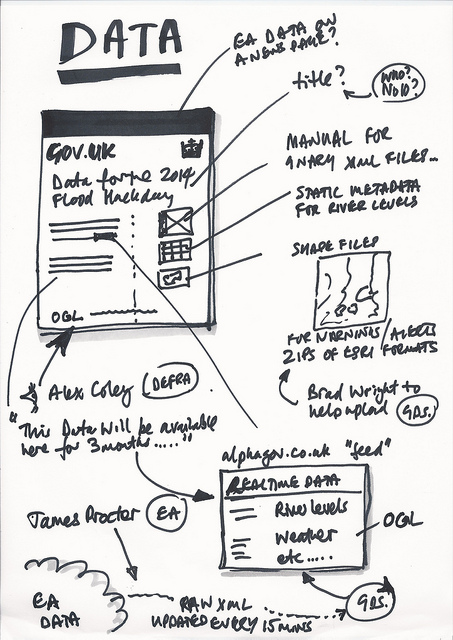
https://gds.blog.gov.uk/2014/02/23/flood-hack-developing-solutions/
Flood hack
DrupalCamp London today got underway with a keynote Delivering User-centred Digital Services by Mark O'Neill from the UK Government Digital Service.

Given the record of public and private sector led IT projects it was refreshing to hear of the GDS's approach being user-centred, the extension of 7 design principles and Mark's previous experience. It's clearly too late for the health care sector to coin and create the Needotron - GDS beat us to it.

Drupal 8 is looking formidable both in its potential and the (learning) stack it presents. Another great session to pick out was - A whole new world for multilingual sites in Drupal 8 by Gábor Hojtsy. The progress here is phenomenal and even though incomplete it is a major achievement and a credit to the Drupal community.

It's humbling as it reminds me to post some introductions to Hodges' model on W2tQ in several languages.

As to being user-centred, the Harmony Forum is a real tease. I know a forum will not moderate itself (is that the new Sorcerer's Apprentice?) and yet time is of the essence. Harmony is one for me to watch - so I'm signed up for the newsletter. Two sessions on Twig and Entities rounded up a busy few days.

This began on Thursday with Cutty Sark, the Royal Greenwich Observatory (learned much from their interactive designs), Turner and the Sea, The British Library - Beautiful Science (60-90 mins ample), and Ibsen's Ghosts at Trafalgar Studios.

I was also able to visit a university yesterday and meet a member of faculty who used Hodges' model many years ago. Here's hoping that some of the materials can be retrieved even though it seems unlikely. I hope to keep in touch with this nursing contact (and not just for the dinner!). I've met several other people here, the Drupal community is another great asset - and with thanks to the sponsors who make these events feasible for many of us.

Output from Needotron


I'll end this post back with Mr O'Neill and the GDS.

I wonder to what extent healthcare figured in the flood deliberations?

It seems that an output from the Needotron may not be so far removed from h2cm?

Happy St David's Day too - in the closing minutes here!


Saturday, 22 February 2014

Call for contributions: 'Interpreting the Information Age' new avenues for research and display

November 24 – 26 2014
Science Museum, London

In autumn 2014, the Science Museum will open a new permanent gallery, Information Age. The gallery will expose, examine and celebrate how information and communication technologies have transformed our lives over the last 200 years. To mark this launch, the Museum is hosting a three day conference which will discuss how the history and material culture of information can be made relevant for today’s audiences.

From the development of global telegraph and computer networks, the creation of constellations of satellites that silently orbit our earth, and the growth of radio, telephony and cellular networks; each technology can be understood through a network of people, practices, devices and infrastructure. Approaches which focus on overly technical histories, individual innovation or inevitable progress fail to acknowledge the role of users in the history of technologies and marginalise a majority of readers or visitors who are engaged by human stories and social history. By contrast, Information Age has taken a user-centric approach, not only in the stories and objects selected for display, but in the way the gallery has been designed and developed. Participation with a diverse range of audiences has been at the heart of the process, providing new avenues for research, fresh perspectives on our collections and original ways to interpret the information networks of which we are all part. We invite papers that include insights from researchers, academics, museum professionals, community partners and participants.

The conference structure is proposed to include:

Day 1: New avenues in the history of information and communication technologies

Day 2: Interpreting and displaying the history of information and communication technologies

Day 3: Reflections on the process and practicalities of participatory practice

We are especially interested in papers that address the following themes, but are happy to consider other proposals. Please contact the organisers for guidance. 

New avenues in the history of information and communication technologies

  • From devices to networks: taking a broader approach to the history of information and communication. How has historical analysis expanded our understanding of information networks as inherently social-cultural phenomena? How can museums move beyond displays of devices, to reveal how networks unite people, places and ideas?
  • User-driven innovation: technological change does not only occur at the moment of invention, but in the hands of users, who adapt and appropriate new technologies. What tools and techniques can we use to reveal previously hidden user stories?
  • Spaces and places of information: How are institutions celebrating the local and global stories in the history of information and communication technology? What partnerships are being formed to support this?

Interpreting and displaying the history of information and communication technologies

  • Collecting information: what are the challenges of collecting the material culture of information and communication? How can opening collecting processes to wider audiences enhance understanding, and what are the benefits for both researchers and the wider public?
  • Displaying information: innovative approaches to the history, present or future of information and communication technologies.
  • Preserving information: the challenges for museums, libraries and archives in preserving our increasingly digital lives.
  • Whose story? As institutions strive to tell the story of information and communication technologies from the perspective of users and co-producers, how can we ensure that we are representing a diverse range of voices? 

Reflections on the process and practicalities of participatory practice

  • Breaking down barriers: what approaches are being taken to ensure museum collections are accessible to wider audiences? What interpretation approaches can be adopted?
  • Collaborative interpretation and design: how are institutions and audiences working together in exhibition development? What are the benefits to the museum, participant and ultimately the gallery visitor? What are the perceived risks to the museum’s authority?
  • Ensuring legacy: how do museums capture the process of participatory practice in a meaningful way? What evaluation methodologies can be adopted? How can museums support partners and participants in the longer-term? 

How to contribute

To submit a proposal, please send a 250 abstract outlining the topic of your paper, along with a 100 word biography, to [ research AT sciencemuseum.ac.uk ] by Friday 28th March 2014.

We welcome proposals which could be delivered either as paper presentations or for consideration as panel discussions with other contributors, along with proposals for workshops which practically address the conference themes.

My source: HUMANIST list

Monday, 17 February 2014

Good Health, Manchester Training Programme 2014/15

Dear Colleague,

Manchester Public Health Development Service are delighted to announce the launch of their updated and refreshed training programme – the Good Health, Manchester Training Programme 2014/15.

This year we are very excited to announce an online booking system that will make booking on our courses even easier for you and your colleagues. Please visit www.goodhealth-manchester.nhs.uk/training to browse and book onto the many public health training courses we have on offer for 2014/15. We have over 50 courses covering a multitude of topics. All courses are free-of-charge to those who work with Manchester people. If your organisation would prefer a bespoke training tailor-made to your needs, please click here.

Please forward this email to any individuals or colleagues that may be interested in attending one of our courses.

We look forward to seeing you soon,

Brian Goodman
Training Coordinator
Manchester Mental Health and Social Care Trust
Manchester Public Health Development Service
Victoria Mill
Lower Vickers Street
Miles Platting
Manchester
M40 7LJ
Tel: 0161 882 2584 (Temporary)
Fax: 0161 203 5817
e-mail: Brian.Goodman AT mhsc.nhs.uk

Wednesday, 15 January 2014

Book review: Values-Based Commissioning of Health and Social Care

This book was a welcome change from the last review, being quite brief in comparison at 155 pages including the index. This isn't a criticism, it just helps in clearing the decks for other reading and distance learning.

The text is no lightweight, however; and should be mandatory reading for all health and social care personnel. Well maybe not all; but that is part of the problem. The clinical and social care workforce are trained to care. Commissioning (and clinical coding) is something done in another location, by other personnel.

If there is a recurring criticism of public services it is that they are cossetted, protected, removed from many of the financial realities of the world. The book, published in 2012, was written anticipating the structural and financial change brought in by the Coalition government and the need for austerity. Therefore, the public sector and clinical staff are not  immune from the vagaries of finance as might be assumed. For the past couple of years I've witnessed the regular shakes of the sieve and heard of the same within local authorities.

Christopher Heginbotham's book provides the background and tensions of commissioning and delivers much needed insight on several fronts by conjoining what so often seems remote. The lesson of the book for me is how distinct finance and commissioning are. I can sum this up as: if person-centred clinicians are concerned with sense-making for and with patients and their families, then commissioning is the sense-making of the available finance. Viewed this way you see the importance of commissioning.  Clinicians are concerned with evidence-based care, ethics, the health reforms, outcomes, quality, and of course values. Add to this patient involvement and public engagement and you have a read that opens a field that many clinicians dash by as they manage various clinical priorities.

Chapter 1 and 2 set the scene of values-based commissioning, definitions, the fact-value distinction; and the post-Labour NHS. The health reforms (chapter 3) are central to the text, but despite the date of publication which the author acknowledges there is little loss of significance. The health and social care commissioning landscape is still taking shape, outcomes based commissioning (chapter 9) can make the news as implementation is delayed (Williams, 2013). Chapter 4 describes the seven fat years followed by seven lean years; an excellent overview with the major influences at work, The Wanless Reports and Marmot Review for example. It is salutary in these times to see NPfIT as a footnote, with IT benefits still to be accrued (p.32). The need to respond to the public health challenges are noted (chapter 6), as with the potential mental health impact of climate change.

The book's figures and tables are a great asset, very useful to educate student nurses about commissioning, value and values. There are a couple of references to colour (p.72) in what are black and white - grey illustrations. 'Reading' the diagrams you can follow them. The author's background comes across, as with location and mental health experience. The book is I believe relevant to readers across all sectors. Heginbotham also indicates that the book is one of a series by CUP, and points to Fulford et al. as a sibling. There are a couple of repeated words but otherwise the production is excellent.  I was a little surprised to find a catastrophe in the text - catastrophe theory (p.51). It is well deployed in explaining complexity and values. When I say surprised perhaps I would really like to see more on this theme of complexity and emergence, but Mr Heginbotham stays clearly on track.

My bias - Hodges' model - found the following standout points:

http://www.cambridge.org/gb/academic/subjects/medicine/medicine-general-interest/values-based-commissioning-health-and-social-careThe number of sentences and figures that describe the individual, group, community and population (the structure of Hodges' model). The way that values can act as a counterpoint and essential adjunct to evidence (subjective - objective; qualitative - quantitative).

Some situations are more biological than others - in certain sorts of surgery, for example - and some have a much larger values base - such as in psychiatry (p.40).

 Reference to (Cronje and Fullan, 2003):
The medical literature demonstrates an equivocal attitude which suggests a 'collective need to better integrate scientific quantitative data . . . and the art of human judgement . . . into a common definition of "rational" medical practice (p.40).
Figure 7.8 Filtering the evidence through a values-based matrix (values across four care domains?).

The use of models to test the real world and reference to a values space.

I posted previously about the nhm - new holistic model (p.80).
(back to the review..!)

Technical aspects (a law and index) and ethical issues that beset commissioning are introduced (space is limited), and recur helping to integrate the book as a whole. Chapter 5 deals with public involvement and engagement and how it can be enacted. Chapter 7 on integrative commissioning invariably raises patient and service user care pathways.

Is this the Rorschach test for patient, care professional and commissioner: please draw your care pathway? 

The book admirably deals with the ideal and realised in the space available. As such even when there is a linear care pathway it is how it is experienced that counts (values and outcomes...). (It is sadly the person-affirming life-story pathway that is so often lost.) 

Perhaps, this is what I have in mind above in referring to emergence. Despite the existence of care pathways in practice the route in-through health and social care is probably found in a rather chaotic way (sudden care transitions); with delays, placement changes, ward movement(s)-stasis, choices to be taken into account, lack of attendance, missed appointments. ... This is why trying to define pathways may certainly assist, but it is the granularity of those definitions and their experience that snags at our clothes along the way. As Heginbotham advises - care pathways are not something to use in a slavish way. This excellent and well referenced book should provoke and establish interest in this very important health and social care activity. An activity and process that must be informed by the values of the public and those of patients and be more than a process, but realised in shared purposes and practise.

Many thanks to CUP for the copy.

Williams, D. Trust forces delay in outcomes based commissioning plan, Health Service Journal, 6 December 2013. p. 4-5.

Heginbotham, C. (2012) Values-Based Commissioning of Health and Social Care. Cambridge, Cambridge University Press.

Tuesday, 7 January 2014

ESRC PhD North West Doctoral Training Centre (NWDTC) CASE Studentships 2014: The spatial and social dynamics of public inclusion for people with dementia & Masters HI Sweden

The Faculty of Health and Medicine, Lancaster University offers an exciting opportunity for an ESRC funded +3 collaborative studentship for PhD research: The spatial and social dynamics of public inclusion for people with dementia

Suitably qualified candidates are invited to apply for this fully-funded three-year PhD CASE studentship which is a collaboration between the Centre for Ageing Research, at Lancaster University, and AgeUK Lancashire. The studentship covers full fees plus a Basic Maintenance Grant (£14,421 p.a.). The student will receive a small contribution for research costs.

The CASE studentship will draw on innovative participatory mixed methods to assess the impact of a range of dementia friendly community initiatives to explore how people with dementia experience social and spatial inclusion, across personal and public spaces. The research offers an opportunity to engage with important policy initiatives and how they impact upon people’s lives. The successful applicant will also benefit from the work placement opportunity within AgeUK Lancashire.

The studentship will be supervised by a team lead by Dr Katherine Froggatt and Professor Christine Milligan at Lancaster University and Mrs Diane Armstrong, Dementia Support Coordinator at AgeUK Lancashire.

Eligible candidates will be UK/EU honours graduate students with a good 2.1 from a recognised University, who show evidence of exceptional ability; they must have completed research methods training as part of an ESRC recognised Masters (or demonstrate research training to an equivalent standard) in a relevant health and social sciences discipline. Students who are currently undertaking a Masters degree (or equivalent) and are expecting to graduate during the 2013-14 academic session are also eligible to apply. Candidates should demonstrate a committed interest and experience in the field of dementia ageing research, preferably in community contexts.

Candidates must satisfy the ESRC's academic and residential eligibility requirements and be UK or EU citizens who have been resident in the UK for three years. Further information on eligibility can be downloaded from the ESRC web site:
http://www.esrc.ac.uk/esrccontent/postgradfunding/foindex.asp

For further information contact Dr Katherine Froggatt: k.froggatt AT lancaster.ac.uk

To apply please submit the following documents electronically, by 5.00pm Thursday February 13th 2014, to Dr Katherine Froggatt: k.froggatt AT lancaster.ac.uk with ‘ESRC CASE studentship’ in the subject line:
  • An up-to-date CV: including two named referees (one of whom should be your most recent academic tutor/supervisor); the applicant will be expected to have approached their referees to arrange for references (including anticipated grade if Masters is ongoing) in advance of shortlisting.
  • A letter of application (not exceeding 2 pages) outlining your suitability for the CASE studentship and how you would anticipate approaching the research.
  • A copy of your first degree and Master’s degree transcripts.
Shortlisted candidates should be available for interview on February 21st 2014

PLUS from LinkedIn

On 01/06/14 1:53 PM, Sabine Koch wrote:
--------------------
In case you know somebody interested in advanced studies in HI please forward this message.
Thanks,
Sabine
----------------------------------------------------------------------------------------
Interested in a two year Master Programme in health informatics at Karolinska Institutet/Stockholm University in Sweden?

Apply online latest January 15th at universityadmissions.se

https://www.universityadmissions.se/intl/search?period=HT_2014&publishers=ki&freeText=Joint+Master%27s+Programme+in+Health+Informatics&courseProgram=programs&level=advanced 

Saturday, 4 January 2014

Ballets of corporate, Governmental, Social and Individual conscience

INTERPERSONAL : SCIENCES
humanistic ------------------------------------- mechanistic
SOCIOLOGY : POLITICAL

individual
c ons cien ce
Health services and services infrastructure


Why do we pay taxes as a society?


2012
Apple UK turnover £1,178m
Corporation tax paid on UK profits £1.7m
(2011: £1,013m £15.7m)
group - population


Q. Does the current state of corporate taxation globally influence the scope, efficacy and ability of governments and WHO to recommend and direct global public health and positive health promoting policies?

My source: Houlder, V., Pickard, J. (2014) Tech giants' £54m bill fuels tax row, Financial Times, FT Weekend, 4-5th January, 2014. p.1.

Thursday, 2 January 2014

CfP Visual In-Sights Conference, Newcastle University, June 2014

To: EUROPEAN-SOCIOLOGIST AT JISCMAIL.AC.UK
Sent: Monday, 30 December 2013, 10:24
Subject: CfP Visual In-Sights Conference, Newcastle University, June 2014


Call for Papers/Proposals
Visual In-Sights: Theory, Method, Practice 26-27 June 2014
Newcastle University, Newcastle Upon Tyne, UK
Deadline for Abstracts/Proposals: 31 January 2014

Keynote Speakers:
Marcus Banks (Oxford University)
David Campbell (http://www.david-campbell.org/ )
Sirkka-Liisa Konttinen (Amber Collective)

Organised by the Visualities Research Group at Newcastle University, this interdisciplinary conference aims to bring together an international community of established and emerging scholars, creative practitioners, visual artists and arts-based, community project leaders who research, use and work with visual materials and visual methods. Contributions are invited that demonstrate the cutting edge in research and practice around the multiple spaces of the visual, and which explore the porous boundary between the theory, method and practice of the visual.

We seek academic papers and/or proposals for multi-media presentations, break-out sessions using arts/performance/installation, contemporaneous fieldwork exercises and workshops, and exhibitive displays. Contributions may speak, but are not limited, to the themes of:
  • Art and Aesthetics
  • Visual Cultures
  • Visualities and Ethics
  • Visual Communication and Visual Practice
Please submit an abstract or artist proposal of up to 250 words to visual.insights AT ncl.ac.uk
by 31 January 2014.

Notifications of acceptance will be sent out on or before 28 February 2014.

Registration http://www.ncl.ac.uk/gps/research/groups/visualities/visual-insights/registration.htm will open on 31 March 2014. The conference fee is £80 (academics), £50 (artists), and £30 (students and unwaged)

For more information please visit:
http://www.ncl.ac.uk/visual-insights/
Enquiries: visual.insights AT ncl.ac.uk

Wednesday, 18 December 2013

Papers, *actual* post-grad studies and a visit to Brian Hodges

Early last month I posted about planned trips to Sheffield and Lancaster Universities.

On the 4th I visited Paula Procter at Sheffield Hallam University, spending two hours there. Paula and I have known each other through informatics conferences since the late 1980s or early 90s and the British Computer Society Nursing Specialist Group. (Sadly this group and its publications are not as active as they used to be.) I really appreciate Paula's time and her key conclusion that rather than thinking about Hodges' model I need to apply my knowledge and experience with the model and DO something with it. In doing something with the model in a certain community - most likely residential care and nursing homes - I would also have a potential community of users for the new website. This was quite something to hear as I'm at that stage of my career when, shall we say - other possibilities beckon.

In the afternoon I travelled the short distance to meet Brian Hodges at his home. It was great to meet with Brian again and his wife. It was a lovely sunny afternoon as per the welcome and some cake! We reflected on the respective changes over the past five years and current events. Hot-off-the-press of course was my sharing the discussion with Paula and the planned visit to Lancaster University.

We agreed to meet again and not leave it so long next time. Brian has a desire to write again and and a prospective topic in dependence - independence. I hope this is something Brian can do and forward a photo for the (still) promised site. Brian now has copies of the most recent papers and the latest draft on recovery in mental health and the model.

On the Wednesday, after work I drove to Lancaster to discuss their PhD E-Research and Technology Enhanced Learning (thesis and coursework) distance learning.

At the start of last week a reserve place - for January 2015 became an offer of a place next month.

So, as of next month I will make a start. There is a residential week to look forward to at the end of March. Three second hand books from the reading list are ordered. There is a recommended video link too that invites repeat viewing, Etienne Wenger on Communities of Practice:

http://www.239productions.co.uk/wenger/

- and in the Nursing Informatics book I'm reading for review, on page 189 box 11.1 is on the same topic and referenced source Wenger, E..

I predicted quite some time ago about the post count decreasing here ... now I have an excuse and I plan on this including Drupal.