Showing posts with label theory. Show all posts

Thursday, 22 May 2014

New: Journal of Critical Anti-Oppressive Social Inquiry (CAOS)

CAOS 
is an interdisciplinary peer reviewed journal that publishes original articles/art work/poetry that foreground critical forms of social inquiry, research and practice.  

http://caos.library.ryerson.ca/index.php/caos

Thursday, 8 May 2014

Interested in writing? [ II ] Hodges' Health Career - Care Domains - Model

In the side bar beneath the bibliography (on a desktop) I've listed a few topics worthy of critical attention. The real need is to link practical application of Hodges' model and further some theoretical underpinnings for the model. This is now happening and it's quite a challenge as I chase questionnaires and write up a draft report for next week. This report is set out as a paper using an author's template from a nursing journal.

Trying to get the message out on writing about this free, holistic bandwidth defining, holistic wrangling, (self-) caring info-portal I blogged an appeal of sorts in 2010. Here we are again. The existing topics in that list relate to the original purposes of the model, plus a few 'extras':
  • reflection;
  • curriculum development;
  • case formulation;
  • holistic care;
  • conceptual spaces
I'll revise the above as a result of this post and ongoing studies at Lancaster University. I will also add the journal to the most recent recovery paper. Expanding on the above for the benefit of anyone interested in using Hodges' model, reflection (as in 2010) is for me the primary purpose of the model.

Reflection: I'm sure that Hodges' model can complement existing and established approaches to reflection. It would be interesting to compare the use of Hodges' model with a control in clinical reflection, reflective practice with a patient/client, and in clinical or managerial supervision. (You see why this is a challenge, and I appreciate it is easy to generate suggestions!)

Curriculum development: If you need a map that incorporates an academic compass (sat-nav even) look no further. Where are the curricula hot-spots and how are they distributed?

Case formulation: There is an existing draft that needs to be revisited at some point, but the scope here is huge in terms of disciplines and applications. As mentioned above it is coming up with questions and research methods.

Holistic care: Is it time to revisit this phrase? Break it apart and put it back together if it still fits?

Is it a damaged good(s)?

Is this a broken currency as it originally did not include the patient as an active participant? Is it one of several linguistic tropes, said in earnest yet what does it mean? How do we measure it? Could there be a role for Hodges' model in defining or measuring it in theory (through the health record) in practice through outcomes that are demonstrably holistic? Does this make sense...? What is this holistic bandwidth that PJ witters on about? Is an informatics metaphor too far, or this a means to a definition?

To conceptual spaces I need to add threshold concepts and there is a literature here for health and social care, something to build upon and post here....

Wednesday, 23 April 2014

Interested in writing?

Two items can be readily brought together here: 
----- Forwarded Message -----
From: JS Drummond
To: NURSE-PHILOSOPHY AT JISCMAIL.AC.UK
Sent: Tuesday, 22 April 2014, 18:00
Nursing Philosophy (Post)-Graduate Student Essay Prize
Hi Folks,

To interested parties, there is still time to submit an entry for the (Post)-Graduate Student Essay Prize to the Journal, Nursing Philosophy.

Details are on the IPONS website. http://www.ipons.co.uk

Best Wishes,
John Drummond (IPONS)
Sent on behalf of Derek Sellman, Editor, Nursing Philosophy

The latest paper on Hodges' model -

Exploring the Dimensions of Recovery and User Experience

- has progressed to the point were I am awaiting contact from the production office of the International Journal of Person Centered Medicine.

In addition to the (Post)-Graduate appeal with IPONS there may be an opportunity through h2cm. If there are any student nurses and other health care learners interested in models of care and the future, I would be pleased to offer some support on a paper. Perhaps there are personal tutors out there who could also engage? I can't offer a prize, but there is surely a prospect with the journal Advances in Nursing Sciences:
Models of Care for the Future
Vol 38:1 - June 2015
Manuscript Due Date: October 15, 2014
As nations worldwide seek to establish models of care that provide quality and efficiency, nurse leaders are emerging to play a significant role in the development of these models. For this issue of ANS we are seeking manuscripts that provide theoretical underpinnings of creative models of care, as well as evidence that supports their implementation. Manuscripts should be clearly grounded in a nursing perspective; the content can include philosophic, theoretic, empirical or ethical aspects related to the model.
I do have form here - two submissions without success - but the very helpful feedback did result in a publication elsewhere.

With studies of my own I can't write another paper alone, but perhaps I can help others. It's time for me to not just think about the model, but do something with it too. It feels strange finally having questions out there in the field - a small study.

Earlier this week a colleague referred to the model's elegant parsimony. This is definitely a quality of Hodges' model and one that merits exploration with new explorers.

Monday, 17 March 2014

[ganm] International Journal of Africa Nursing Sciences - submit today to this exciting new journal!

Dear colleague,

The International Journal of Africa Nursing Sciences (IJANS) is a new, open access, international scientific journal published by Elsevier. The broad-based journal is founded on two key tenets, i.e. to publish the most exciting research with respect to the subjects of nursing and midwifery in Africa, and secondly, to advance the international understanding and development of nursing and midwifery in Africa, both as a profession and as an academic discipline.

The fully refereed journal will provide a forum for all aspects of nursing and midwifery sciences, especially new trends and advances. The journal calls for original research papers, systematic and scholarly review articles, and critical papers which will stimulate debate on research, policy, theory or philosophy of nursing as related to nursing and midwifery in Africa and technical reports, and short communications, all of which will meet the journal's high academic and ethical standards. Manuscripts of nursing practice, education, management, and research are encouraged. The journal values critical scholarly debate on issues that have strategic significance for educators, practitioners, leaders and policy-makers of nursing and midwifery in Africa.

The journal will seek to publish the highest quality scholarly contributions reflecting the diversity of nursing. It is also inviting international scholars who are engaged with nursing and midwifery in Africa to contribute to the journal.

The IJANS is an open access journal and in 2014 there will be no publication charges for any author.

The Editor, Dr Hester Klopper (CEO, FUNDISA and President, STTI), welcomes submissions at  http://ees.elsevier.com/ijans/

With kind regards,

Tewodros Seyoum Nigussie
Lecturer, Msc in Clinical Midwifery
University of Gondar
Department of Midwifery
PO.Box 196
Email Address : tedysha AT gmail.com

University website @ Gondar: http://www.uog.edu.et/


The GANM is part of the Johns Hopkins University School of Nursing PAHO/WHO Collaborating Center.

The thoughts, opinions and views that are posted on the GANM do not reflect those of either Johns Hopkins University or WHO.

Please visit the GANM webpage at: http://knowledge-gateway.org/ganm/

Sunday, 23 February 2014

18th Annual International Philosophy of Nursing Conference

in association with the International Philosophy of Nursing Society
(IPONS)

September 8th, 9th and 10th, 2014

Hosted by the School of Health Sciences, University of Nottingham, England, UK

Brave new world?
Health, technology and evidence based practice

Nurses have seen some fundamental changes in the way that healthcare is delivered. Body care is at the centre of nursing practice but the nature of that care has been extended beyond the personal, human-to-human contact, and is increasingly refracted through the medium of technological/scientific interventions. The way that these technologies interact with the human dimension does, and should, require critical analysis.This is particularly the case for nurses who are increasingly expected to adopt methods and approaches that change the nature of the nurse patient relationship.  Added to this is the way that clinicians/academics/researchers interact with health care issues, locally as well as globally.

There is an established debate and tension within the evidence based practice literature that illustrates a deep ambivalence about how a holistic approach to clinical practice relates to, enhances, or is undermined by the new health technologies. These include care pathways, systematic reviews of knowledge, the enabling/disabling effects of technology and the putative implication that there is an empiricist and dehumanising process involved in these developments. For example, what happens to the complexity of ethical debates when they are shaped in the form of arguments based on literature reviews? These may wittingly or unwittingly serve as a means of translating complex moral issues into usable clinical regimes that partially mimic meta-analyses. Furthermore we may ask what place narrative knowledge and qualitative experiences may have in this new world of implementation technologies? And how do the new interventions of telemedicine and other policy drivers that emphasise the “hospital-at-home” impact on the ways that nurses carry out health care?

This conference intends to examine these and other issues related to ‘Health, technology, and evidence-based practice’.


CONFERENCE DETAILS

Details of the Conference can now be found at the following link:
http://www.nottingham.ac.uk/conference/fac-mhs/healthsciences/aipnursingconference/index.aspx

These details include the list of Keynote speakers; the venue; a Call for Abstracts; conference registration and accommodation, and transportation. Abstracts of the Keynote speakers and the full Conference Programme will be available soon on the above link.

Any specific queries should be addressed to Dr Stuart Nairn
stuart.nairn AT nottingham.ac.uk


other IPONS posts on W2tQ

Thursday, 2 January 2014

CfP Visual In-Sights Conference, Newcastle University, June 2014

To: EUROPEAN-SOCIOLOGIST AT JISCMAIL.AC.UK
Sent: Monday, 30 December 2013, 10:24
Subject: CfP Visual In-Sights Conference, Newcastle University, June 2014


Call for Papers/Proposals
Visual In-Sights: Theory, Method, Practice 26-27 June 2014
Newcastle University, Newcastle Upon Tyne, UK
Deadline for Abstracts/Proposals: 31 January 2014

Keynote Speakers:
Marcus Banks (Oxford University)
David Campbell (http://www.david-campbell.org/ )
Sirkka-Liisa Konttinen (Amber Collective)

Organised by the Visualities Research Group at Newcastle University, this interdisciplinary conference aims to bring together an international community of established and emerging scholars, creative practitioners, visual artists and arts-based, community project leaders who research, use and work with visual materials and visual methods. Contributions are invited that demonstrate the cutting edge in research and practice around the multiple spaces of the visual, and which explore the porous boundary between the theory, method and practice of the visual.

We seek academic papers and/or proposals for multi-media presentations, break-out sessions using arts/performance/installation, contemporaneous fieldwork exercises and workshops, and exhibitive displays. Contributions may speak, but are not limited, to the themes of:
  • Art and Aesthetics
  • Visual Cultures
  • Visualities and Ethics
  • Visual Communication and Visual Practice
Please submit an abstract or artist proposal of up to 250 words to visual.insights AT ncl.ac.uk
by 31 January 2014.

Notifications of acceptance will be sent out on or before 28 February 2014.

Registration http://www.ncl.ac.uk/gps/research/groups/visualities/visual-insights/registration.htm will open on 31 March 2014. The conference fee is £80 (academics), £50 (artists), and £30 (students and unwaged)

For more information please visit:
http://www.ncl.ac.uk/visual-insights/
Enquiries: visual.insights AT ncl.ac.uk

Sunday, 15 September 2013

Book review "Clinical Intuition in Psychotherapy: The Neurobiology of Embodied Response"

Clinical intuition is something that in formal learning terms is intangible, but in practice is earned and relied upon as a gift of experience. When I first received this book from the author Terry Marks-Tarlow, leafing through I thought the emphasis was on the neurobiology presaging a rather technical read. The references to brain structures, neocortex, brain waves ... seemed to suggest a reductive approach, remote from my conception of intuition in clinical practice. I need not have worried, the initial discussion on the brain and evolutionary development is not just a foundation for what follows but as the title suggests underpins and integrates the whole text. Despite the title and as the foreward advises you do not have to be a psychotherapist to read and appreciate this book. The stall is set from the outset in the introduction which explains that chapter one defines clinical intuition:

Clinical intuition is defined from a neurobiological perspective as a right-brain, fully embodied mode of perceiving, relating, and responding to the ongoing flows and changing dynamics of psychotherapy. (p.3)

The introductory material here is essential foundation reading for people starting a career in psychology and mental health related disciplines. The evolutionary development of the brain from reptile through to the mammalian brain is invaluable. Tying this to specific brain functions and circuits - care, fear, panic, play, lust, rage and seeking - helps integrate brain anatomy, perception, emotion, and behaviour. The advances in neurobiology to follow will no doubt demand that we all extend our understanding of this interdisciplinary fusion.

The book itself (hardback edition) is very well produced, the type face easy to read and the book well structured and with a well balanced mix of illustrations and photographs. The reference listing at the end runs over thirteen pages and is well grounded historically and in having regard to ongoing research. The index is comprehensive (fourteen pages) and a resource itself providing a look-up approach. The book's use of case studies, thirteen in total informs the text and provides some continuity through the book. Dialogue between therapist and client is easy to follow and illustrations are provided with ample explanation in situ. The references also utilize web-based resources.

I recall intuition coming up as a thread on several occasions on the psychiatric-nursing list especially between 1998 and 2004. Intuition is a central quality for all personnel working in health and social care. We must also recognise intuition as a human trait as when non-health professionals exercise the judgement that: "Wait a minute, we need a clinical opinion here." Self-care is also discussed. I had a Pythonesque moment - "Is this the right room for an argument?" - considering psychotherapy as a therapeutic modality within therapies as a whole. Here in the UK (and no doubt elsewhere) self, brief and solution based therapies rule economically. Even though the shortage of psychological intervention is recognised in the UK through IAPT improving access to psychological therapies, we need to ask: how does psychotherapy fare in the current (austerity) climate? To what extent can clinicians exercise intuition? Therapy relies on caseness, relationships and narrative, but to what extent can these be acknowledged and delivered within the economical time frames that frequently operate? 

Although there's no specific chapter on training for clinical intuition, Marks-Tarlow provides a list of how researchers have characterized clinical intuition (more recently in the 1980-1990s); five characteristics are proposed:
  • Sudden recognition;
  • Immediate knowledge;
  • Emergent awareness;
  • Non-verbal insight; and 
  • Holistic integrative sensibilities. (pp.42-43).
 Of the first two sudden recognition and immediate knowledge, I thought of the intuitive sense that is applied upon receiving a referral. That is the assumptions (not always helpful) that arise from the information provided (and missing) and where this leads you? But of course, is this clinical intuition? Intuition as the author makes clear (p.3 and) throughout the book is in psychotherapy. Intuition here (and for me) depends on interpersonal - therapeutic - interaction. What precedes is something else (data integration, hypothesizing, reasoning...?). I can however still see explanatory avenues in the above that can help us travel from the conceptual (reduced) to a holistic whole. I did wonder about the role of intuition in suicidal ideation and risk management, but this is also a question of referral criteria and caseness.

I would very much like to write myself about information and complexity and these themes recur in the text, especially the latter. Several 'spaces' are discussed too: social, physical and spatial schemas. The work of Buzsáki on the hippocampus, navigation and maps - landmark navigation - is fascinating in chapter 7 Navigating the Seas. I have likened Hodges' model to a cognitive periplus - an ancient maritime map. Over the next few months I'll post some quotes from the book.

This is an excellent book that I heartily recommend. The discussion of what is implicit in the brain and so in therapy, what is embodied and wisdom in mentoring invites re-reading. Finally but vitally there is much humour and humanity here too.

Many thanks to Terry Marks-Tarlow for the review copy.

Monday, 24 June 2013

Nursing Informatics 2014 - Call for Submissions


Please forward this message via to your own networks and contacts.

We are pleased to announce that NI 2014, the 12th International Congress on Nursing Informatics, will be held in Taipei, Taiwan, June 21-25, 2014.

The theme of the conference is “eSmart + ” where “e” stands for eHealth, “S” implies simplicity, “m” represents mobility and meaningful use, “a” denotes advanced leadership, “r” indicates revolution, “t” means translational technologies, and “+” symbolizes People Leading uCare Safely. The acronym is also used to convey the idea of adopting smart technology to help health providers deliver higher quality care.

The online submissions system is now open and will remain open until mid-September 2013. Decisions on manuscripts will be made by mid-December 2013.

You can find more information at the conference website: www.ni2014.org

We very much look forward to seeing your submissions and to meeting you in Taiwan next year.

With best wishes

Nick Hardiker & Heimar Marin

Co-Chairs, Scientific Programme Committee, NI2014


Saturday, 1 June 2013

Review: Philosophical And Theoretical Perspectives For Advanced Nursing Practice

http://www.jblearning.com/catalog/9780763765705/
If you are a miner for insight, a pearl diver for knowledge or seeking blue sky wisdom this book can deliver and sign-post in plenty through its references. In summary: this book is a history book that nods at futurology.

I had high expectations for the text, also anticipating an exacting read. After all, as a 5th edition this is a well established text. The expectations were not wholly realized, however; many of the papers are quite dated being published originally in the 1990s.

The book is an important collection and can certainly be regarded as essential reading for advanced nursing practitioners and those pursuing post-graduate nursing studies. Several chapters hail from the same journal publisher and perhaps - as a positive - this contributes to the readable and accessible style throughout the book. The text format and size are also easy to read. I found one spelling mistake within the index entry for 'diagnosis' p.387. In addition to the historical development in part 1 the book's division into five parts - 31 chapters in total - acknowledges the reliance on the past and from it appears from a previous edition the arrival of the 21st century. Apart from the current date of issue 2013 I cannot accurately place the most recent additions to the volume. The contents listing and preface are limited in this respect. Judging from the references they are not that recent. 2010 is one of the most recent references I could find, and this, the 75ed of Toby & Mariner.

Many of the papers are seminal and include an overview of particular aspects of nursing thought - analysis and synthesis. Unsurprisingly, there is philosophy and ethics in great abundance, together with ecocentricism, several forms of feminism, aboriginal peoples and their world views, evidence, health, beliefs, art, professionalism, research, patterns, advanced practice, theory and much more. The distinction between evidence based theory and evidence based practice is something of which all nurse students should be aware.

There is specific reference to Advanced Nursing Practitioners. There could obviously be some variation in how this professional group are considered as opposed to Advanced Nursing Practice. Having just returned from Belfast and the University of Ulster there is ongoing currency in McCormack's chapter 17 A Conceptual Framework for Person Centered Practice with Older People. While dated 2003 McCormack's work was emphasized at a recent conference in Ulster I was able to attend (and there are plans for another). I am sure other chapters may be enlivened by such reviewer found co-incidences as this.

I wonder if the scope of the book and acknowledgement of the passing of time seems to shout for a two-volumed approach. As suggested above, the previous acknowledgement of the future seems to have hailed from the 20th century and got lost. We are now after all more than a 1/10 of the way into the 21st century.

Having started my nursing career in the RN, chapter 22 on military metaphor in nursing and the need for another. A researcher contacted me several years ago about using Hodges' model (a conceptual framework) in a study on bullying in nursing. I've never heard anything since, but Hodges' can help in such research in two respects. The inclusion of a political domain and the organization of groups of people, emphasizes process, procedure, protocol, routine, and may proceed to regimentation, discipline, hierarchy so to a degree language games will follow. As this chapter notes, several professions, including nursing are said to eat their young. A commentary after the chapter provides a useful balance and makes this point. The chapter is nonetheless a reminder of the role of language and how professionalism arises and is sustained (disciplines too?). The proposal of frontier as a new metaphor is fitting as Hodges' model identifies five conceptual fronts - frontiers that must be integrated. 

As a frontier - Chapter 21 on rapture and suffering with technology in nursing holds many lessons and insights. Heidegger's "standing reserve", the human-technology interface, what it means to live like a human being and the distinction of being a human being. Mobile technology, m-health, e-health are making a huge contribution to global health and need a place here. I found Macurdy's four principles 326-327 on what patients need to assume power and control over their care very illuminating, especially in highlighting information access and the importance of health literacy.

In the text and the index I could not find specific reference to capacity, as in mental capacity, informatics, global health, information (access), justice, law, legal, management, human rights, literacy, mental, political, psych-, long-term medical conditions and recovery. While the book would become incoherent if a disease/diagnosis-based approach was adopted, we might ask: does dementia deserve specific inclusion? This is an interesting (and potentially vociferous) debate in itself - to what extent should such a book record change through several decades? Of course the book is not an encyclopedia and it is easy to critique according to omission. These are pressing times demographically, however; while there is a population focus: global communities and aboriginal communities in chapter 23 and 24, this merely scratches the surface of very large world.

This book is a valuable asset and has stimulated many ideas here (and potential blog posts). I am very pleased to have read it and would recommend it to students and practitioners alike. I am grateful to the publishers for the review copy.

Wednesday, 29 May 2013

Author's copy: Humans, Information and Science - now on Academia.edu

Humans, Information and Science

This evening I went through some old directories from two PCs ago and added the two figures missing from a paper published in 1996. This is now available on Academia.edu:

http://www.academia.edu/3555654/Humans_information_and_science

I've mentioned this paper before on W2tQ. I thought I would upload a copy as the basic details seems to have prompted some interest. At some point I would like to return to this subject:
ABSTRACT

The use of information forms the basis of nursing policies, standards and professional codes of conduct. Although used intuitively, nurses must now also grapple empirically with information needs often defined by others, and with the technology used to capture and process it. Even the briefest contemplation of 'information' reveals a truly pervasive concept. Information is ubiquitous. In order to care effectively in the so-called "information age" health care professionals need to understand information. This paper is a small contribution to that effort, attempting to conjoin the disparate fields of health and the information sciences; and the basic sciences upon which they are based.

This paper explores how definitions of 'information' formulated in computing and communication theory relate to health and other aspects of human experience. The strategy adopted to achieve this is threefold. First, there is the vexed question of defining data, information and knowledge. Second, I consider how communication - that essential nursing activity - relates to information, meaning and the messages people seek to convey to each other. Thirdly, clinical situations are described in an information oriented manner, using the concepts of 'redundancy' and 'entropy'. The conclusion provides an historical perspective.
Jones, P. (1996) Humans, Information, and Science, Journal of Advanced Nursing, 24(3),591-598.

In the meantime a draft paper on Hodges' model, case formulation (conceptualization) and diagrams is at a reduced 4,000 words ready for a meeting with my co-author later in June.

Early next month I'll post a book review and crack on with other reading for reviews.

Friday, 10 May 2013

Learning theory: an A3 poster

Source: Richard Millwood - A new learning landscape


As the poster demonstrates and Millwood's notes explain learning theories are very varied and yet a constant in terms of teacher education. What is less permanent is the significance of learning styles, which are included above. I wonder if there is an A3 poster addressing that question? A different treatment would be needed, one that might for example show the ups and downs of the literature? What theoretical underpinning has been proposed for learning styles? What are the connections to forms of literacy? I had a brief search, but found nothing to compare with the above effort.

Richard Millwood has provided a great resource and is seeking feedback. The pdf version is very readable on my laptop in HD; plus there is a CMap tools version with links.

It seems blended learning really is the hybrid? It is traditional in face-to-face sense, but can be found in multiple combinations within Millwood's formulation. Is there a place for gestalt learning - a further link with learning styles?

I'm subscribed to a Vygotsky list that is very active; most of the posts pass like e-leaves in the wind-e, a case of info overload.

Vygotsky has a place above:
it is a small place.
So it looks like there really is a lot to take in. Oh joy!

Saturday, 27 April 2013

'Holistic reform of education' in Jordan (an eastern dose of serendipity)

View from The Citadel, Amman 23 April 2013

Yesterday morning I arrived back safe and sound from Amman in Jordan, via Istanbul through to Manchester and full of new experiences and learning. I say 'safe and sound' because travel to the region is clearly not a matter of routine given ongoing events. Checking governmental advice in the UK it becomes a question of personal evaluation as was the unexpected trip to Colombia in 2011. Once the non-trivial decision is out of the way ... Jordan's nursing and educational communities provide a truly remarkable welcome and experience. Not only that, but the kingdom of Jordan and the people have so much to offer in their culture, history, hospitality and engagement.

Returning on Thursday from a full day's trip to Petra - amazing! - I asked for an English language paper to read at the hotel before leaving for the airport. I was provided with a copy of The Jordan Times to accompany a cappuccino*. On page nine Mona Smadi,# Asst. Professor, Al Balqa Applied University) wrote an opinion piece on Holistic reform of education. The opening sentence enabled my brain to reconnect with my legs (although I would have gladly walked back through the valley):
A holistic perception of reality means having a vision of the context of the constituent fragments and thereby gaining a clearer perception of the reality in its totality.
Prof. Smadi's focus is children's education and curriculum reform. The overlap between children's education, the professor's concerns and nursing is not limited to how curricula are designed and who owns them. Is, for example, the curriculum centered on the student as an individual nurse, or child? If nurses are to be able to integrate their learning and effectively negotiate the emotional and ethical spaces they find themselves in then when is this deeper thinking to start?

Petra 25 April 2013

Not surprisingly there was a lot of talk about this at the JNC conference. The theory - practice gap is not just alive and kicking there is an echo off the seemingly disparate walls. Given too the debate in the UK about student nurses spending time as a health care assistant before starting their formal nurse education. The word applied in the title of Prof. Smadi's university's is interesting. We are accustomed to applied mathematics, ethics, energy and of course applied nursing research and many other examples?

What of applied nursing - does that make sense? Or is there a circularity of sorts in nursing applied? I will check my notes as this point was raised in conference regards to evidence based care and evidence based practice.

Prof. Smadi's referring to a 'clearer perception' can also be extended to recognition of patterns, contexts and situations that are 'hot' in how they relate to values.

(There are a couple of points to add here which I will get too).


There was another serving of serendipity to add to that at Le Meridien, soon after rejoining the land of the virtual I came across the UK Department of Education's Preparing for Adulthood initiative on twitter. If you read the brief article by Prof. Smadi you will see how the two are closely related. Do lifestyles and family life today for many compromise the ability of families to teach moral values to children? As noted in the text this then becomes a critical role for education. In westernized cultures is this one of the qualities referred to in the saying of 'spending quality time' with the family? An acknowledgement of a deficit?

Source: http://www.preparingforadulthood.org.uk/
Vital and complex work in two senses. On the one hand cultures try to understand themselves; and on the other, they seek to understand the other others out there: now not so far away. The patterns that are realised be they mosaic, prayers, celtic knot, tartan, languages, landscapes - rock cut architecture - sculpture; these patterns work, that is 'make a difference' by virtue of both the detail and the whole.

"Petra is half-built, half-carved into the rock ..." UNESCO.

#If I have not used the proper name and title I will edit this accordingly asap upon advice.
 
*Why not an Arabic coffee? Well I had one the day before. What can I say... It was different in the preparation, being an observation as in so many cultural patterns (tea). I would like to think I will have another one day. The key thing is I did not necessarily want to have the capability to run to the airport at 11pm, or back to Petra for that matter.


Monday, 22 April 2013

Jordanian Nursing Council 4th International Nursing Conference “The Tipping Point: Creative Solutions to Health and Nursing Challenges”

Well, I arrived in Amman for this conference at midnight and have not been this far east before. It is certainly different and there is much to look forward to.

I panicked slightly in Istanbul briefly reading the boarding time on my e-ticket as the flight time. So, I was looking for 1920, but the flight was 2020 and not yet displayed.

The hotel Le Meridien is excellent, my driver last night and the staff are very friendly. I was told on the 35 minute trip from airport to hotel that events nearby have impacted on tourism. People have had to seek other work as many tourist offices have closed. At breakfast it does give you pause to wonder about what is happening not all that far away.

I've not checked the conference venue yet. There's a reception this evening and workshops ongoing through today. I opted for:

4
15:00-18:00
Nicola McHugh, MSc, MA, RN
Understanding and Using Research in clinical Nursing Practice

In preparation we've been asked to read:

Seers, K. et al., (2008). A randomised controlled trial to assess the effectiveness of a single session of nurse administered massage for short term relief of chronic non-malignant pain. BMC Nursing, 7:10 doi:10.1186/1472-6955-7-10. http://www.biomedcentral.com/1472-6955/7/10

Two workshops are recorded - an approach to consider for the future - as with using Skype.

Although only two days long there are a great range of concurrent sessions, amongst them:
  • Differences in Perception Between Nurses and Patients Related to Patients’ Health Locus of Control Ayman M. Hamdan-Mansour
  • Fostering Global Citizenship in Nursing Education: The Role of the United Nations Mary E. Norton 
  • Aptitude Towards Nursing: Is it Measurable? Maxie Andrade 
  • Comparison of Structure, Process, and Outcomes of Healthcare Service Provision between Advanced Community Nurse Practitioner and General Nurse Practitioner Noppawan Piaseu
  • Development of a Multimedia Computer -Assisted Learning with Integrated Content of Anatomy and Physiology for Enhancing Nursing Students’ Skills on Physical Examination in Adult: Head and Neck Examination Chularuk Kaveevivitchai
  • Assessment of Nursing Students' of Azad Islamic University of Saveh' Perception about Importance of Caring Behaviors Based on Caring Model of Watson Lida Nikfarid
My presentation is tomorrow afternoon and on Wednesday I'm chairing a session.

More to follow on this and some reading ...

Saturday, 23 March 2013

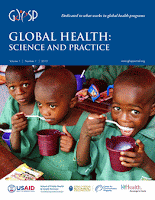
Inaugural issue open-access journal: Global Health - Science and Practice

Dear HIFA members,

The inaugural issue of the open-access journal Global Health: Science and Practice, is now available here:
http://www.ghspjournal.org/content/current

Below are extracts from the editorials:
'USAID and the Schools of Public Health at JHU and GWU welcome you to the inaugural issue of GHSP­an open-access, peer-reviewed journal for the global health community, particularly program implementers, to contribute to and benefit from a dialogue based on science and practical programmatic experience...'
'We foresee that public health practitioners, university colleagues, donors, and other development partners will be able to contribute to and benefit from a dialogue based on science and experience of what works for field programs.... GHSP will take a multidisciplinary approach to the science and practice of global health... We look forward to your engagement and feedback.'
Ariel Pablos-Méndez, Michael Klag, Lynn Goldman
Glob Health Sci Pract 2013;1(1):1-2
http://dx.doi.org/10.9745/GHSP-D-13-00012
'Formal research definitely helps. But it is not enough. We also need programmatic know-how, including experience-based knowledge and 'lessons learned.'.
James D Shelton, Ronald J Waldman
Glob Health Sci Pract 2013;1(1):3-4
http://dx.doi.org/10.9745/GHSP-D-13-00001

Best wishes,
Neil

My source: HIFA2015

Saturday, 23 February 2013

Cognitive continua ( ... just a sentence of promise)


The idea of a cognitive continuum has much to offer nurses and its potential has yet to be fully exploited. p.136.


Thompson, C. (2001) JAN Forum: Clinical decision making in nursing: theoretical perspectives and their relevance to practice - a response to Jean Harbison. Journal of Advanced Nursing, 35(1), 134-137.

Thursday, 21 February 2013

Journal of Learning Analytics - inaugural issue

ISSN 1929-7750 (online)
Homepage: http://epress.lib.uts.edu.au/journals/index.php/JLA
Twitter:  http://twitter.com/jla_editorial
Contact:  jla.editorial at gmail.com

Submission deadline (inaugural issue): April 30, 2013

Overview
Journal of Learning Analytics is a peer-reviewed, open-access journal, disseminating the highest quality research in the field. The journal is the official publication of the Society for Learning Analytics Research (SoLAR). With an international Editorial Board comprising leading scholars, it is the first journal dedicated to research into the challenges of collecting, analysing and reporting data with the specific intent to improve learning and teaching practice. “Learning” is broadly defined across a range of contexts, including informal learning on the internet, formal academic study in institutions (primary/secondary/tertiary), and workplace learning.

The journal seeks to connect researchers and developers with practitioners, creating and disseminating new tools and techniques, studying transformations, and providing ongoing evaluation and critique of the conceptual, technical, and practical outcomes. The interdisciplinary focus of the journal recognizes that computational, pedagogical, institutional, policy and social domains must be brought into dialogue with each other to ensure that interventions and organizational systems serve the needs of all stakeholders. The journal seeks to bring into dialogue the intersection of the fields of Education, Computation and Sensemaking.
Journal of Learning Analytics welcomes papers that either describe original research or offer a review of the state of the art in a particular area. The journal also welcomes practice-focused papers that detail Learning Analytics applications in real-world settings, provided that they offer innovative insights for advancing the field (see the About section).

Focus and Scope
The following topics are indicative of the journal’s scope:

Education
- Connections between learning analytics and the learning sciences
- Personalization and adaptation in the learning process
- Educational research methods
- Learner modeling
- The study of emotion, flow, and affective data

Computation
- Social network analysis
- Web science, the Semantic Web, and linked data
- Data mining and machine learning techniques
- Natural language processing and text mining
- Recommendation engines

Sensemaking
- Visualization and user experience
- Data and multimedia literacy
- Decision-support
- Organizational dynamics
- Ethical issues

Research Papers
Journal of Learning Analytics welcomes papers that either describe original research or offer a review of the state of the art in a particular area of learning analytics. No submission, or substantially overlapping submission, be published or be under review elsewhere.  Submissions that extend previously published conference papers are welcome provided that the journal submission has sufficiently been extended (at least 25-30% of new contribution).

The Reflective Practitioner Section
This section of the Journal of Learning Analytics is peer-reviewed and  covers the application of learning analytics across a diversity of contexts. This section spotlights trends and practices; provides new insights and ideas; and analyzes the implications of learning analytics. This section is not intended as an avenue for publication of research articles.

Editors
- Shane Dawson, University of South Australia, Australia
- Dragan Gasevic, Athabasca University, Canada
- Phillip Long, University of Queensland, Australia

Editor of the Reflective Practitioner Section
- John Campbell, West Virginia University, USA

Thursday, 24 January 2013

Two new books ... to review and a new IPONS website

There are two books in the post for review here which I look forward to receiving. Originally I only enquired about the following:

Philosophical and Theoretical Perspectives for Advanced Nursing Practice, Fifth Edition 

The book will continue to address a need to identify philosophical and a theoretical basis for h2cm.

A phone call from the publisher's rep. Clare McMillan had noted the informatics content here on Welcome to the QUAD W2tQ and would I also be interested in another book?

Yes please, certainly... I appreciate the recognition too.


Nursing Informatics and the Foundation of Knowledge, Second Edition is also to follow and not without a challenge as Clare pointed out. This foundation on informatics is focused on the North American experience. So it is a perspective from Wigan Pier to follow.

Of related interest and with further refinements to follow apparently, the International Philosophy of Nursing Society has a new website.

Wednesday, 16 January 2013

Peter Gärdenfors - "Actions and events modelled in conceptual spaces"

The Barcelona Cognition, Brain and Technology summer school. Barcelona, Spain

Friday, 14 September, 2012 - 09:30 to 11:00


Recording of the speaker's talk at the Barcelona Brain and Technology Summer School, September 2012.
"Actions and events are central to a semantics of natural language. I present a cognitively based model of these notions. After giving a general presentation of the theory of conceptual spaces, I suggest how the analysis of perceptual concepts can be extended to actions and events. First, I argue that action space can be analyzed in the same way as e.g. color space or shape space. The hypothesis is that the categorization of actions depends, to a large extent, on the perception of forces. In line with this, I describe an action as a pattern of forces. An action category is identified as a convex region of action space. I review some indirect evidence for this representation. Second, I represent an event as an interaction between a force vector and a result vector. Typically an agent performs an action – i.e., exerts a force – that changes the properties of the patient. Such a model of events is suitable for an analysis of the semantics of verbs. I compare the model to other related attempts from cognitive semantics."

Additional links:
http://www.ht.lu.se/o.o.i.s?id=21232&p=PeterGardenfors
Conceptual Spaces At Work - Conference May 2012

Related posts on W2tQ

Thursday, 6 December 2012

The Willis Commission on Nursing Education: Recommendations

Here are the recommendations from this commission (the full report is also available):
  • Patient centred care should be at the heart of all pre-registration nursing education and continuing professional development.
  • There were no shortcomings found in nursing education that could be directly responsible for poor standards of care or a decline in care standards.
  • Nurses and their organisations must stand up to be counted on the challenge of poor care and loss of public confidence in order to restore professional pride.
  • Nursing education needs to imbed patient safety and dignity as a top priority.
  • Better evaluation of and research into nursing education programmes is necessary to ensure a programme that is fit for purpose.
  • The future nursing workforce requires nurses to work in a variety of settings.
  • Recruitment campaigns need to widen their diversity in order to encourage the widest, best possible range of applicants.
  • Health care service providers must fully support nursing education.
  • Universities need to recognise nursing as a practice and research discipline.
  • Attention needs to be paid to developing a strategic understanding of the nursing workforce as a whole and as a UK-wide resource.
My source: RCN and others

Monday, 3 December 2012

The Difference that Makes a Difference 2013 - Information: Space, Time, and Identity


You are invited to The Difference that Makes a Difference 2013, An interdisciplinary workshop on Information: Space, Time, and Identity.

Location: The Open University and the MK Gallery, Milton Keynes , UK
Dates: 8-10 April 2013
Website: http://www.dtmd.org.uk

Deadline for one page abstracts - 3rd January 2013.

Information has been conceptualised in many different ways in different disciplines, and the DTMD series of workshops is a forum for sharing of those insights . We are keen to involve as many different people, from as many different disciplines, as possible in presenting and participating in the workshop. We invite a wide range of participants to give short (10 minute) presentations on their work as it relates to an understanding of information.

There will be six sessions:

Over days 1 and 2 the first four sessions consist of a keynote speaker followed by six or seven short presentations (which will have been selected by referees from submitted abstracts) then a panel discussion.
  1. Information and Space. The relationship between information and space, 'meaning' in our physical environment, and the information landscapes that go beyond physical space.
  2. Information and Time. Both the historic framework of the notion of information, and time as a 'dimension' in information – physics, entropy, information and ‘the arrow of time’.
  3. Information and Identity. Identity (race, gender, nationality, class and sexual orientation, for example) as information and, conversely, information as identity.
  4. What is information? Why are so many disciplines using informational concepts in their narratives? Is a Universal Theory of Information (UTI) possible?
Sessions 5 and 6 on day 3 draw together the insights from the first two days in two ways. First, through art, when the results of the work of the Workshop artist’s collaboration with delegates is presented and discussed. Second, a final keynote speech from Luciano Floridi, Professor of the Philosophy of Information will lead in to a panel discussion with the keynote speakers from the earlier sessions.

For more details see the workshop programme: http://www.dtmd.org.uk/programme and the Call for Papers: http://www.dtmd.org.uk/call-for-papers

Accepted abstracts will be published in a Workshop Digest which will be made available online prior to the event, and, following the workshop, delegates will be invited to submit papers for special issue of Kybernetes, based on papers presented at the workshop.

We hope to see you in Milton Keynes in April.
Best wishes,
Magnus Ramage and David Chapman on behalf of the Programme Committee: http://www.dtmd.org.uk/committee
-- 
Dr. David A. Chapman CEng, FIET, FHEA
Senior Lecturer
Department of Communication and Systems
The Open University http://cands.open.ac.uk/
Intropy blog: http://www.intropy.co.uk/
T. +44 1908 652919 Twitter @dachapman