Showing posts with label situated. Show all posts

Tuesday, 23 September 2014

Agnostic qualities in Hodges' model

In the previous post I highlighted "Holistic approaches to learning are agnostic as to method." 

I added that there would be more to follow as Hodges' model can be viewed as agnostic on several levels. The following is taken from a paper on Hodges' model and its application in forensic nursing:
Hodges’ model claims to be person-centred and situated (Jones, 2008). What exactly does this mean for forensic nursing? The utility of Hodges’ model lies in it being agnostic. By ‘agnostic’ this means that the model is not dependent upon, dedicated to, sanctioned by, or owned by any particular discipline (even nursing). It was not designed with a particular media, clinical setting, situation or organization in mind. It is true, however, that the model was formulated within academia and health and social care, being taught and applied by community mental health nurses, learning disability and health visiting students. Apart from the history and universality of the model’s cruciform structure and its inherent 2 x 2 matrix form [often referred to as a Johari window (Luft and Ingham, 1955)], the model is also culturally neutral. This is an essential requirement to reflect and enact nursing values and codes of conduct (Nursing and Midwifery Council, 2008).
Doyle, M., Jones, P. (2013). Hodges’ Health Career Model and its role and potential application in forensic mental health nursing. Journal of Psychiatric and Mental Health Nursing. 20, 7, 631-640.
http://onlinelibrary.wiley.com/doi/10.1111/j.1365-2850.2012.01961.x/abstract

Tuesday, 1 April 2014

Space Station Robot Forgets Key Again

individual
INTERPERSONAL : SCIENCES
humanistic ------------------------------------------- mechanistic
SOCIOLOGY : POLITICAL
group

Memory: artificial (jokes aside) and real

Just-be?

Making sense of the
activities of daily living

Chunking

Space Station Robot Forgets Key Again


Making sense of someone
else's sense of the
 activities of daily living


Funding for research
(competition!)
group - population

Additional link: The Economist - Rise of the robots 29.3.14
Image source: APOD

Sunday, 16 March 2014

A *prospective* journal issue devoted to the "Health Career - Care Domains - Model"

Last month I was contacted regards the possibility of acting as associate editor for a journal issue devoted to Hodges' model, or a related theme.

At present with part-time studies having started in January and a residential week to following at the end of March I have rather got my hands full. I hope to post in the near future on how these studies are helping to shape my ideas.

One clear 'result' is the prompt to engage with residential and nursing homes in preparation for a 'small research study' I have to complete this northern Spring. I've two meetings organised thus far with home managers.

A journal issue is a great prospect however, a giant step in fact - for the conceptual framework and myself (I'd also contribute an editorial). Perhaps I could share this project with someone similarly minded regards the potential of Hodges' model in health and social care and without in education and informatics? It seems that this invitation will stand even if I can only pick it up in the future, end of 2015-2016...

In the sidebar, below the bibliography I've listed a publications to-do list that could be extended:
  • Hodges' model, structure, content and applications 
  • taking the 'career' out of Hodges' model and putting it back;
  • curriculum development;
  • reflective practice;
  • case formulation;
  • holistic care (and related perspectives, but in informatics, SOCIO-TECHNICAL);
  • the theory - practice gap;
  • threshold concepts;
  • and conceptual spaces;
  • integrated care; 
  • Nursing theory: future history - why they still matter;
  • quality assurance and care values;
  • multidisciplinary care and interprofessional education;
  • diagrams that care;
  • student contribution;
  • patient, service user contribution;
  • .... ?
The distance learning Technology Enhanced Learning course is stimulating many other insights. The learning is very collaborative and a great demonstrator in so many ways. The recent trip to London and meeting at London South Bank University also stressed the need for publishing in the 'popular' nursing press. Recent writing (recovery, recovery model) and studies also points to not being tied to original purposes of Hodges' model - but going beyond this ... far beyond: global health integration, health literacy, self-care, methodological approaches to critique and investigate Hodges' model. ...

Monday, 3 March 2014

The limitations of the healthcare sector


4
many
decades there 
have been recurring 
issues, austerity measures, 
requirements, policy challenges, 
policy initiatives, gaps between theory 
and practice, a crisis in compassionate care, 
rising waiting times and a plethora of other concerns.

All these then and much more 
affect the
 healthcare
 sector

Clearly, there is no 'magic wand', but there must be a way to address some of the difficulties? 
Within health and social care, locally, nationally and globally we need a tool to help improve interprofessional reflective practice, to support person-centered, holistic care across physical, emotional, social, political and spiritual domains of care. 

The future demands a resource (free, open, easy to learn) that can also facilitate self-care, health literacy and the many carers within families and communities.
 
So, how big is your picture?


Wednesday, 11 December 2013

Critical Thinking - Gaining knowledge: Beginners + Experts = audience?

Clearing through books last month with several bound for the charity shops I came across Critical Thinking in Nursing: An Interactive Approach, by Rubenfeld & Sheffer, with the following table (p.30):


BEGINNERS EXPERTS
Ways of:

Gaining Knowledge Assigned readings and asking authoritiesMultiple written and verbal sources, and experience
Thinking DualisticRelativistic
Using rules Context freeSituation dependent
Looking at situations NarrowBroad

The table is not remarkable in its theme, but it is a useful prompt for Hodges' model and future studies. The concepts listed might help illustrate how Hodges' model can support learning. In addition to having an individual focus the model can consider any situation, hence the claim that the model is 'situated'. As stated previously person centeredness is not a given. It does not follow, nor is it achieved just because 'person centered' features several times in care philosophies and policies. The person must be put at the center of the model and then each of the domains considered together with the spiritual dimensions.

I'm also reading a nursing informatics book (posts and review to follow) that discusses casuistic ethics, that is case-based reasoning. While the utility of casuistry is debated in nursing, the need to consider the individual is always paramount. A prime example of the focus on the individual is the programme Inside the Ethics Committee on BBC Radio 4. Central to ethics are the frequent dilemmas that arise in health and social care, the difficult moral choices and dichotomies that must be faced. The model can be used in a context free way, that is considering rules in general; and also employed in specific contexts, such as a best interest meeting for a person recently moved into a residential care facility and distressed by the experience.

There are many dichotomies that can be identified in the basic model, and to a certain extent they reflect the dualistic thinking of the beginner as they build an understanding of particular fields of health care. As learners progress they integrate the concepts they encounter and are then able to associate these and relate them to prior learning, the current case and generate hypotheses that may also be predictive. Hodges’ model can frame and help represent student encounters be they narrow or broadening (recognising patterns). Gaining knowledge may need particular attention by the student (mentor and lecturer) in terms of the student's strategies for creating and protecting opportunities as a beginner and competent practitioner.

As a sign-off mentor I’ve become acutely aware – as required - of a learner’s level of skills and knowledge. What is their level of competence? What is their level of situational awareness? How are they progressing through their learning according to previous mentors and their own goals, learning objectives and evaluation? The concept of emotional intelligence is not new and still has the attention of researchers. Perhaps this could also inform questions for research into Hodges’ model as students elaborate their initial representations of nursing care, skills and knowledge through their course and ongoing as experts. Is emotional intelligence central to compassion in nursing? Encompassing all of these ‘ways’ in the table is reflection. This is not just for reflective practice but an ability to critique one's own practice and that of others.

The table is also helpful at this time considering future content and content types and the potential audience of a new website. The challenge is to emulate the table above in the way it reduces, simplifies very complex educational matters. Yesterday afternoon I was able to attend a very helpful two hour research clinic in Lancaster, following this I must (still) reduce the above questions and also recognise my own biases.

Rubenfeld & Sheffer (1994) Critical Thinking in Nursing: An Interactive Approach. 1st Edition, Lippincott Williams and Wilkins.

Saturday, 27 April 2013

'Holistic reform of education' in Jordan (an eastern dose of serendipity)

View from The Citadel, Amman 23 April 2013

Yesterday morning I arrived back safe and sound from Amman in Jordan, via Istanbul through to Manchester and full of new experiences and learning. I say 'safe and sound' because travel to the region is clearly not a matter of routine given ongoing events. Checking governmental advice in the UK it becomes a question of personal evaluation as was the unexpected trip to Colombia in 2011. Once the non-trivial decision is out of the way ... Jordan's nursing and educational communities provide a truly remarkable welcome and experience. Not only that, but the kingdom of Jordan and the people have so much to offer in their culture, history, hospitality and engagement.

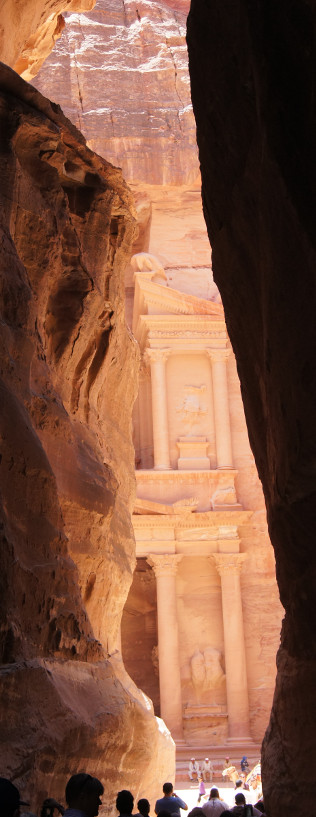
Returning on Thursday from a full day's trip to Petra - amazing! - I asked for an English language paper to read at the hotel before leaving for the airport. I was provided with a copy of The Jordan Times to accompany a cappuccino*. On page nine Mona Smadi,# Asst. Professor, Al Balqa Applied University) wrote an opinion piece on Holistic reform of education. The opening sentence enabled my brain to reconnect with my legs (although I would have gladly walked back through the valley):
A holistic perception of reality means having a vision of the context of the constituent fragments and thereby gaining a clearer perception of the reality in its totality.
Prof. Smadi's focus is children's education and curriculum reform. The overlap between children's education, the professor's concerns and nursing is not limited to how curricula are designed and who owns them. Is, for example, the curriculum centered on the student as an individual nurse, or child? If nurses are to be able to integrate their learning and effectively negotiate the emotional and ethical spaces they find themselves in then when is this deeper thinking to start?

Petra 25 April 2013

Not surprisingly there was a lot of talk about this at the JNC conference. The theory - practice gap is not just alive and kicking there is an echo off the seemingly disparate walls. Given too the debate in the UK about student nurses spending time as a health care assistant before starting their formal nurse education. The word applied in the title of Prof. Smadi's university's is interesting. We are accustomed to applied mathematics, ethics, energy and of course applied nursing research and many other examples?

What of applied nursing - does that make sense? Or is there a circularity of sorts in nursing applied? I will check my notes as this point was raised in conference regards to evidence based care and evidence based practice.

Prof. Smadi's referring to a 'clearer perception' can also be extended to recognition of patterns, contexts and situations that are 'hot' in how they relate to values.

(There are a couple of points to add here which I will get too).


There was another serving of serendipity to add to that at Le Meridien, soon after rejoining the land of the virtual I came across the UK Department of Education's Preparing for Adulthood initiative on twitter. If you read the brief article by Prof. Smadi you will see how the two are closely related. Do lifestyles and family life today for many compromise the ability of families to teach moral values to children? As noted in the text this then becomes a critical role for education. In westernized cultures is this one of the qualities referred to in the saying of 'spending quality time' with the family? An acknowledgement of a deficit?

Source: http://www.preparingforadulthood.org.uk/
Vital and complex work in two senses. On the one hand cultures try to understand themselves; and on the other, they seek to understand the other others out there: now not so far away. The patterns that are realised be they mosaic, prayers, celtic knot, tartan, languages, landscapes - rock cut architecture - sculpture; these patterns work, that is 'make a difference' by virtue of both the detail and the whole.

"Petra is half-built, half-carved into the rock ..." UNESCO.

#If I have not used the proper name and title I will edit this accordingly asap upon advice.
 
*Why not an Arabic coffee? Well I had one the day before. What can I say... It was different in the preparation, being an observation as in so many cultural patterns (tea). I would like to think I will have another one day. The key thing is I did not necessarily want to have the capability to run to the airport at 11pm, or back to Petra for that matter.


Friday, 22 March 2013

BBC Horizon II: Processes - step this way ... safely

Following the BBC TV Horizon programme last night "How to Avoid Mistakes in Surgery" I came across the following list concerned with processes:
Sequential steps. Where one step follows another.

Alternative steps. Where conditional logic specifies which of several paths should be traversed.

Iterative steps. Where a single step is repeated multiple times.

Composite steps. Where steps are nested within other steps.

Optional steps. Where any one of a set of steps may be traversed, depending on the results of a boolean operation.

Checklist. Where all of a number of steps must be traversed, but in any order. p.126.
The list is related to software development and manufacturing as per the reference source below. Within informatics and project management I've noticed and written here about the emphasis placed on processes. Process, process and yet more - in one form or other. As A&E doctor Kevin Fong revealed people can get lost in a process (intubation), especially experts within organisational hierarchies - complex teams in urgent circumstances. In information system projects the need for a socio-technical perspective is essential, and is synonymous with due consideration of human factors. Processes are an essential ingredient to understanding the world and there's a huge literature on events, co-ordination, timing, logistics, value ... but as the Horizon programme pointed out there's also a need for reflection, stepping back, taking in or trying to grasp the big picture. Maintaining situation awareness is vital to assure safety and as the program showed in a crisis hindsight makes a blind spot visible. This is why process is one of four P's in Hodges model (the others - purpose, practice and policy). Processes count, but they are only part of the bigger picture.

The steps above are intended for software developers, but the descriptions throw up some points when subject to a more literal - human - interpretation (which might be a problem?).

The 'alternative' steps: could that mean skipping one in turn as in 'alternate'?

And crucially for the checklist are there any risks associated with its being completed in any order?

There is a world of difference between programming methods and logic on the one hand; and human language and dialogue on the other.

Fayad, M.E., Johnson, R.E. Domain-Specific Application Frameworks: Frameworks Experience by Industry.

Monday, 3 December 2012

The Difference that Makes a Difference 2013 - Information: Space, Time, and Identity


You are invited to The Difference that Makes a Difference 2013, An interdisciplinary workshop on Information: Space, Time, and Identity.

Location: The Open University and the MK Gallery, Milton Keynes , UK
Dates: 8-10 April 2013
Website: http://www.dtmd.org.uk

Deadline for one page abstracts - 3rd January 2013.

Information has been conceptualised in many different ways in different disciplines, and the DTMD series of workshops is a forum for sharing of those insights . We are keen to involve as many different people, from as many different disciplines, as possible in presenting and participating in the workshop. We invite a wide range of participants to give short (10 minute) presentations on their work as it relates to an understanding of information.

There will be six sessions:

Over days 1 and 2 the first four sessions consist of a keynote speaker followed by six or seven short presentations (which will have been selected by referees from submitted abstracts) then a panel discussion.
  1. Information and Space. The relationship between information and space, 'meaning' in our physical environment, and the information landscapes that go beyond physical space.
  2. Information and Time. Both the historic framework of the notion of information, and time as a 'dimension' in information – physics, entropy, information and ‘the arrow of time’.
  3. Information and Identity. Identity (race, gender, nationality, class and sexual orientation, for example) as information and, conversely, information as identity.
  4. What is information? Why are so many disciplines using informational concepts in their narratives? Is a Universal Theory of Information (UTI) possible?
Sessions 5 and 6 on day 3 draw together the insights from the first two days in two ways. First, through art, when the results of the work of the Workshop artist’s collaboration with delegates is presented and discussed. Second, a final keynote speech from Luciano Floridi, Professor of the Philosophy of Information will lead in to a panel discussion with the keynote speakers from the earlier sessions.

For more details see the workshop programme: http://www.dtmd.org.uk/programme and the Call for Papers: http://www.dtmd.org.uk/call-for-papers

Accepted abstracts will be published in a Workshop Digest which will be made available online prior to the event, and, following the workshop, delegates will be invited to submit papers for special issue of Kybernetes, based on papers presented at the workshop.

We hope to see you in Milton Keynes in April.
Best wishes,
Magnus Ramage and David Chapman on behalf of the Programme Committee: http://www.dtmd.org.uk/committee
-- 
Dr. David A. Chapman CEng, FIET, FHEA
Senior Lecturer
Department of Communication and Systems
The Open University http://cands.open.ac.uk/
Intropy blog: http://www.intropy.co.uk/
T. +44 1908 652919 Twitter @dachapman

Saturday, 1 September 2012

April 8-10 2013 The Difference That Makes a Difference: Information - People and Places

To: DTMD2011 contacts
Dear colleague,

We are sending you this message because either you attended The Difference That Makes a Difference 2011 workshop (www.dtmd2011.info) last September, or we have previously had some other contact with you in association with the workshop, and we think this information will be of interest to you.

 DTMD 2013

Plans for "The Difference That Makes a Difference 2013" are taking shape. It will run from 8th to 10th April 2013 and will either be on the Open University campus or, if we can get the funding, at Bletchley Park. There will be an overall theme to the workshop of 'Information: People and Places', with the sessions provisionally planned as follows:
Session 1: The philosophy of information and the search for a UTI. This does not specifically address the people and places theme, but addresses the underlying theoretical basis running through all discussions of Information.

Session 2: Information and Identity: How does thinking in terms of information inform our understanding of human identity? How do our concepts of identity inform our understanding of information? What do we learn if we address race, gender, nationality, class, sexual orientation as information issues?

Session 3: Information and the built environment. In what sense is architecture an information discipline? What is the relationship between information and cities.

Session 4: Information and Geography. This opens the themes of sessions 2 and 3 to a broader consideration of information in the context of physical and human geography. As with DTMD 2011, these sessions will be followed by a synthesis session to maximise the opportunity for discussion. 
An additional exciting plan for DTMD 2013 is the involvement of artists. We have been in discussion with the MK Gallery and are seeking funding to allow three artists to participate in the workshop, and at the end of the workshop for one them to be commissioned to produce a work which reflects, interprets and communicates ideas emerging from the workshop. The commissioned work would be unveiled/launched/performed six months after the workshop.

We are very pleased that Professor Luciano Floridi (http://www.philosophyofinformation.net/Welcome.html) has agreed to participate in the workshop.

Please get in touch if you have any proposals or suggestions for DTMD 2013 - and put it in your diary.

TripleC Special Issue. We've had a good set of papers submitted for the special issue of TripleC arising from DTMD 2011, which we are currently reviewing. The Special Issue is planned for August this year - keep an eye on the website: www.triple-c.at.  

Kybernetes. We (Magnus and David) together with Chris Bissell (Professor of Telematics at the OU, and one of the Keynote Speakers at DTMD 2011) are to take up the editorship of Kybernetes (http://www.emeraldinsight.com/journals.htm?issn=0368-492X ) from later this year, with Magnus as lead editor and David and Chris as co-editors. Among our plans for the journal are to increase the focus on Information. Again: keep an eye on the website.

Best wishes,
David Chapman and Magnus Ramage

Dr. David A. Chapman CEng, FIET, FHEA
Senior Lecturer
Department of Communication and Systems
The Open University
http://cands.open.ac.uk/
Intropy blog: http://www.intropy.co.uk/
Twitter @dachapman

http://www.dtmd2011.info/announcements/newsapril2012

Friday, 17 August 2012

Context, locus, photos and festival-non-goer (Ack. FT)

In the Financial Times, Life & Arts section, June 23/June 24 2012 Francis Hodgson wrote Hocus-focus about the 15th PHotoEspaƱa festival.

The curator Gerardo Mosquera introduced the broad theme of the festival -

From Here: Context and Internationalisation

- which Hodgson feels provides 'no secure binder between disaprate elements':
' "Context," he writes opaquely, "has ceased to be a 'closed' locus linked to a reductive concept of what is local; instead it is projected as a space from which international culture is naturally constructed."
Apart from giving a broad hint that pictures will come from around the world, I'm not sure that is much help for a festival-goer.' p.10.
Although I'm a festival-non-goer in this case and my access to the images is limited to the three published in the FT and online, I wonder if a link here is the interposition of local and global? The conurbation that can be described as glocal? This is what that single sentence says to me.

In accord with our economic times the festival website notes that:
PHotoEspaƱa has cut its budget by 25%. The public-private partnership model has been adapted to ensure a broad-based programme of exhibitions and activities.
In this sense here at least art reflects health care. The reliance on partnership, overcoming constraints whilst providing an experience that coheres.

25%
This context.
One care domain.

Which domain do we cut - the interpersonal, the social, political, the scientific? Do we vary the top-slicing across the domains? In health too we must grasp what is local, global and glocal to us.

Monday, 13 August 2012

A question. An answer - in response to recent media (HSJ Ack.)

Here are a couple of quotes from HSJ Roundtable meetings:
"What I hear around the country is that we have masses of information but we need to turn that into something that is intelligible and can be used for strategic decision making."...

"We need to look at how information links together to get a holistic picture of the situation." p. 20.
Dr Shahid Ali, (2012) Commissioning Information. Full Measures. HSJ, June 28, 20-23.

 "I don't think we should be integrating systems, we should be integrating around patients."  p. 20.
Dr Shahid Ali, (2012) Integrated Care. Let the Data Flow. HSJ, June 21, 20-25. 

"There's no integrated view of integrated care. The danger is that you have an integrated care system and everyone says, 'I will do one as well', and you end [up] with six of them." p. 22.
Owen Powell, (2012) Integrated Care. Let the Data Flow. HSJ, June 21, 20-25.


A question or two, or three ...

Is there a generic framework that can be shared and utilised across all health and social care?

A free resource that can be deployed in imagination, in solo on paper, in tandem and within a group potentially shaping collaboration, innovation, change and transformation. Applied in the clinical environment, the home, the lecture theater, the sports field...

A tool that can help support reflective practice not only at a strategic level, but the tactical and operational. What is happening on the ground floor? A framework that can help represent not only processes and policy, but practice, individual and group purposes.

Yes, policy maker and CEO meet with your information manager ... and discuss strategy.

But what is data, information, knowledge ....? What is 'health care' for it appears above we do not know?

Is there really no integrated view - even at a basic level that deserves further study?

Yes, health care practitioner meet your patient (client), their carer, your other partners (social enterprise...) and pursue what really counts: the best quality of care you can deliver given several constraints.

What is the outcome to be?

For the majority of the population (those not living with a long term medical condition) the transformation must be self-efficacy:
if 'shift happens' it must be from ill-health to health through education.

One answer:
The health care system cannot do this alone.