Showing posts with label self. Show all posts

Saturday, 27 September 2014

Rijksmuseum Amsterdam - health in art : art in health

I arrived in Amsterdam last night and spent today, 8 hours in the Rijksmuseum. It is an amazing experience, even to just scratch the surface. Early on it was not busy! Entering the building, is as publicised, to discover a remarkable series of spaces.

There are so many highlights of a rewarding day. One must be within the final hour 1610 finding one of Van Gogh's self portraits. Van Gogh finds himself placed in the interpersonal domain not just by virtue of this self portrait, but his struggle with mental health and  hospitalisations.
individual
INTERPERSONAL : SCIENCES
humanistic ------------------------------------------- mechanistic
SOCIOLOGY : POLITICAL
group
http://www.vangoghmuseum.nl/en


The Anemic Woman
Samuel Dirksz van Hoogstraten [Public domain], via Wikimedia Commons
There were many other (ill-)health related examples (and many that are also bright and humorous).

The sick child. The Sick Woman....

When initially viewing Visiting the Sick you have some searching to do. The sick individual themselves and the doctor are rather lost in the background. The painting stresses the sociological, domestic aspects of health past and present.

In Visiting the Sick and The Anemic Woman we get a view of the way outside (possibly of spiritual significance?) and another room through doorways. From TV, reading and my visit today, this is a common device within Dutch genre painting. If we have a diagnosis now in the 21st century, we still need to look through the windows and doors that relate to the individual and their social situation. In the age of the interface and partitions we still need to negotiate themDoorways, windows and portals as changes in knowledge content, can in the form of care domains illuminate the boundary of what is objective and subjective. This is central in health and social care.


Van Gogh self portrait source:
http://historiek.net/chinezen-zeer-geinteresseerd-in-van-gogh/13217/#.VCb5mRbivTo

The Anemic Woman image source:
http://commons.wikimedia.org/wiki/File:Samuel_van_Hoogstraten_-_The_Anaemic_Lady_-_WGA11719.jpg

Thursday, 7 August 2014

Health and Social Care Policy: Always - from a distance

individual
INTERPERSONAL : SCIENCES
humanistic ------------------------------------------- mechanistic
SOCIOLOGY : POLITICAL
group

"Cura te ipsum." - "Take care of your own self."


mental health


physical

social


policy


Additional link:
http://en.wikipedia.org/wiki/Cura_te_ipsum


Latin source: Mediawatch, tpm the philosophers' magazine, 2nd quarter 2014, p.14.

(which cites: http://www.3ammagazine.com/3am/cura-te-ipsum/ )

Tuesday, 3 June 2014

Never give up on someone ...

individual
INTERPERSONAL : SCIENCES
humanistic ------------------------------------------- mechanistic
SOCIOLOGY : POLITICAL
group

Never give up on someone with Mental Illness – 

when 'I' is replaced with -


'We' 
'illness' becomes 'Wellness'


Thanks to colleague Julie Draper - apparently this is doing the rounds on Facebook and elsewhere.

Tuesday, 25 March 2014

Extraordinary lives: Demographic influences on academic studies - Life Writing, Life Story Work

Recent reading for studies at Lancaster included
Ethics of Internet Research: Contesting the Human Subjects Research Model

Beyond a week's focus on ethics the above refers to Life Writing:
The study of Life Writing spans many disciplines, and represents 'a fast changing terrain' which is concerned with the study of the writing of lives, encompassing auto/biography as well as aspects of life story that originate outside the written form, such as oral history, testimony, and artifacts such as photography and the visual arts (Jolly, 2001, p. ix). The written text is viewed as a vehicle for an individual's construction of identity, the personal narrative that it records being

…a fundamental means by which people comprehend their own lives and present a 'self' to their audience. (Borland, 1991, p. 71)
...
The multiple approaches taken in Life Writing research can arguably be attributed to the multidisciplinary background of its practitioners. Like Internet researchers, those researching Life Writing have been trained in a variety of disciplines including anthropology, sociology, history, linguistics and literary theory. These various disciplines have contributed a range of insights into the collection of oral history and analysis of the resultant texts (Gluck and Patai, 1991, p. 3). Ethical guidelines for the conduct of Life Writing researchers, such as those published by the Oral History Society in the UK, appear to follow a human subjects model, focussing on the undertaking of the interview, and restricting discussion of the resultant text to issues of copyright. Yet practitioners emphasise the need to remember that as:

…the typical product of an interview is a text, not a reproduction of reality …models of textuality [are] therefore needed. (Gluck and Patai, 1991, p. 3)
What chance is there that Life Writing will be - is being influenced by current demographic and societal trends? Trends and challenges that inevitably present new meanings for history within life and with this new ethical issues? While life writing is clearly an established discipline, how might it develop and what other challenges might apply?

In health and social care Life Story Work is an important part in of assessment and interventions. Has it been discussed, is it appropriate, completed and if so, is this work available and accessible? Do we need people beyond the existing establishment with a dedicated set of skills and knowledge to engage with people diagnosed early on, or will treatments soon make this less of an issue? Will dementia and early dementia especially, with the latest technology prompt new perspectives, or reinforce existing life writing practices? What is an archive? In life story work these people, persons, individuals (and their lives?) are more than subjects.

There are many overlaps already in the mental health state of past and present national leaders, while health services continue to bridge the dementia gap in diagnosis. Biography: world leaders, other recognised lives in Life Story Work and seeking to preserve personal identities in dementia care: clearly these are figures that count.

Saturday, 22 March 2014

Over Here 2: Smart Thinking or Who do you think you are?

Of all the things that tend to merge, overlap, then appear discrete only to dissolve again we can see illness, health and well-being. To these we can add - self-help, intelligent self-help, various forms of literacy (3R's, emotional, economic, information, visual, health) and self-care.

I am sure that Hodges' model can help improve health literacy and general reflective abilities. There are some really difficult-to-reach audiences, clients and communities out there. The challenge is not just spreading the word:
A crude but generally accurate definition of what makes a smart thinking book is anything you could easily imagine being the subject of a TED talk. The recipe is to find a leading expert and get him (alas, still more often than her) to write about an idea in his field that is interesting to a wider audience and which he believes - or at least claims - can help us change our lives for the better. It has been called intelligent self-help, but since most potential readers would not appreciate the implied association with the dumber varieties, "smart thinking" has a certain advantage. ... FT Weekend. p.8
- but demonstration too.

My source: Julian Baggini, Wisdom set to work, Life & Arts, Financial Times. March 8-9, 2014, p.8.
Online: http://www.ft.com/cms/s/2/70365226-a3c1-11e3-aa85-00144feab7de.html#axzz2wiUqgpuw

Thursday, 27 February 2014

Book: The Last Asylum

INTERPERSONAL : SCIENCES
humanistic ------------------------------------------- mechanistic
SOCIOLOGY : POLITICAL
individual
The Last Asylum
 -sociology
-medicine

medical-
social-


group - population

Winwick Hospital remembered

Image source: Metro

Wednesday, 29 January 2014

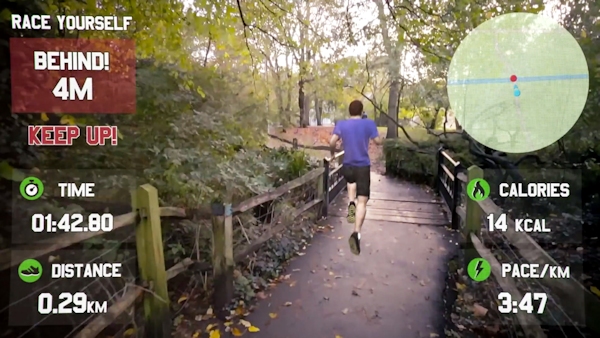
Race Yourself for Google Glass transforms exercise

From ISPR - my source:
http://ispr.info/2014/01/27/race-yourself-for-google-glass-transforms-exercise/?utm_source=rss&utm_medium=rss&utm_campaign=race-yourself-for-google-glass-transforms-exercise
 
Get Fit This Year by Fleeing From Augmented Reality Zombies: Race Yourself Transforms Exercise Into a Game on Google Glass

Race Yourself is a New Fitness Startup for Google Glass, Aiming to Turn Exercise Into a Game.  By Racing Against a Virtual Projection of Yourself, Attaining Personal Bests, and Burning Calories, You Can Unlock New Game Modes Such as Running Away from Giant Rolling Boulders. Race Yourself has Already Raised £200,000 from Investors Lead by DN Capital, and is Now Launching a Crowd-Funding Campaign Via Their Website, www.raceyourself.com, on the 8th January.  ...


http://ispr.info/

INTERPERSONAL : SCIENCES
humanistic ------------------------------------------- mechanistic
SOCIOLOGY : POLITICAL

individual
Am I dreaming?

technology    virtual reality    physical health


Dreams of Peace
group - population

Sunday, 12 January 2014

Book: Thinking as Communicating - Sfard (the intra- interpersonal domain)

Previously I wondered about a term that might combine thinking and the formation and process of mental mapping, the creation of a conceptual map - a mental conceptual geography - cogneography?

Thinking as Communicating
Finding Anna Sfard's 1998 paper this past week led me to her book. The following is from the introduction:
I define thinking as individualized form of interpersonal communication. The disappearance of the time-honored dichotomy is epitomized in the term commognition, which combines communication with cognition. The commognitive tenet implies that verbal communication, with its distinctive property of recursive self-reference, may be the primary source of humans’ unique ability to accumulate the complexity of their action from one generation to another.

Sfard's work will have to go on the 'to read' pile (part-time studies begin tomorrow), but it may help provide ways to understand and unravel the intra- and interpersonal domain within Hodges' model. The mathematical emphasis (even though I may struggle with this) is an added bonus.

Sfard, A. Thinking as communicating: Human development, the growth of discourses, and mathematizing. Cambridge, UK: Cambridge University Press.

Sfard, A. (1998). On two metaphors for learning and the dangers of choosing just one. Educational Researcher, 27(2), pp. 4-13.
http://www.colorado.edu/physics/phys4810/phys4810_fa08/4810_readings/Sfard.pdf

Monday, 23 December 2013

SCNTST - Self Therapy

INTERPERSONAL : SCIENCES
SOCIOLOGY : POLITICAL
individual
Self Therapy
SCNTST


"... Self Therapy 
is designed for the headphones
 not the dance floor, ..."


Hunter-Tilney, L., Life&Arts, FT Weekend November 16-17 2013, p.19.

group - population


Image source: http://renownedforsound.com/index.php/album-review-scntst-self-therapy/

Saturday, 7 December 2013

Reading and writing the minutia of locked doors and windows (still a draught)

Couples, married or not, partners are the cards that frequently, if not by definition, lean on each other beyond the pale, to the n-th degree. Witness so many lessons of what love really is.

They bend and flex. Tested by history, timelines entwined, ties-that-bind, trying to persist in the hear and how.

Their psychological union is challenged as memories become eroded and physically frailty takes hold. Usually; mostly, on the one.

Eventually things, established relationships break and one or the other - should we say: finds themselves in - residential care.

Courtship enables us to become socialised to and with each other and respective families and in some instances other cultures and beliefs.

In this crucial transition sometimes there is learning through experience as respite care is sought.

In other cases health services wonder how this relationship has survived for so long. A crisis is a precipice for change. A chaotic invitation. Radical.

A sudden shift from what was home to a new world of corridors, r, ro, roo, room, rooms; my room? New noises and smells and altered routines and jumbled faces, touches, days and nights

The dolls of childhood are left behind, but may be picked up again literally as an emotional comforter. If not this then perhaps a ‘paper clad dol’ that is bound to be - ‘deprivation of liberty’.

In this new home, this person walks the corridor and inspects the minutia of the doors and windows. Staff pass by(e) waving by their walk - "so-busy-look-no-hands" while trying to be butterflies.

Butterflies that cannot say which way is ‘out’.

They are they. Difficult to follow with eye, head and a hand to catch. The individual recognises the whole of the comings and goings, the main thoroughfare. The strategic point, the nexus of comings and goings.

Something's not right though! I need to be somewhere else.

Sadly (or Usually), there is no going back.

Is there a pattern to this confused-coming-to-terms-with?

From asking repeatedly about being elsewhere, especially with the setting of the sun is there a shift in attempted reasoning? So correct, so responsible all those decades ago. Perhaps even months ago...

If no one will listen to me then perhaps if I have my wife/husband with me then they will see the importance of my cause, my mission.

See look - I have my wife, husband, partner with me now: we really need to go!

Can the residential care home support this person? Can they meet their care needs? They say they are ‘struggling’. Will they need to move – again?

How do they work through this transition? What do we know of how individuals negotiate this transition in their lives? How can we try to understand?

How do they make sense of what has happened, and where they now find themselves? Will their level of distress, agitation gradually extinguish as with their efforts to leave?

As they look to the windows, seek to traverse the doorway, cross the foreign threshold and venture to that somewhere that is not here, we know one thing.

Person centredness lies in the minutia of the life once lived through those locked doors and windows.

We can ‘open’ the doors and windows by travelling with them, together, sharing that journey, the sense of those times and upon returning help them adjust to this new listen and how. Clearly, deprivation of liberty is not a punishment here, yet it demands compensation by provision of high quality personalised care.

Monday, 2 December 2013

Book review: "Selfhood"

http://www.amazon.co.uk/SELFHOOD-Emotional-Wellbeing-Prevention-Psychology/dp/1908561009/ref=sr_1_1?s=books&ie=UTF8&qid=1318237775&sr=1-1The vertical axis of Hodges' model denotes the individual and hence the self, the person and the group, the populous. As such when I came across Dr Terry Lynch's book Selfhood it was ideal as a book review candidate.

The book declares itself as a self-help book and clearly and quickly qualifies in this through its content. Section two of the book from page 51 through to page 272 (of 281 in total) is devoted to raising an individual's level of selfhood.

At first I wondered if this was going to be a fuzzy read that might also prove repetitious. I'll explain the latter shortly. The former does not apply, even though the 'self' is a very fuzzy concept especially in the hands of philosophers. Some of the content in section two may well overlap, but amongst self-awareness, self-talk, self-care, self-contact – these contributing components to selfhood are clearly explained.  The book utilises diagrams throughout, from page 3; and these support the text and are used to cross reference material.

Section one on basic principles and concepts fosters a sense of self-regulation for the self-help that the intended readership will pursue. The need to take one’s time with recovery of selfhood is stressed initially, the reader reminded of this through the actions, minimising the perception and occurrence of failure. There is no crash program and pacing is vital, small steps, return to some actions if necessary we are told early on. While not stated explicitly section one helps to foster hope. Although this is a self-help book, resort to a good therapist is mentioned on a couple of occasions. The central risk to the self of suicide is also examined and given due regard in terms of safety.

There is little new in a technical sense for a mental health professional, but the way the ideas are explained is very informative. The diagrams and the metaphors that are sometimes employed are very useful as teaching aids. If you are at the latter stages of your career then self-actualisation (p.258), as ever, and  creativity provides hope. I did wonder about the reading-grammar level and how this might exclude some people. Could this be another project? I enjoyed reading of the need to create a life-long solid level of selfhood (p.40), which also emphasizes the general need for life-long learning. Relating selfhood to overall 'health literacy' might be informative. You will not find assessment and methods here, which is liberating. Assessment is integral to the reflective process but not explicit and process bound as it is in mental health services. This may in itself provide a benchmark for the future progress of 'selfhood' and health literacy?

One thing I am still reflecting upon - is distinguishing between being able to have an overview of the route to selfhood and having a ‘big picture’ – holistic - perspective of ones situation (p.42). This concern resurfaced in the risk of being overwhelmed by the ‘big picture’ (p.45) and here am I wondering about the therapeutic uses of the big picture – as a summariser - ready reckoner for health, social care and recovery. 

As a champion for Hodges’ model I can also identify with the call for a flexible balance between the two poles of self and others and the call to reflect carefully. Action as harmony of action (p.54) amid the frequent chaos of our lives and health care systems is a very helpful definition. If you seek another perspective on self-efficacy there's a lead here. I was struck by the first case study about Craig and his initial wish for self-admission to hospital. I smiled somewhat ruefully at this, considering the changes in the number of NHS beds (-1700 HSJ) even in the brief years since Lynch’s book was written and published in 2011. This stresses the need for self-care and supports the advent of the 'recovery' movement in mental health. 

My previous note regards the literacy level of readers, is obviously a factor as users are encouraged to reflect upon each selfhood component and also write a diary/journal. The spatial definitions of selfhood also engaged me, given my preoccupation with cognitive spaces. This discussion of physical space, self, personal space and self-centredness and the notion of polluted environment in the context of emotions and feelings prompted much reflection.

At the end the reader is invited to read through the text again. I can see how a second pass and one that uses the book as a self-help manual could pay dividends. The self-help quality of the book is clear as after each attribute is described several actions are outlined. There are affirmations for the reader to utilise that are also listed in an appendix. The case histories should assist readers, who seeking to improve or recover their level of selfhood, may identify with at least one of several. The thought about repetition is not surprising as this is self-soup so to speak. There are just short of sixty instances of self-'  ' in the very helpful index.

Ultimately, this is not so much a statement about the book but perhaps the mental health challenge that faces the self in dealing with the other and the world at large. Overall the books 281 pages reveal the rich complexity of a vital concept and contributor to mental health and wellbeing. This is a very practical book which is to say it is an excellent self-help book.

Lynch, T. (2011) SELFHOOD, Limerick, Mental Health Publishing.


Thursday, 28 November 2013

The Health Foundation launch new Person-Centred Care resource centre

Dear CHAIN member,

We would like to draw your attention to the following new resources.  
Please pass on as appropriate.  Thank you.

The Health Foundation has launched their new person-centred care resource centre:

http://personcentredcare.health.org.uk/

The resource centre is designed to help healthcare professionals implement a more person-centred healthcare service, where people are supported to more effectively manage and make informed decisions about  their own health and care. Initially focusing on shared decision making and self-management support.

Regards,
Wendy Zhou
CHAIN Manager

CHAIN - Contact, Help, Advice and Information Network  
– is an online international network for people working in health and social care.  
For more information on CHAIN and joining the network please visit website: 
http://chain.ulcc.ac.uk/chain/index.html

Saturday, 16 November 2013

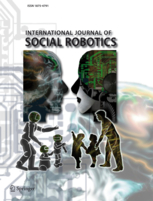
Call for papers: Social Robots: Form, Content, Critique - International Journal of Social Robotics

Dear Humanists,

With the usual apologies for duplications and request for cross-posting to suitable lists and potentially interested colleagues - on behalf of my co-editors:

Call for Papers: Social Robots: Form, Content, Critique
special issue of The International Journal of Social Robotics

Co-editors: Michaela Pfadenhauer (Karlsruhe University / Karlsruhe Institute of Technology), Satomi Sugiyama (Franklin College, Switzerland), Charles Ess (University of Oslo).
 
We invite papers from scholars and researchers across the disciplines (including philosophy, robot ethics, artificial intelligence, cognitive science, media/sociology, information science, art history) that examine and explore social robots through three distinct but inextricably interwoven frameworks:
    http://www.springer.com/engineering/robotics/journal/12369
  • Form/appearance (e.g., human/animal likeness in appearance; everyday media forms and robotic functions; cultural attitudes toward robot forms, etc.)
  • Content/AI/applications (e.g., implications of artificial intelligence in everyday human experiences such as memories, relationships, and conceptions of the self and self-understanding;  applications that shape human-robot interactions; applications of mobile media and their implications in human's robotic experiences, etc.)
  • Critical issues that undergird the above, including; ethics, intimacy, emotions, authenticity, etc.

Paper submission deadline: 1 January 2014
Notification to authors: 1 March 2014
Submission of authors' revised papers: 1 May 2014
Final acceptance: 1 June 2014
(accepted papers will be immediately published at the IJSR webpage with a Digital Object Identifier for citation purposes)
Publication: August, 2014


The call is an outcome of the COST Strategic Workshop on Social Robotic and Sustainability that took place in Brussels, Belgium, on 10-13 June 2013.
http://www.cost.eu/events/socialrobotics

The online submission system is available at:
http://www.editorialmanager.com/soro/
Authors are required to register on the website and to follow the Journal's Instructions for Authors' as provided there.

Many thanks in advance,

- Charles Ess
Professor in Media Studies
Department of Media and Communication
Director, Centre for Research on Media Innovations
http://www.hf.uio.no/imk/english/research/center/media-innovations/

My latest book, Digital Media Ethics, is now available from Polity:
http://www.politybooks.com/book.asp?ref=0745656056

University of Oslo
P.O. Box 1093 Blindern
NO-0317
Oslo Norway
email: charles.ess AT media.uio.no


My source: http://digitalhumanities.org/humanist

Sunday, 13 October 2013

Health, Art and The Reith Lectures 2013 (and the search for the perpetual umbilicus)

This week sees the start of The Reith Lectures on BBC Radio 4 by Grayson Perry.

The question is: who decides on what makes art good?

Perry writes in the Financial Times Weekend:
Clement Greenberg, a famous art critic in the 1950s, said that art will always be tied to money by an umbilical cord of gold, either state money or market money. I'm pragmatic about it: one of my favourite quotes is you'll never have a good art career unless your work fits into the elevator of a New York apartment block.
Once born into the world, the umbilical cord that transfers and imbues life and sustenance no longer matters physically. It is the social ties that bind, according to the lyrics and life experience.

In health and social care we need to find a perpetual umbilical cord that makes well-being and health not just something to take for granted. Not some thing that is only noticed when the piece of art won't fit into the elevator any longer.

This is the challenge in health care. A challenge that will see art movements and markets come and go. The solutions will rely on science, technology and art.

@science @technology @art 
each brings its own engineering.

We need tools that facilitate self-care when needed. Cognitive engineering that people can call upon by virtue of the combined literacies they possess. Self-care that is delayed due to self-knowledge.

Cognitive tools people can take anywhere; from elevators in New York and doors to apartments, yurts in Mongolia, the multitude of tents in Jordan to the terraced houses near Wigan Pier ...


Financial Times, Grayson Perry’s Reith Lectures: Who decides what makes art good? October 11, 2013 7:16 pm

Monday, 30 September 2013

Time, History, Technology, Institutions, Transparency and Reflective Practice


Despite the passing of time
refactored as
institutional history
 and
 technical solutions,
reflective practice
and
transparency
in care
remain aspirational.


Image: Sculpture at Prague Congress Center

Monday, 12 August 2013

'Monitor Me' BBC 2 Horizon

This is an excellent TV program:
Dr Kevin Fong explores a medical revolution that promises to help us live longer, healthier lives. Inspired by the boom in health-related apps and gadgets, it's all about novel ways we can monitor ourselves around the clock. How we exercise, how we sleep, even how we sit.
Some doctors are now prescribing apps the way they once prescribed pills. Kevin meets the pioneers of this revolution. From the England Rugby 7s team, whose coach knows more about his players' health than a doctor would, to the most monitored man in the world who diagnosed a life threatening disease from his own data, without going to the doctor. (BBC 2 website)

Thursday, 25 July 2013

Training Needs of Psychiatric Mental Health Nurses: Study

Dear all,

We're currently collecting data for a study regarding the training needs of psychiatric mental health nurses in collaboration with Horatio - European psychiatric nurses. Anyone interested in receiving an online (editable pdf) self administered questionnaire or a printed version is more than welcome to contact me on / off list (stephendemicoli@yahoo.com).

Thanks in advance and kind regards to all,

Steve Demicoli
E-mail: 
stephendemicoli@yahoo.com


Source: Psychiatric Nursing list
The questionnaire is not long, I will be taking part.

Tuesday, 28 May 2013

Countries, places and maps (Lahiri)


“The place to which you feel the strongest attachment
 isn’t necessarily the country you’re tied to by blood or birth:
 it’s the place that allows you to become yourself. 
This place may not lie on any map.”

Jhumpa Lahiri
  

My source: Fred Dervin via mailinglist at cosmobilities.net

Wednesday, 8 May 2013

Jordan JNC Conference: Mental health and stigma, Student nurse's aptitude and the MDGs

There were a great many fascinating talks at the conference in Amman. The following caught my attention:

Dr Heyam Dalky on Perception and Coping with Stigma of Mental Illness: Arab Families' Perspectives

Since I trained in the late 1970s there has been a marked positive change in the social stigma associated with medical and mental health conditions. People are by and large more enlightened regards epilepsy for example. Although perhaps some of the progress can be related to medication, medicine management and community follow-up. Mental health professionals and services are aware of the potential damage that a diagnosis of 'schizophrenia' can inflict on young adults. Despite any sense of progress I might see, there is much still to be done as campaigns such as Time To Change attest.

It was very useful then to revisit the historical development of thought in stigma. Dr Dalky also shared global insights into stigma perception within families by citing research in a range of countries; for example, in Jordan, Morocco, Sweden, Germany, China, Malaysia, and Ethiopia.

Within Hodges' model the individual, as in the self, is given a pivotal and yet mobile place (transferable from the top of the model to the center) this led me to the concept of self-stigma (Corrigan, 2009) as I draft a paper on h2cm, case formulation and diagrams.

In her presentation Dr Dalky notes:
  • Link and Phelan (2001) defined stigma as the co-occurrence of the components of: 
    • labeling, stereotyping, separation, status loss, and discrimination.
  • “self-stigma” or “stigma perception,” is the extent to which individuals believe others stigmatize them because of who they are.
They say travel broadens the mind and listening to this presentation you really see the difficulties, objectives and aspirations that not only practitioners share but families and our clients too.

Heyam F. Dalky, PhD, RN, Jordan University of Science & Technology, Irbid, Jordan
 

Ever since my engineering aptitude was measured in the mid 1970s by predicting the movement of a series of gears I've always held a special place for aptitude and attitude, as reflected here on W2tQ.

Mrs. Maxie Andrade, et al. presentation Aptitude Towards Nursing: Is it Measurable? highlighted a central challenge within nurse education.

Nurse training represents a major personal investment for the student (their family too in many cases), the educational institutions and societies concerned. As a sign-off mentor I assess third year students on their final placement. This is a great responsibility that is usually a privilege, but it can be a frustration at the loss entailed for a failing student.

Mrs Andrade defined aptitude:
Is a condition, a quality or a set of qualities in an individual, which is indicative of the probable extent to which one will be able to acquire under suitable training some knowledge, skill or composite of knowledge, understanding and skill

Ref: Mangal S L. General Psychology. Fifteenth reprint. New Delhi: Sterling Publishers Pvt. Ltd; 2008.
The main questions:
Do nursing students possess the required ability (aptitude) to become an effective nurse?
What abilities do we really expect from nursing students?
The development of a tool to measure aptitude was described, reviewing the literature. Are there any existing tools within nursing? What exactly should a tool measure? Statistics and results were listed. This was a very interesting presentation and of particular interest to me.

Mrs. Maxie Andrade, Asst. Professor, Manipal College of Nursing Manipal, Manipal University


There was also a reminder of the time left to achieve the Millennium Development Goals [MDGs] c/o Prof. Hester C. Klopper's keynote: The nursing education tipping point: Forces of change. 
Less than 1,000 days and that was last month.

One thing I noticed and a sign of the issues in the Eastern Mediterranean is that the JNC conference website has proved unavailable at times. It is accessible as I post this.

Andrade M. Perceptions of health care consumers, deliverers and nurse educators on nurses, nursing practice and nursing education system. Manipal University, Manipal: 2010. (Dissertation work).
Andrade M. Choice of nursing career: Pleasure or pressure. International Journal of Nursing Education. 2012; 4(1); 42-44. 

Corrigan, P.W., Larson, J.E., RĂ¼sch, N. (2009). Self-stigma and the “why try” effect: impact on life goals and evidence-based practices. World Psychiatry. 8(2): 75–81.

Wednesday, 19 December 2012

My coat, Your coat, the Community cloakroom

'Untitled' 2012 (coats, wire, screws), by Jannis Kounellis


"Such wall-mounted three-dimensional pieces seem to me to talk the language of painting rather than sculpture. So does a massive, poignantly flopping black cross created from several navy coats tied together with wire and screws, hung against a wall. Each coat is a human measure, a stand-in for a human presence." p.20.

Wullschlager, J. (2012) Arts: Beauty in a burlap sack, Financial Times, 8-9 December. p. 20.


Bunzl, J. (2001) writes:
"Expressed in terms of a community-building process, we could thus identify the entity of the nation state as representing the equivalent of the individual person: the prime agent through which community or chaos in the world will ultimately be determined." p.20.

Additional link:
Parasol unit (Jannis Kounellis exhibition)

Bunzl, J. (2001) The Simultaneous Policy – An Insider’s Guide to Saving Humanity and the Planet. New European Publications.
Image source:
Wullschlager, J. (2012) Arts: Beauty in a burlap sack, Financial Times, 8-9 December. p. 20.