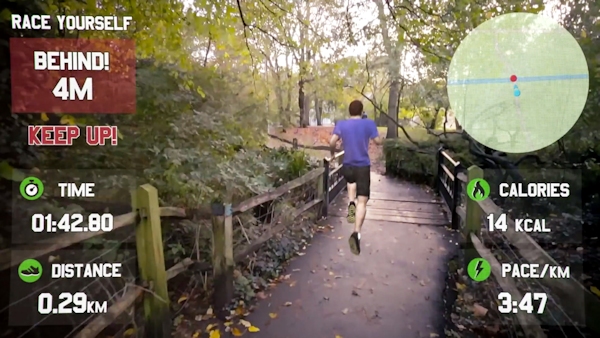
Mobile and wearable sensors are increasingly permeating everyday life and becoming an integral part of it. Information gathered from these sensors can provide unprecedented insights into diverse aspects of human behaviour. Analysis of human behaviour is of special interest in healthcare, since the health state of a person depends on behaviour aspects, including physical activity levels, amount of social activity, work-life balance and other aspects that are relevant for specific health conditions.
The main goal of this special issue is to explore the link between human behaviour and health. In particular, sensing modalities, data processing methods and behaviour capturing techniques that facilitate this exploration are of interest. Considering the interdisciplinary nature of the work in this area, papers are invited from both technical and medical perspectives that provide new understandings of the link between behaviour and health.
For this special issue topics of interest include, but are not limited to:
1. Technology for behaviour sensing:
- Exploitation of pervasive sensors: Activity sensors,
- connectivity sensors, microphones and webcams as included in smart phones, tablets, game consoles, etc.
- Development of new mobile medical sensor systems for outpatient use
- Unobtrusive sensor systems for long-term behaviour monitoring
- Sensors and actuators for wellness, fitness and rehabilitation
- Bio and physiological measurement technology
- Sensor systems for specific pathologic behaviour, illnesses or mental disorders
- Wearable sensors and brain computer interfaces
- Solutions for usability issues (textile sensors, unobtrusive power supply, data storage and communication, etc.)
2. Application of behaviour sensors in health domain:
- Feasibility studies on new behaviour sensor modalities
- Cross-section studies on the usability
- Longitudinal studies / medical trials on accuracy / effectiveness of applied behaviour sensors
- Ethical and legal requirements concerning sensor systems
- Health monitoring in clinical and daily life environment
- Games in assessment and therapy
- Cognitive behavioural therapy, speech therapy, music therapy and experiences with new therapies
- Supporting maintenance of mental wellness
3. Signal processing of behaviour data:
- Innovative algorithms for assessment of long-term physiological and behavioural data
- Identification of clinical meaningful features based on measured sensor data
- Approaches for data fusion of different sensor modalities
- Activity recognition for health applications
- Machine-learning and classification problems
- Handling missing or untrusted data
- Models for interpreting medical sensor data
- HCI for patients, caregivers and health insurance
- Prediction of disease or episode onset
- Decision support for therapy planning
- Virtual reality systems for therapy
- Support for preventative measures
4. Organizational and legal aspects:
- Inclusion of behaviour data in electronic health records
- Privacy/security issues of extensive behaviour data collections
- Business cases / market analysis for behaviour based health applications in home and clinical environments
- Tele health and mobile technology
- Interaction Designs and Applications for patient self-care
- Persuasive technologies and approaches for behaviour shaping
- Practical inclusion of behaviour data recording and analysis in daily clinical work, regarding prevention, monitoring and treatment of diseases
Submissions:
Deadline for manuscript submission: (EXTENDED) March 14th, 2014
Notification: April 30th, 2014
Tentative publication: Summer 2014
Papers should be around 10-15 pages (soft limit) using the journal
Instructions for Authors.
Please submit the initial manuscript to:
https://www.easychair.org/conferences/?conf=puchealth2014Submissions should be blind, with no author identifying information.
With your submission, please also suggest three potential reviewers.
Guest Editors:
Franz Gravenhorst (gravenhorst AT ife.ee.ethz.ch), ETH Zurich, Switzerland
Venet Osmani, CREATE-NET, Italy
Bert Arnrich, Bogazici University, Turkey
Amir Muaremi, ETH Zurich, Switzerland