Showing posts with label activity. Show all posts

Sunday, 23 February 2014

Man Runs a Loop-the-Loop (in Hodges' model - discuss?)

INTERPERSONAL : SCIENCES
humanistic ------------------------------------------- mechanistic
SOCIOLOGY : POLITICAL
individual


group - population

Monday, 17 February 2014

Good Health, Manchester Training Programme 2014/15

Dear Colleague,

Manchester Public Health Development Service are delighted to announce the launch of their updated and refreshed training programme – the Good Health, Manchester Training Programme 2014/15.

This year we are very excited to announce an online booking system that will make booking on our courses even easier for you and your colleagues. Please visit www.goodhealth-manchester.nhs.uk/training to browse and book onto the many public health training courses we have on offer for 2014/15. We have over 50 courses covering a multitude of topics. All courses are free-of-charge to those who work with Manchester people. If your organisation would prefer a bespoke training tailor-made to your needs, please click here.

Please forward this email to any individuals or colleagues that may be interested in attending one of our courses.

We look forward to seeing you soon,

Brian Goodman
Training Coordinator
Manchester Mental Health and Social Care Trust
Manchester Public Health Development Service
Victoria Mill
Lower Vickers Street
Miles Platting
Manchester
M40 7LJ
Tel: 0161 882 2584 (Temporary)
Fax: 0161 203 5817
e-mail: Brian.Goodman AT mhsc.nhs.uk

Wednesday, 29 January 2014

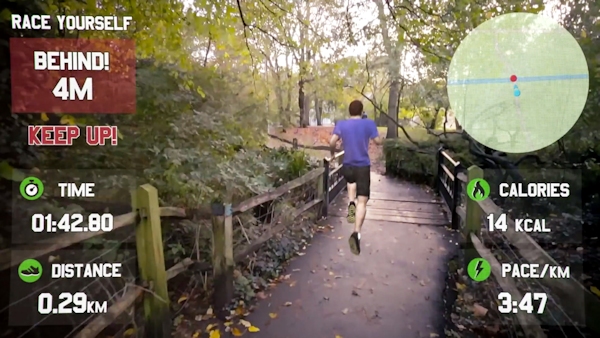
Race Yourself for Google Glass transforms exercise

From ISPR - my source:
http://ispr.info/2014/01/27/race-yourself-for-google-glass-transforms-exercise/?utm_source=rss&utm_medium=rss&utm_campaign=race-yourself-for-google-glass-transforms-exercise
 
Get Fit This Year by Fleeing From Augmented Reality Zombies: Race Yourself Transforms Exercise Into a Game on Google Glass

Race Yourself is a New Fitness Startup for Google Glass, Aiming to Turn Exercise Into a Game.  By Racing Against a Virtual Projection of Yourself, Attaining Personal Bests, and Burning Calories, You Can Unlock New Game Modes Such as Running Away from Giant Rolling Boulders. Race Yourself has Already Raised £200,000 from Investors Lead by DN Capital, and is Now Launching a Crowd-Funding Campaign Via Their Website, www.raceyourself.com, on the 8th January.  ...


http://ispr.info/

INTERPERSONAL : SCIENCES
humanistic ------------------------------------------- mechanistic
SOCIOLOGY : POLITICAL

individual
Am I dreaming?

technology    virtual reality    physical health


Dreams of Peace
group - population

Friday, 22 November 2013

Call for Papers Springer Personal and Ubiquitous Computing Journal: Issue Topic; Behaviour and Health

Mobile and wearable sensors are increasingly permeating everyday life and becoming an integral part of it. Information gathered from these sensors can provide unprecedented insights into diverse aspects of human behaviour. Analysis of human behaviour is of special interest in healthcare, since the health state of a person depends on behaviour aspects, including physical activity levels, amount of social activity, work-life balance and other aspects that are relevant for specific health conditions.

The main goal of this special issue is to explore the link between human behaviour and health. In particular, sensing modalities, data processing methods and behaviour capturing techniques that facilitate this exploration are of interest. Considering the interdisciplinary nature of the work in this area, papers are invited from both technical and medical perspectives that provide new understandings of the link between behaviour and health.

For this special issue topics of interest include, but are not limited to:

1. Technology for behaviour sensing:

- Exploitation of pervasive sensors: Activity sensors,
- connectivity sensors, microphones and webcams as included in smart phones, tablets, game consoles, etc.
- Development of new mobile medical sensor systems for outpatient use
- Unobtrusive sensor systems for long-term behaviour monitoring
- Sensors and actuators for wellness, fitness and rehabilitation
- Bio and physiological measurement technology
- Sensor systems for specific pathologic behaviour, illnesses or mental disorders
- Wearable sensors and brain computer interfaces
- Solutions for usability issues (textile sensors, unobtrusive power supply, data storage and communication, etc.)

2. Application of behaviour sensors in health domain:

- Feasibility studies on new behaviour sensor modalities
- Cross-section studies on the usability
- Longitudinal studies / medical trials on accuracy / effectiveness of applied behaviour sensors
- Ethical and legal requirements concerning sensor systems
- Health monitoring in clinical and daily life environment
- Games in assessment and therapy
- Cognitive behavioural therapy, speech therapy, music therapy and experiences with new therapies
- Supporting maintenance of mental wellness

3. Signal processing of behaviour data:

- Innovative algorithms for assessment of long-term physiological and behavioural data
- Identification of clinical meaningful features based on measured sensor data
- Approaches for data fusion of different sensor modalities
- Activity recognition for health applications
- Machine-learning and classification problems
- Handling missing or untrusted data
- Models for interpreting medical sensor data
- HCI for patients, caregivers and health insurance
- Prediction of disease or episode onset
- Decision support for therapy planning
- Virtual reality systems for therapy
- Support for preventative measures

4. Organizational and legal aspects:

- Inclusion of behaviour data in electronic health records
- Privacy/security issues of extensive behaviour data collections
- Business cases / market analysis for behaviour based health applications in home and clinical environments
- Tele health and mobile technology
- Interaction Designs and Applications for patient self-care
- Persuasive technologies and approaches for behaviour shaping
- Practical inclusion of behaviour data recording and analysis in daily clinical work, regarding prevention, monitoring and treatment of diseases

Submissions:

Deadline for manuscript submission: (EXTENDED) March 14th, 2014
Notification: April 30th, 2014
Tentative publication: Summer 2014

Papers should be around 10-15 pages (soft limit) using the journal
Instructions for Authors.

Please submit the initial manuscript to:
https://www.easychair.org/conferences/?conf=puchealth2014

Submissions should be blind, with no author identifying information.
With your submission, please also suggest three potential reviewers.

Guest Editors:
Franz Gravenhorst (gravenhorst AT ife.ee.ethz.ch), ETH Zurich, Switzerland
Venet Osmani, CREATE-NET, Italy
Bert Arnrich, Bogazici University, Turkey
Amir Muaremi, ETH Zurich, Switzerland

Sunday, 18 August 2013

International Health Terminology Standards Development Organisation: 2012 Report

IHTSDO CoP: 2012 Annual Activity Report Now Available

Our annual activity report for 2012 is now available in two formats:

Online magazine: www.ihtsdo.org/activity_report

PDF: www.ihtsdo.org/activity_report.pdf


We hope you enjoy it! Any comments or questions can be sent to info AT ihtsdo.org.


Source and many thanks to Juliet Krarup (ihtsdo staff)

Monday, 17 June 2013

Walking the line of signs of movement in fresh air ...


P Being mobile and active is one
H of the most important
Y factors in longevity
S and quality of life.
I  A model of activity in residential
C and nursing home care should be a right.
O I often enquire about
-
P the possibility of residents who
O tend to become
L agitated at a certain time of
I of the day, to be taken, or assisted to
T have a walk, or at least
I  feel the fresh
C air on their faces.
A This can make a real
L difference, as Nature's natural sedative.


Prompted by a question posed by Jackie Pool on LinkedIn:
Supporting individuals through activity - a positive role for carers?

Jackie's description of an everyday indoor activity being used to promote movement and mobility flags a real issue. Access to the outdoors is still very difficult for many residents on units that are located upstairs.

Residential homes should (must) have sufficient staff to facilitate a full range of activities. This month in the Northern hemisphere it is summer: outside.

In terms of taking people out, staff often look at me and I them, as together we acknowledge the constraints that frequently operate. I've walked outside with residents myself a great opportunity to assess and engage. Staff know the benefits of movement and activity. This helps us all to get out-side of our-selves. The gift it that this diversion of sun and air (and rain) can reach through confusion and agitation, even if only for a short period of time. Hence it can be acutely frustrating when this basic need can not be fulfilled. Holding on to life's essential repertoire is vital.