Showing posts with label socio-technical. Show all posts

Monday, 21 July 2014

The Cost of Things: The quality of what is fixed and what is marginal

individual
INTERPERSONAL : SCIENCES
humanistic ------------------------------------------- mechanistic
SOCIOLOGY : POLITICAL
group

Internet of Things 
(IoT)
http://www.thezeromarginalcostsociety.com/
The Zero Marginal Cost Society

IoT is not just an incredible prospect it is an incredible happening.

Let us not forget however
the Fixed Costs of Social Care


Should some of the costs that assure High Quality be fixed, or remain intangible?

Thursday, 17 April 2014

IEEE Computer, Special issue on Physical-Cyber-Social Computing

Physical-Cyber-Social Computing

Final submissions due: 1 September 2014
Publication issue: May/June 2015

Please email the guest editors a brief description of the article you plan to submit by 15 August 2014

Guest Editors: Payam Barnaghi, Manfred Hauswirth, Amit Sheth, and Vivek Singh (ic3-2015 AT computer.org)

Computing, communication, and mobile technologies are among the most influential innovations that shape our lives today. Technology advancements such as mobile devices that reach over half of Earth's population, social networks with more than a billion members, and the rapid growth of Internet-connected devices (the Internet of Things) offer a unique opportunity to collect and communicate information among everybody and everything on the planet. Interacting with the physical world enriches our existing methods of information exchange — sharing our thoughts, communicating social events, and work collaboration via the new dimension of physical computing. This all-encompassing "new world of information" requires that we be able to process extremely large volumes of data to extract knowledge and insights related to our surrounding environment, personal life, and activities, on both local and global scales.

These trends have led to an emergence of physical-cyber-social (PCS) computing, which involves a holistic treatment of data, information, and knowledge from the physical, cyber, and social worlds to integrate, understand, correlate, and provide contextually relevant abstractions to humans and the applications that serve them. PCS computing builds on and significantly extends current progress in cyber-physical, socio-technical, and cyber-social systems. This emerging topic seeks to provide powerful ways to exploit data that are available through various IoT, citizen and social sensing, Web, and open data sources that have either seen or will soon see explosive growth. Providing interoperable information representations and extracting actionable knowledge from the deluge of human and machine sensory data are key issues.

This special issue seeks innovative contributions to computer systems and interaction design, information processing and knowledge engineering, and adaptive solutions associated with PCS computing and the novel applications it enables. Potential topics include:
  • semantics and information modeling; semantic integration, fusion, and abstraction strategies;
  • stream processing and reasoning on complex PCS data; real-time feedback control and response systems; human/event/situation-centered views of data streams;
  • pattern recognition, trend detection, anomaly and event detection, semantic event processing, and inferring actionable knowledge techniques;
  • spatio-temporal, location-aware, continuous, scalable, and dynamic analysis;
  • security, privacy, and trust issues in collection, storage, and processing; and
  • novel and significant PCS applications, deployments, and evaluations in areas including personalized and contextualized information and alerts, health, biomedicine, smart cities, and human/social/economic development.
Submission Guidelines

All submissions must be original manuscripts of fewer than 5,000 words, focused on Internet technologies and implementations. All manuscripts are subject to peer review on both technical merit and relevance to IC's international readership — primarily practicing engineers and academics who are looking for material that introduces new technology and broadens familiarity with current topics. We do not accept white papers, and we discourage strictly theoretical or mathematical papers. To submit a manuscript, please log on to ScholarOne (https://mc.manuscriptcentral.com:443/ic-cs) to create or access an account, which you can use to log on to IC's Author Center and upload your submission.

My source:
Announcements mailing list
Announcements AT ubicomp.org
http://ubicomp.org/mailman/listinfo/announcements_ubicomp.org

Sunday, 23 February 2014

18th Annual International Philosophy of Nursing Conference

in association with the International Philosophy of Nursing Society
(IPONS)

September 8th, 9th and 10th, 2014

Hosted by the School of Health Sciences, University of Nottingham, England, UK

Brave new world?
Health, technology and evidence based practice

Nurses have seen some fundamental changes in the way that healthcare is delivered. Body care is at the centre of nursing practice but the nature of that care has been extended beyond the personal, human-to-human contact, and is increasingly refracted through the medium of technological/scientific interventions. The way that these technologies interact with the human dimension does, and should, require critical analysis.This is particularly the case for nurses who are increasingly expected to adopt methods and approaches that change the nature of the nurse patient relationship.  Added to this is the way that clinicians/academics/researchers interact with health care issues, locally as well as globally.

There is an established debate and tension within the evidence based practice literature that illustrates a deep ambivalence about how a holistic approach to clinical practice relates to, enhances, or is undermined by the new health technologies. These include care pathways, systematic reviews of knowledge, the enabling/disabling effects of technology and the putative implication that there is an empiricist and dehumanising process involved in these developments. For example, what happens to the complexity of ethical debates when they are shaped in the form of arguments based on literature reviews? These may wittingly or unwittingly serve as a means of translating complex moral issues into usable clinical regimes that partially mimic meta-analyses. Furthermore we may ask what place narrative knowledge and qualitative experiences may have in this new world of implementation technologies? And how do the new interventions of telemedicine and other policy drivers that emphasise the “hospital-at-home” impact on the ways that nurses carry out health care?

This conference intends to examine these and other issues related to ‘Health, technology, and evidence-based practice’.


CONFERENCE DETAILS

Details of the Conference can now be found at the following link:
http://www.nottingham.ac.uk/conference/fac-mhs/healthsciences/aipnursingconference/index.aspx

These details include the list of Keynote speakers; the venue; a Call for Abstracts; conference registration and accommodation, and transportation. Abstracts of the Keynote speakers and the full Conference Programme will be available soon on the above link.

Any specific queries should be addressed to Dr Stuart Nairn
stuart.nairn AT nottingham.ac.uk


other IPONS posts on W2tQ

Saturday, 22 February 2014

Call for contributions: 'Interpreting the Information Age' new avenues for research and display

November 24 – 26 2014
Science Museum, London

In autumn 2014, the Science Museum will open a new permanent gallery, Information Age. The gallery will expose, examine and celebrate how information and communication technologies have transformed our lives over the last 200 years. To mark this launch, the Museum is hosting a three day conference which will discuss how the history and material culture of information can be made relevant for today’s audiences.

From the development of global telegraph and computer networks, the creation of constellations of satellites that silently orbit our earth, and the growth of radio, telephony and cellular networks; each technology can be understood through a network of people, practices, devices and infrastructure. Approaches which focus on overly technical histories, individual innovation or inevitable progress fail to acknowledge the role of users in the history of technologies and marginalise a majority of readers or visitors who are engaged by human stories and social history. By contrast, Information Age has taken a user-centric approach, not only in the stories and objects selected for display, but in the way the gallery has been designed and developed. Participation with a diverse range of audiences has been at the heart of the process, providing new avenues for research, fresh perspectives on our collections and original ways to interpret the information networks of which we are all part. We invite papers that include insights from researchers, academics, museum professionals, community partners and participants.

The conference structure is proposed to include:

Day 1: New avenues in the history of information and communication technologies

Day 2: Interpreting and displaying the history of information and communication technologies

Day 3: Reflections on the process and practicalities of participatory practice

We are especially interested in papers that address the following themes, but are happy to consider other proposals. Please contact the organisers for guidance. 

New avenues in the history of information and communication technologies

  • From devices to networks: taking a broader approach to the history of information and communication. How has historical analysis expanded our understanding of information networks as inherently social-cultural phenomena? How can museums move beyond displays of devices, to reveal how networks unite people, places and ideas?
  • User-driven innovation: technological change does not only occur at the moment of invention, but in the hands of users, who adapt and appropriate new technologies. What tools and techniques can we use to reveal previously hidden user stories?
  • Spaces and places of information: How are institutions celebrating the local and global stories in the history of information and communication technology? What partnerships are being formed to support this?

Interpreting and displaying the history of information and communication technologies

  • Collecting information: what are the challenges of collecting the material culture of information and communication? How can opening collecting processes to wider audiences enhance understanding, and what are the benefits for both researchers and the wider public?
  • Displaying information: innovative approaches to the history, present or future of information and communication technologies.
  • Preserving information: the challenges for museums, libraries and archives in preserving our increasingly digital lives.
  • Whose story? As institutions strive to tell the story of information and communication technologies from the perspective of users and co-producers, how can we ensure that we are representing a diverse range of voices? 

Reflections on the process and practicalities of participatory practice

  • Breaking down barriers: what approaches are being taken to ensure museum collections are accessible to wider audiences? What interpretation approaches can be adopted?
  • Collaborative interpretation and design: how are institutions and audiences working together in exhibition development? What are the benefits to the museum, participant and ultimately the gallery visitor? What are the perceived risks to the museum’s authority?
  • Ensuring legacy: how do museums capture the process of participatory practice in a meaningful way? What evaluation methodologies can be adopted? How can museums support partners and participants in the longer-term? 

How to contribute

To submit a proposal, please send a 250 abstract outlining the topic of your paper, along with a 100 word biography, to [ research AT sciencemuseum.ac.uk ] by Friday 28th March 2014.

We welcome proposals which could be delivered either as paper presentations or for consideration as panel discussions with other contributors, along with proposals for workshops which practically address the conference themes.

My source: HUMANIST list

Tuesday, 18 February 2014

4th International Symposium on Pervasive Computing Paradigms for Mental Health

May 8 - 9, 2014 - Tokyo, Japan
NEWS: The paper submission deadline has been extended to February 22, 2014

http://mindcaresymposium.org/show/homeYou are warmly invited to participate in the 4th MindCare 2014 symposium which is focused on the use of technologies in favor of maintaining and improving mental wellbeing. It will be hosted at the University of Tokyo. The symposium will bring together top researchers and practitioners from various technological, medical and psychological disciplines.

KEYNOTE SPEAKERS
MindCare 2014 will feature two state-of-the-art keynote speeches given by:
  • Neema Moraveji - Director of Calming Technology Lab, Stanford University, USA
  • Manabu Honda - Director of the Department of Functional Brain Research, National Center of Neurology and Psychiatry, Tokyo, Japan
The accepted papers will be published in Springer's LNICST series and will appear in the SpringerLink - one of the largest digital online libraries which covers a myriad of scientific disciplines. In addition, the accepted papers will be available in EU digital library (EUDL) and indexed in Scopus and EI as well as submitted for indexing in ISI Proceedings. Selected papers will be given a possibility to be extended for a journal publication.

Sunday, 16 February 2014

Conference: Design as Caring in an Urban World - Final Call for Papers

Design as caring in an urban world: Royal Geographical Conference, London, Tuesday 26 to Friday 29 August 2014

In his essay, “Building, Dwelling, Thinking”, Heidegger considers the interrelationships between care and design by arguing that we are only capable of building well when we know how to dwell, that is, cultivating attachments to our environments and, through this cultivation, giving and receiving care. Recent work in areas such as urban and cultural geographies, and science and technology studies, has further elaborated on this connection between care and design by exploring the affective and relational work that goes into shaping and repairing the fragile attachments between the human and non-human materials that compose the urban world. At the same time, the materiality of urban environments is often found to be inattentive to human difference and diversity, and rarely shaped by, or exposed to, a caring design ethic.

In this session, we seek to bring concepts and practices of care and design into a closer dialogue with one another in order to develop new ways of thinking about the (co) production of urban environments. It is our belief that now, more than ever, a rethinking is required about the relationships between urban design and care, as issues such as sustainability and inclusivity ask for modes of designing and dwelling that convey the affective and relational sensibilities and values of caring.

We are interested in stimulating an exchange of ideas and inspirations between urban design and care by engaging with the ways in which caring skills and sensibilities can become expressed through design practice and thinking, and also the ways in which caring knowledge can be a resource for reconfiguring urban spaces. The questions explored in the session include, but are not limited to, the following:
  • How is caring embedded and expressed in daily encounters between people and urban environments, including buildings, spaces and technologies?
  • What kinds of skills and values of urban design do these encounters cultivate and what can be done to make public and support these?
  • How can an ethics and politics of care and caring be instilled into the design of places and what does a caring design ethic refer to and entail for practice?
  • What are the pedagogic and practical challenges in creating caring design values and practices?
  • How could an ethics and politics of care be mobilised as a form of constructive critique of current urban design discourses where the sensibilities and values of care have often received less attention?
Session convenors: Charlotte Bates, Rob Imrie, and Kim Kullman

Please send a proposed abstract of 200-300 words to Charlotte Bates (c.bates AT gold.ac.uk) or Kim Kullman (k.kullman AT gold.ac.uk) by February 19th 2014.

Wednesday, 29 January 2014

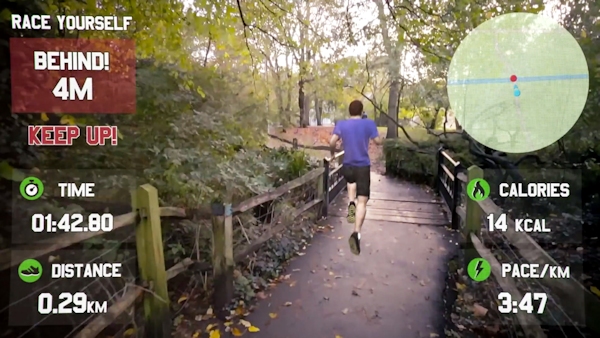
Race Yourself for Google Glass transforms exercise

From ISPR - my source:
http://ispr.info/2014/01/27/race-yourself-for-google-glass-transforms-exercise/?utm_source=rss&utm_medium=rss&utm_campaign=race-yourself-for-google-glass-transforms-exercise
 
Get Fit This Year by Fleeing From Augmented Reality Zombies: Race Yourself Transforms Exercise Into a Game on Google Glass

Race Yourself is a New Fitness Startup for Google Glass, Aiming to Turn Exercise Into a Game.  By Racing Against a Virtual Projection of Yourself, Attaining Personal Bests, and Burning Calories, You Can Unlock New Game Modes Such as Running Away from Giant Rolling Boulders. Race Yourself has Already Raised £200,000 from Investors Lead by DN Capital, and is Now Launching a Crowd-Funding Campaign Via Their Website, www.raceyourself.com, on the 8th January.  ...


http://ispr.info/

INTERPERSONAL : SCIENCES
humanistic ------------------------------------------- mechanistic
SOCIOLOGY : POLITICAL

individual
Am I dreaming?

technology    virtual reality    physical health


Dreams of Peace
group - population

Tuesday, 7 January 2014

ESRC PhD North West Doctoral Training Centre (NWDTC) CASE Studentships 2014: The spatial and social dynamics of public inclusion for people with dementia & Masters HI Sweden

The Faculty of Health and Medicine, Lancaster University offers an exciting opportunity for an ESRC funded +3 collaborative studentship for PhD research: The spatial and social dynamics of public inclusion for people with dementia

Suitably qualified candidates are invited to apply for this fully-funded three-year PhD CASE studentship which is a collaboration between the Centre for Ageing Research, at Lancaster University, and AgeUK Lancashire. The studentship covers full fees plus a Basic Maintenance Grant (£14,421 p.a.). The student will receive a small contribution for research costs.

The CASE studentship will draw on innovative participatory mixed methods to assess the impact of a range of dementia friendly community initiatives to explore how people with dementia experience social and spatial inclusion, across personal and public spaces. The research offers an opportunity to engage with important policy initiatives and how they impact upon people’s lives. The successful applicant will also benefit from the work placement opportunity within AgeUK Lancashire.

The studentship will be supervised by a team lead by Dr Katherine Froggatt and Professor Christine Milligan at Lancaster University and Mrs Diane Armstrong, Dementia Support Coordinator at AgeUK Lancashire.

Eligible candidates will be UK/EU honours graduate students with a good 2.1 from a recognised University, who show evidence of exceptional ability; they must have completed research methods training as part of an ESRC recognised Masters (or demonstrate research training to an equivalent standard) in a relevant health and social sciences discipline. Students who are currently undertaking a Masters degree (or equivalent) and are expecting to graduate during the 2013-14 academic session are also eligible to apply. Candidates should demonstrate a committed interest and experience in the field of dementia ageing research, preferably in community contexts.

Candidates must satisfy the ESRC's academic and residential eligibility requirements and be UK or EU citizens who have been resident in the UK for three years. Further information on eligibility can be downloaded from the ESRC web site:
http://www.esrc.ac.uk/esrccontent/postgradfunding/foindex.asp

For further information contact Dr Katherine Froggatt: k.froggatt AT lancaster.ac.uk

To apply please submit the following documents electronically, by 5.00pm Thursday February 13th 2014, to Dr Katherine Froggatt: k.froggatt AT lancaster.ac.uk with ‘ESRC CASE studentship’ in the subject line:
  • An up-to-date CV: including two named referees (one of whom should be your most recent academic tutor/supervisor); the applicant will be expected to have approached their referees to arrange for references (including anticipated grade if Masters is ongoing) in advance of shortlisting.
  • A letter of application (not exceeding 2 pages) outlining your suitability for the CASE studentship and how you would anticipate approaching the research.
  • A copy of your first degree and Master’s degree transcripts.
Shortlisted candidates should be available for interview on February 21st 2014

PLUS from LinkedIn

On 01/06/14 1:53 PM, Sabine Koch wrote:
--------------------
In case you know somebody interested in advanced studies in HI please forward this message.
Thanks,
Sabine
----------------------------------------------------------------------------------------
Interested in a two year Master Programme in health informatics at Karolinska Institutet/Stockholm University in Sweden?

Apply online latest January 15th at universityadmissions.se

https://www.universityadmissions.se/intl/search?period=HT_2014&publishers=ki&freeText=Joint+Master%27s+Programme+in+Health+Informatics&courseProgram=programs&level=advanced 

Saturday, 21 September 2013

Health 2.0 Europe 2013: Nurses, registration and £££

This year I've really enjoyed the Health 2.0 Manchester chapter meetings and there's some great evening sessions to follow this northern autumn. In June as I posted on W2tQ I also spent a weekend at the NW Health Hack in Knutsford. 

For several months European Health 2.0 conference has been publicized at the Manchester meetings. I was keen to attend until I saw the registration fee even with a 15% reduction. The fee increased yesterday too as I was reminded by Pascal Lardier on twitter:
@pascal_lardier 19 Sep
Today is the last day to pay less for your ticket to Register here:
I retweeted the above and replied to Pascal and Health2eu, telling them what they already know - Health 2.0 rocks! but adding that I thought few nurses would be able to afford the registration fee.

NW Health Hack was a success for me (in addition to our group coming 3rd) because it was free, apart that is from driving there over the weekend on my days off (thanks again to all the sponsors). As the NHS is trying to save money I've also taken some unpaid leave this year.

NHS nurses, like many public sector groups have effectively had a pay cut these past few years. There are other general challenges:
  • Are those nurses who might attend already 'onboard'?
  • Does nursing engagement itself need a health check (what is 'clinical engagement' now)?
  • Much was made of achieving clinical engagement in previous NHS IT projects. How can clinical engagement that reaches nurses be assured now?
  • If (technical) innovation is to be a constant stream, please don't leave the nurses on an island: they can set sail too.
  • Are nurses, like the one writing this, tainted, having been sat on the fence (health care || ICT) for too long?
  • Once projects are established how can nurses, patients and carers stay the course and keep in touch and engaged?
  • As 'NHS clinicians' can nurses participate in initiatives such as the forthcoming Code4Health, or will operational constraints limit their involvement?
  • How are the socio-technical aspects and outcomes measured (hospital vs. home personal use vs. self-care...) ?
  • Is there a golden ratio for the mix of delegates?
  • If there's a strategic partner involved where's the strategy?
Pascal sliced through my query and many of the points above:

19 Sep
- then they should reach out to me!

So if the World Wide Health 2.0 conferences are of interest to you, do as Pascal suggests. New communities can provide new opportunities. Don't just help make your day, help make tomorrow too.

In 2012 the NHS employed 146,075 doctors, 369,868 qualified nursing staff, and 37,314 managers. 
http://www.nhsconfed.org/priorities/political-engagement/Pages/NHS-statistics.aspx#staff

Additional notes 29 Sept:


patients are also asking how can Health 2.0 Europe conference be made more accessible for them ?

they should email me pascal AT health2con.com there is a FREE reg code for them.

Monday, 12 August 2013

'Monitor Me' BBC 2 Horizon

This is an excellent TV program:
Dr Kevin Fong explores a medical revolution that promises to help us live longer, healthier lives. Inspired by the boom in health-related apps and gadgets, it's all about novel ways we can monitor ourselves around the clock. How we exercise, how we sleep, even how we sit.
Some doctors are now prescribing apps the way they once prescribed pills. Kevin meets the pioneers of this revolution. From the England Rugby 7s team, whose coach knows more about his players' health than a doctor would, to the most monitored man in the world who diagnosed a life threatening disease from his own data, without going to the doctor. (BBC 2 website)

Tuesday, 30 July 2013

Modeling Outside the Box (MOTB) Workshop

(co-located with MODELS'13 in Miami, Florida, USA, September 30, 2013)

http://cserg0.site.uottawa.ca/modelingoutsidethebox2013

WHAT IS IT?
-----------
Through a series of creativity, lateral thinking, and brainstorming activities, the Modeling Outside the Box (MOTB) workshop will ask participants to think outside the box and imagine different, radical, innovative forms of model-driven engineering (MDE). Participants will be asked to leave behind all their preconceived notions of MDE and to approach the issue of MDE from a different angle. This will be a highly interactive workshop in which facilitators will use tried-and-tested methods for fostering creativity to generate fresh new ideas for MDE. The aim is to avoid the blinkered thinking and tunnel vision that is a natural consequence of any mature discipline. The outcomes will be new connections between people and, hopefully, new ideas that may lead to future research collaborations.

SOUNDS FUN. BUT IS IT FOR ME?
-----------------------------
We are looking for people who are willing to step outside their particular areas of expertise or interest and join with other positive-thinking individuals to imagine alternative futures for MDE. If you have been frustrated with the current state of MDE practice and want to change, then we want you!

SOUNDS LIKE ME. WHERE DO I SIGN UP?
-----------------------------------
We are asking all potential participants to fill in a short 2 page application form
  http://cserg0.site.uottawa.ca/motb13/MOTB13application.doc
and submit it in pdf format via EasyChair
https://www.easychair.org/conferences/?conf=motb2013.
The application form is just meant to ensure a diverse mix of people with a range of experiences are represented as creativity works best when there is diversity. In particular, we are aiming for a mix of senior people and junior people, including students. We encourage both academics and practitioners to join us. We will try our best to accept all applications.

SOUNDS INTERESTING. BUT WILL IT REALLY CHANGE ANYTHING?
-------------------------------------------------------
We cannot promise that the world will change if you come to this workshop.
We can promise that you will meet like-minded individuals, that you will get a chance to have proper conversations with them rather than just listening to presentations, and that your way of thinking will be challenged.

WHO IS BEHIND THIS?
-------------------
Your friendly organizers are Jon Whittle, Nelly Bencomo, and Gunter Mussbacher.
Feel free to contact them at modelingoutsidethebox2013-info@site.uottawa.ca
if you have any questions or just want more information.

PUBLICATION AND COMMITMENT
--------------------------
There will be no presentations or papers in workshop proceedings.
Furthermore, while MODELS’13 allows participants to move between workshops, this is not conducive to creative thinking. We therefore ask applicants to commit to spending the whole day with MOTB.

IMPORTANT DATES
---------------
Deadline for Application: Sunday, August 4, 2013, 23:59:59, Pago Pago, American Samoa time
Notification Sent to Participants: Monday, August 12, 2013
Workshop: Monday, September 30, 2013


I realise this is not models of nursing, and it is a workshop with a specific focus - MDE - it is also rather short notice. The appeal for me is the aims of the workshops and how it encourages a socio-technical approach. I'm sure that h2cm could inform proceedings. Thinking outside the box means you first must identify them.

Monday, 10 June 2013

Eyes, prisms, data, courts and complexes [ in Hodges' model ]

INTERPERSONAL : SCIENCES
SOCIOLOGY : POLITICAL

individual


The court of public opinion


The military-industrial complex

Eisenhower 

group - population


Source: Luce, E. US data-intelligence complex emerges from shadow of 9/11, Financial Times. 8-9 June, 2013. p.6.

Images:
Eye: http://www.teamthinking.co.uk/self-awareness/4575076161
Prism: http://rorate-caeli.blogspot.com/2013/06/politics-papal-reminders-looking-at.html


Friday, 7 June 2013

Information Commissioner's Office (ICO) fines Glasgow City Council £150,000

The Information Commissioner's Office (ICO) has fined Glasgow City Council £150,000 for the loss of two unencrypted laptops, one of which contained personal details about more than 20,000 people.

...

An ICO investigation discovered that - despite previous warnings - Glasgow City Council had provided staff with unencrypted laptops after there had been problems with encryption software. At least 74 of these laptops remain unaccounted for, with at least six of them known to have been stolen.

Sunday, 7 April 2013

3rd Int. Conference on Integrated Information: IC-ININFO, Prague Sept

Hi everyone!

I have been invited to Chair a session at the IC-ININFO 2013 conference in Prague in September and am now looking for abstracts by people interested in attending.

I am particularly interested in papers around sociotechnology or knowledge management. At this stage an abstract is required of around 250 words to me in the first instance and if I accept it, then it will go through the online review system. After acceptance of their abstract the authors have to prepare their Conference paper of up to 8 pages.

The paper submission will initiate a further single blind peer review process and the final paper will be published in the Conference Proceedings Book. More over, each author can submit a full paper to one of the supporting journals.

Please get in touch if you have an idea for this conference.

Elayne Coakes (Dr)
Senior Lecturer, Information and Knowledge Management
Room M112
The University of Westminster
coakese at WESTMINSTER.AC.UK

My source: SOCIOTECH at JISCMAIL.AC.UK

Monday, 1 April 2013

Dem@Care Summer School on Ambient Assisted Living

Dem@Care SUMMER SCHOOL ON AMBIENT ASSISTED LIVING (DemAAL 2013)
16-20 September 2013, Chania, Crete, Greece
http://mklab.iti.gr/demaal2013/

We are pleased to announce the 1st Dem@Care summer school on Ambient Assisted Living. The DemAAL summer school is primarily intended for postgraduate (PhD or MSc) students, postdocs and researchers investigating clinical and technical aspects related to Ambient Assisted Living (AAL) technologies for remote health management, ageing well and independent living. Leading researchers from academia and industry will cover theoretical and practical aspects pertinent to pervasive and ubiquitous computing technologies for Ambient Intelligence (AmI) applications, while special focus will be given on the role and opportunities of such technologies for dementia management.

Lecture material will be augmented with hands-on practical sessions. Participants will be provided with electronic versions of all programme lectures and all necessary tools and environments for the hands-on sessions. PC access with all tools pre-installed will be available on site as well. In addition, participants will have the opportunity to present their work and obtain feedback during a dedicated poster session intended to further facilitate interactions and the exchange of ideas.

TOPICS
=======
- Dementia and ICT for staging, enablement, and support
- Wearable and pervasive computing
- Sensor networks
- Sensor correlation and fusion
- Context modelling
- Activity monitoring and recognition
- Semantic Complex Event Processing
- Contextual reasoning in AmI
- Assistive technologies for cognitive support and well-being
- Video & voice-based analytics for symptomatic assessment of dementia

SPEAKERS
==========
- Assoc. Prof. Panagiotis Bamidis (Aristotle University of Thessaloniki, Greece)
- Prof. Jenny Benoit-Pineau (University of Bordeaux 1, France)
- Prof. Claudio Bettini (University of Milan, Italy)
- Dr. Antonis Bikakis (University College London, UK)
- Dr. Francois Bremond (INRIA Sophia Antipolis, France)
- Dr. Ceyhun Burak Akgül (Vistek Isra Vision)
- Prof. Cem Ersoy (Boğaziçi University, Turkey)
- Dr. Kate Irving-Lupton (Dublin City University, Ireland)
- Dr. Laura Klaming (Philips Research, The Netherlands)
- Prof. Chris Nugent (University of Ulster, UK)
- Assoc. Prof. Mounir Mokhtari (CNRS/Institut Mines-Telexom, France)
- Prof. Adrian Paschke (Freie Universität Berlin, Germany)
- Dr. Daniel Rogen (ETH Zürich, Switzerland)
- Prof. Stefan Sävenstedt (Luleå University of Technology, Sweden)
- Prof. Alan Smeaton (Dublin City University, Ireland)
- Dr. Alex Sorin (IBM Research Haifa, Israel)
- Prof. Kåre Synnes (LTU, Sweden)
- Prof. Magda Tsolaki (Aristotle University of Thessaloniki, Greece)

HOW TO APPLY
=============
Please visit and follow the instructions at http://mklab.iti.gr/demaal2013/registration. The deadline for applications is May 30th, 2013.
The summer school fee, including lectures, accommodation, meals and social events is 450 €.

VENUE
=======
The summer school will be held in Chania, Crete, a beautiful land brimming with natural beauty, history, and culture, at the Conference Center of MAICh. For more information about Chania, transportation and accommodation please visit http://mklab.iti.gr/demaal2013/venue.

ORGANISING COMMITTEE
======================
- Ceyhun Burak Akgül (Vistek Isra Vision)
- Stamatia Dasiopoulou (Centre for Research and Technology Hellas)
- Kate Irving (Dublin City University)
- Athina Kokonozi (Centre for Research and Technology Hellas)-
- Yiannis Kompatsiaris (Centre for Research and Technology Hellas)
- Erik Schuijers (Philips Research)

Friday, 22 March 2013

BBC Horizon II: Processes - step this way ... safely

Following the BBC TV Horizon programme last night "How to Avoid Mistakes in Surgery" I came across the following list concerned with processes:
Sequential steps. Where one step follows another.

Alternative steps. Where conditional logic specifies which of several paths should be traversed.

Iterative steps. Where a single step is repeated multiple times.

Composite steps. Where steps are nested within other steps.

Optional steps. Where any one of a set of steps may be traversed, depending on the results of a boolean operation.

Checklist. Where all of a number of steps must be traversed, but in any order. p.126.
The list is related to software development and manufacturing as per the reference source below. Within informatics and project management I've noticed and written here about the emphasis placed on processes. Process, process and yet more - in one form or other. As A&E doctor Kevin Fong revealed people can get lost in a process (intubation), especially experts within organisational hierarchies - complex teams in urgent circumstances. In information system projects the need for a socio-technical perspective is essential, and is synonymous with due consideration of human factors. Processes are an essential ingredient to understanding the world and there's a huge literature on events, co-ordination, timing, logistics, value ... but as the Horizon programme pointed out there's also a need for reflection, stepping back, taking in or trying to grasp the big picture. Maintaining situation awareness is vital to assure safety and as the program showed in a crisis hindsight makes a blind spot visible. This is why process is one of four P's in Hodges model (the others - purpose, practice and policy). Processes count, but they are only part of the bigger picture.

The steps above are intended for software developers, but the descriptions throw up some points when subject to a more literal - human - interpretation (which might be a problem?).

The 'alternative' steps: could that mean skipping one in turn as in 'alternate'?

And crucially for the checklist are there any risks associated with its being completed in any order?

There is a world of difference between programming methods and logic on the one hand; and human language and dialogue on the other.

Fayad, M.E., Johnson, R.E. Domain-Specific Application Frameworks: Frameworks Experience by Industry.

Thursday, 14 March 2013

Development Informatics (IS/ICT) Masters Scholarship from Manchester University

I last posted a news item on this in 2010 my source - ciresearchers AT vancouvercommunity.net:

The 2013 Development Leaders Scholarship - worth £15,200 - is available for developing country applicants to the one-year MSc ICT4D programme; creating ICT4D champions.

It is also tenable on the MSc Management and Information Systems programme; which develops “hybrid” information systems professionals.

Applicants apply first for the programme. On receipt of an offer, send a scholarship application statement by June 2013. Scholarship covers all tuition fees. Details at: http://www.sed.manchester.ac.uk/idpm/postgraduate/taught/funding/

If you know someone interested in studying either ICT4D or M&IS at MSc level, could you please let them know about this?

They are welcome to contact me with questions.

Thanks
Richard
---------
Prof. Richard Heeks
Director
Centre for Development Informatics
IDPM, SED, University of Manchester
Arthur Lewis Building
Manchester M13 9PL  U.K.

Phone: +44-161-275-2870
Fax: +44-161-275-2898
Email: richard.heeks AT manchester.ac.uk
Web: http://www.manchester.ac.uk/research/richard.heeks/

Centre Web: http://www.manchester.ac.uk/cdi

Our new one-year Masters in ICTs for Development:
http://www.sed.manchester.ac.uk/postgraduate/taught/courses/06237/index.asp

Blog: http://ict4dblog.wordpress.com
Twitter: http://twitter.com/CDIManchester
Publications list on Google Scholar

Tuesday, 12 March 2013

Community Informatics and Improving Health: New Special Issue

Colleagues:
The Journal of Community Informatics has just published its latest issue at
 http://www.ci-journal.net/index.php/ciej. We invite you to review the Table of Contents here and then visit our web site to review articles and items of interest.
Thanks for the continuing interest in our work,
Michael Gurstein, Ph.D.
Editor in Chief: Journal of Community Informatics, Vancouver CANADA Phone 604-602-0624 gurstein at gmail.com
The Journal of Community Informatics
Special Issue: Community Informatics for Improving Health Table of Contents
Editorial
--------
Overview of ICTs and Health
                Lareen Ann Newman
Editorial: Community Informatics for Improving Health
                Michael Gurstein
Articles
--------
Developing decentralised health information systems in developing countries –cases from Sierra Leone and Kenya
                Edem Kwame Kossi,       Johan Ivar Sæbø,             Jørn Braa,            Mohamed Mumeneeh
Jalloh,   Ayub Manya
Improving community health equity: the potential role for mHealth in Papua New Guinea
                Belinda Jane Loring
Capturing Qualitative Spatial Data to Understand Social Epidemiology in Public Health
                William R Buckingham
Narrating Aboriginality On-Line: Digital Storytelling, Identity and Healing
                Naomi Adelson,                Michelle Olding
Decreasing Health Disparities through Technology: Building a Community Health Website
                Olga Idriss Davis,              Kristen Bean,     Dominica McBride
Bridging the Digital Divide: A Bilingual Interactive Health Kiosk for Communities Affected by Health Disparities
                Kristen Bean,     Olga Davis,          Hector Valdez
‘MYBus’: Young People's Mobile Health, Wellbeing and Digital Inclusion
                Bjorn Nansen,   Kabita Chakraborty,        Lisa Gibbs,           Colin MacDougall,           Frank Vetere
Concussion Information on the Move: The Role of Mobile Technology in Concussion Management
                Osman Hassan Ahmed, Andy J Pulman
With a little help from my friends: experiences of building a virtual community for children with cancer
                Paula Hicks,        Jane B. Grimson,              Owen P. Smith
Impact of Internet on delivery of critical cardiac health care  :
                Sudeepa - Banerjee
A review on mHealth research in developing countries
                Wallace Chigona,              Mphatso Nyemba,          Andile Metfula
Reports
--------
Socio-technical approach to community health: designing and developing a mobile care data application for home-based healthcare, in South Africa
                Retha de la Harpe,           Hugo Lotriet,      Dalenca Pottas, Mikko Korpela
Perceived Benefits Of Remote Data Capturing In Community Home-Based Care:
The Caregivers’ Perspective
                Nobubele Angel Shozi,  Dalenca Pottas, Nicky Mostert-Phipps
Health Impact Assessment of a UK Digital Health Service
                Sue Heather Wright,       Irfan Ghani,        John Kemm,       Jayne Parry
Points of View
--------
W(h)ither Community: Locating participatory approaches to ICT-enabled health and development
                Ian Pringle
________________________________________________________________________
The Journal of Community Informatics http://www.ci-journal.net
 

Friday, 21 December 2012

KT-EQUAL events: inc. Food and Nutrition in Later Life; Meeting the Needs of People Living with Dementia and their Carers ...

Dear KT-EQUAL supporters,

Hello. Here's an update about some of our activities and other news that may be of interest to you.

-----------------------------------------
Upcoming events programme
You are warmly invited to join our upcoming events:

------------------------------------------
Food and Nutrition in Later Life
------------------------------------------
When:    8 January 2013
Time:     9.30am - 16.15pm
Where:   University of Reading

The day features talks from experts, as well as an interactive "hands-on" showcase.  The event should be informative and fun, and provide an opportunity to meet and network with others who have personal or professional interests in food and nutrition for older people. The programme has been designed to appeal to a wide audience, including older adults, practitioners from health and social care, academic researchers, industry and charities.

Free to attend with lunch and refreshments included.

For further details and to book: http://kt-equal.org.uk/calendar/96/60-Nutrition-in-Older-Age

------------------------------------------
Thinking outside the box - meeting the needs of people living with dementia and their carers
------------------------------------------
When:    24 January 2013
Time:     9.00am - 16.45pm
Where:   The Forum, St James Parade, Bath, BA1 1UG

Dementia is a major challenge facing our health and social services over the next 20 years.  This has now been recognised by the government and significant resources are being directed towards early diagnosis, new treatments and management of people with dementia.

This funding will only be effective if we can develop news ways of supporting and managing people with dementia and there carers.  This will require a multidisciplinary team approach to problem solving and service delivery.  Health and Social Care Practitioners are familiar with the concept of multidisciplinary team working but often lack insights into dynamics of group working. We need to ensure that the interventions are effective and consider outcome measures that are appropriate for a long term neurodegenerative condition that are appropriate for patients and carers.

This event aims:

- to help researchers, health and social care professionals to think differently about meeting the needs of people who are living with dementia
- to consider the range of outcome measures that might be used to assess the benefit of an intervention
- to make researchers aware of the challenges and opportunities of multidisciplinary working
- to inform new researchers of the needs of people with dementia
- to trigger ideas for new research and provide a forum where participants can develop potential proposals

Please note that this event has limited places to ensure that representatives from several disciplines have the opportunity to participate.

Free to attend with lunch and refreshments included.

For further details and to register interest: http://kt-equal.org.uk/calendar/96/61-Thinking-outside-the-box-meeting-the-needs-of-people-living-with-dementia-and-their-carers

------------------------------------------
Design for Living in Later Life
------------------------------------------
When:    31 January 2013
Time:     10.00am - 16.30pm
Where:   The Open University, Milton Keynes

This event brings together the latest research ideas and developments about creating lifetime environments for people of all ages.

Free to attend with lunch and refreshments included.

For further details and to book: http://kt-equal.org.uk/calendar/96/54-Design-for-Living-in-Later-Life

------------------------------------------
Keeping safe and maintaining independence: older people and sight loss
------------------------------------------
When:    7 February 2013
Time:     9.30am - 15.45pm
Where:   Weetwood Hall Conference Centre and Hotel, Otley Road, Leeds, LS16 5PS

This workshop event is concerned with sight loss in later life and how we can enable people to live a quality life despite the difficulties that arise from diminished vision.

This event aims to raise awareness of sight loss and its impact and to increase knowledge and understanding of how to support people with sight loss. The programme will showcase new developments in research and practice that have the potential to inform practitioners.

Free to attend with lunch and refreshments included.

For further details and to book: http://kt-equal.org.uk/calendar/96/62-Keeping-safe-and-maintaining-independence-older-people-and-sight-loss

------------------------------------------

New posts on the KT-EQUAL blog which may be of interest to you:

Housing LIN newsletter – Housing with Care Matters, December 2012

This reflects back on some of the successes the Housing Learning and Improvement Network (LIN) had in 2012, including the recent 2nd annual conference attended by over 300 people.

The conference also saw Norman Lamb, Minister for Care and Support Services, announce an additional £40m in this financial year for Disabled Facilities Grants. Details of this and a number of other recent policy and funding announcements to do with housing, care and support are featured in this end of year newsletter along with information on new learning resources from the Housing LIN, important new publications such as HAPPI2, calls for information, and details of Housing LIN forthcoming regional meetings and events.

New dementia website launched: dementiakt.ca

The Canadian Dementia Knowledge Translation Network (CDKTN) and the National Core for Neuroethics are pleased to announce the launch of the online Dementia Knowledge Translation (KT) Learning Centre. This website is targeted towards new and established dementia researchers engaged in KT.

------------------------------------------

Invitation to take part in a study

I am sending some details passed onto us by one of our members, based at TRL:

We are currently undertaking a European study regarding older road users and what different countries do about supporting mobility. The aim of our project is to investigate travel patterns and road safety amongst older road users across Europe, see how they are changing and look at what work is being undertaken to support improving mobility. As part of this we are looking to undertake interviews with possible major players as to what they are doing. Would anyone be interested in taking part in a telephone interview with one of our researchers on this topic?

If you are interested please contact Jenny Stannard, Principal Project Manager and Road Risk Consultant.
email: jstannard@trl.co.uk

It would be helpful if you would contact Jenny by 18 January 2013 if you would like to take part.

------------------------------------------

Recent Highlights

A new BBC film highlights the work of our i-design team in Cambridge: how do older people use technology? http://www.bbc.co.uk/news/technology-20664470

Falling off the Bandwagon: Sustaining digital engagement by older people - a series of consultation events have recently been undertaken exploring potential solutions to the challenges faced by older IT users. A major consultation event took place at St Georges House, Windsor focusing on solutions and how to implement them.  http://www.stgeorgeshouse.org/consultations/social-and-ethical-consultations/recent-consultations/

We were delighted that The Princess Royal presented a keynote address at our recent 'Showcase world class occupational therapy research to meet the needs of an ageing population' event. This event took place at the College of Occupational Therapists where The Princess Royal is Patron. It was a unique opportunity to bring together leading experts to discuss ways of meeting the challenges of an ageing population. http://blog.kt-equal.org.uk/

------------------------------------------

I hope that this is helpful. It's been a pleasure to meet with some of you over the course of this year - look forward to further developments in 2013. If you have any queries and or comments/suggestions please do not hesitate to contact me.

As this eventful year draws to a close, we would like to thank you for all your continued support and extend seasons greetings.  All the very best for 2013.

Bangar
--------
S Bangar
KT-EQUAL Research Co-ordinator
School of Health and Related Research (ScHARR)
University of Sheffield
Regent Court, 30 Regent Street
Sheffield  S1 4DA

http://www.equal.ac.uk/

*Please note: I work 4 days each week.
_______________________________________________
Sparc-network mailing list <Sparc-network@lists.reading.ac.uk> (... and my source)
http://www.lists.rdg.ac.uk/mailman/listinfo/sparc-network