 |
Hi Peter We are delighted to introduce our new series of Health Insights. These free to attend events for healthcare professionals feature interactive round table activities, news on how the latest innovations support the health and care community, and best practice experiences from NHS Trust colleagues. CLICK HERE TO SEE NEW DATES AND LOCATIONS Starting in Leeds and Newbury this October and held in association with NHS England, each one day conference will feature: Digital Discovery Sessions - facilitated round tables exploring procurement issues An update from NHS England on Tech Funds and Open Source Programme Host Roy Lilley, popular Healthcare Broadcaster, with lively panel debates Speakers will include Rob Webster, CEO of NHS Confederation, Tim Straughan, Director of Health and Innovation at Leeds and Partners, and Clive Kay, Chief Executive of Bradford Teaching Hospitals. REGISTER FREE TODAY We hope to see you at your local Health Insights. Kind regards Samantha Phillips HIMSS UK |
Showing posts with label NHS. Show all posts
Showing posts with label NHS. Show all posts
Tuesday, 9 September 2014
UK: Health Insights - how innovations support in health and care communities

Saturday, 30 August 2014
In a 'paperless NHS' - let's not forget...
The benefits of information technology across all sectors are well recognised when they are realised:
As we head towards a paperless NHS let's not forget that health care is both an art and a science.
Links:
The Digital Challenge (due for an update?)
Digitising the NHS by 2018 - One Year On. techUK report | March 2014.
What of the impact of the pending election 2015? Time inconsistency problem:
The NHS needs a 'Bank of England moment' HSJ.
drawMD Pediatrics - Patient Education by Drawing on Medical Artwork for Healthcare Providers
Medical-Artist
individual
INTERPERSONAL : SCIENCES
INTERPERSONAL : SCIENCES
humanistic ------------------------------------------- mechanistic
SOCIOLOGY : POLITICAL
group
creativity usability readiness to hand context | information storage and retrieval, access, efficiency, space, security, information sharing, patient safety, legibility |
| digital inclusion | cost, savings, governance, reporting (locally, nationally, internationally), policy integration |
As we head towards a paperless NHS let's not forget that health care is both an art and a science.
Links:
The Digital Challenge (due for an update?)
Digitising the NHS by 2018 - One Year On. techUK report | March 2014.
What of the impact of the pending election 2015? Time inconsistency problem:
The NHS needs a 'Bank of England moment' HSJ.
drawMD Pediatrics - Patient Education by Drawing on Medical Artwork for Healthcare Providers
Medical-Artist
Thursday, 28 August 2014
Compare and contrast potential - Energy for Change Index and Hodges' model
The biopsychosocial model is quite all encompassing used as it is to help explain and represent pain, explain human development and balance the physical excesses of psychiatry.
For all its scope the biopsychosocial model is two domains short of Hodges' model.
Hodges' model is dated though, a child of the mid-1980s. The biopsychosocial model predates Hodges' and as models of nursing have fallen out of favour in terms of the attention they receive the biopsychosocial is subjected to critique as per:
Whilst the energy for change domains have a specific derivation and (instrumental) purpose I would suggest that a possible strength for Hodges' might lie in the notion (which it is) that there is an underlying conceptual structure from which the domains arise. This structure might support the model's application in time, as well as assuring its longevity and the stamina of its champion.
My prompt: Land, M., et al. (2014) Pedal to the metal to improve the NHS. HSJ, 124, 6389, 26-27.
Image: (please see title and image link)
For all its scope the biopsychosocial model is two domains short of Hodges' model.
Hodges' model is dated though, a child of the mid-1980s. The biopsychosocial model predates Hodges' and as models of nursing have fallen out of favour in terms of the attention they receive the biopsychosocial is subjected to critique as per:
Ghaemi, S.N. (2009). The rise and fall of the biopsychosocial model. Br J Psychiatry.195(1):3–4.A cursory check reveals a diverse and current literature on the biopsychosocial model. If this is positive for the general role of 'models' in health and social care education and learning then there is another encouraging source in the five energies for change with its five domains, as per the figure:
Hatala, A.R. (2012). The status of the “biopsychosocial” model in health psychology: Towards an integrated approach and a critique of cultural conceptions. Open Journal of Medical Psychology, 1, 51-62. doi: 10.4236/ojmp.2021.14009
 |
| The five energy domains |
- Spiritual
- Social
- Physical
- Psychological
- Intellectual
Whilst the energy for change domains have a specific derivation and (instrumental) purpose I would suggest that a possible strength for Hodges' might lie in the notion (which it is) that there is an underlying conceptual structure from which the domains arise. This structure might support the model's application in time, as well as assuring its longevity and the stamina of its champion.
My prompt: Land, M., et al. (2014) Pedal to the metal to improve the NHS. HSJ, 124, 6389, 26-27.
Image: (please see title and image link)
Thursday, 14 August 2014
Paper: Low-cost strategies to improve dementia care
An interest in health and science invites some thought about chaos, complexity and catastrophe theory. These suggest quite a cold - mechanistic - perspective of reality. So trying to think of clinical and nursing examples beyond fluid dynamics, the heart muscle... to more socially oriented applications demands some creative thinking.
In my work within intermediate support in the community for decades my colleagues and I come across cases were husband, wife, partner have looked their significant other to the nth degree. That degree can include hiding the extent of a person's cognitive problems from other family members. Suddenly there is a real catastrophe as the carer is taken acutely ill and hospitalised.
Left at home soon the dependency is revealed. Trying to negotiate care at home can then be a real challenge.
Alternately, when people living with dementia are hospitalised for physical reasons another host of challenges arise.
I've a relative who works over at Warrington General Hospital and it's great to be able to help highlight a paper written by Michelle Beavan their dementia champion and published in Nursing Times:
Beavan M (2014) Low-cost strategies to improve dementia care. Nursing Times; 110: online issue.
In my work within intermediate support in the community for decades my colleagues and I come across cases were husband, wife, partner have looked their significant other to the nth degree. That degree can include hiding the extent of a person's cognitive problems from other family members. Suddenly there is a real catastrophe as the carer is taken acutely ill and hospitalised.
Left at home soon the dependency is revealed. Trying to negotiate care at home can then be a real challenge.
Alternately, when people living with dementia are hospitalised for physical reasons another host of challenges arise.
I've a relative who works over at Warrington General Hospital and it's great to be able to help highlight a paper written by Michelle Beavan their dementia champion and published in Nursing Times:
Beavan M (2014) Low-cost strategies to improve dementia care. Nursing Times; 110: online issue.
Thursday, 31 July 2014
NHScitizen twitter chat 6 August 7-8pm #nhscitizen
 |
| NHS citizen |
@NHSCitizen
If you are on twitter:Pls RT :) We're having a twitter chat on Wed 6 Aug at 7-8pm for
http://bit.ly/nhscitchat
(Above link not active at present)
http://www.nhscitizen.org.uk/
Saturday, 7 June 2014
This May Hurt A Bit ...
individual
INTERPERSONAL : SCIENCES
humanistic ------------------------------------------- mechanistic
SOCIOLOGY : POLITICAL
INTERPERSONAL : SCIENCES
humanistic ------------------------------------------- mechanistic
SOCIOLOGY : POLITICAL
group
| Here - | Here - |
| - Here (especially) | and Here... |
and here - all around these care domains in the Spiritual domain.
Wednesday, 14 May 2014
Help Doctoori.net deliver Health Information For All

Doctoori is more than just a website. Whether you want advice on how to get fit, which super foods actually boost your health, or a guide to your pregnancy and keeping your baby healthy, we have it covered. Also if you need to see a clinician face-to-face, our find a clinic healthcare directory will give you the information you need to choose who is best for you.
Our UK based editorial team ensure all our articles are:
- Based on the latest medical evidence
- Rigorously reviewed
- Thoroughly monitored to ensure they are up to date
- In keeping with the high standards set by the Information Standard.
..... with you on your journey to better health
My source: Zain Sikafi CEO and Founder of doctoori.net - info AT doctoori.net
Saturday, 19 April 2014
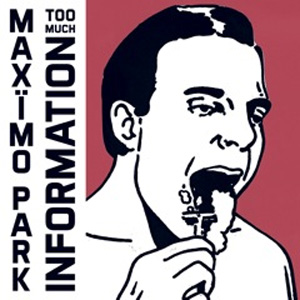
care.data: too much information?
individual
INTERPERSONAL : SCIENCES
humanistic ------------------------------------------- mechanistic
SOCIOLOGY : POLITICAL
humanistic ------------------------------------------- mechanistic
SOCIOLOGY : POLITICAL
group
individual - person ethics 'personal' My identity: lost in numbers Vs. specificity of patterns *my attitude to my 'sensitive' information health literacy personal responsibility, self care, quantified self my understanding of care.data Trust | datasets, BIG data hospital episodes, treatments research privacy research anonymising process for nhs data *care.data is a natural step towards personalised medicine? axon - neurobiology Axon - data warehouse statistics service development and innovation |
 | data security, law, information governance NHS commercial, contract potential for abuse - assumptions public mental health public health policy, consultation policy communication public engagement, primary care informed consent, opt-out data definitions, standards ISO27001 population, insurance |
Additional links:
Allyson Pollock - Protecting confidential patient information and promoting public health research. Three proposed amendments to the Care Bill
Building trust in the use of personal data for medical research, 1 April 2014, AMRC
Image source:
http://www.contactmusic.com/press/maximo-park-announce-new-album-too-much-information-released-3rd-february-2014
Friday, 21 March 2014
BCS, UKCHIP and IHRIM announce a new vision for the health informatics profession at HC2014
 |  |
19 March 2014
BCS, The Chartered Institute for IT, the UK Council of Health Informatics Professions (UKCHIP) and the Institute of Health Records and Information Management (IHRIM) are working collaboratively to create a new federation for the Informatics profession. The three autonomous bodies will work closely together in a federation to ensure that UK health informatics is recognised as a valued profession.
Justin Whatling, Chair of BCS Health, part of the Chartered Institute for IT, explains: “This is a very exciting moment for health informatics. Today technology has an immense and profound impact on the health and wellbeing of people. Therefore it’s time for the profession to mature to meet the increasing demand on our skills and capability. We want health to be an attractive place for informatics professionals from other sectors to come and work, and we want to provide a clear career path and professional development opportunities to retain those already working in health. The federation will help us to achieve this.”
The initiative comes as the NHS is under increasing pressure to find and implement new models of health and social care that will provide services closer to people’s homes. This requires health professionals to share accurate information securely and confidentially. In addition, the Caldicott 2 Review has introduced a Duty of Care to Share health information. Both of these things have happened at a time when public trust in the NHS’ ability to handle personal health information has taken a hit.
The federation will be open to all other informatics professional bodies, the private sector, the home countries and lay representation. It will provide leadership of the overall profession with a single professional register and point of entry for professionals, oversee an agreed regulatory framework with a common code of ethical practice and coordinate access to resources providing a unified set of capabilities for all professional areas of practice.
Read more
Tuesday, 25 February 2014
NW England: Pathways to Health and Wealth 31st March 2014 (4-7pm)
Dear all
As discussed in our meeting, here is the website for the LU Cross Faculty KE event Pathways to Health and Wealth taking place on 31st March 2014 (4-7pm):
http://www.lancaster.ac.uk/healthandwealth/
Please let me or Becky Gordon b.gordon AT lancaster.ac.uk know if you have any queries and please pass on to any of your industry connections who you think might be interested to find out what we do, how we do it and how we can help them do it too!
Thanks, Karen
Dr Karen L Wright
Peel Trust Lecturer in Biomedicine
Faculty of Health and Medicine
Division of Biomedical and Life Sciences
Furness College
Lancaster University
Lancaster LA1 4YG
Email: karen.wright AT lancaster.ac.uk
[ Just to note I have not attended these meetings, the post is copied here to help in a small way with local publicity. PJ ]
As discussed in our meeting, here is the website for the LU Cross Faculty KE event Pathways to Health and Wealth taking place on 31st March 2014 (4-7pm):
http://www.lancaster.ac.uk/healthandwealth/
Please let me or Becky Gordon b.gordon AT lancaster.ac.uk know if you have any queries and please pass on to any of your industry connections who you think might be interested to find out what we do, how we do it and how we can help them do it too!
Thanks, Karen
Dr Karen L Wright
Peel Trust Lecturer in Biomedicine
Faculty of Health and Medicine
Division of Biomedical and Life Sciences
Furness College
Lancaster University
Lancaster LA1 4YG
Email: karen.wright AT lancaster.ac.uk
[ Just to note I have not attended these meetings, the post is copied here to help in a small way with local publicity. PJ ]
Sunday, 9 February 2014
End of Life Care: Gold Standards Framework (Heaven's door)
INTERPERSONAL : SCIENCES
humanistic ------------------------------------------- mechanistic
SOCIOLOGY : POLITICAL
humanistic ------------------------------------------- mechanistic
SOCIOLOGY : POLITICAL
individual
| PRIMARY CARE | ACUTE CARE |
| CARE HOMES | DEMENTIA (CARE) |
group - population
Looking at a table 'GOLD STANDARDS SET BY BENCHMARK PROGRAMME' (p.23) in Prof. Thomas's HSJ article, I could see an instant fit between the four listed care contexts and the domains of Hodges' model.
There are also many overlaps and of course Hodges' model is an idealised resource. For example, governance applies across all the above and in that way all can be placed in the POLITICAL domain.
Further points explaining the above includes:
- The GP and primary care seeing the person first not the diagnosis. Again in this sense - respect and dignity we can place all these care specialisms in the INTERPERSONAL. You would hope that primary care 'know' the patient as a person, an individual; or at least through recourse to the primary care record.
- If a care home 'works' it will be able to deliver care almost transparently, it is not a process but a social gathering. It is not the person's home (their home is not something to be forgotten, replaced like their past), but it seeks to emulate this as far as possible. Care is a routine that is also personalised and even at the end of life there is peace, calm and dignity.
- Dementia care is a political challenge, a priority and challenge across all the domains. As in the previous post - what training is provided to Health Care Assistants and other staff? How is the strategy for dementia progressing across all these care environments?
Thomas, K. (2014) 'End of life care is a litmus test for the whole of the NHS'. HSJ, 31 January, 124, 6384, 21-23.
Saturday, 8 February 2014
HCA training: Knock, knock, knocking on the political domain's door
INTERPERSONAL : SCIENCES
humanistic ------------------------------------------- mechanistic
SOCIOLOGY : POLITICAL
humanistic ------------------------------------------- mechanistic
SOCIOLOGY : POLITICAL
individual
emotional care | physical care |
social care | FRANCIS - a year on: How much training do healthcare assistants have before their first shift on a ward? 25% = none |
group - population
Although that 25% sits nicely in the POLITICAL domain, what is the impact of this finding across the domains overall? Whether or not the impact is equally shared across the interpersonal, sciences and social domain, upon which domain will it end up knocking?
Calkin, S. (2014) Francis impacts on culture and patient safety, HSJ, 7 February. 124, 6376, 4-5.
Wednesday, 22 January 2014
Better information means better care
BBC Radio 4: Inside Health 21 January 2013
INTERPERSONAL : SCIENCES
humanistic ------------------------------------------- mechanistic
SOCIOLOGY : POLITICAL
Margaret McCartney and Mark Porter ask whether the anonymity of patient records on a new NHS database can be guaranteed?NHS: Your records:
Using information about the care you have received, enables those involved in providing care and health services to improve the quality of care and health services for all. The role of the Health and Social Care Information Centre (HSCIC) is to ensure that high quality information is used appropriately to improve patient care.
NHS England has therefore commissioned a programme of work on behalf of the NHS, public health and social care services to address gaps in information. Our aim is to ensure that the best possible evidence is available to improve the quality of care for all. ...http://www.nhs.uk/NHSEngland/thenhs/records/healthrecords/Pages/care-data.aspx
INTERPERSONAL : SCIENCES
humanistic ------------------------------------------- mechanistic
SOCIOLOGY : POLITICAL
individual
my interests | scientific interests |
social interests | commercial interests |
group - population
Wednesday, 15 January 2014
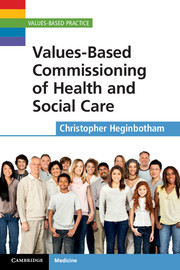
Book review: Values-Based Commissioning of Health and Social Care
This book was a welcome change from the last review, being quite brief in comparison at 155 pages including the index. This isn't a criticism, it just helps in clearing the decks for other reading and distance learning.
The text is no lightweight, however; and should be mandatory reading for all health and social care personnel. Well maybe not all; but that is part of the problem. The clinical and social care workforce are trained to care. Commissioning (and clinical coding) is something done in another location, by other personnel.
If there is a recurring criticism of public services it is that they are cossetted, protected, removed from many of the financial realities of the world. The book, published in 2012, was written anticipating the structural and financial change brought in by the Coalition government and the need for austerity. Therefore, the public sector and clinical staff are not immune from the vagaries of finance as might be assumed. For the past couple of years I've witnessed the regular shakes of the sieve and heard of the same within local authorities.
Christopher Heginbotham's book provides the background and tensions of commissioning and delivers much needed insight on several fronts by conjoining what so often seems remote. The lesson of the book for me is how distinct finance and commissioning are. I can sum this up as: if person-centred clinicians are concerned with sense-making for and with patients and their families, then commissioning is the sense-making of the available finance. Viewed this way you see the importance of commissioning. Clinicians are concerned with evidence-based care, ethics, the health reforms, outcomes, quality, and of course values. Add to this patient involvement and public engagement and you have a read that opens a field that many clinicians dash by as they manage various clinical priorities.
Chapter 1 and 2 set the scene of values-based commissioning, definitions, the fact-value distinction; and the post-Labour NHS. The health reforms (chapter 3) are central to the text, but despite the date of publication which the author acknowledges there is little loss of significance. The health and social care commissioning landscape is still taking shape, outcomes based commissioning (chapter 9) can make the news as implementation is delayed (Williams, 2013). Chapter 4 describes the seven fat years followed by seven lean years; an excellent overview with the major influences at work, The Wanless Reports and Marmot Review for example. It is salutary in these times to see NPfIT as a footnote, with IT benefits still to be accrued (p.32). The need to respond to the public health challenges are noted (chapter 6), as with the potential mental health impact of climate change.
The book's figures and tables are a great asset, very useful to educate student nurses about commissioning, value and values. There are a couple of references to colour (p.72) in what are black and white - grey illustrations. 'Reading' the diagrams you can follow them. The author's background comes across, as with location and mental health experience. The book is I believe relevant to readers across all sectors. Heginbotham also indicates that the book is one of a series by CUP, and points to Fulford et al. as a sibling. There are a couple of repeated words but otherwise the production is excellent. I was a little surprised to find a catastrophe in the text - catastrophe theory (p.51). It is well deployed in explaining complexity and values. When I say surprised perhaps I would really like to see more on this theme of complexity and emergence, but Mr Heginbotham stays clearly on track.
My bias - Hodges' model - found the following standout points:
 The number of sentences and figures that describe the individual, group, community and population (the structure of Hodges' model). The way that values can act as a counterpoint and essential adjunct to evidence (subjective - objective; qualitative - quantitative).
Some situations are more biological than others - in certain sorts of surgery, for example - and some have a much larger values base - such as in psychiatry (p.40).
Reference to (Cronje and Fullan, 2003):
The use of models to test the real world and reference to a values space.
I posted previously about the nhm - new holistic model (p.80).
(back to the review..!)
Technical aspects (a law and index) and ethical issues that beset commissioning are introduced (space is limited), and recur helping to integrate the book as a whole. Chapter 5 deals with public involvement and engagement and how it can be enacted. Chapter 7 on integrative commissioning invariably raises patient and service user care pathways.
Is this the Rorschach test for patient, care professional and commissioner: please draw your care pathway?
The book admirably deals with the ideal and realised in the space available. As such even when there is a linear care pathway it is how it is experienced that counts (values and outcomes...). (It is sadly the person-affirming life-story pathway that is so often lost.)
Perhaps, this is what I have in mind above in referring to emergence. Despite the existence of care pathways in practice the route in-through health and social care is probably found in a rather chaotic way (sudden care transitions); with delays, placement changes, ward movement(s)-stasis, choices to be taken into account, lack of attendance, missed appointments. ... This is why trying to define pathways may certainly assist, but it is the granularity of those definitions and their experience that snags at our clothes along the way. As Heginbotham advises - care pathways are not something to use in a slavish way. This excellent and well referenced book should provoke and establish interest in this very important health and social care activity. An activity and process that must be informed by the values of the public and those of patients and be more than a process, but realised in shared purposes and practise.
Many thanks to CUP for the copy.
Williams, D. Trust forces delay in outcomes based commissioning plan, Health Service Journal, 6 December 2013. p. 4-5.
Heginbotham, C. (2012) Values-Based Commissioning of Health and Social Care. Cambridge, Cambridge University Press.
The text is no lightweight, however; and should be mandatory reading for all health and social care personnel. Well maybe not all; but that is part of the problem. The clinical and social care workforce are trained to care. Commissioning (and clinical coding) is something done in another location, by other personnel.
If there is a recurring criticism of public services it is that they are cossetted, protected, removed from many of the financial realities of the world. The book, published in 2012, was written anticipating the structural and financial change brought in by the Coalition government and the need for austerity. Therefore, the public sector and clinical staff are not immune from the vagaries of finance as might be assumed. For the past couple of years I've witnessed the regular shakes of the sieve and heard of the same within local authorities.
Christopher Heginbotham's book provides the background and tensions of commissioning and delivers much needed insight on several fronts by conjoining what so often seems remote. The lesson of the book for me is how distinct finance and commissioning are. I can sum this up as: if person-centred clinicians are concerned with sense-making for and with patients and their families, then commissioning is the sense-making of the available finance. Viewed this way you see the importance of commissioning. Clinicians are concerned with evidence-based care, ethics, the health reforms, outcomes, quality, and of course values. Add to this patient involvement and public engagement and you have a read that opens a field that many clinicians dash by as they manage various clinical priorities.
Chapter 1 and 2 set the scene of values-based commissioning, definitions, the fact-value distinction; and the post-Labour NHS. The health reforms (chapter 3) are central to the text, but despite the date of publication which the author acknowledges there is little loss of significance. The health and social care commissioning landscape is still taking shape, outcomes based commissioning (chapter 9) can make the news as implementation is delayed (Williams, 2013). Chapter 4 describes the seven fat years followed by seven lean years; an excellent overview with the major influences at work, The Wanless Reports and Marmot Review for example. It is salutary in these times to see NPfIT as a footnote, with IT benefits still to be accrued (p.32). The need to respond to the public health challenges are noted (chapter 6), as with the potential mental health impact of climate change.
The book's figures and tables are a great asset, very useful to educate student nurses about commissioning, value and values. There are a couple of references to colour (p.72) in what are black and white - grey illustrations. 'Reading' the diagrams you can follow them. The author's background comes across, as with location and mental health experience. The book is I believe relevant to readers across all sectors. Heginbotham also indicates that the book is one of a series by CUP, and points to Fulford et al. as a sibling. There are a couple of repeated words but otherwise the production is excellent. I was a little surprised to find a catastrophe in the text - catastrophe theory (p.51). It is well deployed in explaining complexity and values. When I say surprised perhaps I would really like to see more on this theme of complexity and emergence, but Mr Heginbotham stays clearly on track.
My bias - Hodges' model - found the following standout points:
The number of sentences and figures that describe the individual, group, community and population (the structure of Hodges' model). The way that values can act as a counterpoint and essential adjunct to evidence (subjective - objective; qualitative - quantitative). Some situations are more biological than others - in certain sorts of surgery, for example - and some have a much larger values base - such as in psychiatry (p.40).
Reference to (Cronje and Fullan, 2003):
The medical literature demonstrates an equivocal attitude which suggests a 'collective need to better integrate scientific quantitative data . . . and the art of human judgement . . . into a common definition of "rational" medical practice (p.40).Figure 7.8 Filtering the evidence through a values-based matrix (values across four care domains?).
The use of models to test the real world and reference to a values space.
I posted previously about the nhm - new holistic model (p.80).
(back to the review..!)
Technical aspects (a law and index) and ethical issues that beset commissioning are introduced (space is limited), and recur helping to integrate the book as a whole. Chapter 5 deals with public involvement and engagement and how it can be enacted. Chapter 7 on integrative commissioning invariably raises patient and service user care pathways.
Is this the Rorschach test for patient, care professional and commissioner: please draw your care pathway?
The book admirably deals with the ideal and realised in the space available. As such even when there is a linear care pathway it is how it is experienced that counts (values and outcomes...). (It is sadly the person-affirming life-story pathway that is so often lost.)
Perhaps, this is what I have in mind above in referring to emergence. Despite the existence of care pathways in practice the route in-through health and social care is probably found in a rather chaotic way (sudden care transitions); with delays, placement changes, ward movement(s)-stasis, choices to be taken into account, lack of attendance, missed appointments. ... This is why trying to define pathways may certainly assist, but it is the granularity of those definitions and their experience that snags at our clothes along the way. As Heginbotham advises - care pathways are not something to use in a slavish way. This excellent and well referenced book should provoke and establish interest in this very important health and social care activity. An activity and process that must be informed by the values of the public and those of patients and be more than a process, but realised in shared purposes and practise.
Many thanks to CUP for the copy.
Williams, D. Trust forces delay in outcomes based commissioning plan, Health Service Journal, 6 December 2013. p. 4-5.
Heginbotham, C. (2012) Values-Based Commissioning of Health and Social Care. Cambridge, Cambridge University Press.
Wednesday, 20 November 2013
Consultation on the proposed withdrawal of the SNOMED CT national care planning content
In addition to responding myself, I notice on the actual consultation page on 'Citizen Space' there is an option to share this consultation.
Dear Peter,
You are registered for the care planning content via the HSCIC Technology Reference data Update Distribution website.
The national Care Planning Content is designed for use to support care planning functionality across health and social care. This functionality crosses many professions/sectors which may have differing descriptions for a care plan in the traditional health record (e.g. treatment plans, birthing plans, support plans, intervention plans or care order sets). The content can support the interoperation of care plans across boundaries and paper based care plans based on the pack have also been used successfully to gain greater familiarity with structured terminology (SNOMED CT).
More details at: http://www.infostandards.org/careplanning
The absence of a declared owner or sponsor for this product means that we are proposing to withdraw it and are keen to hear views and understand the impact of not maintaining this content and its associated services.
We have a number of questions to determine how information Standards could best support the development of a standard for care planning, the consultation can be found at:
https://consultations.infostandards.org/bdea/snomed-ct-care-planning/consult_view
- and we would value and encourage your feedback on this proposal.
If you have any questions regarding the above you can contact us by sending an e-mail to information.standards AT hscic.gov.uk. This is the preferred form of communication.
You can also telephone for advice and support. Our telephone number is +44 845 13 00 114
We are available weekdays from 9am to 5pm.
Regards
The TRUD support team
Health and Social Care Information Centre
Dear Peter,
You are registered for the care planning content via the HSCIC Technology Reference data Update Distribution website.
The national Care Planning Content is designed for use to support care planning functionality across health and social care. This functionality crosses many professions/sectors which may have differing descriptions for a care plan in the traditional health record (e.g. treatment plans, birthing plans, support plans, intervention plans or care order sets). The content can support the interoperation of care plans across boundaries and paper based care plans based on the pack have also been used successfully to gain greater familiarity with structured terminology (SNOMED CT).
More details at: http://www.infostandards.org/careplanning
The absence of a declared owner or sponsor for this product means that we are proposing to withdraw it and are keen to hear views and understand the impact of not maintaining this content and its associated services.
We have a number of questions to determine how information Standards could best support the development of a standard for care planning, the consultation can be found at:
https://consultations.infostandards.org/bdea/snomed-ct-care-planning/consult_view
- and we would value and encourage your feedback on this proposal.
If you have any questions regarding the above you can contact us by sending an e-mail to information.standards AT hscic.gov.uk. This is the preferred form of communication.
You can also telephone for advice and support. Our telephone number is +44 845 13 00 114
We are available weekdays from 9am to 5pm.
Regards
The TRUD support team
Health and Social Care Information Centre
Thursday, 7 November 2013
Calling all healthcare radicals!
Rocking the boat and staying in it: how to succeed as a radical in healthcare
Corporate Rebels United is a global movement of “corporate rebels” across multiple industries and sectors. Many healthcare rebels/radicals are part of this. This is the manifesto of Corporate Rebels United which perfectly captures the mission of organisational radicals in healthcare to deliver the new truth of healthcare transformation.
Through Hodges' model I am an advocate for 'radical history', nursing care lessons from the past can (must!) inform future health and social care.
Sunday, 27 October 2013
Positioning Nursing in a Digital World. RCN eHealth Survey 2012 Report
Abstract:
Commissioned by the RCN, this eHealth survey explores the knowledge and experiences of nursing staff in relation to current eHealth developments, together with their attitudes to new and emerging uses of technology in health and social care. The aims of the 2012 survey were to identify the readiness of nursing staff to participate in eHealth, to understand the barriers that prevent nursing staff from benefiting from information and communications technology, and to ascertain what progress has been made since the previous RCN eHealth survey in 2010.
Image source: http://www.gerrybolger.com/wp-content/uploads/2013/07/image1.jpg
Tuesday, 8 October 2013
Infostandards.org: HSCIC supports the information standards community
Dear Peter,
You may have seen the publicity this week regarding the launch of a new website, www.infostandards.org, developed by the Health and Social Care Information Centre, working with the Department of Health, NHS England and other commissioning partners.
Infostandsards.org has been developed to support information standards professionals across health and social care. The site provides a single place where all information standards can be located, along with valuable supporting material, such as e-learning, implementation guidance and case studies. It also enables users of the site to become active participants in the development and appraisal of standards, by providing the means to share material, draw on each others’ experiences and engage in discussions about existing and potential future standards.
TRUD is pleased to support this new venture and recognises the importance of engaging with information standards professionals across health and social care. The site provides a single place where all information standards can be accessed, along with valuable supporting materials, such as e-learning, implementation guidance and case studies. It also enables users of the site to share material, draw on each other’s experiences and engage in discussions about existing and potential future standards, collections and extractions.
The site’s scope and design will evolve continually to meet the needs and preferences of the community, so we encourage you to become active users and help shape its future development. It is the intention that the site will be an integral part of the assurance process for information standards and collections, details of which will be made available on the site in due course.
Dr Ken Lunn, Director of Information Standards Delivery, said:
http://www.infostandards.org/topic/prescribing/dmd-draft-user-guide-available-for-review
The guidance is not currently ready for formal consultation but we would value your input at this juncture to see if the contents are useful and useable.
Questions about www.infostandards.org can be sent to info.standards AT hscic.gov.uk and via twitter where you can follow us @infostandards
Regards
The TRUD support team
Health and Social Care Information Centre
You may have seen the publicity this week regarding the launch of a new website, www.infostandards.org, developed by the Health and Social Care Information Centre, working with the Department of Health, NHS England and other commissioning partners.
Infostandsards.org has been developed to support information standards professionals across health and social care. The site provides a single place where all information standards can be located, along with valuable supporting material, such as e-learning, implementation guidance and case studies. It also enables users of the site to become active participants in the development and appraisal of standards, by providing the means to share material, draw on each others’ experiences and engage in discussions about existing and potential future standards.
TRUD is pleased to support this new venture and recognises the importance of engaging with information standards professionals across health and social care. The site provides a single place where all information standards can be accessed, along with valuable supporting materials, such as e-learning, implementation guidance and case studies. It also enables users of the site to share material, draw on each other’s experiences and engage in discussions about existing and potential future standards, collections and extractions.
The site’s scope and design will evolve continually to meet the needs and preferences of the community, so we encourage you to become active users and help shape its future development. It is the intention that the site will be an integral part of the assurance process for information standards and collections, details of which will be made available on the site in due course.
Dr Ken Lunn, Director of Information Standards Delivery, said:
"We have supported the creation of the infostandards.org website because openness and increased engagement with end users can only improve the development, delivery and adoption of effective information standards. Standards are essential to the delivery of improved, digitally enabled health and care services and by collaborating with the wider community we can tackle together the challenges we all face. I look forward to seeing how the site will be used by the community."In support of implementation of the NHS dictionary of medicines and devices (dm+d) the Pharmacy Terminology team are currently updating some of the dm+d implementation guidance. Following feedback from the community a starter guide to dm+d providing an overview of dm+d, an explanation of the Standard, how it relates to the SNOMED CT UK Drug Extension and some fundamentals on content, structure and the release itself has been drafted and is available for comment on infostandards.org.
http://www.infostandards.org/topic/prescribing/dmd-draft-user-guide-available-for-review
The guidance is not currently ready for formal consultation but we would value your input at this juncture to see if the contents are useful and useable.
Questions about www.infostandards.org can be sent to info.standards AT hscic.gov.uk and via twitter where you can follow us @infostandards
Regards
The TRUD support team
Health and Social Care Information Centre
Saturday, 21 September 2013
Health 2.0 Europe 2013: Nurses, registration and £££
This year I've really enjoyed the Health 2.0 Manchester chapter meetings and there's some great evening sessions to follow this northern autumn. In June as I posted on W2tQ I also spent a weekend at the NW Health Hack in Knutsford.
For several months European Health 2.0 conference has been publicized at the Manchester meetings. I was keen to attend until I saw the registration fee even with a 15% reduction. The fee increased yesterday too as I was reminded by Pascal Lardier on twitter:
NW Health Hack was a success for me (in addition to our group coming 3rd) because it was free, apart that is from driving there over the weekend on my days off (thanks again to all the sponsors). As the NHS is trying to save money I've also taken some unpaid leave this year.
NHS nurses, like many public sector groups have effectively had a pay cut these past few years. There are other general challenges:
Pascal Lardier @pascal_lardier
- then they should reach out to me!
So if the World Wide Health 2.0 conferences are of interest to you, do as Pascal suggests. New communities can provide new opportunities. Don't just help make your day, help make tomorrow too.
In 2012 the NHS employed 146,075 doctors, 369,868 qualified nursing staff, and 37,314 managers.
http://www.nhsconfed.org/priorities/political-engagement/Pages/NHS-statistics.aspx#staff
Additional notes 29 Sept:
Health 2.0 MCR @H20MCR
For several months European Health 2.0 conference has been publicized at the Manchester meetings. I was keen to attend until I saw the registration fee even with a 15% reduction. The fee increased yesterday too as I was reminded by Pascal Lardier on twitter:
@pascal_lardier 19 SepI retweeted the above and replied to Pascal and Health2eu, telling them what they already know - Health 2.0 rocks! but adding that I thought few nurses would be able to afford the registration fee.
Today is the last day to pay less for your ticket to @Health2eu Register here: http://www.health2con.com/events/health-2-0-europe-2013-registration/ …#health2con#nhssm#hcsmeu
NW Health Hack was a success for me (in addition to our group coming 3rd) because it was free, apart that is from driving there over the weekend on my days off (thanks again to all the sponsors). As the NHS is trying to save money I've also taken some unpaid leave this year.
NHS nurses, like many public sector groups have effectively had a pay cut these past few years. There are other general challenges:
- Are those nurses who might attend already 'onboard'?
- Does nursing engagement itself need a health check (what is 'clinical engagement' now)?
- Much was made of achieving clinical engagement in previous NHS IT projects. How can clinical engagement that reaches nurses be assured now?
- If (technical) innovation is to be a constant stream, please don't leave the nurses on an island: they can set sail too.
- Are nurses, like the one writing this, tainted, having been sat on the fence (health care || ICT) for too long?
- Once projects are established how can nurses, patients and carers stay the course and keep in touch and engaged?
- As 'NHS clinicians' can nurses participate in initiatives such as the forthcoming Code4Health, or will operational constraints limit their involvement?
- How are the socio-technical aspects and outcomes measured (hospital vs. home personal use vs. self-care...) ?
- Is there a golden ratio for the mix of delegates?
- If there's a strategic partner involved where's the strategy?
Pascal Lardier @pascal_lardier
- then they should reach out to me!
So if the World Wide Health 2.0 conferences are of interest to you, do as Pascal suggests. New communities can provide new opportunities. Don't just help make your day, help make tomorrow too.
In 2012 the NHS employed 146,075 doctors, 369,868 qualified nursing staff, and 37,314 managers.
http://www.nhsconfed.org/priorities/political-engagement/Pages/NHS-statistics.aspx#staff
Additional notes 29 Sept:
Health 2.0 MCR @H20MCR
@h2cm patients are also asking how can @Health2eu Health 2.0 Europe conference be made more accessible for them @pascal_lardier?
@H20MCR @h2cm @Health2eu @pascal_lardier they should email me pascal AT health2con.com there is a FREE reg code for them.
Sunday, 7 July 2013
Part II: Pensioners, 'Health students' and Children
For decades the reactive health care system has been founded, loved and sustained through the primary care - secondary care hospital system, together with its complex range of referral systems and processes.
Now demographic trends and economic pressures have seen the emergence and ongoing development of the virtual hospital. Call centers and teams that deliver nursing and medical care in the home to prevent admission and facilitating early discharge are still basically reactive.
What is needed is a cognitive hospital.
A form of hospital that acknowledges the health care system but can finally progress the preventive agenda on an individual, educational basis, fostering self-efficacy, health literacy and if necessary self-care.
Now demographic trends and economic pressures have seen the emergence and ongoing development of the virtual hospital. Call centers and teams that deliver nursing and medical care in the home to prevent admission and facilitating early discharge are still basically reactive.
What is needed is a cognitive hospital.
A form of hospital that acknowledges the health care system but can finally progress the preventive agenda on an individual, educational basis, fostering self-efficacy, health literacy and if necessary self-care.
Subscribe to:
Posts (Atom)