Showing posts with label medicine. Show all posts

Friday, 29 August 2014

Technology Enhanced Learning: A Medical Student Conference, Belfast, 3rd October 2014


www.med.qub.ac.uk/TEL


Abstract submissions are open for the Technology Enhanced Learning: A Medical Student Conference being held on Friday 3rd October in Riddel Hall, Queen’s University, Stranmillis, Belfast. The team welcome abstracts reporting on innovations in technology enhanced learning within medical education. This could include the development of electronic materials as well as medical education research. Further details on abstract submissions including the categories and the types of presentation opportunities can be found on the QUB website.

Deadline for receipt of abstract submissions: Wednesday 17th September.

Bookings are also open for this event through the Higher Education Academy’s website for students and educators to join the team in Belfast for a celebration of student engagement in the area of technology enhanced learning within medical education. The day will showcase student presentation poster presentations and demonstrations. In addition there will be a keynote from Jane Hart from the Centre for Learning & Performance Technologies and a group discussion on the future of technology enhanced learning in medical education. Prizes will be awarded for best poster and best presentation.

For further information about the event please go to the QUB event page or contact Karen Murphy from the School of Medicine, Dentistry and Biomedical Sciences.

Thursday, 28 August 2014

Compare and contrast potential - Energy for Change Index and Hodges' model

The biopsychosocial model is quite all encompassing used as it is to help explain and represent pain, explain human development and balance the physical excesses of psychiatry.

For all its scope the biopsychosocial model is two domains short of Hodges' model.

Hodges' model is dated though, a child of the mid-1980s. The biopsychosocial model predates Hodges' and as models of nursing have fallen out of favour in terms of the attention they receive the biopsychosocial is subjected to critique as per:
Ghaemi, S.N. (2009). The rise and fall of the biopsychosocial model. Br J Psychiatry.195(1):3–4.

Hatala, A.R. (2012). The status of the “biopsychosocial” model in health psychology: Towards an integrated approach and a critique of cultural conceptions. Open Journal of Medical Psychology, 1, 51-62. doi: 10.4236/ojmp.2021.14009
A cursory check reveals a diverse and current literature on the biopsychosocial model. If this is positive for the general role of 'models' in health and social care education and learning then there is another encouraging source in the five energies for change with its five domains, as per the figure:
http://www.changemodel.nhs.uk/pg/cv_blog/content/view/74232/network?cview=62406
The five energy domains
  • Spiritual
  • Social
  • Physical
  • Psychological
  • Intellectual
There is clearly great similarity with Hodges' model although in h2cm the spiritual combines all the four domains of which the political also replaces the intellectual. I would equate the intellectual with the psychological, accepting of course the existence of individual and group psychologies. Being intellectual and becoming intellectual to the extent of an individual realising their potential has long been recognised as a political matter and consequence (Freire). As such the Political domain within Hodges' model is central to its relevance within the field of engagement and innovation and beyond.

Whilst the energy for change domains have a specific derivation and (instrumental) purpose I would suggest that a possible strength for Hodges' might lie in the notion (which it is) that there is an underlying conceptual structure from which the domains arise. This structure might support the model's application in time, as well as assuring its longevity and the stamina of its champion.


My prompt: Land, M., et al. (2014) Pedal to the metal to improve the NHS. HSJ, 124, 6389, 26-27.

Image: (please see title and image link)

Thursday, 7 August 2014

Health and Social Care Policy: Always - from a distance

individual
INTERPERSONAL : SCIENCES
humanistic ------------------------------------------- mechanistic
SOCIOLOGY : POLITICAL
group

"Cura te ipsum." - "Take care of your own self."


mental health


physical

social


policy


Additional link:
http://en.wikipedia.org/wiki/Cura_te_ipsum


Latin source: Mediawatch, tpm the philosophers' magazine, 2nd quarter 2014, p.14.

(which cites: http://www.3ammagazine.com/3am/cura-te-ipsum/ )

Saturday, 5 July 2014

CARE2X Integrated Hospital Information System


In learning we often look in turn for role models, exemplars then even some comparator or examples against which to compare and contrast to understand the context and our own knowledge, skills and potential.

In health and social care information systems it's useful for me to look at what is available in Drupal. A recent find is Care2X with a demo available. There are numerous plans to take these systems further:

 Care3g is seeking funding.

There is also Project Mtuha.

There's a post by Tim Schofield - Helping African hospitals with open source software that describes how the enterprise resource planning system KwaMoja @KwaMoja is being used to provide administration systems for hospitals in Africa.

Even though not on the same scale as commercial hospital systems in the USA and EU ... these are significant software projects compared with my purposes which are educational.

Care2X presentation

Friday, 27 June 2014

Competition: Win attendance at the Royal Society of Tropical Medicine and Hygiene Meeting in Oxford, UK - Deadline June 30

In order to celebrate International Clinical Trials Day, Global Health Trials is running a competition. The first prize is attendance of the Royal Society of Tropical Medicine and Hygiene (RSTMH) Meeting in Oxford, UK, on 25-27 September 2014, covering transport, accommodation, conference registration and living expenses. The winner and two runners-up will also win one-year fellowships with the RSTMH. Please note that the deadline for entries is June 30, 2014.

In order to enter this competition, you must be working in a research role (for example, as an investigator, nurse, field worker, lab technician or data manager, etc) and currently be working in a low or low-middle income country as defined by the world bank.
To enter, you can send us either a two-minute video you have made (you can use your smartphone) OR a photo-board (up to fifteen photos) on one of the following three topics:
  1. A day in the life of our clinical trial(s)
  2. How we are building research capacity in our health facility
  3. My health research career
An important aim of this competition is to celebrate and recognise the quantity and diversity of clinical trials that are being conducted around the Globe. Tell the Global Health Network community about the trial that you are working on!
Again, please note that the deadline for entries is June 30, 2014.

Please refer to the following link for more information:
https://globalhealthtrials.tghn.org/community/blogs/post/383/2014/05/global-health-trials-international-clinical-tr/

With best regards,
Tamzin Furtado
Project Manager

www.globalhealthtrials.org
info AT globalhealthtrials.org

The Global Health Clinical Trials ( www.globalhealthtrials.org) is an open collaboration aiming to support clinical trials in resource-limited settings by providing guidance, training, resources and career development. Please do visit and let us know what you think.

HIFA profile: Tamzin Furtado is Project Manager of Global Health Trials, UK. Professional interests: Global health, clinical trials. tamzin.furtado AT ndm.ox.ac.uk

My source: HIFA2015

Sunday, 15 June 2014

Blood: A Biography of the Stuff of Life

individual
INTERPERSONAL : SCIENCES
humanistic ------------------------------------------- mechanistic
SOCIOLOGY : POLITICAL
group

Blood, blood cells, functions, blood pressure, blood gases, haemoglobin, Hb - Hgb, bruising, circulation, pulse, time, events, measures, observations, processes, systems, chaos ...

http://www.waterstones.com/waterstonesweb/products/lawrence+hill/blood/10208678/


emphasis here on *biography*

Image: Waterstones

My source:
The Times, June 7, 2014.

Thursday, 12 June 2014

Psychiatric Bulletin - Letter: Psychiatry for medical students: need for a more holistic approach to teaching?

From: Psychiatric Bulletin -

http://pb.rcpsych.org/content/38/3/138.2.full

Kristina Rodney and Laura Wilkinson

Kristina Rodney and Laura Wilkinson are both ST4 medical students, Newcastle University, Newcastle, UK, email:k.rodney AT newcastle.ac.uk.

We are two medical students who wish to offer a perspective on undergraduate education and psychiatry.

During our student placement, we attended the old age psychiatry module at the Northern Deanery MRCPsych programme focusing on dementia and ethics. This was aimed at trainees and not specifically medical students but we were surprised to find that this was not above our level of knowledge. This prompted discussion of undergraduate psychiatry training more broadly, which we felt focused too heavily on the diagnosis of mental illness and less so on the holistic approach to the patient and their presentation as covered by the MRCPsych course. From our experience of undergraduate psychiatry we feel that the assessment by means of a logbook of conditions encourages students to find patients with a certain diagnosis, and in doing so overlooks the true essence of psychiatry. To our mind this incorporates the ability to consider all aspects of a patient’s life and formulating these, while demonstrating compassion for another person at a time of most need.

Through choosing a 6-week placement in old age psychiatry we have been able to explore the specialty more thoroughly and broadly than facilitated within the standard undergraduate programme, and we have realised how little of psychiatry we have been exposed to as undergraduates. We have become more aware of the importance of considering the patient’s personal and social circumstances alongside their diagnosis, and how these can influence each other. Specifically, the importance of a sound ethical approach to practice has been highlighted through the higher-level teaching we experienced, where the Mental Capacity Act was discussed in detail.

We believe that it would benefit undergraduates to experience a more realistic and rounded placement in psychiatry and truly consider the social implications of mental illness. As it currently stands, undergraduate education in psychiatry is oversimplified to focus on diagnosis and does not acknowledge the capabilities of medical students to adopt a holistic approach. An opportunity to consider all aspects of a psychiatrist’s role may encourage more students to consider a career in this field.

<>

I have contacted the authors of this letter to inform them of Hodges' model and its scope in assuring holistic and integrated care. The model could also facilitate curriculum development. The authors of the letter are not endorsing Hodges' model, I am seeking to highlight the need for such a resource.

Thanks to:
Lucy Alexander
Rights and Permissions Manager
Royal College of Psychiatrists

Wednesday, 4 June 2014

Would you let a robot take your blood?

A Robot With A Hypodermic Needle 

Written by Lucy Black
27 July 2013

Would you let a robot take your blood? The answer to this question illuminates our real relationship to machines that aspire to rise above the robot vac. Is there another sort of uncanny valley?

Veebot is a very clever use of some basic image processing plus some very accurate positioning mechanisms. It first locates a good vein using infrared. Once it has a target it switches to ultrasound to make sure that there is enough blood flow to make it worth inserting the needle.

More...


My source:
International Society for Presence Research: June
http://ispr.info/


individual
INTERPERSONAL : SCIENCES
humanistic ------------------------------------------- mechanistic
SOCIOLOGY : POLITICAL
group
trust, confidence, anxiety, expectations, 'needles' - phobia, previous experiences, model of the 'other', intelligence, physical tests to differentiate mental health problems, subjective feelings - 'creepiness'
human
pa
safety, measurement, imaging, mechanics, technology, electromagnetic spectrum, infra red, ultrasound, motion, accuracy, research, trials, evidence, logic, blood sample,  appearance, (surgical robots R-here)
factors
in             RFT - 'right first time'
public awareness, interaction, relationships, community of practice - acceptance, publicity, media, dissemination
investment, policy, certification, law, standards, testing, supervision, labour relations

Tuesday, 20 May 2014

MEMO: .health as a top-level domain

m e m o r a n d u m
Date:20 May 2014
To: ICANN
From: PETER JONES
Subject:
Please do not try to put a full stop to ongoing efforts to utilise the internet to benefit the true health and well-being of the world's citizens.

The work is a challenge, much has been achieved and there is great promise for the future and not merely through the quantified self, personalised medicine, biotechnology and the virtual healthcare market. ...

The self, indeed this whole effort must be assured, integrated and qualified.

This means of course that the provenance, standards and values vested in health related data, information and knowledge must be of the highest quality.

Then - we can start to think about -


Yours sincerely,

Peter Jones

Additional link:
http://www.jmir.org/2014/3/e73/

Monday, 19 May 2014

[hifa2015] World Medical Association calls for a moratorium on the sale of the .health top-level domain

Dear colleagues,

The World Medical Association has called for a moratorium on the sale of the .health top-level domain (TLD). This is significant as the WMA 'is an international organization representing approximately 9 million physicians of all specialties and sectors.'

Below are extracts from a letter from the WMA Secretary-General dated 8th March to ICANN (the body that administers internet domains). The full letter is available here:

http://www.icann.org/en/news/correspondence/kloiber-to-chehade-et-al-11mar14-en.pdf
'By now the ICANN Board is aware that .health is one of the ten most opposed new gTLDs...'

'... We, the World Medical Association (WMA), add our voice to recommend that the auction of the .health gTLD not go forward.'

Best wishes,
Neil
-----
[ c/o Neil Pakenham-Walsh ]

Let's build a future where people are no longer dying for lack of healthcare knowledge: Join HIFA www.hifa2015.org

Friday, 16 May 2014

If you must rumple the care domains - rumple them together

individual
INTERPERSONAL : SCIENCES
humanistic ------------------------------------------- mechanistic
SOCIOLOGY : POLITICAL
group

'A Man’s body and his mind, 
with the utmost reverence to both I speak it, 
are exactly like a jerkin, and a jerkin’s lining; – 
rumple the one – you rumple the other.’ 1


1 Sterne L. The Life and Opinions of Tristram Shandy, Gentleman (1761), vol. 3, ch. 4 (eds M New, J New). University of Florida Press, 1978.

Source: Royal College of Psychiatrists (2013) Whole-person care: from rhetoric to reality Achieving parity between mental and physical health. Occasional Paper 88, March 2013. p.2.

Wednesday, 14 May 2014

Help Doctoori.net deliver Health Information For All

http://www.doctoori.net/
Doctoori brings to you, high quality, reliable health information in the Arabic language, through our syndicated partnership with NHS Choices. Our engaging, patient focused articles and interactive tools provide an invaluable, trusted health resource for you and your family. 

Doctoori is more than just a website. Whether you want advice on how to get fit, which super foods actually boost your health, or a guide to your pregnancy and keeping your baby healthy, we have it covered. Also if you need to see a clinician face-to-face, our find a clinic healthcare directory will give you the information you need to choose who is best for you.

Our UK based editorial team ensure all our articles are:
  • Based on the latest medical evidence
  • Rigorously reviewed
  • Thoroughly monitored to ensure they are up to date
  • In keeping with the high standards set by the Information Standard.
Doctoori.net

 ..... with you on your journey to better health

My source: Zain Sikafi CEO and Founder of doctoori.net  - info AT doctoori.net

Saturday, 19 April 2014

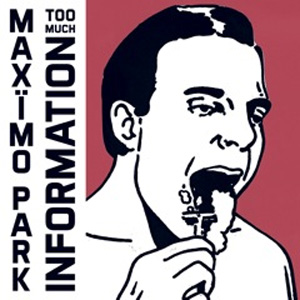
care.data: too much information?

individual
INTERPERSONAL : SCIENCES
humanistic ------------------------------------------- mechanistic
SOCIOLOGY : POLITICAL
group

individual - person
ethics
'personal'
My identity:
 lost in numbers Vs. specificity of patterns
*my attitude to my 'sensitive' information
health literacy
personal responsibility, self care, quantified self
my understanding of care.data
Trust


datasets, BIG data
hospital episodes, treatments
research
privacy research
 anonymising process for nhs data
*care.data is a natural step towards personalised medicine?
axon - neurobiology
Axon - data warehouse
statistics
service development and innovation

data security, law, information governance
NHS
commercial, contract
potential for abuse - assumptions
public mental health
public health
policy, consultation
policy communication
public engagement, primary care
informed consent, opt-out
data definitions, standards
ISO27001
population, insurance


Additional links:
Allyson Pollock - Protecting confidential patient information and promoting public health research. Three proposed amendments to the Care Bill

Building trust in the use of personal data for medical research, 1 April 2014, AMRC

Image source:
http://www.contactmusic.com/press/maximo-park-announce-new-album-too-much-information-released-3rd-february-2014

Saturday, 12 April 2014

ERCIM News No. 97 Special theme: "Cyber-Physical Systems"

Dear ERCIM News Reader,

ERCIM News No. 97 has just been published at http://ercim-news.ercim.eu/en97

Special theme: "Cyber-Physical Systems"
http://ercim-news.ercim.eu/en97/special/

Guest editors
:
- Maria Domenica Di Benedetto, University of L’Aquila, Center of Excellence DEWS
- Françoise Lamnabhi-Lagarrigue, CNRS, Laboratoire des Signaux et Systèmes
- Erwin Schoitsch, AIT Austrian Institute of Technology/AARIT.

http://ercim-news.ercim.eu/en97Keynote: "The Importance of Cyber-Physical Systems for Industry" by Clas Jacobson, Chief Scientist for United Technologies Systems & Controls Engineering, USA

This issue is also available for download as:
pdf
http://ercim-news.ercim.eu/images/stories/EN97/EN97-web.pdf
epub: http://ercim-news.ercim.eu/images/stories/EN97/EN97.epub

Next issue: No. 98, July 2014 - Special Theme: "Smart Cities"
(the call will be published shortly at http://ercim-news.ercim.eu/call)

Thank you for your interest in ERCIM News.
Feel free to forward this message to others who might be interested.

Best regards,
Peter Kunz
ERCIM News central editor

Includes:
Optogenetics to Unravel the Mechanisms of Parkinsonian Symptoms
Big Data in Healthcare: Intensive Care Units as a Case Study
SEMEOTICONS: Face Reading to Help People stay Healthy


--------------------------------------------------------------------------------------
Cor Baayen Award 2014: Nominate a promising young researcher. Deadline: 30 April
http://www.ercim.eu/activity/cor-baayen-award
-------------------------------------------------------------------
ERCIM "Alain Bensoussan" Fellowship Programme
ERCIM offers fellowships for PhD holders from all over the world. The next round is open. Application deadline: 30 April 2014 http://fellowship.ercim.eu/

Follow us on twitter http://twitter.com/#!/ercim_news
and join the open ERCIM LinkedIn Group http://www.linkedin.com/groups/ERCIM-81390

Thursday, 27 February 2014

Rare Disease Day 28 February 2014


INTERPERSONAL : SCIENCES
humanistic ------------------------------------------- mechanistic
SOCIOLOGY : POLITICAL
I am honored to stand, in her graceful place, and shine a light on a delicate group of individuals who, nevertheless, in sheer numbers are a force to be reckoned with.
Thank you,

Sean Hepburn Ferrer
A disease or disorder is defined as rare in Europe when it affects fewer than 1 in 2000.
A disease or disorder is defined as rare in the USA when it affects fewer than 200,000 Americans at any given time. One rare disease may affect only a handful of patients in the EU (European Union), and another touch as many as 245,000. In the EU, as many as 30 million people alone may be affected by one of over 6000 rare diseases existing.
  • 80% of rare diseases have identified genetic origins whilst others are the result of infections (bacterial or viral), allergies and environmental causes, or are degenerative and proliferative.
  • 50% of rare diseases touch children.
In the words of Audrey Hepburn,

We cannot save everyone… but the knowledge that someone is coming to their rescue… that we care as a society is ultimately as important…”.

It is in this spirit that we invite you, alongside Sean Hepburn Ferrer, to Join Together for Better Care.
group - population

Winwick Hospital remembered

Image source: Metro

Tuesday, 25 February 2014

NW England: Pathways to Health and Wealth 31st March 2014 (4-7pm)

Dear all

As discussed in our meeting, here is the website for the LU Cross Faculty KE event Pathways to Health and Wealth taking place on 31st March 2014 (4-7pm):

http://www.lancaster.ac.uk/healthandwealth/

Please let me or Becky Gordon b.gordon AT lancaster.ac.uk know if you have any queries and please pass on to any of your industry connections who you think might be interested to find out what we do, how we do it and how we can help them do it too!

Thanks, Karen

Dr Karen L Wright
Peel Trust Lecturer in Biomedicine
Faculty of Health and Medicine
Division of Biomedical and Life Sciences
Furness College
Lancaster University
Lancaster LA1 4YG
Email: karen.wright AT lancaster.ac.uk

[ Just to note I have not attended these meetings, the post is copied here to help in a small way with local publicity. PJ ]

Monday, 27 January 2014

'Intellectual brutalisation' and the saving grace and power of poetry

BBC Radio 4 Today: An eminent cardiologist has organised and funded a poetry competition for his medical students to stop them becoming, in his words, intellectually brutalised.
Gabrielle Gascoigne, pictured, is a previous winner.
The BBC’s Jane Dreaper discovers more.

PBS: For these medical students, poetry nurtures the soul

Here's (source: http://www.bbc.co.uk/programmes/b03s6mdp/live ) the full version of Mastectomy - For His Wife, by Gabrielle Ruth Gascoigne:

It will be an honour
to bathe the scars.
Don’t think my tears imply
an ounce of sorrow -
only joy
could fill my eyes.

It will be a pleasure
to hold you close.
Know this – your precious flesh
calls the bluff on gold
and silver -
makes me a king.

It will be a delight
to talk with you
into the night we thought
stolen, clean away -
until day
renews our hope.

It would be too heartless
if all this love,
these sinner’s prayers and more
should fall to nothing
more than rain
on empty streets.

INTERPERSONAL : SCIENCES
humanistic ------------------------------------------- mechanistic
SOCIOLOGY : POLITICAL

individual
subjectivity
insight, rapport, empathy
emotional control, detachment, engagement
risk of burnout
objectivity
anatomy, physiology         
physicality, processes, mechanistic
intellectual brutalisation
humanistic
communication, relationships
(medic) poetry

funding, crowded curricula
hidden curriculum
group - population

Sunday, 22 December 2013

mEDucator 3.0 | Open Linked Education - Melina+ (Drupal)

http://www.meducator3.net/melinaplus/
Checking through links yesterday I came across the mEDucator initiative and Melina+ which is part and noticed it is built using Drupal.

There is a thread on Drupal.org on science applications:

https://groups.drupal.org/science-applications

I posted in 2009 about the Science Collaboration Framework - SCF (for creating biomedical resources).

The link to SCF no longer works; there is an archive of this and other work that was part of Harvard's Initiative in Innovative Computing (IIC).

So it's important to consider these initiatives at least in terms of their longevity, their scale and number of participants, as examples of funded research and as Drupal projects.

Saturday, 14 December 2013

H2cm - Beauchamp and Childress (1994) four principles of healthcare ethics

I'm clearing the decks of books at the moment, one of which is McGonigle and Mastrian's Nursing Informatics and the Foundation of Knowledge, Second Edition (2012). I notice a 3rd edition is in preparation.

A review will follow, but in chapter 5 on Ethical Applications of Informatics on page 73 (pb.) the four principles healthcare ethics of Beauchamp and Childress (1994) are mentioned in a very concise, informative discussion.

Although the exercise that follows involves 'putting concepts in boxes', doing so helps us to see beyond the boxes, to see the links between.

Although harm takes several forms it is physical harm (for nonmaleficence) that is most commonly thought of. This is the ethics concerning an individual so why have I placed beneficence in the sociology domain? Justice should be straight forward, but only if reinforced by law, and then only if that law is exercised. Autonomy should be straight forward. I must have the mental capacity, the insight to have choices. In the eyes of others these choices may be rationale or irrational. Although justice is place in the political (group / population) domain, rights are ascribed to individuals. This is useful property of Hodges' model the way that the individual and their mental life are diametrically placed (opposed?) and linked. It is others who are having determine the ethics of a given case, evaluating what is in the person's best interests; also having to take into account any advanced directives, or living wills.

What do you think? If you have some comments, can improve this or feel there is a correspondence here please let me know.

INTERPERSONAL : SCIENCES
SOCIOLOGY : POLITICAL

individual
autonomy nonmaleficence
beneficencejustice
group - population

  • Respect for autonomy - the patient has the right to refuse or choose their treatment. (Voluntas aegroti suprema lex.)
  • Beneficence - a practitioner should act in the best interest of the patient. (Salus aegroti suprema lex.)
  • Non-maleficence - "first, do no harm" (primum non nocere).
  • Justice - concerns the distribution of scarce health resources, and the decision of who gets what treatment (fairness and equality).
Above text: