Showing posts with label literature. Show all posts

Saturday, 5 July 2014

Excuses found: "premature definition of variables"

Currently reading:
MURPHY E., DINGWALL R., GREATBATCH D., PARKER S., WATSON P. (1999). Qualitative research methods in health technology assessment: a review of the literature. Health Technology Assessment. 2(16), p.84.
http://www.journalslibrary.nihr.ac.uk/__data/assets/pdf_file/0008/64826/FullReport-hta2160.pdf
Marshall (1985) presented the flexibility of qualitative research as one of its strengths. She argued that, in qualitative research, the researcher does not assume that (s)he knows, at the outset, the exact nature of the research question. Rather, qualitative research offers the opportunity of discovery. In fact, researchers vary considerably in the extent to which they formulate the precise nature of the research question in advance of the study. Most seek to avoid what Silverman (1993) referred to as “premature definition of variables”.
<>

Ah, so this is what I've doing!

Yes, but for how long with h2cm, with Drupal...?

1997... 2007...  and counting... :-)

Tuesday, 17 June 2014

Book: The Empathy Exams & Michel Serres Institute

individual
INTERPERSONAL : SCIENCES
humanistic ------------------------------------------- mechanistic
SOCIOLOGY : POLITICAL
group
http://www.lesliejamison.com/
The Natural Sciences
Local, Society & Socio-

-Economic


As recent posts reveal I'm overwhelmed with reading at present. Material that is essential for the TEL course and reading more tangential and yet potentially enjoyable titles. It will be a busy summer as all this is brought together(!?). Especially as I've a literature search in mind as a module submission - progress permitting.

The publication of Jamison's book this (N) spring sits well after the findings last year about the benefits of reading fiction in increasing empathy.

Since 2008-2009 I've lost touch with the work of Michel Serres:

Jones, Peter, Exploring Serres’ Atlas, Hodges’ Knowledge Domains and the Fusion of Informatics and Cultural Horizons (Aug 15, 2007). SOCIAL INFORMATION TECHNOLOGY CONNECTING SOCIETY AND CULTURAL ISSUES. Available at SSRN: http://ssrn.com/abstract=1842504 or http://dx.doi.org/10.2139/ssrn.1842504

- having only just found the Institute. I only scratched the surface of Serres' oeuvre in the above paper and must recharge my reflective capacity.

http://institutmichelserres.ens-lyon.fr/
Book cover image: http://www.ew.com/ew/article/0,,20800427,00.html

My source: The Empathy Exams
FT Weekend, June 7-8, 2014.

Sunday, 15 June 2014

Blood: A Biography of the Stuff of Life

individual
INTERPERSONAL : SCIENCES
humanistic ------------------------------------------- mechanistic
SOCIOLOGY : POLITICAL
group

Blood, blood cells, functions, blood pressure, blood gases, haemoglobin, Hb - Hgb, bruising, circulation, pulse, time, events, measures, observations, processes, systems, chaos ...

http://www.waterstones.com/waterstonesweb/products/lawrence+hill/blood/10208678/


emphasis here on *biography*

Image: Waterstones

My source:
The Times, June 7, 2014.

Tuesday, 3 June 2014

L-earning a Living with McLuhan

individual
INTERPERSONAL : SCIENCES
humanistic ------------------------------------------- mechanistic
SOCIOLOGY : POLITICAL
group

In 1964, Marshall McLuhan predicted that the future of work would involve -


 "learning a living"... .


production


communities of practice
earning a living


Source:
Parchoma, G. (2006). A proposed e-learning policy field for the Academy. International Journal of Teaching and Learning in Higher Education, 18(3), 230-40. (p.232).
Reading for module 2.

Tuesday, 20 May 2014

3-day Short Course in Systematic Reviewing and GRADE, 2-4 July 2014, UCL and NCCMH

http://www.ucl.ac.uk/clinical-psychology/CORE/Images/grade-approach-poster.png
Dear all,

I’d be very grateful if you could forward this onto any colleagues you think would be interested in attending. Many thanks.

Introduction to Systematic Reviewing and the GRADE Approach
3-day short course
UCL, London

Led by Dr Craig Whittington, with over 10 years’ experience developing NICE clinical guidelines and Cochrane reviews.
  • A practical approach to systematic reviewing taught by experts developing clinical guidelines for NICE.
  • Get the latest advice about GRADE, the sensible and transparent approach to grading quality of evidence and strength of recommendations, adopted by the Cochrane Collaboration.
  • Bring an idea for a systematic review; leave with a protocol and toolkit to get the work completed to the very highest standard.
Please visit:
http://www.ucl.ac.uk/clinical-psychology/CORE/short-courses/grade-approach.htm

To book please email snaqvi AT rcpysch.ac.uk
Best wishes,
Sabrina Naqvi

Sabrina Naqvi
Project Manager
National Collaborating Centre for Mental Health
The Royal College of Psychiatrists
3rd Floor | 21 Prescot Street | London E1 8BB
Website: http://www.rcpsych.ac.uk

Sunday, 19 January 2014

FOUR QUARTETS T.S. Eliot from EAST COKER - IV


FOUR QUARTETS

T.S. Eliot


EAST COKER
(No. 2 of 'Four Quartets')


IV
The wounded surgeon plies the steel
That questions the distempered part;
Beneath the bleeding hands we feel
The sharp compassion of the healer's art
Resolving the enigma of the fever chart.

    Our only health is the disease
If we obey the dying nurse
Whose constant care is not to please
But to remind of our, and Adam's curse,
And that, to be restored, our sickness must grow worse.

    The whole earth is our hospital
Endowed by the ruined millionaire,
Wherein, if we do well, we shall
Die of the absolute paternal care
That will not leave us, but prevents us everywhere.

    The chill ascends from feet to knees,
The fever sings in mental wires.
If to be warmed, then I must freeze
And quake in frigid purgatorial fires
Of which the flame is roses, and the smoke is briars.

    The dripping blood our only drink,
The bloody flesh our only food:
In spite of which we like to think
That we are sound, substantial flesh and blood—
Again, in spite of that, we call this Friday good.


T.S. Eliot Nobel Prizes biography
http://www.nobelprize.org/nobel_prizes/literature/laureates/1948/eliot-bio.html

Source copy:
http://www.davidgorman.com/4Quartets/notes.htm

http://www.davidgorman.com/4Quartets/2-coker.htm

Thursday, 24 October 2013

Arts: "Reflection on a sofa" Hodges' model as a 'memory palace' I

Prior to the New Dynamics in Ageing Showcase this Monday (a great event) I travelled down to London on Sunday morning. I wasn't 100% that morning, nothing specific.

I arrived at noon dropped the bags at the B&B and then took the nine stops from Kings Cross to South Kensington. A few minutes walk brought me to the Victoria and Albert Museum. I was early to collect my timed ticket for the Sky Arts Ignition: Memory Palace exhibition.

After queuing for ten minutes (we Brits eh!) at the proper sign to be told I just had to approach the entrance at the allotted time. I went to check the cafe. This was very nice, on the pricey side and rather busy. It's not easy to find a seat, do self-service and be secure. Anyway it was time for a walk, find somewhere else. Before doing so I went to shop and bought the exhibition book, not a huge tome and quite interesting.

Not far away around the corner I found the Brompton cafe. There were seats here. I ordered a cappucinno. There was a large communal table so I sat there. I was ok for about twenty minutes and then came over all hot and increasingly dizzy. I realised I had to move and quickly so took my jumper off and walked around to the right where there was a bookshop.

It was empty and there was sofa with 'LOVE' emblazoned on it - three times - if I registered this correctly. I could hear the cafe and just see one table through the passage way. At that moment I'd had enough of the individual-group axis and the humanistic-mechanistic took over as I went semi-horizontal.

After a couple of minutes I recovered myself and was able to get up - yes the gyro functions - and carry on my way. I am really grateful for that little space and rest. I was still determined to visit the exhibition and attend the showcase. This was fortunate timing with Sunday the 20th the last day of the exhibition and I wanted to keep it that way.
In the post-apocalyptic world of British author Hari Kunzru’s specially commissioned 10,000 word novella, London has been ravaged by a magnetic storm; all memory, art, writing, and recording has been banned. As one man attempts to remember, alone in his cell, the narrative unfolds.
Zoe Pilger, The Independent - Art review.
“misremembered” ambulance by London-based illustration collective Le Gun
“Once there were great palaces called Hospitals.” In contrast to a dystopian future when the NHS and indeed all medical knowledge has been erased, the idea of basic public services appears miraculous. “It was a time of great wonder,” he writes, referring to the present. This fragment of text is accompanied by a fabulous sculpture of a “misremembered” ambulance by London-based illustration collective Le Gun. A ghoulish figure brandishes a whip and pulls a cart filled with potions that promise ad-hoc, alchemical healing.
Zoe Pilger, The Independent - Art review and image
See page 18-19 of Kunzru’s book.
I started in a memory palace, a book shop. I left to visit another, carrying my own memory palace in my mind.

Hodges' model is a memory palace, vacant, awaiting occupancy by patient, client, or carer. The model acts as a great prompt past, future and the here and now.

Monday, 8 July 2013

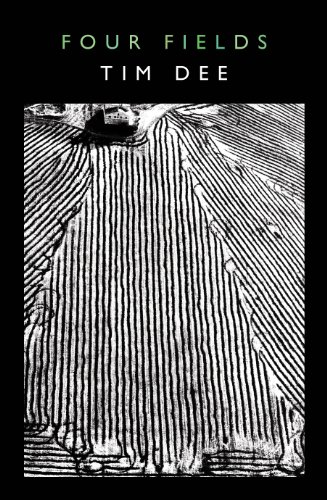
Four Fields

On my wish list:
In his first book since the acclaimed The Running Sky Tim Dee tells the story of four green fields. Four fields spread around the world: their grasses, their hedges, their birds, their skies, and their natural and human histories. Four real fields - walkable, mappable, man-made, mowable and knowable, but also secretive, mysterious, wild, contested and changing. Four fields - the oldest and simplest and truest measure of what a man needs in life - looked at, thought about, worked in, lived with, written.

Dee's four fields, which he has known for more than twenty years, are the fen field at the bottom of his Cambridgeshire garden, a field in southern Zambia, a prairie field in Little Bighorn, Montana, USA, and a grass meadow in the exclusion zone at Chernobyl, Ukraine. Meditating on these four fields, Dee makes us look anew at where we live and how. He argues that we must attend to what we have made of the wild, to look at and think about the way we have messed things up but also to notice how we have kept going alongside nature, to listen to the conversation we have had with grass and fields.

Four Fields is a profound, lyrical book by one of Britain's very best writers about nature.

Source image and text: Amazon

Monday, 3 June 2013

Book: Thomas Keneally - The Daughters of Mars

http://www.welovethisbook.com/reviews/daughters-mars
An interesting novel in light of the military metaphor in nursing mentioned in the previous post. In February I visited Hay-on-Wye which was a great experience - book shops galore! Keneally was interviewed on Sky Arts - Hay Sessions, and by The Telegraph:
In the circumstances, he could be forgiven for turning out the odd finely wrought novella. Instead, the last six years have seen seven new Keneally books – his most recent novel weighed in at 520 pages and has a serious claim to be the best he’s ever written. The Daughters of Mars, about Australian nurses in the First World War, once again pulls off the miraculous Keneally trick of being both epic and intimate. It’s also packed with great phrase-making – an aspect of his work too often overlooked.
Hay Festival

Source: Sky Arts & The Telegraph
http://www.telegraph.co.uk/culture/hay-festival/10078501/Hay-Festival-2013-Thomas-Keneally-discusses-his-new-novel-The-Daughters-of-Mars.html

Tuesday, 28 May 2013

Countries, places and maps (Lahiri)


“The place to which you feel the strongest attachment
 isn’t necessarily the country you’re tied to by blood or birth:
 it’s the place that allows you to become yourself. 
This place may not lie on any map.”

Jhumpa Lahiri
  

My source: Fred Dervin via mailinglist at cosmobilities.net

Tuesday, 15 January 2013

‘Attentive Writers’: Healthcare, Authorship, and Authority - Call for Papers

 Medical Humanities Research Centre, University of Glasgow, 23-25 August 2013

http://www.gla.ac.uk/schools/critical/research/conferences/attentivewriters/

http://www.gla.ac.uk/schools/critical/research/conferences/attentivewriters/
From nurses, physicians and surgeons to administrators, caregivers, technicians, veterinarians and voluntary sector workers, this conference adopts the term ‘attentive writers’ as evocative of the multitude of both non-professional and professional caregivers – clinical and non-clinical healthcare workers – whose attention to illness might take narrative form. The study of physician-writers was one of the earliest developments in the related fields of Literature and Medicine and the Medical Humanities, with canonical figures such as Conan Doyle, Goldsmith, Keats, Smollett, and William Carlos Williams, receiving much-deserved critical attention. Echoing Rita Charon’s concept of ’attentiveness’, this conference brings this established field of enquiry regarding ‘the physician as writer’ into dialogue with recent calls for a more inclusive approach to the Medical Humanities (i.e. ‘Health Humanities’) and questions the authoritative place of the Western – traditionally male – physician in our explorations of the humanities/health interface.

The relationship between healthcare, authorship and authority will be addressed through three inter-related strands of thematic enquiry: (1) an historical and literary examination of ‘attentive writers’; (2) a more devolved interrogation of the field of Narrative Medicine; and (3) an examination of ‘attentive writing’ as creative practice.

Current Confirmed Plenary Speakers: Professor Rita Charon; Professor Paul Crawford; Further TBA Papers might address, but are not limited to, the following topics:
  • Nurse-writers, physician-writers, surgeon-writers, veterinarian-writers, etc. of any culture, historical period or literary epoch, and/or nurses, physicians, surgeons, and vets as literary subjects
  • Non-clinical healthcare workers (adminstrators, janitors, technicians, etc.) as writers and/or literary subjects
  • The literature of caregiving
  • Gender and medical authority
  • Historical development of medical and literary professionalism
  • The afterlife of Foucault’s ‘medical gaze’
  • Hybrid discourses and genres (the case history, illness narratives, etc.)
  • Narrative Medicine (and, particularly, does it challenge or reinforce the notion of physician as sole author/authority) and related developments in professionalism and education
  • The philosophy of attentiveness in healthcare and creative writing
  • ‘Attentive writing’ as creative practice; including ‘process oriented’ writing practices and those primarily concerned with the creation of aesthetically valuable outcomes.
Abstracts of up to 500 words should be submitted, along with a short biography (no more than 250 words), to arts-attentivewriters at glasgow.ac.uk by 4 March 2013 (note the extended date). Further information for creative writers wishing to make a submission will be announced shortly.

Any queries may also be directed to: megan.coyer at glasgow.ac.uk

Jill Anderson Senior Project Development Officer, Mental Health in Higher Education [My source] 
Join mhhe hub: http://mhhehub.ning.com/ Follow us on Twitter: https://twitter.com/mhhehub 
 <>

It is six years this April of trying to be an 'attentive writer' here on W2tQ, so this sounds a very interesting conference in an apparently fabulous city I have yet to visit. Hodges' model is a great tool to assist in attentiveness and creativity. After the disappointment of the conference in Australia for May I am considering other conference options and writing projects.

Wednesday, 26 September 2012

SF, health, criminality and justice

"The Dehewwoff system of punishing by disease; graded capital punishment; the more serious the crime the more serious the disease the culprit is infected with. For minor crimes a mere fever, loss of livelihood and medical expenses; for more damaging misdeeds a bout of something lasting perhaps months, with pain and long convalescence, bills and no sympathy, sometimes marks to show later on. For really ghastly crimes, infections with diseases rarely survived; near certain death but possible divine intervention and miracle cure. Of course, the lower one's class, the more virulent one's punishment, to allow for the hardier constitution of the toilers. Combinations, and recurring strains, provide sophistications to the basic idea." p.181.

Use of Weapons, Iain M Banks, 1990, Orbit.

Amongst other reading and snorkeling, I read Use of Weapons on holiday. Consider Phlebas was the better read to me. I've come across this disease - justice idea before. As I read the above paragraph in the book you can see the many limitations with this, the physical, psychological and ethical dimensions. This is SF of course, but are the assumptions about the toilers accurate? As a health care professional and thus exposed to more bugs what impact would that have? You also wonder to what extent personalised medicine could physically level the sentencing field? The point about divine intervention seems to suggest a way to gauge - balance that uncertainty element. Is this left to a surface protein or something else? Are the diseases as punishments all to be physical?


My copy (see inside back cover) is now sitting on a shelf in the secondhand book section of the supermarket across from the Zante Park Hotel in Laganas, Zakynthos - the quieter end of the resort. I bought two Camus paperbacks, my book was donated - I suppose you could also say it was shop-dropped - and I'd washed my hands. ;-)

Image source: Goodreads.com

Wednesday, 8 August 2012

Ways of Seeing John Berger - Conference

5-8 September 2012
King’s College London, Strand, London WC2

2012 marks the 40th Anniversary of two of John Berger’s major works: the novel G, winner of the Booker and James Tait Black Memorial Prizes, and the collaborative, SFTA/BAFTA-winning BBC TV series and book Ways of Seeing.

In celebration, the Centre for Life-writing Research at King's College London, and the Department of English and Drama at the British Library - home, since 2009, to the major collection of Berger’s papers - are holding a series of events.

For full details of the programme, and to book, please visit our website:
http://www.kcl.ac.uk/artshums/ahri/centres/lifewriting/berger/index.aspx  
Centre for Life-Writing ResearchAHRI - Arts & Humanities Research Institute

Room K1.26 | School of Arts and Humanities | King’s College London | Strand | WC2R 2LS |
e
life-writing at kcl.ac.uk | w: http://www.kcl.ac.uk/artshums/ahri/index.aspx

Sunday, 8 April 2012

h2cm in the presence of -alities

INTERPERSONAL : SCIENCES
SOCIOLOGY : POLITICAL

morality     personality  
mentality   individuality   spirituality
intentionality   transcendentality  rationality
dimensionality   causality  functionality
logicality   locality   physicality
artificiality  materiality  finicality
hospitality   geniality   quality
informality     sociability      conjugality
practicality  plurality
nationality    feudality  principality  
equality  formality  confidentiality
brutality  officiality   criminality


Child to adult:
"Yes, but where does reality, aboriginality, universality, proportionality, abnormality, mortality go?"
:Adult to child