Showing posts with label ecosystem. Show all posts

Wednesday, 3 September 2014

Five Domains - Five Gyres

There are five domains in Hodges' model that can help us assess, plan and formulate health and social care, support reflection upon interventions and evaluate progress over time. An aide-memoire indeed!
individual
INTERPERSONAL : SCIENCES
humanistic ------------------------------------------- mechanistic
SOCIOLOGY : POLITICAL
group


Brain Plasticity


Plastic Brain

With five domains to support short and longer-term memory do we really need to force the oceans to remember when we fail to care...?

Saturday, 9 August 2014

HIFA Voices Database - launched 12 August 2014

The HIFA Voices database will bring together the experiential knowledge of HIFA members: more than 12,000 professionals from over 2500 organisations in 170 countries, ranging from senior executives at the World Health Organization in Geneva to community health workers in rural Gambia. Our common vision is a world where every person and every health professional has access to the information they need to protect their own health and the health of those for whom they are responsible. HIFA Voices will be launched on 12 August 2014.

HIFA Voices harnesses the practical expertise of providers and users of healthcare information, together with relevant health information sciences literature. This helps us to understand the healthcare information needs of different users in different contexts and how these needs can be more effectively addressed. Further information about HIFA Voices.

Read the blog about HIFA Voices on the ElsevierConnect website, and the press release from mPowering Frontline Health Workers and Intel Corporation.

We are currently seeking further financial and technical support to enable us to develop HIFA Voices through 2015 and beyond. Please contact us for details.

My source: HIFA2015 list.

Saturday, 5 July 2014

i c u

individual
INTERPERSONAL : SCIENCES
humanistic ------------------------------------------- mechanistic
SOCIOLOGY : POLITICAL
group


tears


tears


Avatar image "I see me through your eyes."
te ar s

Wired: Avatar 2, 3 and 4

ICU - Intensive Care Unit
Image: http://i1.ytimg.com/vi/Ek5C0NhnNlA/maxresdefault.jpg

Sunday, 29 June 2014

"ICU" - Technical Haemorrhage & Chlorophyllic Clots

individual
INTERPERSONAL : SCIENCES
humanistic ------------------------------------------- mechanistic
SOCIOLOGY : POLITICAL
group


ICU - Intensive Care Unit
GIS - Geographical Information System

Wednesday, 9 April 2014

Angling for Ideas

The Angler by Paul Klee (1879-1940, Switzerland)

This is just a rock pool
I reflect

So is this, even before Pollock
just a single drip in the ocean

Fishing for praise

Here we trawl, as we do we maul.
Why owns the holistic ocean?
Does it bleed, does it leak?
Abs-orbs all angles?
just?


Image source: http://en.wahooart.com/@@/8LT48X-Paul-Klee-The-Angler

Sunday, 9 March 2014

THE LANCET From public to planetary health: a manifesto

http://t.co/TUIj0MRVb7

A new vision for planetary health

Copyright: European Space Agency/Science Photo Library
This manifesto for transforming public health calls for a social movement to support collective public health action at all levels of society. Our aim is to respond to the threats we face: threats to human health and wellbeing, threats to the sustainability of our civilisation, and threats to the natural and human-made systems that support us.

Our vision is for a planet that nourishes and sustains the diversity of life with which we co-exist and on which we depend. Our goal is to create a movement for planetary health.

If you agree with the broad thrust of the manifesto (not necessarily every detail), please register your agreement here.

Monday, 8 July 2013

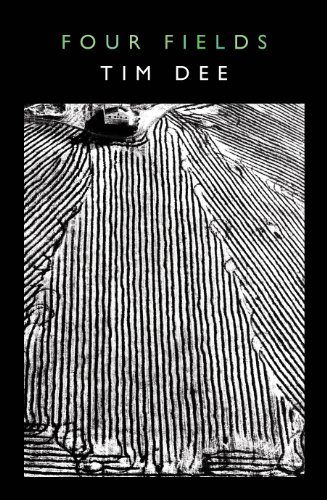
Four Fields

On my wish list:
In his first book since the acclaimed The Running Sky Tim Dee tells the story of four green fields. Four fields spread around the world: their grasses, their hedges, their birds, their skies, and their natural and human histories. Four real fields - walkable, mappable, man-made, mowable and knowable, but also secretive, mysterious, wild, contested and changing. Four fields - the oldest and simplest and truest measure of what a man needs in life - looked at, thought about, worked in, lived with, written.

Dee's four fields, which he has known for more than twenty years, are the fen field at the bottom of his Cambridgeshire garden, a field in southern Zambia, a prairie field in Little Bighorn, Montana, USA, and a grass meadow in the exclusion zone at Chernobyl, Ukraine. Meditating on these four fields, Dee makes us look anew at where we live and how. He argues that we must attend to what we have made of the wild, to look at and think about the way we have messed things up but also to notice how we have kept going alongside nature, to listen to the conversation we have had with grass and fields.

Four Fields is a profound, lyrical book by one of Britain's very best writers about nature.

Source image and text: Amazon

Friday, 28 June 2013

Visual representation of nature - ASEH2014

I subscribe to quite a few mail lists including the H-ENVIRONMENT list at H-NET.MSU.EDU. The post below caught my attention being always intrigued by diagrams and how they are applied. Caleb Wellum's post - copied below with thanks - stood out, not so much for the panel and being there (San Francisco!) as the theme. I've added links plus an image below and edited slightly:

Dear Colleagues,

I am organizing a panel about the visual representation of nature (and the politics of different representational forms) for ASEH 2014. My paper will examine H.T. Odum's energy diagrams in his popular 1970s works "Environment, Power, and Society" and "Energy: Basis for Man and Nature."
Michael Clemens will discuss nature documentaries at the National Film Board of Canada in the 1960s and 1970s and Duygu Kasdogan will be doing a visual ethnography of biofuels. We are looking for a 4th person to round out our panel. Your paper can be about any period, region, or form of visual representation.

Sincerely
Caleb Wellum
PhD Candidate
University of Toronto

Monday, 8 April 2013

Exoplanets, exobiology, exocortex, exocare ...?

http://www.guardian.co.uk/books/booksblog/2008/may/14/godvsatanindeepspace
Exoplanets

planets outside the solar system
An exoplanet (or extrasolar planet) is a planet orbiting a star different from the Sun (the "exo" prefix means "outside" in Greek). Up until now, one has found mainly gas giant planets, which are easier to detect than telluric planets. However, due to the increasing sensitivity of the detection methods, one already begins to observe the first planets of sizes comparable to the Earth.
Source: http://media4.obspm.fr/exoplanets/pages_definition/questce.html

Exobiology
The term exobiology ... covers the search for life beyond Earth, and the effects of extraterrestrial environments on living things.
Source: http://en.wikipedia.org/wiki/Astrobiology

Exocortex
-noun
An artificial external information processor that augments the brain's high-level cognition. Julia used her exocortex to access the memory of her tenth birthday.
Source: Fleming, N. The next wave. New Scientist, 14 May 2011. 210, 2812, p.33.

Exobuilding
ExoBuilding explores the novel design space that emerges when an individual‟s physiological data and the fabric of building architecture are linked. In its current form ExoBuilding is a tent - like structure that externalises a person's physiological data in an immersive and visceral way. This is achieved by mapping abdominal breathing to its shape and size, displaying heart beat through sound and light effects and mapping electro dermal activity to a projection on the tent fabric.
Source: http://www.cs.nott.ac.uk/~hms/pdfs/SchnadelbachEtAl_ExoBuilding_CameraReady_AuthorVersion.pdf
(8 April 2013 #DTMD13)

Exoskeleton

http://www.infoniac.com/hi-tech/top-10-robotic-exoskeletons.html
n.
ex·o·skel·e·ton ( k s -sk l -tn). n. A hard outer structure, such as the shell of an insect or crustacean, that provides protection or support for an organism.
Source: http://www.thefreedictionary.com/exoskeleton
exoskeleton: A medical device that allows individuals with severe spinal cord injury to walk and enhances rehabilitation for stroke victims.
Source: http://tagdef.com/exoskeleton


Exocare: Depends on your perspective - context / situation sensitive

Care exercised by a planet, or that planet's representation (on Earth the UN) towards life on other worlds, includes ethics, protocols and first contact.
See also: http://www.seti.org/post-detection.html

Care not delivered by statutory health services. Care delivered by the individual also described as self-care.

Care directed at specific celestial objects, often as a result of long held ethnocultural beliefs and customs, the moon for example.

Care that extends 'human ecosystems' to what is external to the physical self, to encompass Gaia - the Earth and biosphere. Love directed not at a single person, or thing but the sense of what is whole.

Also refers to the use of a conceptual framework to frame reflections on health and social care - individually, socially or globally. Provides a means to integrate concepts of care according to the situation and salience incorporating the individual-group (population); the local, global and glocal.


Saturday, 30 March 2013

Individual - Group: Axes & Histories

What are the dimensions of the axes that make up the structure of Hodges' model?

Can the individual see the group - the global population - beyond the fresh air in their pocket?

In not seeing the individual, as the global corpus shouts about: "choice", "economic growth", "freedom", "human rights", "democracy", "justice" ... do they see the big picture amid the political smog, the corporate dust storm?
One form human society has so far not generally taken is global. There is still virtually no shared consciousness globally of common struggles or common achievements. Enormous groups - the poor in the Global South for instance - have no sense of forming a single community; in an earlier age, the experience of being subjected to European colonial force failed to create a common anti-colonial front. Even today's most urgent global issues tend to be tackled regionally or nationally: the history of global warming or organised crime is a history of multiple actors, as often as not talking at cross-purposes. p.8.

Prof. Mark Mazower, All together now, FT Weekend, March 9 - 10, 2013, p. 8. Reviewing The Undivided Past: History Beyond Our Differences, by David Cannadine, Allen Lane. 
http://www.ft.com/cms/s/2/edb5b2ea-84d3-11e2-891d-00144feabdc0.html#axzz2OXNCQ1xD
http://www.ft.com/cms/s/0/b1793262-8d6f-11e2-82d2-00144feabdc0.html#axzz2OXNCQ1xD

Wednesday, 23 January 2013

In orbit*: Where a model of global health care should be


What platform are you using 
to monitor and positively impact 
the minutiae of care 
and the whole picture?

* and in mind.

On 25 May, NASA's Phoenix lander was 10 kilometres above the surface of Mars and less than three minutes from landing when it was captured passing in front of Heimdall crater by the HiRISE camera on the Mars Reconnaissance Orbiter (MRO).

http://www.nature.com/news/2008/080604/full/453712a/box/1.html
Published online 4 June 2008 | Nature 453, 712-713 (2008) Eric Hand

Additional link:
Phoenix: A tribute

Friday, 18 January 2013

ERCIM News No. 92 Special theme: "Smart Energy Systems"

Dear ERCIM News Reader,

ERCIM News No. 92 has just been published at
http://ercim-news.ercim.eu/en92

Special Theme: "Smart Energy Systems"
Guest editors: Carl Binding, IBM Research Lab, Switzerland and Han La Poutré, CWI and Utrecht University, the Netherlands
Modern, industrialized, society is heavily dependent on ubiquitous, cheap energy, which we expect to be readily available, not to be polluting, and to be convenient to use.
Since the invention of the steam engine by James Watt, this paradigm has lead towards tremendous improvement of life quality in the developed world, and developing countries eagerly aspire to similar energy standards.
However, the price of this hunger for energy is increasing. Fossil fuel resources such as oil or gas are becoming harder to explore, even leading to environmental disasters as with the Gulf of Mexico oil-platform, recently. Exploration of shale gas (“fracking”) causes negative environmental impact, beyond the well-known CO2 problematics. Besides the sheer availability of fossil energy, associated CO2 emissions have caused wide-spread concerns about impacts on climate and on human health (fine particle emissions).
http://ercim-news.ercim.eu/en92/special

Keynote:  "Smart Energy Systems – A European Perspective" by Ariane Sutor
http://ercim-news.ercim.eu/en92/keynote

This issue for download in pdf:
http://ercim-news.ercim.eu/images/stories/EN92/EN92-web.pdf

Includes: Research and Innovation
A Projector as Mobile Visualization device on an Assistive Robot (p.48)
by Paul Panek, Christian Beck, Georg Edelmayer, Peter Mayer and Wolfgang L. Zagler 

Next issue: No. 93, January 2012 - Special Theme: "Mobile Computing"
(see call at http://ercim-news.ercim.eu/call)
Thank you for your interest in ERCIM News.
Feel free to forward this message to others who might be interested.

Peter Kunz
ERCIM News central editor
--------------------------------------------------------------------
ERCIM "Alain Bensoussan" Fellowship Programme
ERCIM offers fellowships for PhD holders from all over the world. The next round is now open!
Next deadline for applications is exceptionally 28 February 2013
http://fellowship.ercim.eu/


Additional links [by PJ]:
UNDP: Sustainable Energy
The Communication Initiative Network - Natural Resource Management
UNESCO: Renewable and Alternative Energies

Saturday, 3 November 2012

'Semantic Reefs' - All at Sea, on Land and in Mind

In reviewing some literature recently I came across the phrase 'semantic reef'. In forwarding a copy of the paper Dr Trina Myers described the semantic reef as: an architecture created to automatically infer phenomenon or alerts about coral reefs using Semantic technologies (aka. Linked Data).

The coinage of semantic reef in the paper by Myers and Atkinson really captured my imagination. While the semantic web is of interest to me and the environment is the oxygen to the human ecosystem, to our very existence and well-being; Myers and Atkinson's semantic reef is very specific:
The Semantic Reef Knowledge Representation system is an eco-informatics application designed to assist in the integration of remotely sensed data streams and historic data sets supporting flexible hypothesis design and knowledge extraction. The system is an ontology-based architecture built to allow researchers to combine disjoint data sets into a single Knowledge Base for modelling the impact of climate change on coral reef ecosystems. p.16.
I've written previously of the conceptual role that the axes of Hodges' model can play. How they act as a distinct, idealised boundary between the disciplines. Most evident is the MECHANISTIC-HUMANISTIC divide between the hard sciences and the humanities. Academics, researchers, health practitioners can become trapped in a disciplinary silo. Reefs are often a Great Barrier. Mariners have to find navigable waters to find a way through. Safe passage is recorded.

The last thing anyone wants is a shipwreck; whether in the ecosphere, designing software or health care.
Maybe this is another (long-winded-yes) way of recognising the collapse of holistic bandwidth at the point of a medical emergency, a crisis. The situation IS a shipwreck. A disaster of a very personal kind. What lies beyond the information required in that specific instant, what lies outside that atoll is suddenly not important.


More positively though a reef also represents an opportunity. It is a sign, a measure of global health. As such it IS a community. It is community. Harmony. Balance. It is the community around which others revolve. And we need to recognise; nOt that, but this and nOw. ...:

Trina Myers, Ian Atkinson (2013). Eco-informatics modelling via semantic inference. Information Systems. 38, 1, March 2013, 16–32.

Thanks to Dr Trina Myers.

Image sources:
Australian National Maritime Museum

http://en.wikipedia.org/wiki/File:Atafutrim.jpg